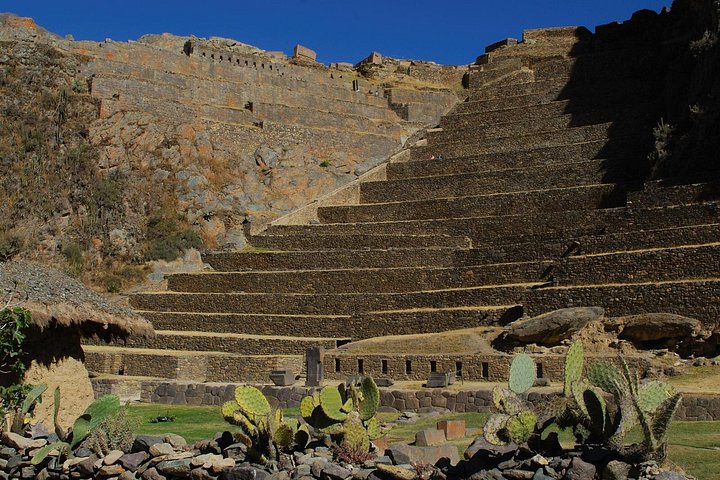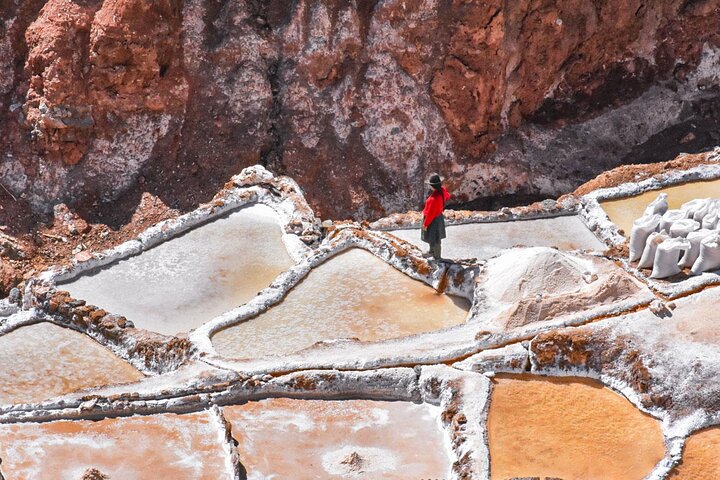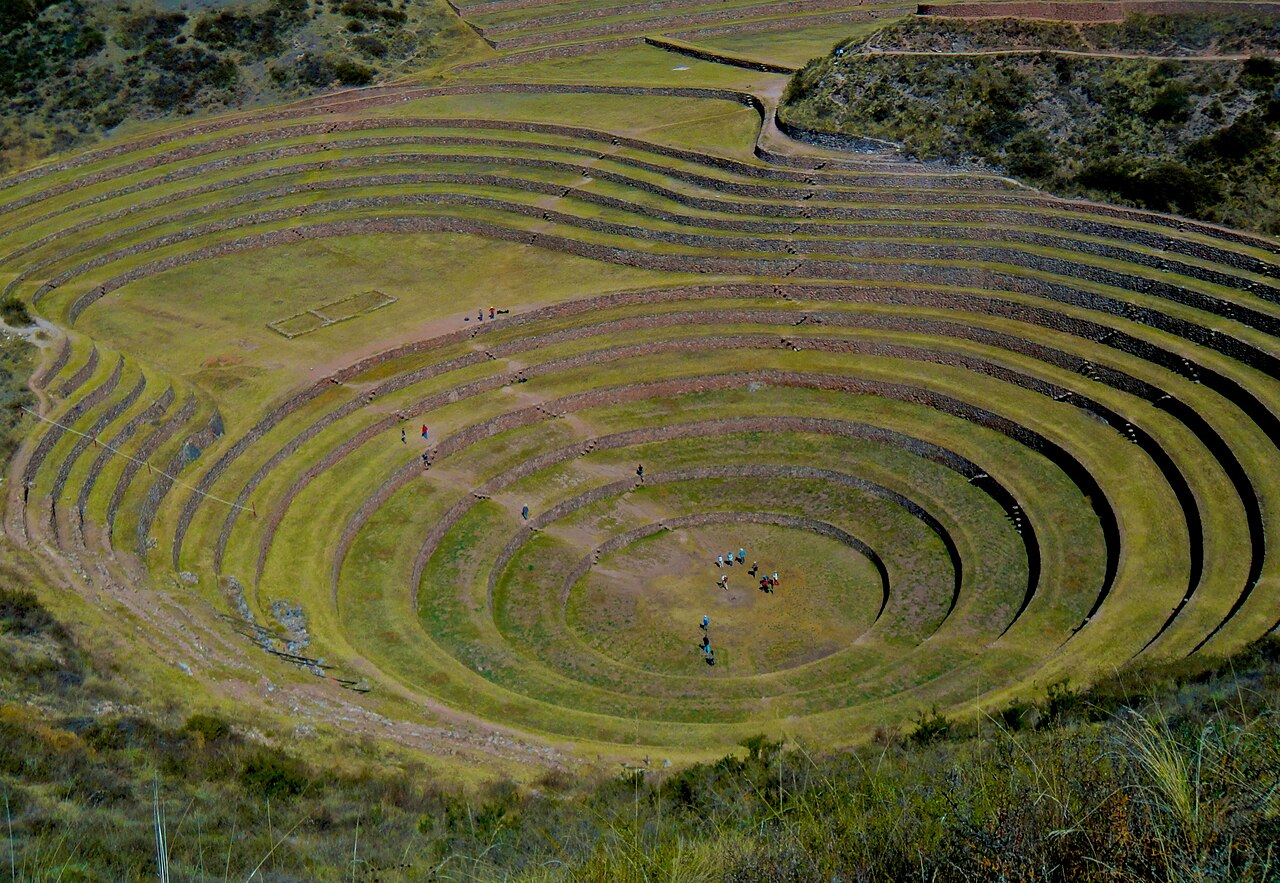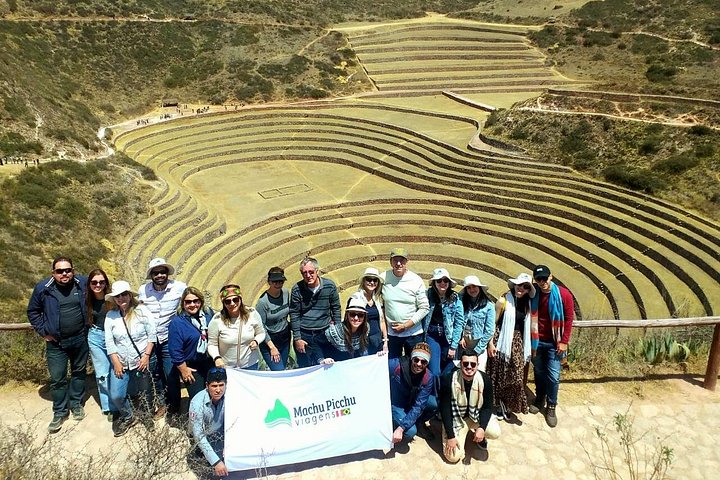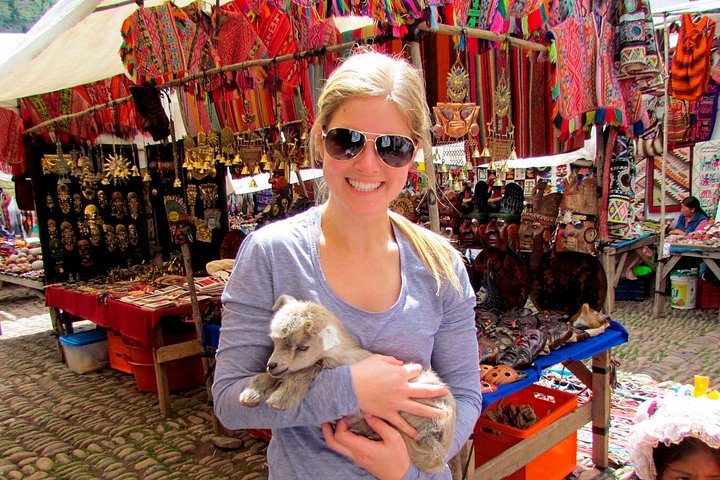
Pisac is the gateway to the Sacred Valley and one of its most dramatic sites. High above the town, curving agricultural terraces climb a mountain spur toward a ceremonial centre with a Temple of the Sun, ritual baths and a carved stone gateway, while across the gorge the cliffs are pocked with Inca burial niches. Below, the town square holds a long-running craft market with alpaca knitwear, ceramics, silver jewellery and woven belts. The big market day is Sunday, with smaller markets on Tuesday and Thursday, so choose your day with that in mind. A private tour covers the ruins and the market in about five hours and handles the road to the upper gate, which is steep and slow if you go independently. Pisac suits anyone who wants both landscape and local life in a single morning.
The citadel is usually visited from the top down. Cars and tours climb a switchback road to the upper entrance near the Intihuatana group, and from there a path descends along the terraces toward the town. Paths are stone, uneven and exposed, with steep drop-offs in places, so wear shoes with grip, take a hat and expect to climb many steps. The site sits above 3,000 metres, which you will feel if you have just arrived from sea level, so spend a night or two in Cusco or the valley before tackling it.
Tickets matter. The ruins are covered by the Boleto Turistico, the regional tourist ticket, and the partial valley circuit that includes Pisac, Chinchero, Ollantaytambo and Moray lasts two days. Check whether your tour price includes the ticket or leaves it for you to buy, and carry some cash in soles. Go early in the day for cooler air and clearer views, and keep the market for late morning when stalls are fully open.
The valley is wetter from November to March, with afternoon showers common, so pack a light rain jacket and allow for slippery stone. The terraces turn vivid green in that season, which is a pleasure for photographs. If you only have time for one set of valley ruins besides Ollantaytambo, Pisac is the better choice for scenery, and the market gives you a sensory contrast after the quiet of the stonework.
What to expect
The experience
A private guided visit that drives up to the ruins, walks the terraces and temple area, then descends to the town for time in the craft market.
Best time
Early morning for the ruins and a Sunday for the biggest market, with Tuesday and Thursday as quieter alternatives.
How long
About five hours with a guide, or a full morning if you go on your own.
Tips
Wear grippy shoes, bring a hat, water and soles in cash, and check whether your tour covers the Boleto Turistico entry.
Quick picks
- Best for
- Travellers who want valley scenery and a working market in a single half day.
- Families
- Older children enjoy the terraces and the market, but the stone steps and drop-offs need close supervision for little ones.
- Couples
- Go on a Sunday morning, walk the terraces in the soft light, then browse the stalls before lunch in town.
- Pair with
- Ollantaytambo fortress and the Chinchero weaving village on the same day, or a night in Urubamba.
- Time needed
- Half a day, or a full day if you combine it with another valley stop.
Good questions
When is the Pisac market busiest?+
Sunday is the big market day, with smaller markets on Tuesday and Thursday. Go on Sunday for choice and atmosphere, and on a weekday if you prefer fewer crowds.
Do I need the Boleto Turistico for Pisac?+
Yes, the ruins are part of the tourist ticket and the partial valley circuit that also covers Chinchero, Ollantaytambo and Moray. Check whether your tour includes it, and carry cash in case you need to buy it.
How hard is the walk through the ruins?+
It is a steady walk on uneven stone steps at over 3,000 metres, with some drops beside the path. Take it slowly and bring water, especially if you have only just arrived from sea level.
Is it better to go with a guide or on my own?+
A guide explains the temples and burial niches, and a private tour handles the steep road to the upper gate. Independent visitors can take a taxi up and walk down.
What is the weather like in the rainy season?+
From November to March expect afternoon showers and slippery stone, though mornings are often clear. A light rain jacket and shoes with grip make the visit comfortable.