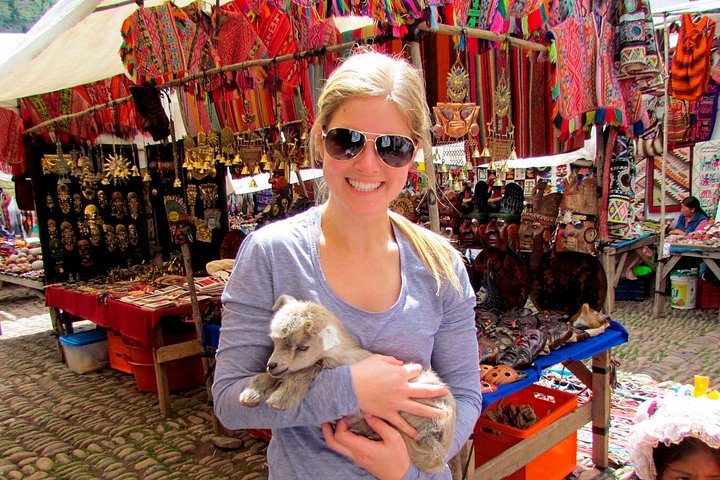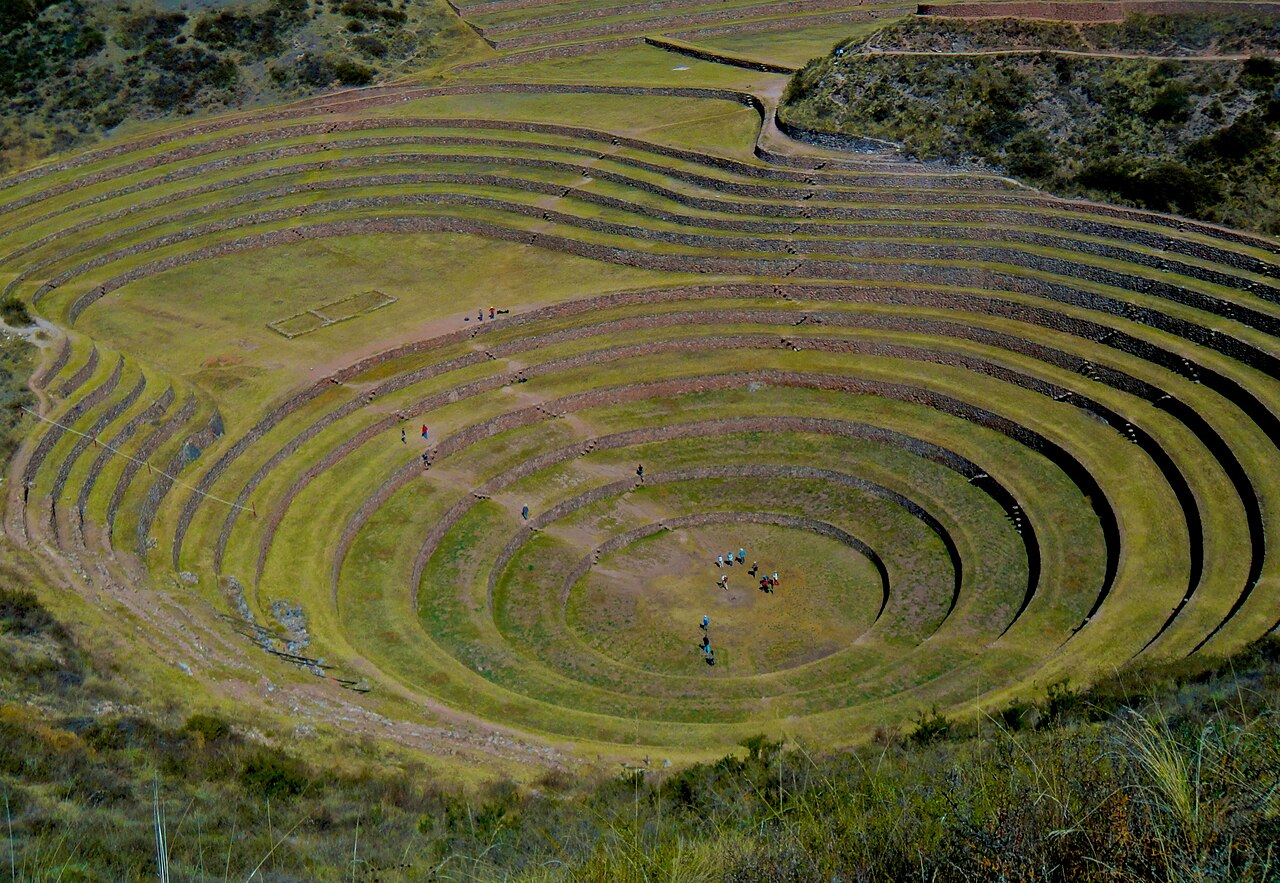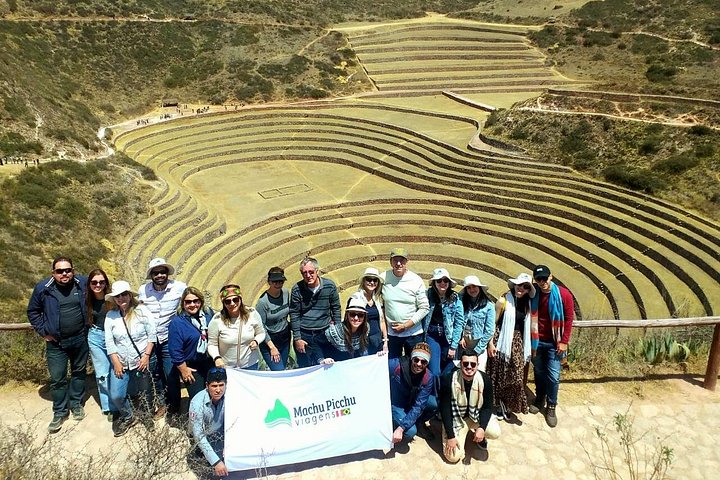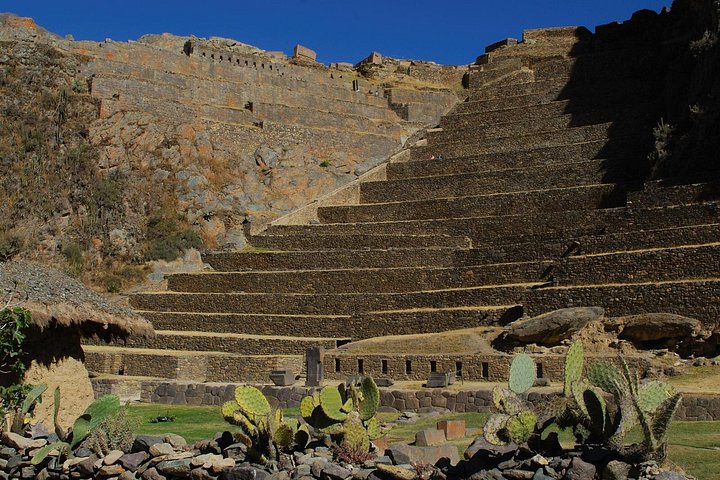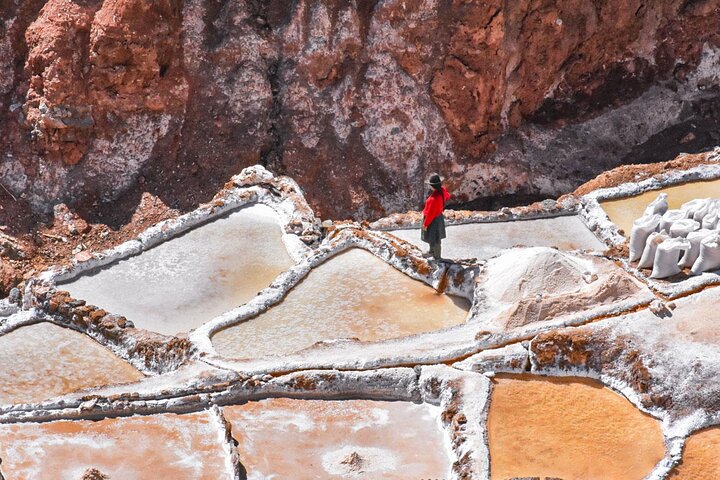
Chinchero sits on a windswept plateau above 3,700 metres, the first real village of the Sacred Valley on the road from Cusco. Its plaza has Inca walls and terraces, a colonial church built on an Inca base and a Sunday market that is still used by local people. The great draw is the weaving. In cooperatives around the village, women show how wool is washed with a root detergent, spun, dyed with plants and insects and woven on backstrap looms, and you can buy textiles directly from the makers. This half-day tour combines Chinchero with Moray and the Maras salt mines, which is a tidy introduction to the plateau and its crafts.
A visit usually begins in a cooperative, where a weaver explains the dyes, from cochineal insects to plants and minerals, and demonstrates the techniques. Take time to ask about patterns and quality, since a genuine hand-woven piece is priced very differently from a machine-made imitation, and buying from a cooperative puts money straight into local households. It is polite to treat the demonstration as a chance to learn and then buy if you like something, rather than expecting to bargain hard.
The village also has an archaeological site and church included in the Boleto Turistico, the regional tourist ticket whose partial valley circuit covers Chinchero, Pisac, Ollantaytambo and Moray. Check whether your tour includes entry. The Sunday market is a good chance to see local people trading produce and goods, rather than only crafts for visitors.
The altitude is high and the weather changes quickly, so dress in layers and carry a rain jacket, especially from November to March when showers are frequent. A half-day tour takes six or seven hours with transport from Cusco. If you are staying in the valley, ask your hotel to arrange a private visit to a weaving cooperative on your way to Moray.
What to expect
The experience
A guided half-day tour that includes a weaving demonstration in Chinchero, then Moray and the Maras salt mines.
Best time
Morning, when cooperatives are open and the plaza is quiet, or Sunday for the local market.
How long
One to two hours in the village within a tour of six to seven hours.
Tips
Carry soles for textiles, ask about dyes and techniques, and dress in layers for the wind.
Quick picks
- Best for
- Travellers who like crafts, textiles and meeting the people who make them.
- Families
- Children enjoy seeing wool turned into colour and meeting the weavers who make them.
- Couples
- A hand-woven piece bought from the maker is a lovely keepsake of the trip.
- Pair with
- Moray and Maras on the same tour, or Pisac market on another day.
- Time needed
- Half a day with transport.
Good questions
What happens in a Chinchero weaving demonstration?+
Weavers show how wool is washed, spun and dyed with natural materials, then woven on a backstrap loom. You can ask questions and buy pieces directly.
Is Chinchero in the Boleto Turistico?+
Yes, it is in the partial valley circuit that also covers Pisac, Ollantaytambo and Moray. Check whether your tour includes the entry.
When is the Chinchero market?+
The main market takes place on Sundays and is used by local people for produce and goods. Cooperatives are open on other days too.
Is it worth buying textiles?+
Yes, if you want an authentic hand-woven piece. Ask about the materials and time involved, and expect to pay more for natural dyes and fine work.
How high is Chinchero?+
The village is above 3,700 metres, so it feels cool and thin. Take it slowly and keep warm layers handy.