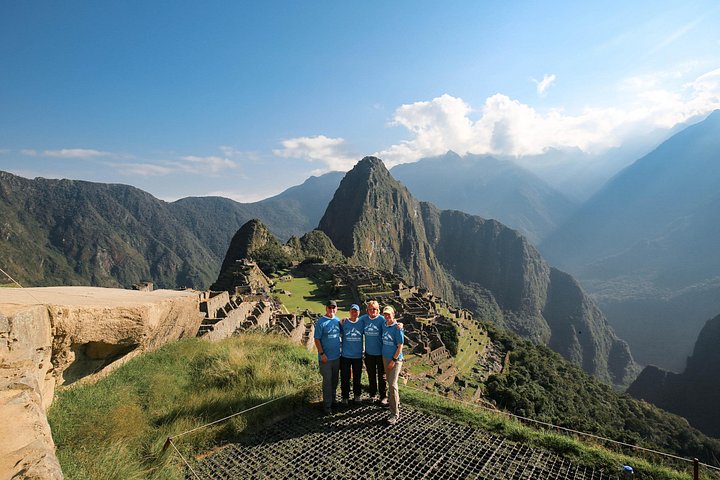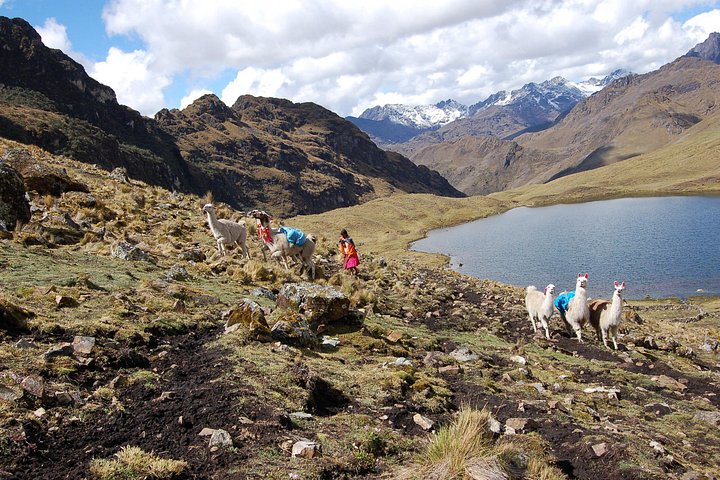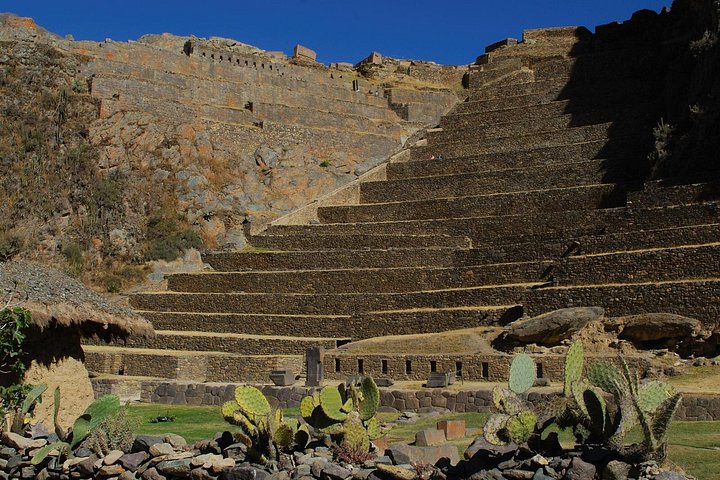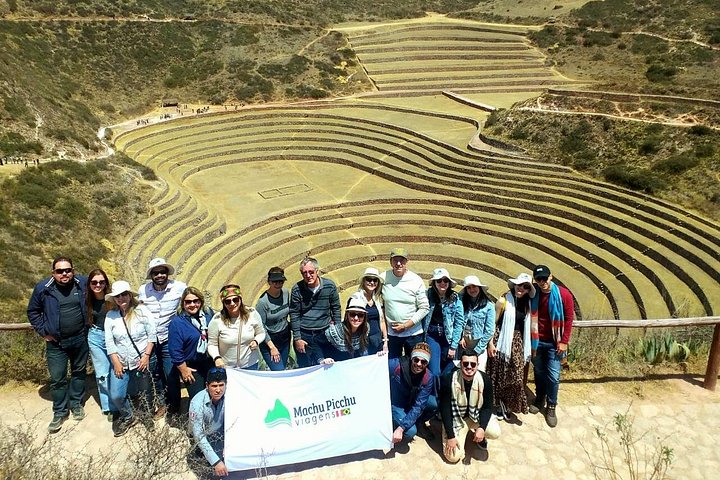
Huchuy Qosqo, meaning Little Cusco in Quechua, is a ruined Inca estate perched on a ridge above the Sacred Valley, with stone halls, terraces and sweeping views over the river. A three-day trek brings you here on foot, then continues down into the valley and on to Machu Picchu by way of the railway and Aguas Calientes. It is a moderate route with far fewer walkers than the Inca Trail or Salkantay, which makes it appealing if permits are sold out or you want solitude. You walk through farming hamlets, over grassy passes and past mountain lakes, with guides, cooks and porters or horses carrying the camping gear. Meals are prepared on the trail, and the final day includes a guided tour of the citadel. For travellers with a few extra days and decent fitness, it adds a wild chapter to the usual valley sightseeing.
The first day starts with a transfer from Cusco or the valley to the trailhead, then a steady climb on dirt paths toward high pastures where llamas and alpacas graze. Camp is usually set in a farming community or beside a lake. The second day crosses a pass of around 4,000 metres, descends to Huchuy Qosqo for a guided look at the ruins, then continues down to the valley floor, where a vehicle or train brings you to Aguas Calientes for a night in a simple hotel.
On the third day you visit Machu Picchu with a guide and return to Cusco or the valley by train and road. Exact routes vary by operator, so read the itinerary when you book.
This is a trek for people who like walking but do not need a technical challenge. Days involve several hours of uphill and downhill on uneven paths at altitude, and weather can swing from hot sun to cold wind to rain within hours. Allow at least two days in Cusco or the valley to acclimatise beforehand, train with hill walks, and break in your boots.
Pack layers, a rain jacket, sun protection, a head torch, a refillable bottle and a small amount of cash for tips and snacks. Most operators supply tents, sleeping mats and meals, and offer sleeping bags for hire, but check what is included.
Choose your season with care. The dry months from May to September give crisp, clear days and cold nights, while the rainy season from roughly November to March brings mud, cloud and slippery slopes, though the hills are a deep green. Machu Picchu entry uses timed slots and set circuits, so your operator will book these in advance; keep your passport handy for checks. Travel insurance that covers trekking is strongly advisable, and an honest conversation with the operator about your fitness will help match you to the right group.
What to expect
The experience
A guided three-day trek with camping, a visit to the Huchuy Qosqo ruins, a night in Aguas Calientes and a guided tour of Machu Picchu.
Best time
May to September for dry, clear days, or the green season if you are happy with mud and showers.
How long
Three days and two nights from pick-up to return.
Tips
Acclimatise for two days first, pack layers and rain gear, check what camping gear is included and carry your passport.
Quick picks
- Best for
- Fit walkers who want a quiet route to Machu Picchu when the Inca Trail is full.
- Families
- Best for teenagers who are used to long hiking days at altitude.
- Couples
- A shared adventure with camp meals and big skies, ending with the citadel.
- Pair with
- Pisac or Ollantaytambo before the trek, and a night in a valley hotel afterwards.
- Time needed
- Three days, plus two days to acclimatise before starting.
Good questions
How hard is the Huchuy Qosqo trek?+
It is moderate, with long days on uneven paths and a pass of about 4,000 metres. Training with hill walks and arriving acclimatised makes it much easier.
Is it an alternative to the Inca Trail?+
Yes, it ends at Machu Picchu without the classic trail permits, and it is much quieter than the better-known routes.
Is camping gear included?+
Most operators provide tents, mats and meals, with sleeping bags often available to hire. Check the inclusions list for your departure.
Do I need a separate Machu Picchu ticket?+
Operators normally arrange entry and train as part of the package. Confirm this when you book and carry your passport.
When is the best season to go?+
May to September is driest. The green season from roughly November to March is wetter and muddier but quieter and lush.