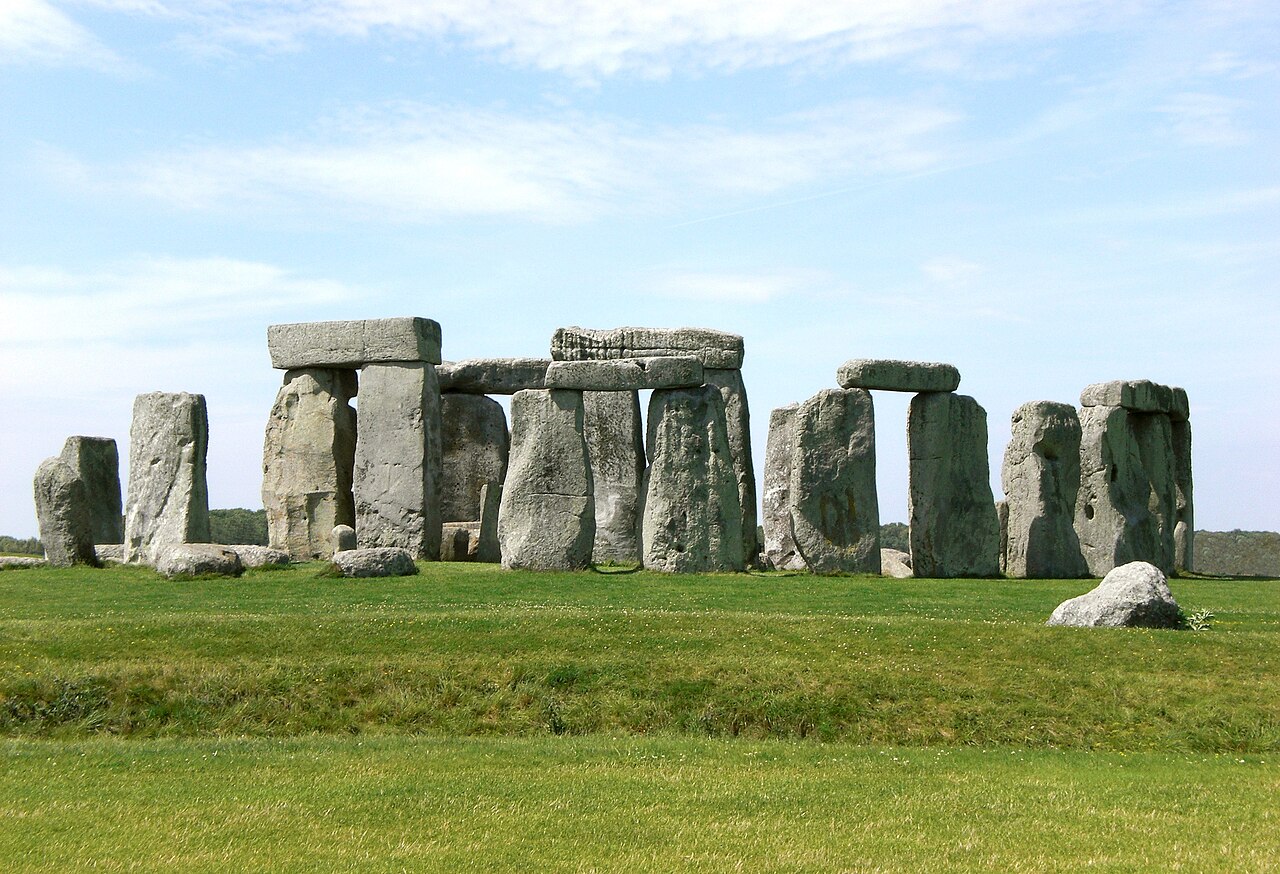
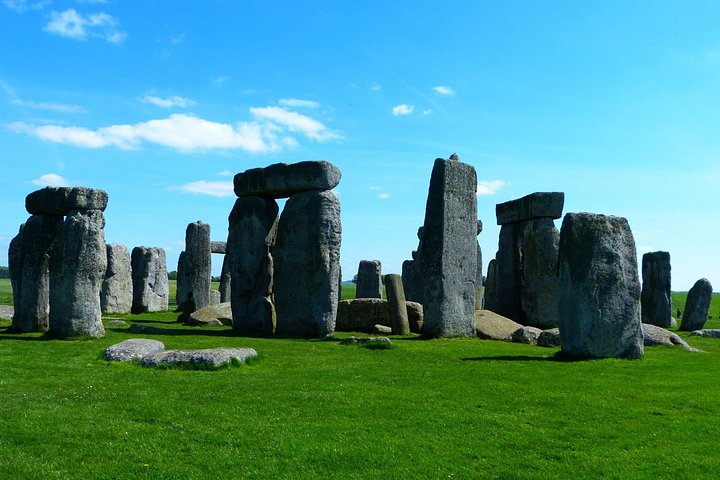
Woodhenge is one of the best-kept secrets of the Stonehenge landscape, a place where you can stand almost alone in a field and read a prehistoric monument at close range. It lies a couple of miles north-east of Stonehenge, beside the village of Durrington, and it was only identified in the 1920s, when aerial photography revealed a pattern of dark marks in a ploughed field. Excavation then showed that these were post holes, the remains of six concentric oval rings of timber uprights, a wooden counterpart to the stones. Concrete posts now mark each hole, and the little forest of short pillars lets you walk the rings and sense the plan of the lost building. It dates from the period when the first great monuments of the area were being raised, around 4,400 years ago, and a child burial was found near the centre. Just beyond, Durrington Walls is a giant circular enclosure and one of the largest henges in Britain. Excavations there found the remains of houses and enormous quantities of animal bones, and many archaeologists now believe it was a settlement used by the people who built Stonehenge, a place for midwinter and midsummer feasts. The ditch and bank survive as a broad earthwork across the fields. Woodhenge is looked after by English Heritage and is free to visit.
Reading the site
It helps to treat Woodhenge and Durrington Walls as a pair. The great timber circle was part of a ceremonial landscape that also included the river, the avenue that led from Durrington to the Avon, and the stones themselves, and the evidence suggests that the timber monuments were linked to the living, while Stonehenge was linked to the dead.
Whether or not that theory holds in every detail, it makes for a rewarding walk, because you can follow the same line of thought across the fields. The concrete posts are different heights for the different rings, which shows how the original structure may have risen toward the centre.
Practicalities
Woodhenge is a short drive from Amesbury, with a small area for parking near the entrance, and the monument is in an open field with a gate and information panels. It is free, there are no facilities, and the surface can be wet. You can walk onwards to Durrington Walls, and the National Trust has a route from the henge across the landscape toward Stonehenge, which is a good way to experience the scale of the setting on foot.
Because there is little shelter, wear a windproof layer and sturdy shoes, and expect to share the place with only a handful of people most days.
Making it part of your trip
This is an ideal short stop before or after Stonehenge, and it takes about half an hour. It suits visitors who want to go beyond the ticketed stones, families who want a gentle outdoor stop, and anyone interested in how archaeologists reconstruct lost buildings.
The best light is in the early morning or at dusk. Some guided and private tours of the area include Woodhenge, so it is worth looking at the itinerary of any tour you consider. If you have a car, combine it with the landscape walks and finish in Salisbury for dinner.
What to expect
The experience
A self-guided stop in an open field, where concrete posts mark the rings of timber uprights, with information panels and a short walk toward Durrington Walls.
Best time
Early morning or dusk, when the field is quiet and the light is low; dry weather keeps the ground firm.
How long
About half an hour for Woodhenge, up to an hour if you walk out to the henge bank at Durrington Walls.
Tips
Wear a windproof layer and sturdy shoes, take the information panels in order, and combine it with Stonehenge in the same trip.
Quick picks
- Best for
- Visitors who have seen Stonehenge and want to understand the wider story of the people who built it.
- Families
- Children can walk among the posts and imagine the lost timber ring, which is a good free stop before the ticketed stones.
- Couples
- A quiet, uncrowded walk in the evening light.
- Pair with
- Stonehenge and the landscape walks, a few minutes away by car.
- Time needed
- Thirty to sixty minutes.
Good questions
What is Woodhenge?+
It is a Neolithic monument whose six oval rings of timber posts were identified from the air in the 1920s. Concrete posts now mark where the wooden uprights stood.
Is Woodhenge free?+
Yes, it is free to visit and looked after by English Heritage. There are no facilities, so plan ahead.
What is Durrington Walls?+
It is one of the largest henge enclosures in Britain, next to Woodhenge. Many archaeologists believe it was a settlement for the builders of Stonehenge.
How far is Woodhenge from Stonehenge?+
About two miles, a few minutes by car. A walking route also links the Durrington area with Stonehenge across the landscape.
How long do I need?+
About half an hour for Woodhenge itself. Allow more if you want to walk to Durrington Walls or on toward the stones.