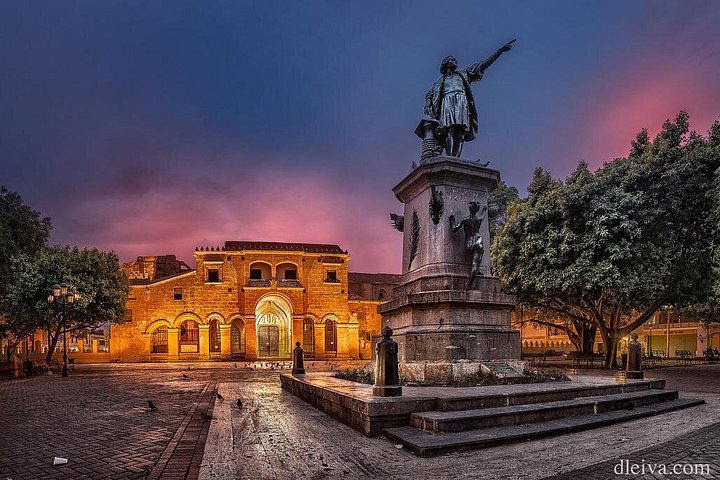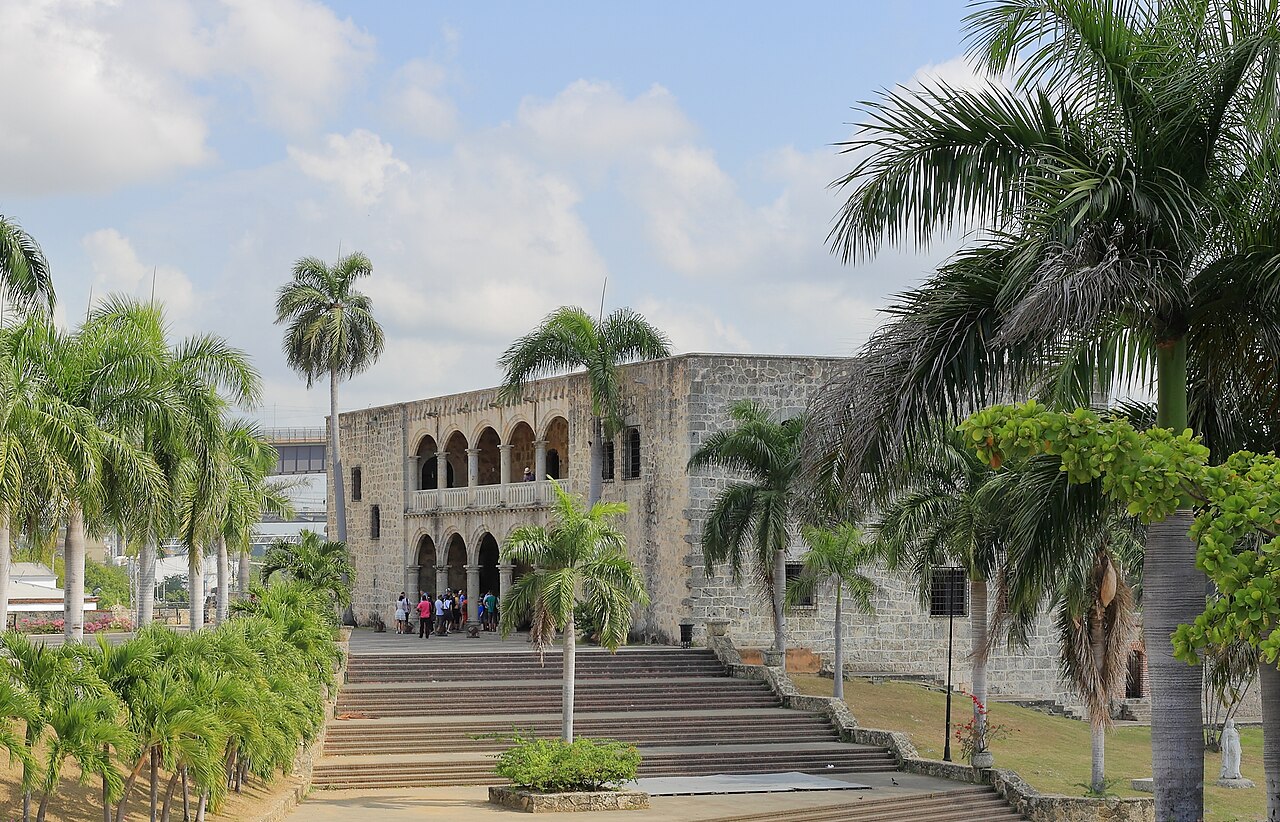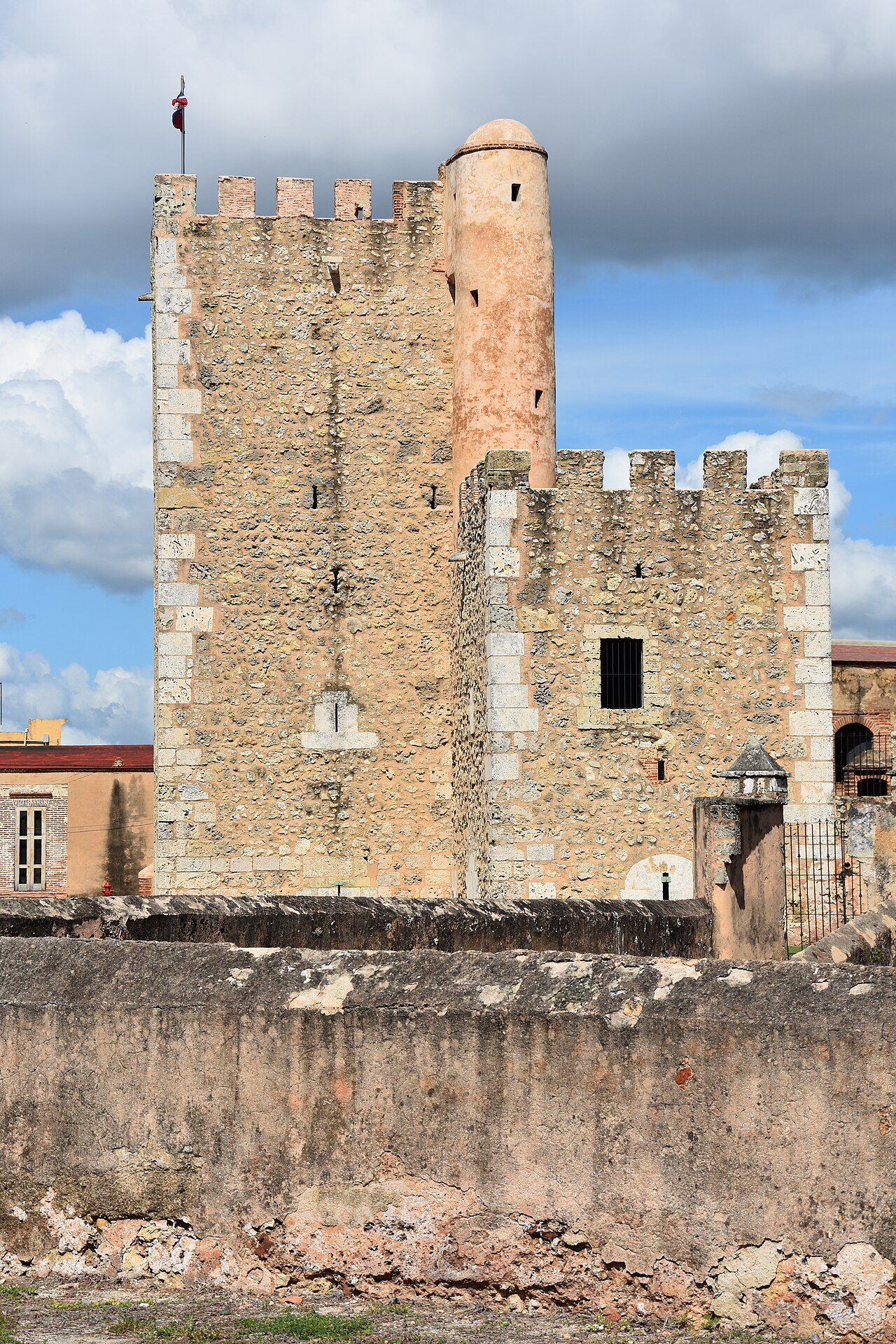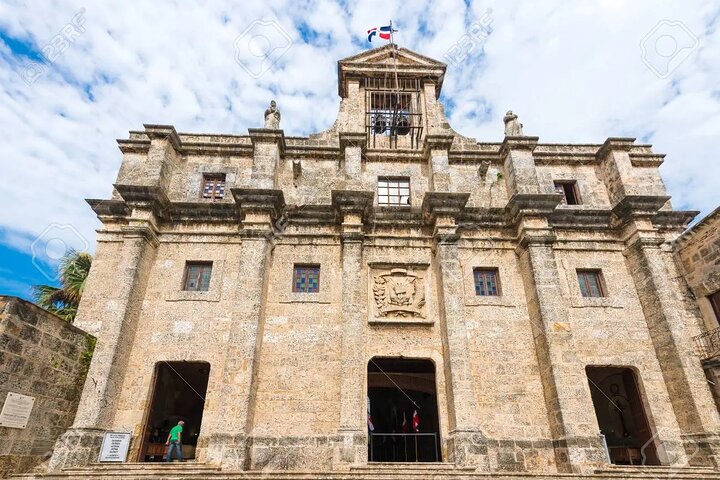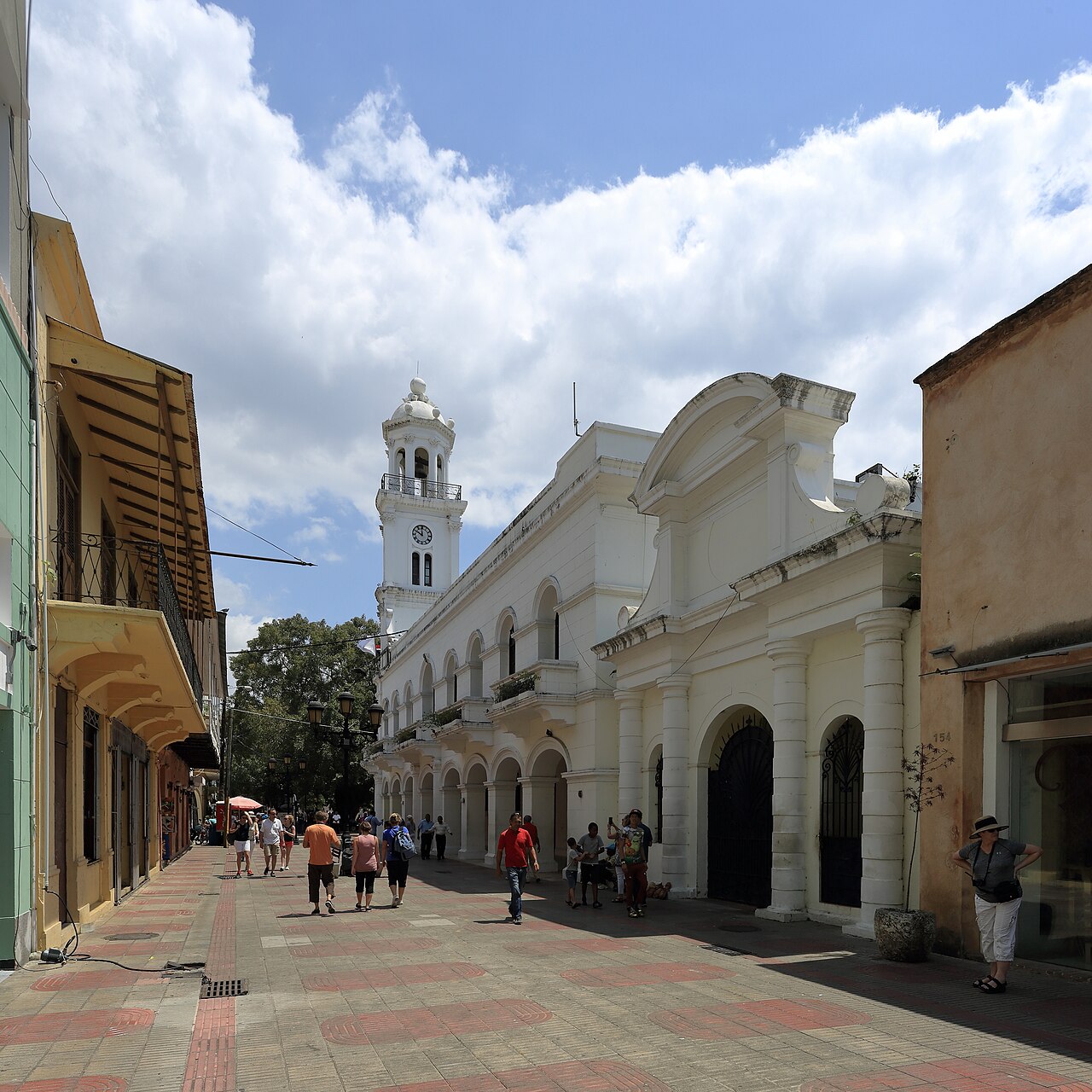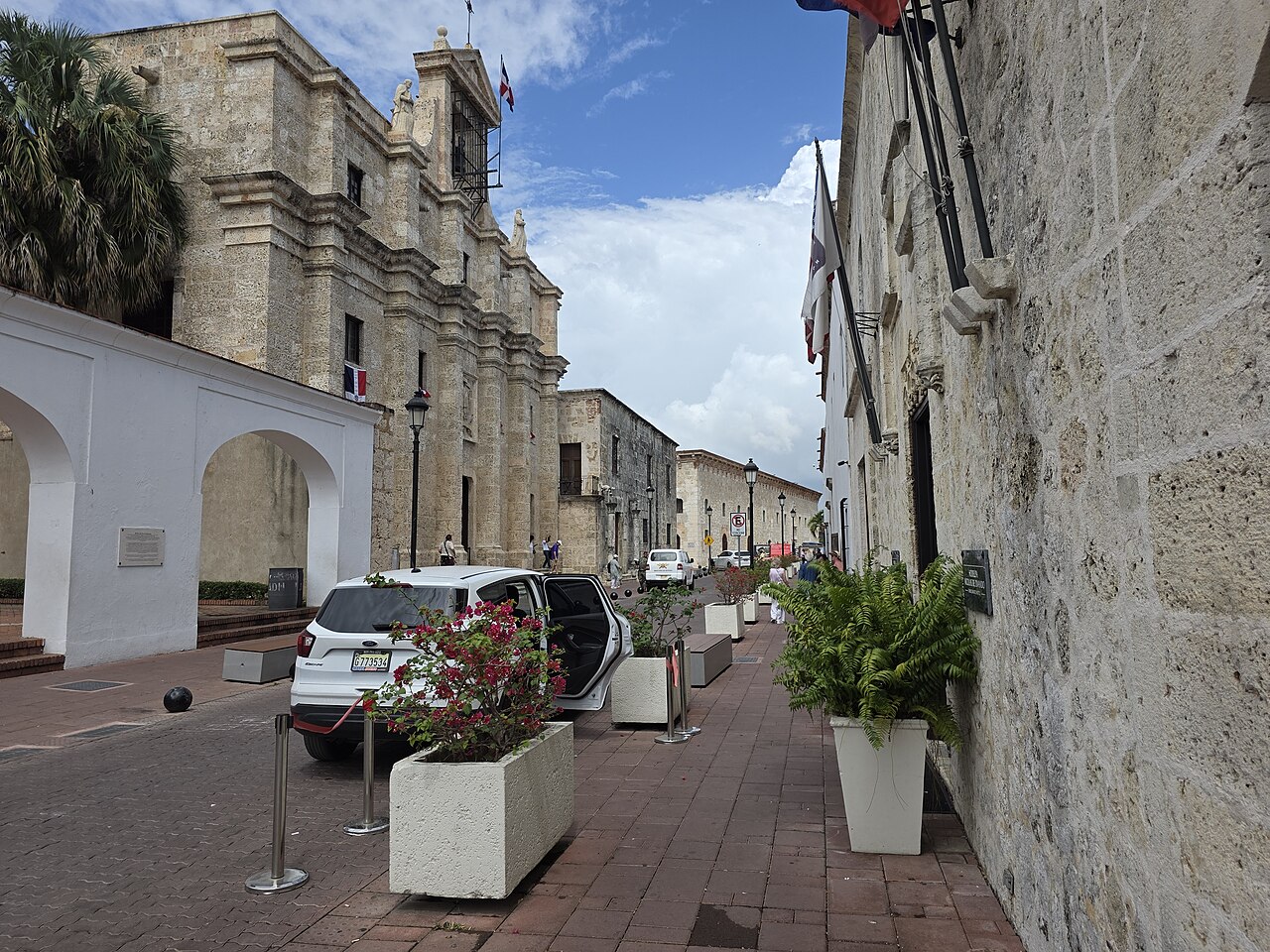
Calle Las Damas, the Street of the Ladies, is the most atmospheric stretch of the Colonial Zone. Laid out in the early 1500s, it runs from the Fortaleza Ozama toward the Alcázar de Colón and is often described as the first paved street in the Americas. The name is usually traced to the ladies of Governor Diego Columbus’s court, who are said to have strolled here in the evening. Today the cobbles are worn smooth, the façades are restored in warm stone, and each house tells a piece of the story of the early colony. The street is short enough to walk in fifteen minutes but rich enough to fill an hour. On the way you pass the Casa de Bastidas, a restored colonial house, the Museo de las Casas Reales, which occupied the old palace of the governors and now explores the colonial administration, and the Panteón Nacional, a neoclassical building that once served as a Jesuit church and now honors national figures. At the end sits the Fortaleza Ozama, with its stone tower looking over the river. A sundial near the Plaza de España is another detail to look for.
How to visit
Calle Las Damas is a public street and free to walk at any time, though the museums and monuments along it have their own opening hours and entry fees. Wander in the morning for the best light and cool air, or in the late afternoon when the stones glow and the shadows lengthen. Parking is difficult in the zone, so arrive on foot or by taxi.
What to expect
The cobbles are uneven, so wear shoes with grip. The street is narrow and can be busy with tour groups mid-morning, particularly when cruise passengers are in port. Take your time at the historical plaques, which often give the date and the original owner, and look up at the carved stonework above doorways.
Making the most of it
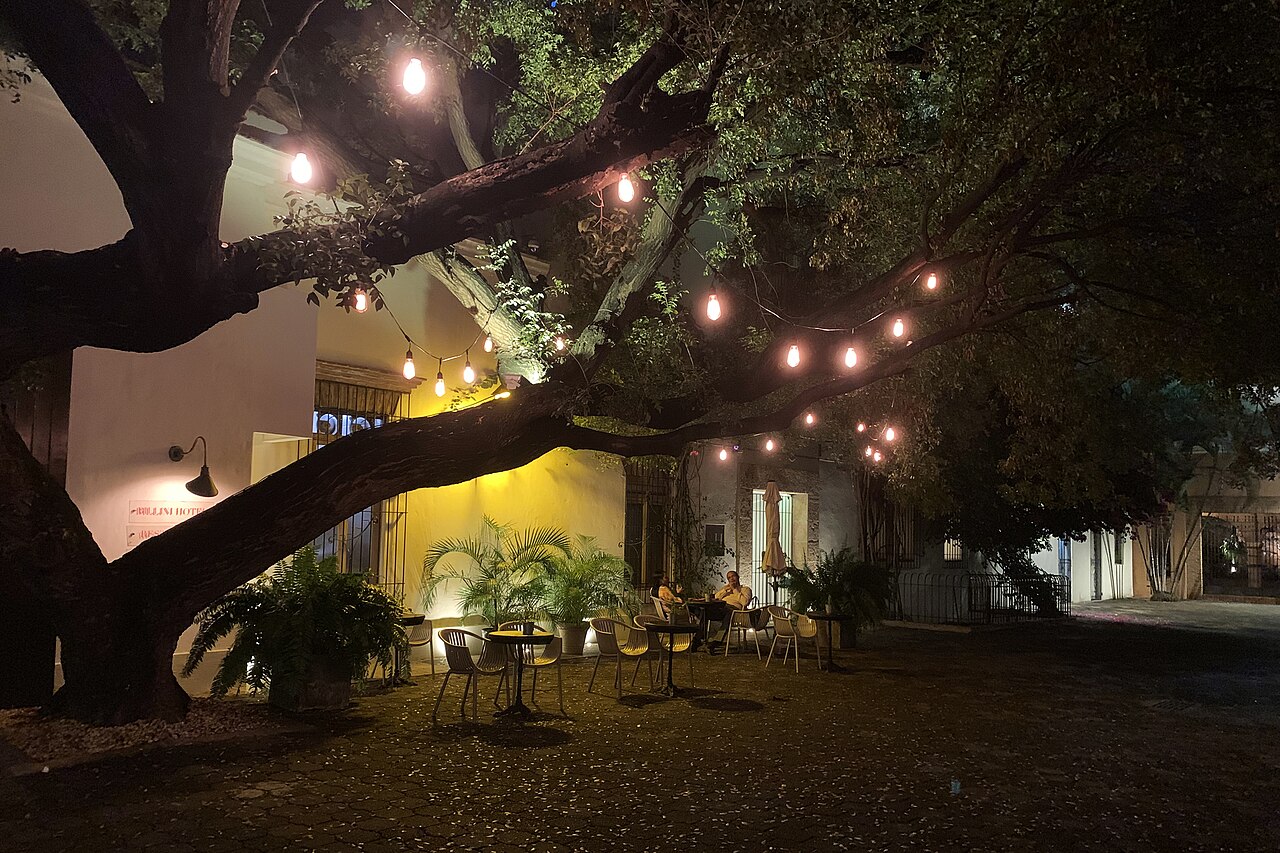
Start at the Fortaleza end and walk toward the Plaza de España, stopping at whichever museum appeals, then finish with a coffee or lunch on the plaza. A guided walk adds the stories, but the street also rewards a slow solo stroll. For a different mood, come back in the evening when lights come on and the crowds thin.
Context worth knowing
The buildings along the street were homes and offices of the early colonial elite, and many carry coats of arms, carved doorways and inscriptions that speak of the era’s ambitions. The Casa de Bastidas, named for the explorer Rodrigo de Bastidas, now hosts exhibitions and is worth a quick look. The stretch near the fortress has a shaded corner with benches, a good place to rest.
Guides like to point out how the street’s alignment connected the fort, the palace and the cathedral, showing the practical logic of colonial planning. If you enjoy photography, the low evening light and the empty street just after sunrise are the best moments for pictures without crowds.
Practical notes
The street is easy to combine with lunch, since cafés and restaurants cluster near the Plaza de España at the western end. If you want a guided interpretation, short walking tours leave from nearby, and many start here because the street ties the main sights together. Carry a hat and a bottle of water, as shade is patchy, and look out for shaded benches along the route. The museums open and close at different hours, so decide in advance which ones you most want to see.
What to expect
The experience
A free self-guided stroll along a historic cobbled street lined with museums, mansions and monuments.
Best time
Early morning or late afternoon, when the light is warm and the heat is lower.
How long
About an hour, more if you visit the museums.
Tips
Wear shoes with grip for the cobbles and bring water in the warmer months.
Quick picks
- Best for
- Anyone who wants a quick, atmospheric taste of colonial Santo Domingo at no cost.
- Families
- Easy for children, though the cobbles are rough for strollers.
- Couples
- Romantic in the evening light, with cafés nearby.
- Pair with
- The Alcázar de Colón and the Fortaleza Ozama.
- Time needed
- One hour.
Good questions
Why is it called Calle Las Damas?+
The name is usually traced to the ladies of Governor Diego Columbus’s court, who are said to have strolled along it.
Is it really the first paved street in the Americas?+
It is widely described as the first paved street of the New World, and the claim is part of its identity.
Is there a fee to walk it?+
No. The street is public. Museums and monuments along it charge their own entry fees.
What is on the street?+
The Casa de Bastidas, the Museo de las Casas Reales, the Panteón Nacional and the Fortaleza Ozama are among the notable sites.
When is it quietest?+
Early in the morning and in the evening, away from mid-morning tour groups.