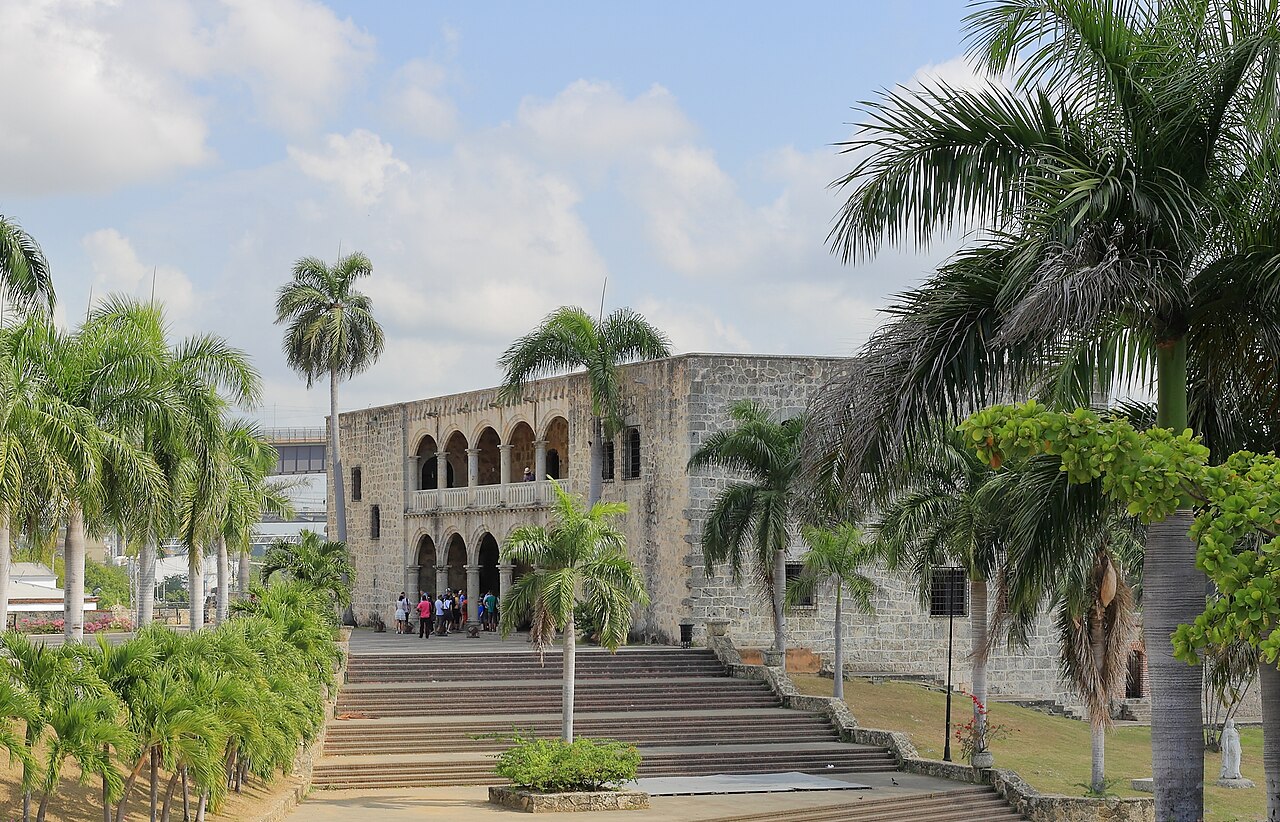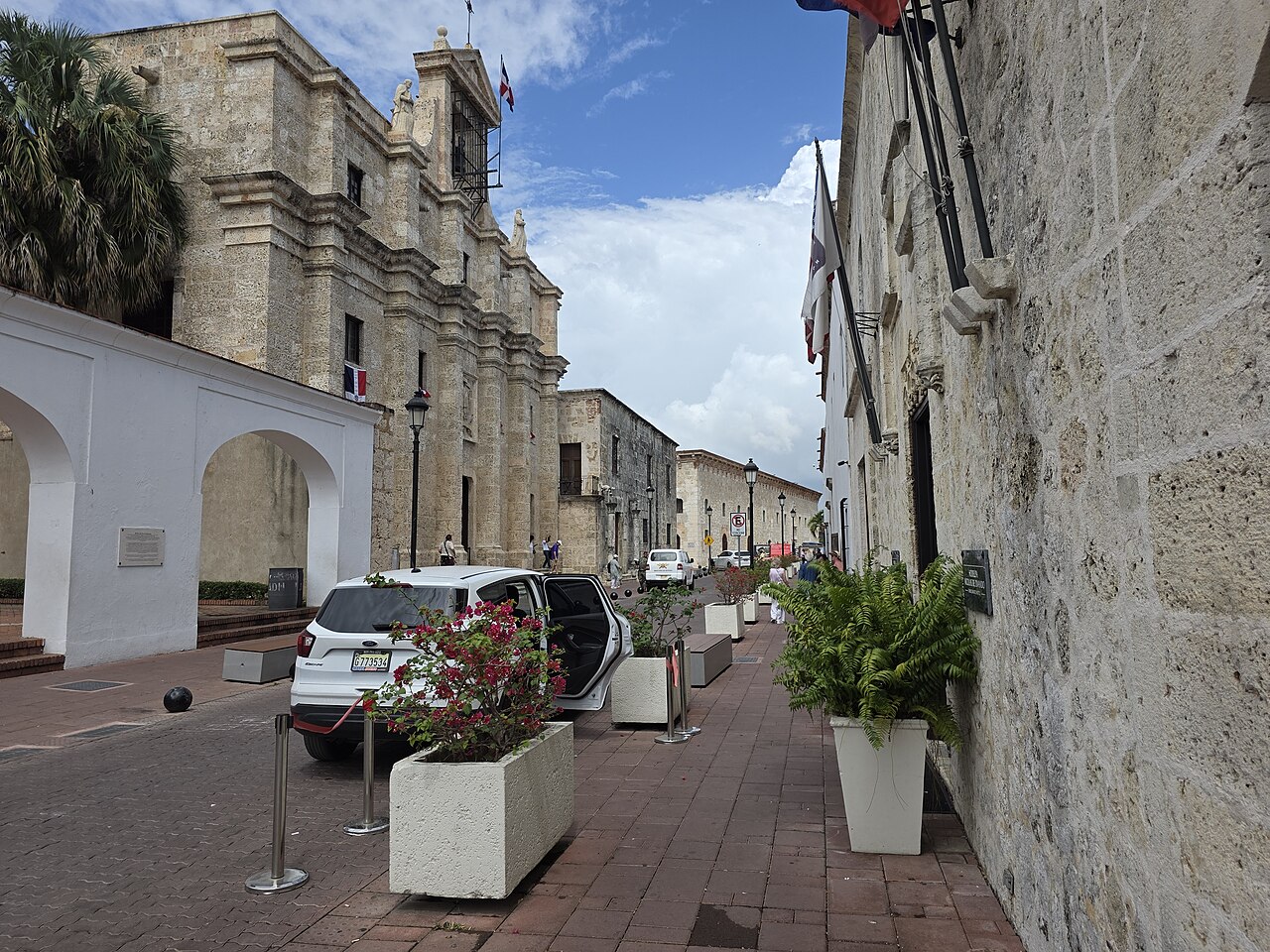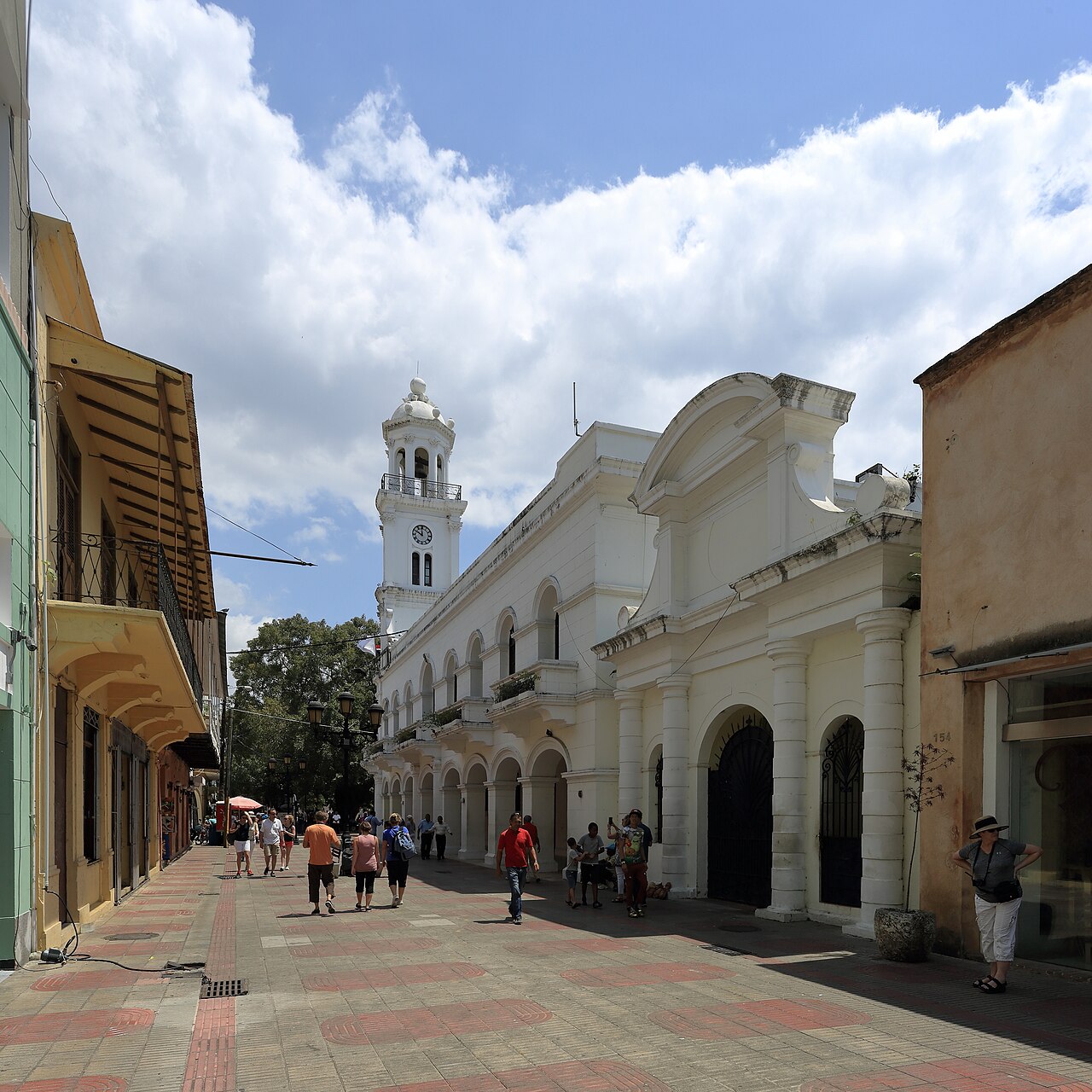
Los Tres Ojos, the Three Eyes, is the capital’s most surprising natural sight. A staircase descends into a vast limestone sinkhole on the eastern edge of Santo Domingo, and at the bottom a series of caverns opens onto still lagoons whose water glows in shades of green and turquoise under the hanging roots and stalactites. The park takes its name from the pools, which look like eyes set into the rock, and the setting feels far more like a jungle cenote than a city attraction. After the heat and traffic of the streets, the cool air and the quiet are a real relief. The park is part of a system of caves and underground water that runs beneath the area, and it has long carried meaning for the Taíno people who lived on the island before the Spanish arrived. Visitors follow paths and steps through the caves, pausing at viewpoints over the water. On many visits a small hand-pulled raft carries passengers across one of the lagoons to another part of the cave system, which is one of the most memorable moments of the trip. The half-day tour we link pairs the park with the Columbus Lighthouse, so you see a natural wonder and one of the city’s great monuments in a single morning.
How to visit
The park lies east of the Ozama River, so it is usually reached with a guided half-day tour or a taxi arranged for the round trip. The tour covers transport and a guide, which takes the guesswork out of navigating an unfamiliar part of the city. Check the inclusions when you book, including entry fees and the order of stops, because itineraries differ between operators.
What to expect
There are plenty of steps going down and back up, and the stone can be damp and slippery, so wear shoes with good grip rather than flip-flops. The caves are dim and humid, mosquitoes can appear near the water, and the lagoons are for looking rather than swimming. Cameras do well in the soft light, and a phone with a good low-light mode helps. Visiting earlier in the day usually means fewer people at the viewpoints.
Making the most of it
Combine Los Tres Ojos with the Colonial Zone, the Faro a Colón and a long lunch for a very full city day, or pair it with a quieter afternoon by the sea. The park suits families with children who can manage stairs, but it is not a good fit for travelers with limited mobility.
Context worth knowing
The caves formed when limestone collapsed and exposed underground pools fed by freshwater, which is why the colors are so vivid and the water so clear. The Taíno used caves like these as places of gathering and ritual, and the island’s rock shelters still hold carvings and paintings in other regions. Inside the park the lighting is natural, with shafts of sunlight reaching the water at certain hours, so photographers should try to come when the sun is higher.
Bring a small bag, leave bulky items at the hotel, and watch your footing near the water, where the stone is slick. A quiet voice carries well in the caves, and you will hear birdsong from the trees above.
What to expect
The experience
A guided half-day tour that visits the Los Tres Ojos caves and lagoons and the Columbus Lighthouse.
Best time
Morning, when the park is cooler and quieter, in any season.
How long
About a half day including transport, depending on the departure.
Tips
Wear shoes with grip for the damp steps, bring a little cash for extras and skip the flip-flops.
Quick picks
- Best for
- Travelers who want something natural and different alongside the colonial sights.
- Families
- Older children enjoy the raft crossing, but the many steps are hard for toddlers and strollers.
- Couples
- Atmospheric and photogenic, a good contrast to the cobbles of the old town.
- Pair with
- The Colonial Zone walking tour or a seafront lunch on the Malecón.
- Time needed
- Half a day.
Good questions
What is Los Tres Ojos?+
It is a cave and lagoon park on the eastern side of Santo Domingo, where limestone caverns open onto clear green and turquoise pools.
Can you swim in the lagoons?+
The water is for looking rather than swimming. Follow the signs and your guide at each viewpoint.
Is it difficult to walk?+
There are many steps down into the sinkhole and back up again. Wear grippy shoes and take it slowly, and note that it is not well suited to limited mobility.
How far is it from the Colonial Zone?+
It is on the east side of the river, a short drive from the old town in normal traffic. Tours handle the transport.
Is it worth visiting?+
Yes. Most travelers rank it among the most unexpected sights in the capital, and it makes an easy half-day add-on.