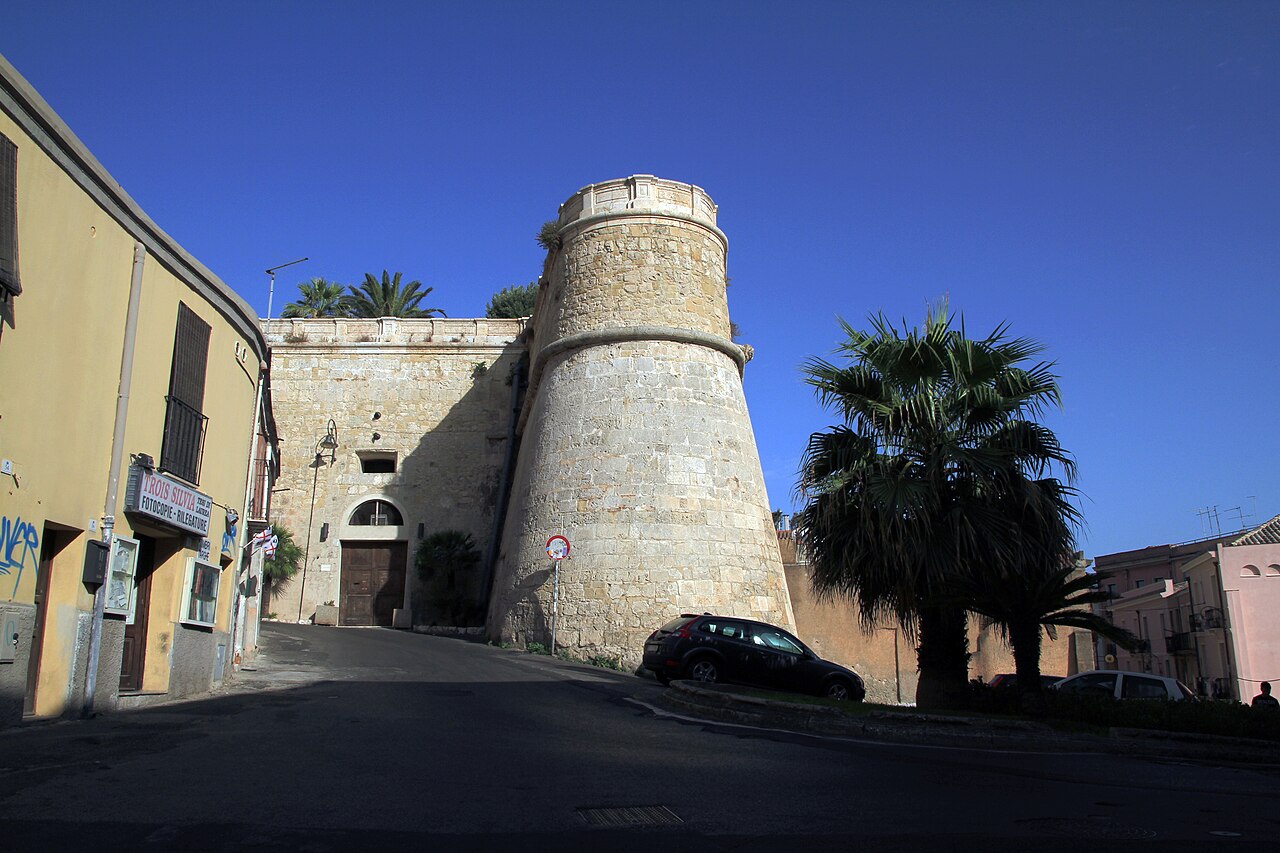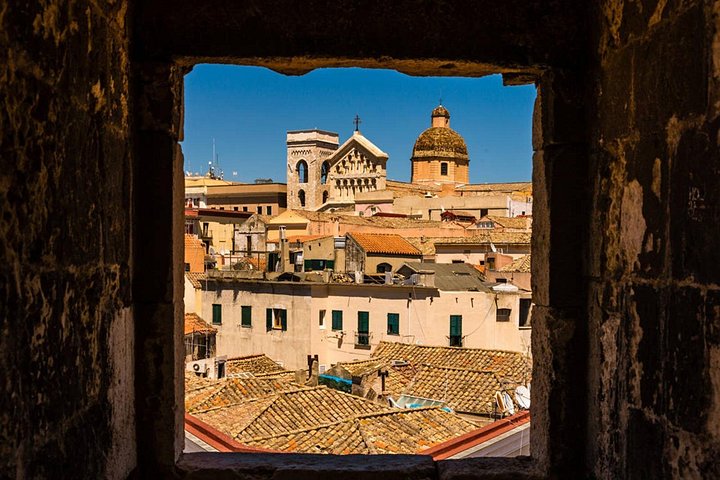
Castello is the reason Cagliari feels like a fortress that grew a city. The district sits on a limestone hill above the port, ringed by the walls and towers that Pisan and later Aragonese rulers built to hold the island's capital. Inside, the lanes are narrow, the palazzi are pale gold and every few streets open onto a terrace with the Gulf of Angels laid out below. Two slender towers, San Pancrazio and the Elephant Tower, still guard the old gates, and the cathedral of Santa Maria dominates the upper square with a facade that was rebuilt in the twentieth century in Pisan Romanesque style. Much of the old quarter is pedestrian, which makes it a good place to walk rather than ride. A guided walking tour is the easiest way to read it, because the district has no single headline monument. The guide links the cathedral, the viewpoints, the former university buildings and the surviving bastions into one story, and points out details you would walk past alone.
What you see
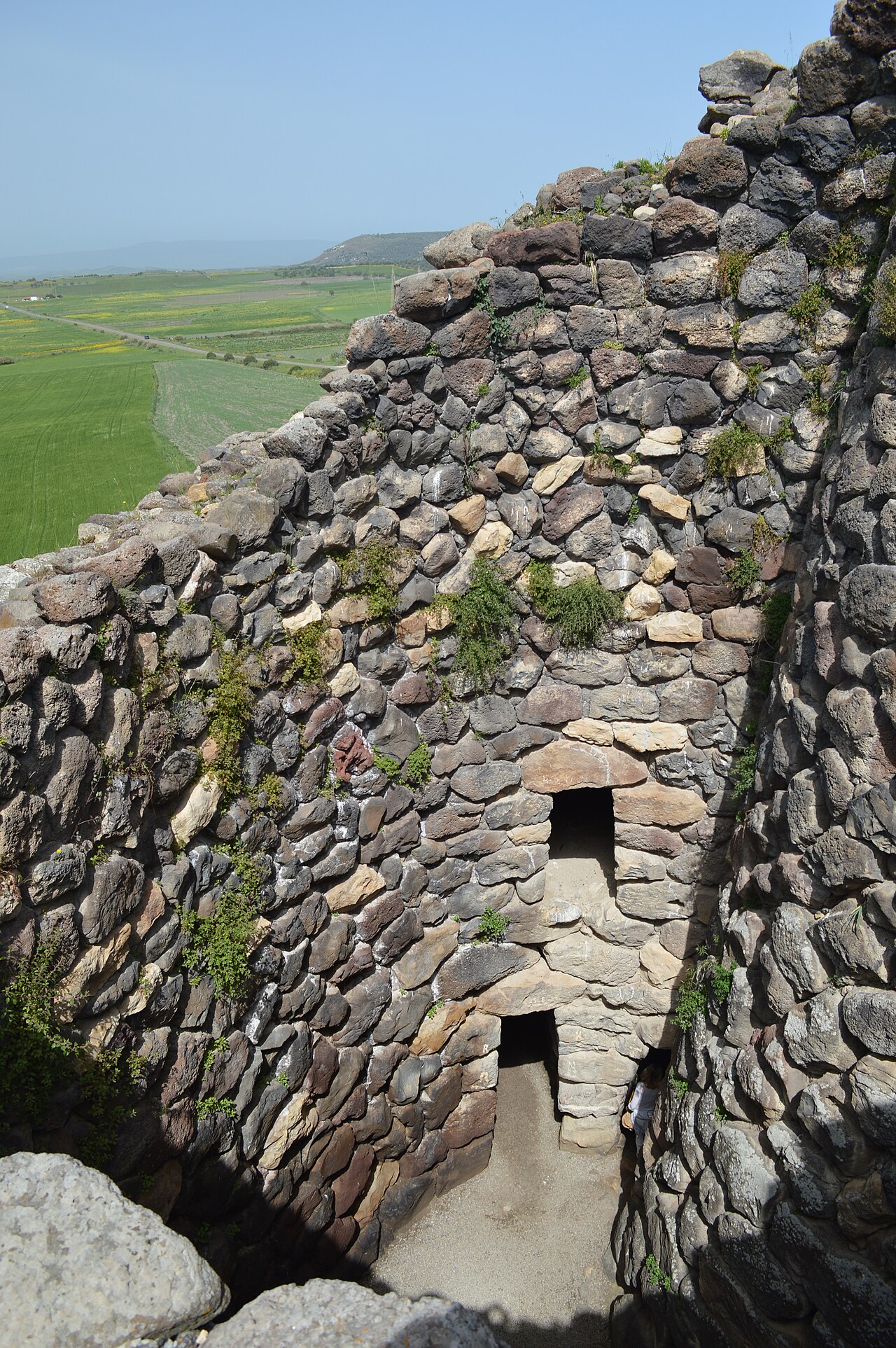
Castello rises steeply from the Marina and Stampace districts, and the best way up is on foot, by the stairs and lanes that climb from the Bastione di Saint Remy. At the top, the Cathedral of Santa Maria sits at the centre of a small square, and the so-called Citadel of Museums on the northern edge holds the national archaeological museum, where the Bronze Age Giants of Mont'e Prama are among the most talked-about exhibits. The city walls and towers frame the streets, and the terraces along the ramparts give long views over the port, the lagoons and the Sella del Diavolo headland.
Choosing how to do it
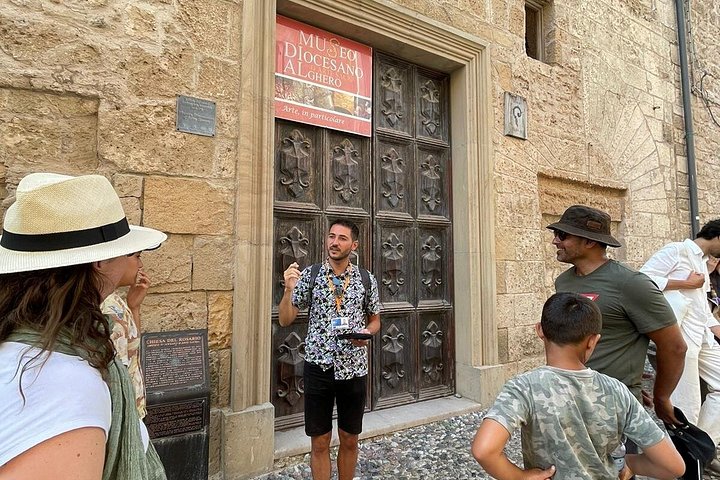
A walking tour of the old town suits a first visit, because the layout is confusing and the history spans Phoenician, Roman, Pisan, Aragonese and Savoy rule. Tours usually run in the morning or late afternoon and finish within a couple of hours. Wear shoes with grip, since the stone lanes are polished and steep, and carry water in warm weather. Museums and churches keep their own opening hours, which are shorter in winter, so check before you plan to go inside.
When to go
Castello is pleasant all year. Winter days are mild and clear, crowds are thin and the light on the pale stone is excellent. Summer afternoons are hot and the lanes hold the heat, so start early. Combine the walk with a late lunch in the Marina district below, where the markets and trattorias are, and finish at sunset on the Bastione di Saint Remy terrace.
What to expect
The experience
A guided walk through the lanes, squares and ramparts of the hilltop old town, usually in a small group and in a couple of languages depending on the departure.
Best time
Morning for cooler air and soft light, or late afternoon to finish on a terrace at sunset.
How long
Plan two to three hours including stops at the viewpoints and the cathedral square.
Tips
Wear shoes with good grip for the steep, polished stone, and check church and museum opening hours if you want to go inside after the tour.
Quick picks
- Best for
- First-time visitors who want the story of Cagliari in a single, walkable loop.
- Families
- Fine for school-age children who can handle hills and stairs; skip it in the midday heat.
- Couples
- The late-afternoon walk that ends at a rampart terrace is the romantic version.
- Pair with
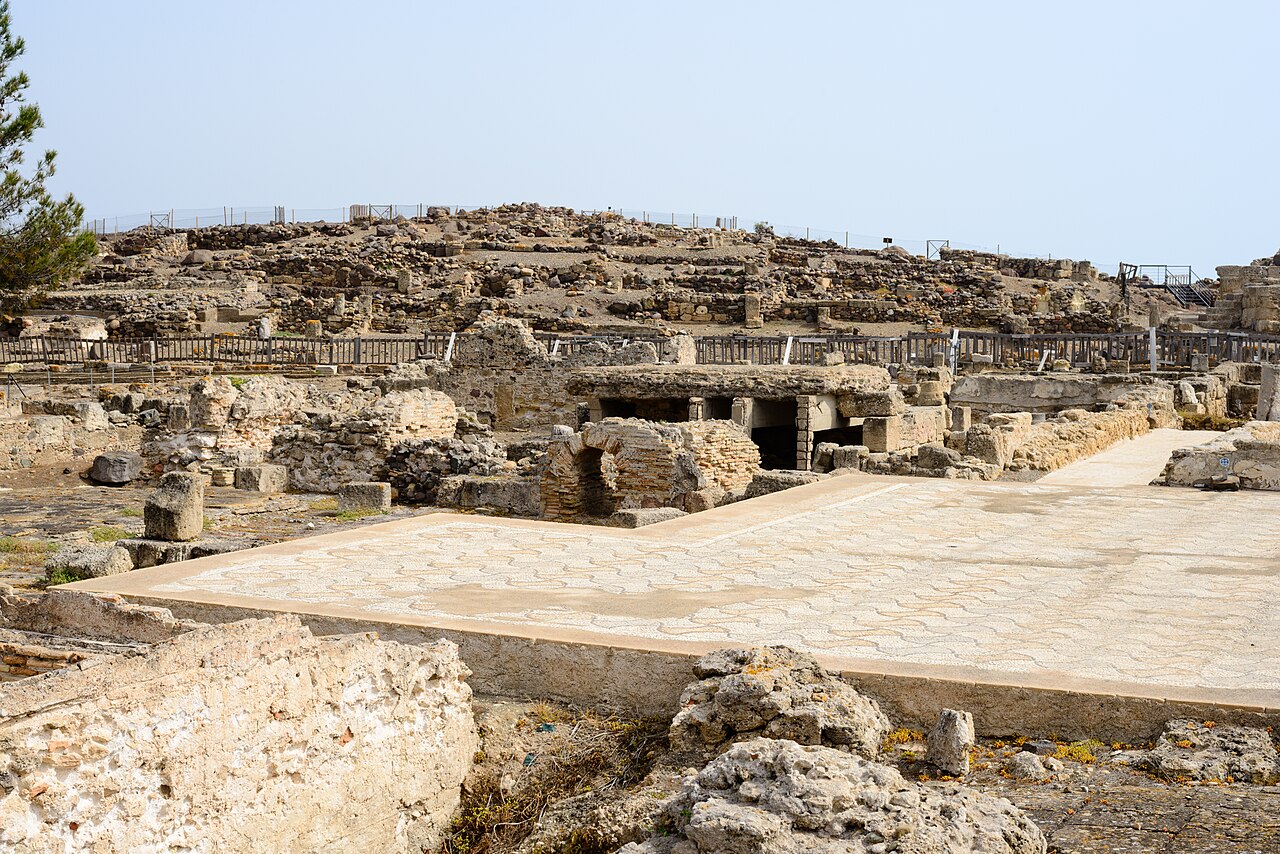
- The Bastione di Saint Remy, Poetto beach for a sunny winter stroll, or the Roman ruins of Nora.
- Time needed
- Half a morning, with extra time if you add the archaeological museum.
Good questions
Is Castello hard to walk?+
The district is on a steep hill, so expect stairs and slopes on uneven stone. Take the climb slowly, or start at the top and walk down.
Do I need a guide?+
No, the quarter is free to wander, but a guide explains the layers of Pisan, Aragonese and Savoy history that the streets do not label. Many visitors find it helpful on a first trip.
What are the main sights inside Castello?+
The cathedral, the San Pancrazio and Elephant towers, the rampart terraces and the Citadel of Museums with the archaeological museum. Together they take most of a morning.
Is Castello open in winter?+
Yes, the streets and terraces are open all year, and winter is a comfortable time to walk. Museum and church hours are shorter, so confirm them before you go.
Where can I eat nearby?+
Trattorias in the Marina district below the hill serve Sardinian dishes such as culurgiones and fregola. Try them after the walk, when the lower streets are lively.