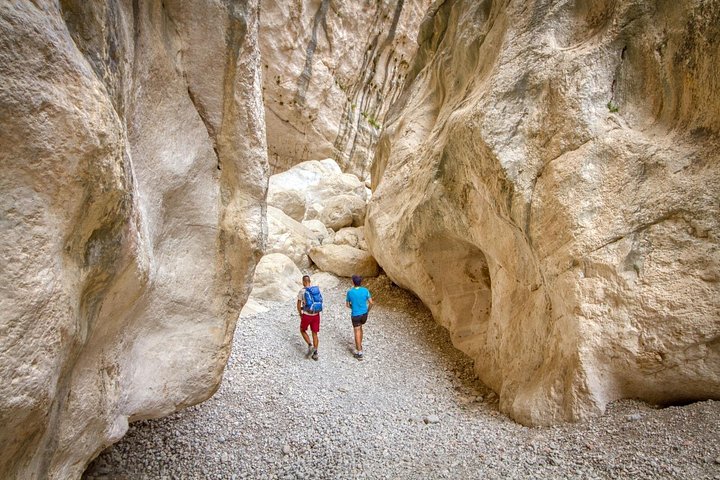
Gola Su Gorropu is the wildest sight in Sardinia's interior. The canyon cuts through the Supramonte massif between Dorgali and Urzulei, and its pale limestone walls rise sheer for hundreds of metres, narrowing in places to a corridor of a few metres wide. The gorge is about one and a half kilometres long, and the floor is a jumble of boulders carried down by a seasonal river. The sense of scale is the attraction: you stand at the bottom and look up at a thin strip of sky. Getting there takes a hike. The most common approach starts at the Genna Silana pass on the SS125 road and descends a marked trail, with the walk taking around an hour each way. Other routes are longer and demand more experience, so most visitors join a guided hike that handles the route, the safety and the explanation.
What you see
A deep, shadowed corridor with sheer walls, pools and boulders that you climb over, and holm oak and juniper clinging to the slopes above. Rock climbers use the walls, and the area is a protected natural zone with rare plants and wildlife. Within the gorge, the route usually ends at a boulder-choked section beyond which only experienced canyoners go further. The scenery is the point, so expect to take your time with photographs.
Choosing a hike
The guided trek is the sensible choice for most people. Guides know the current conditions, supply guidance on the path and can explain the geology and wildlife. The common route from the Genna Silana side is a moderate walk with a steep descent and ascent, while longer routes from the north and south are demanding and take most of a day. Access rules are set locally, and conditions can change after heavy rain, so check with your guide.
When to go
Late spring and early autumn are comfortable. Summer is hot, though the gorge itself is cooler. Winter walks are possible in dry spells, but the river can run after rain and some sections may be unsafe, so confirm the day before and be ready to postpone. Wear proper hiking shoes, carry water and a layer, and allow most of a day including the drive from Cala Gonone, Dorgali or Baunei.
What to expect
The experience
A guided hike on a marked trail down to the canyon floor, with time to walk and scramble among the boulders before the climb back up.
Best time
Late spring and early autumn, in dry weather. In winter, hike only after dry spells and confirm conditions with the guide.
How long
Around four to seven hours including the drive and the walk, depending on the route.
Tips
Wear hiking shoes with grip, carry water and a snack, and be ready to cancel or change the route if it has rained heavily.
Quick picks
- Best for
- Active travellers who want a dramatic canyon and are comfortable on rocky trails.
- Families
- Suitable for fit older children; the trail is steep in places and there is no easy shortcut.
- Couples
- A shared adventure day, ending with a meal in Dorgali or Cala Gonone.
- Pair with
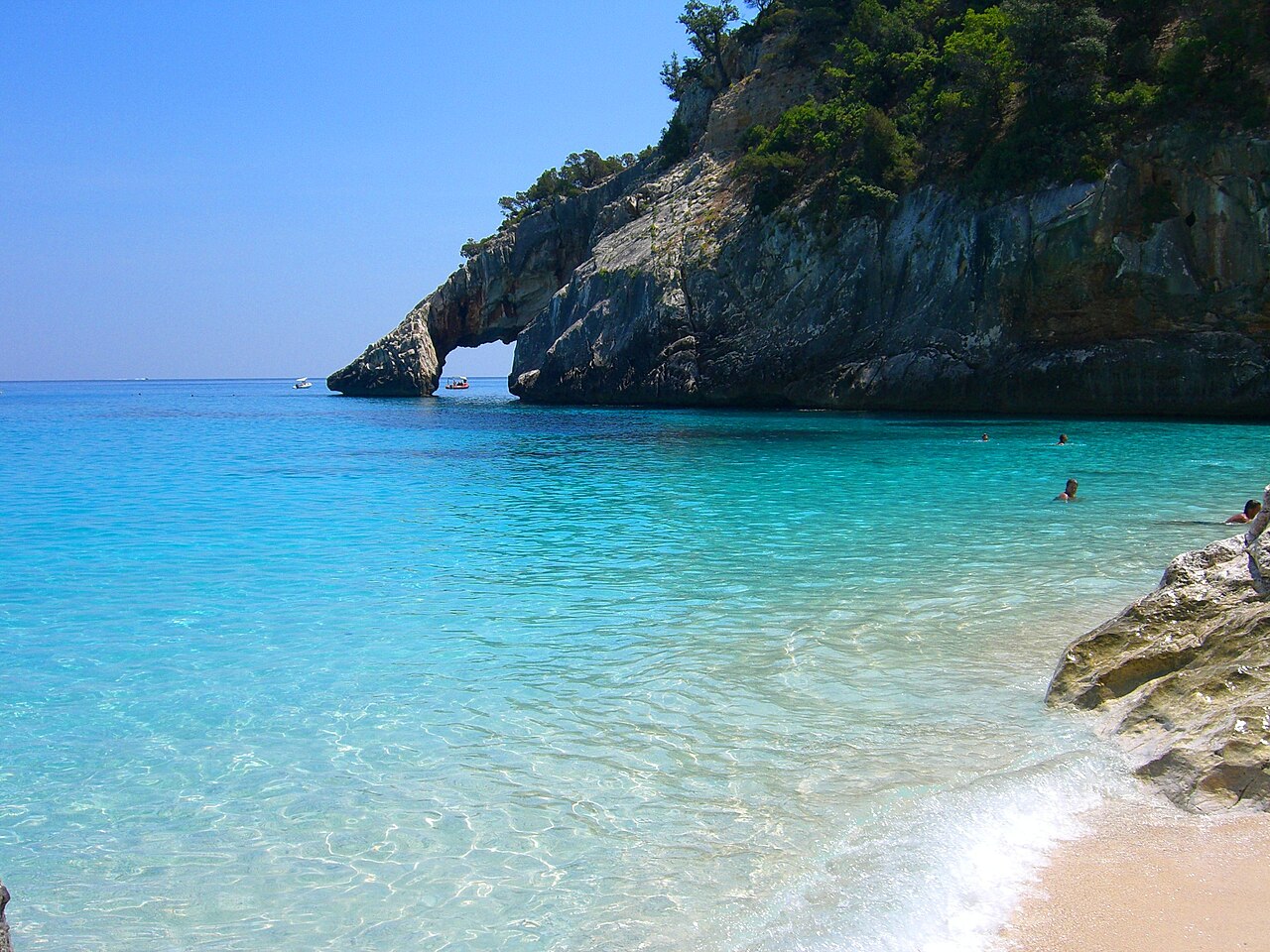
- Cala Goloritzé, the Aquarium at Cala Gonone or a Dorgali lunch.
- Time needed
- A full day with transfers.
Good questions
How deep is Gorropu canyon?+
Its limestone walls rise for hundreds of metres in places, which is why it is often described as one of Europe's deepest canyons. The gorge is about one and a half kilometres long.
How hard is the hike?+
The usual route from the Genna Silana pass is moderate, with a steep descent and ascent of around an hour each way. Longer routes from the north and south are demanding.
Do I need a guide?+
Local rules and conditions apply, and guides are recommended or required on some routes. A guided hike also adds safety and explanation.
Can I visit in winter?+
Yes in dry weather, but rain can raise the river and make parts of the canyon unsafe. Confirm conditions the day before.
Where do hikes start?+
Most start near the Genna Silana pass on the SS125 between Dorgali and Baunei, or from the Urzulei side. Check the meeting point when you book.