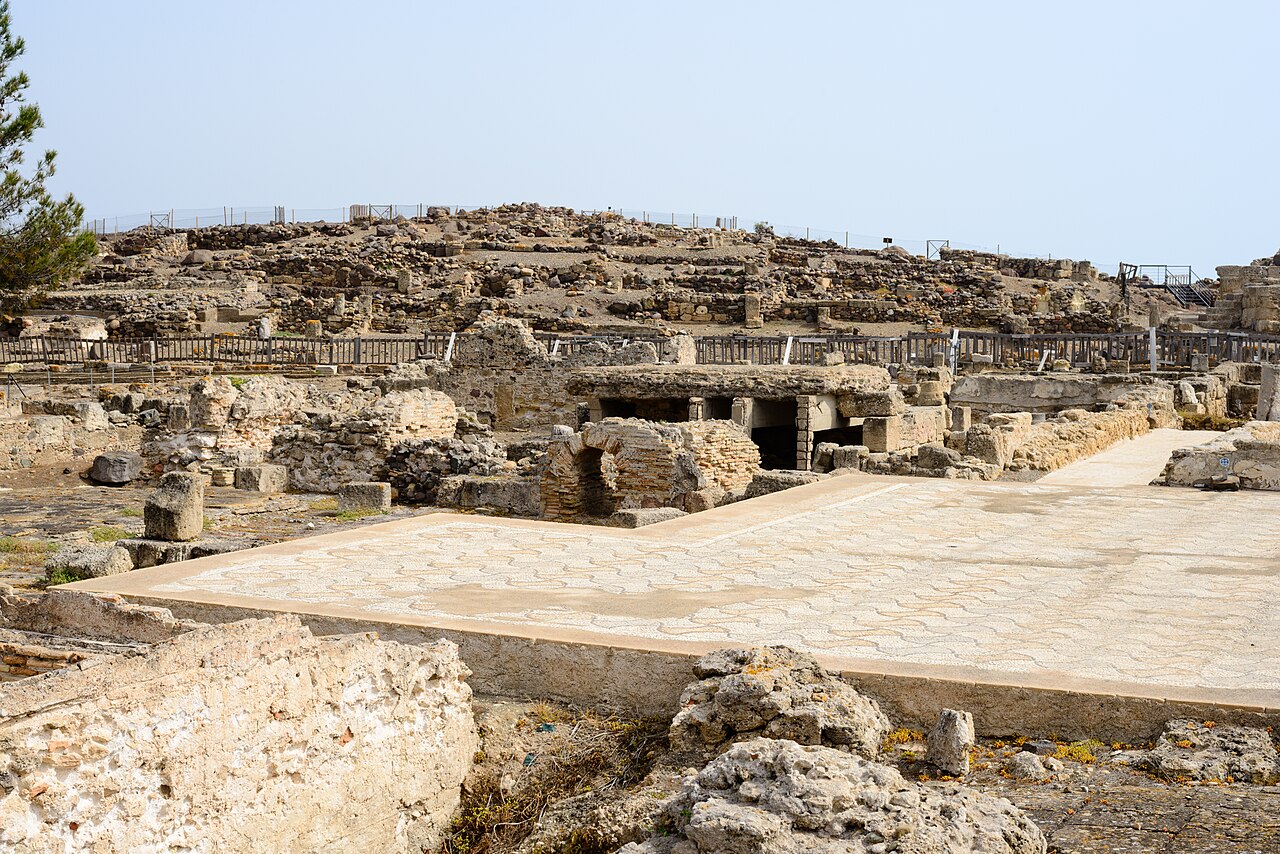
Nora is the best place to see how the Mediterranean world met Sardinia. The Phoenicians founded the city in the late eighth or seventh century BC on a small headland between the sea and a lagoon, and later Carthaginians and Romans built on it. What remains is a compact archaeological area where streets, a forum, temples, baths and houses sit within sight of the water. The Roman theatre, dating from the early first century BC, is among the best-preserved buildings, and the baths and villas hold mosaics from the second to fourth centuries AD, including a famous Nereid floor. The site lies about thirty kilometres southwest of Cagliari, near the town of Pula, and is easy to reach by car or on a guided half-day trip. A guide brings the ruins to life by explaining which layers belong to which culture and how the port functioned.
What you see
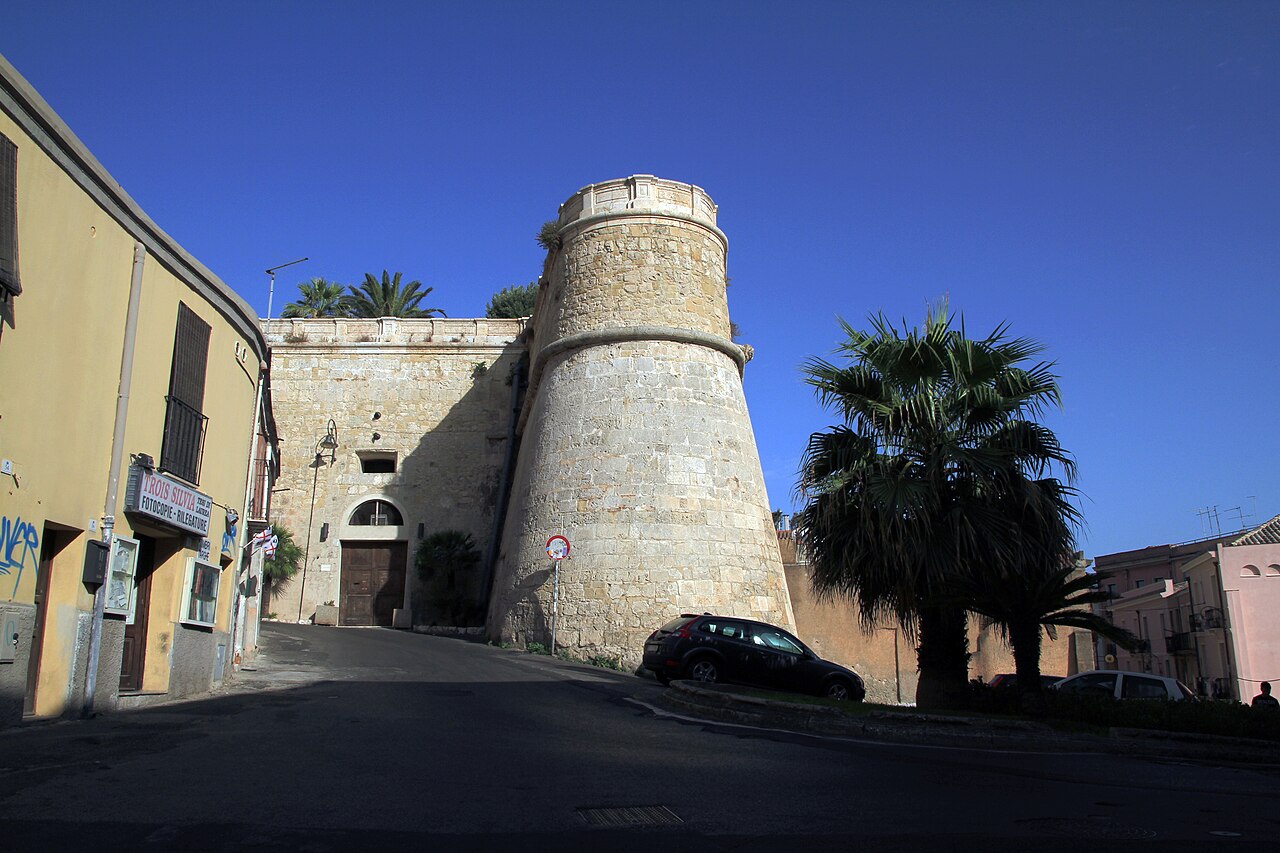
A cluster of low ruins on the headland, framed by the sea on three sides. The theatre is the centrepiece, and the baths, the forum and the mosaic floors fill out the picture. Parts of the city are now below water, which shows how the coastline has shifted. A Spanish-era watchtower stands nearby, and the civic archaeological museum in Pula holds finds from the excavations. A free audio guide app is available, and visitor rules ban walking on walls and mosaics and entering in swimwear.
Choosing a tour
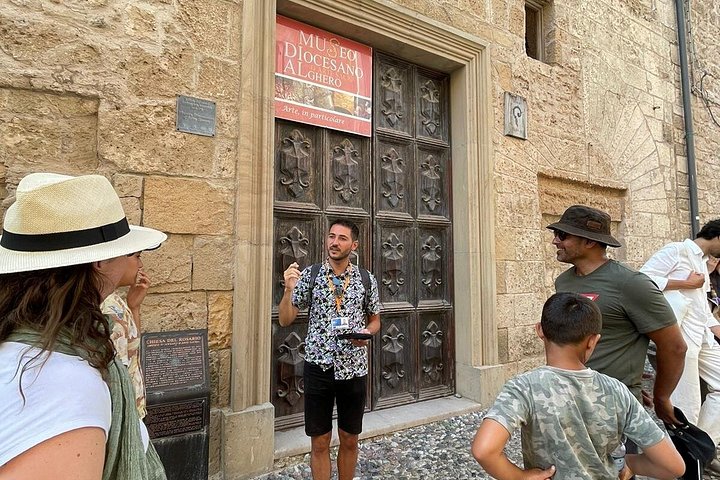
Independent visitors can buy a ticket at the entrance, but a guided tour is the best way to understand a site where the ruins are fragmentary. Half-day trips from Cagliari include the transfer and a guide, which suits those without a car. Combined tickets with the Saline Conti Vecchi flamingo saltworks have been offered, a useful pairing for a nature-and-history day. Opening hours vary by season, so check the timetable on the managing foundation's website.
When to go
The site is open to visitors all year in principle, with shorter hours in winter. Spring and autumn are comfortable, summer is hot and exposed, and winter can be windy but clear. Allow two hours, and consider continuing along the coast to the beaches of Chia and Pula for a walk.
What to expect
The experience
A guided visit through the streets, theatre, baths and mosaics of a Phoenician and Roman port city, usually as a half-day trip from Cagliari.
Best time
Spring and autumn for mild weather, or a clear winter morning when the site is quiet.
How long
About two hours on site, plus travel time from Cagliari.
Tips
Bring a hat and water, wear closed shoes and do not enter in swimwear or walk on walls and mosaics.
Quick picks
- Best for
- History fans who want Phoenician and Roman ruins by the sea.
- Families
- The open layout and sea views suit curious children, though there is little shade.
- Couples
- A quiet winter or spring visit with lunch in Pula afterwards.
- Pair with
- The Chia beaches, Su Nuraxi at Barumini or the Conti Vecchi flamingo saltworks.
- Time needed
- A half day from Cagliari.
Good questions
Who founded Nora?+
The Phoenicians founded it around the end of the eighth or in the seventh century BC. Carthaginians and later Romans developed it into a major port.
What can I see at Nora?+
A Roman theatre, baths, a forum, temples and houses with mosaic floors, all set on a seaside headland. Some parts of the ancient city lie underwater.
How far is Nora from Cagliari?+
About thirty kilometres southwest, close to the town of Pula. It is easy by car or on a guided half-day tour.
Is there an audio guide?+
A free audio app is available at the site. A live guide adds depth for a fragmentary city like this one.
Is Nora worth visiting in winter?+
Yes, it is quiet and often clear, though hours are shorter and the headland can be windy. Check the timetable for your date.