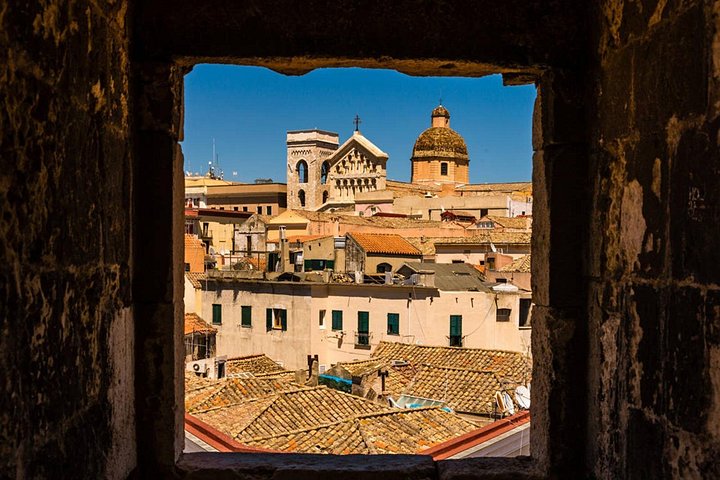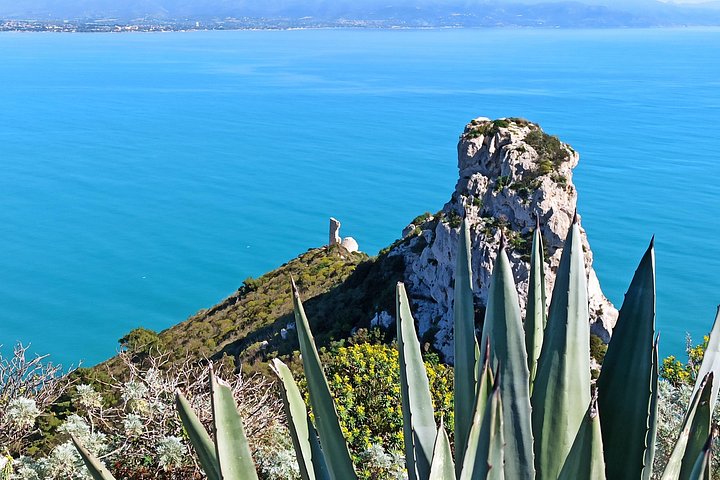
The Sella del Diavolo, or Devil's Saddle, is the rocky headland that closes the eastern end of Cagliari's bay and separates the city's harbour beaches from Poetto. Its profile is one of the best known on the island, a long limestone ridge with a dip in the middle that local legend says is the saddle of the devil. The headland is a protected natural area, and its slopes are covered in Mediterranean scrub, with wild olive, rosemary and juniper filling the air with scent. In places the cliffs drop straight to the sea, and caves cut into the rock are popular with boat tours. A walking trail climbs the headland from the Calamosca side and follows the ridge, passing old military remains and an old watchtower before opening to views of the whole gulf. On a clear day you can see the lagoons, the city rising on its hills, and the long line of Poetto beach curving away to the east. With a guide, the hike becomes more than a viewpoint walk, because you learn the legends, the geology and the plants and birds along the way. It is one of the best free-feeling outdoor outings in the capital, and it works in the cooler seasons when the beaches are quiet.
What you see
The trail runs along the spine of the headland and moves through pine and scrub to a series of lookouts. At the top, an old Spanish-era watchtower stands over the ridge, and the views take in both sides of the promontory: the working port and city on one hand, the open sea and Poetto on the other.
Along the way you may spot gulls and other seabirds, and in spring the hillside is dotted with wildflowers. The legend of the saddle comes from a story about a fallen devil, and guides like to tell it on the way up.
Choosing how to do it
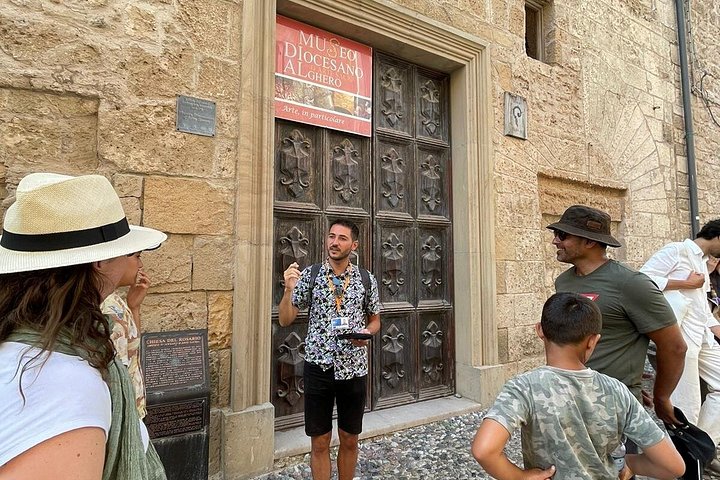
A guided hike usually takes a couple of hours and starts near the Calamosca beach. The route is moderately steep in places and the ground is rocky, so wear shoes with good grip. Independent hikers can follow the trail too, but local guides add context and keep you on the right paths.
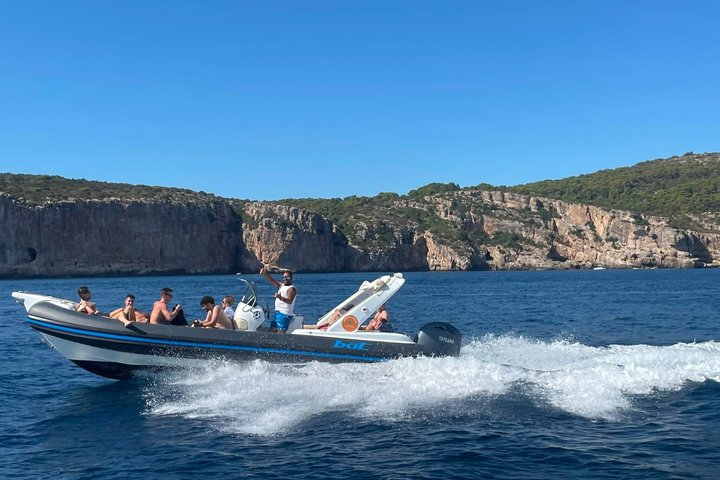
For a different angle, boat tours go around the headland and into its sea caves, and are popular in the warm months, so you can combine both views if your schedule allows. Check conditions on the day, because wind and heat can affect access and comfort.
When to go
The cooler months from autumn to spring are the best time for the hike, with mild temperatures and clear views. In summer, start at sunrise or go late in the day to avoid the heat, because the ridge has little shade. Bring water, sun protection and a windbreaker, since the headland is exposed. Sunset from the ridge is spectacular, but plan your descent before dark. Finish with a swim, a walk on the beach at Calamosca or an aperitivo back in town.
Good to know
The headland is a protected area, so stay on the paths, take your rubbish with you and never light fires. Cameras are essential, but so is a good pair of sunglasses on bright days, because the pale limestone reflects strongly. If the wind is high, the guide may choose a more sheltered route, which is another reason to go with someone who knows the ground well.
What to expect
The experience
A guided walk along the headland trail from the Calamosca side, with stops at lookouts and the old watchtower and stories about the legend of the saddle.
Best time
Autumn to spring for mild temperatures, or sunrise and late afternoon in summer.
How long
Plan around two to three hours including photo stops.
Tips
Wear shoes with grip, bring water, sun protection and a windproof layer, and finish before dark.
Quick picks
- Best for
- Active visitors who want a big view and a bit of nature without leaving the capital.
- Families
- Suitable for children who enjoy a steady uphill walk; there is little shade and some steep, rocky sections.
- Couples
- Sunset on the ridge is the romantic choice, with a drink back in town afterwards.
- Pair with
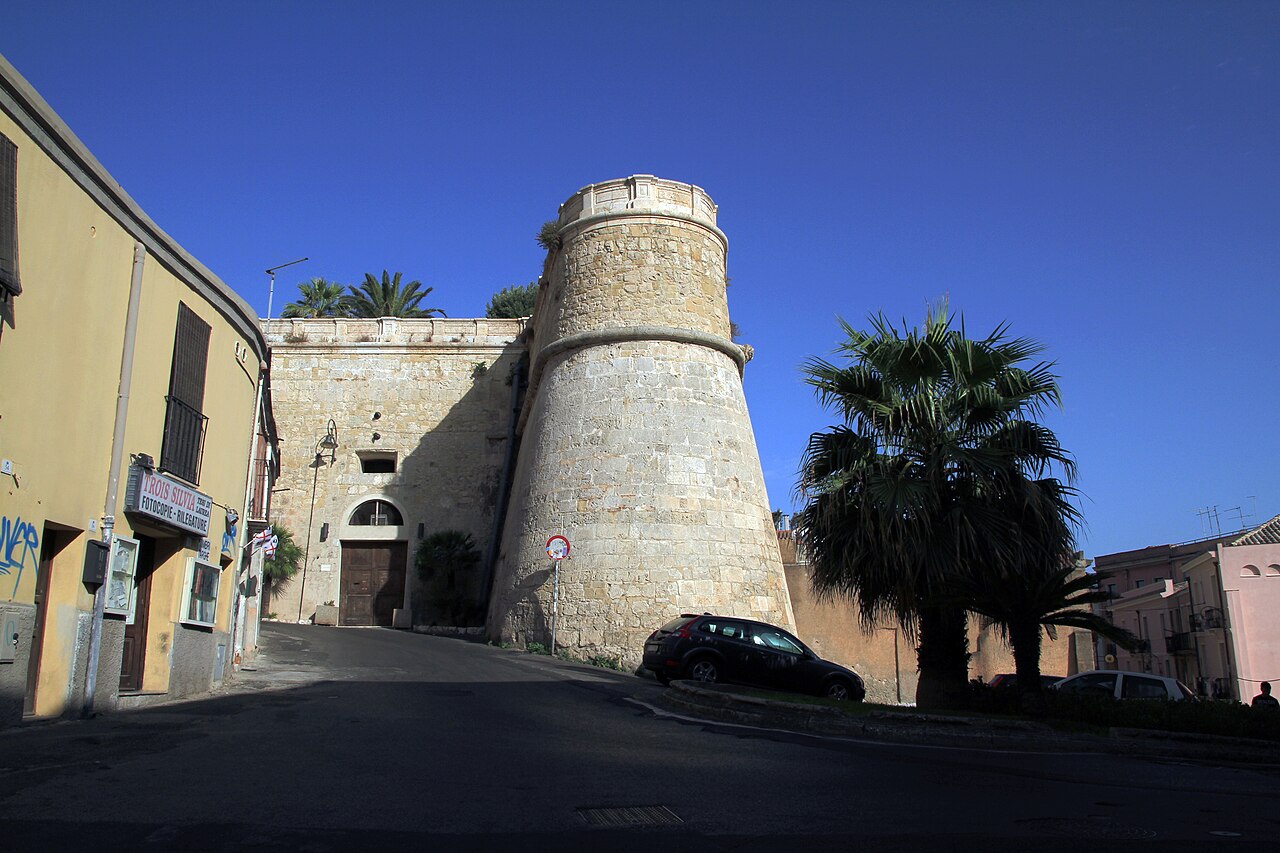
- A beach walk at Poetto, the Castello old town or the Saint Remy Bastion.
- Time needed
- Half a morning or a late afternoon.
Good questions
Why is it called the Devil's Saddle?+
The ridge has a dip in the middle that looks like a saddle, and a local legend links it to a fallen devil. Guides usually tell the story on the walk.
How hard is the hike?+
It is moderate. The path climbs steadily and the ground is rocky in places, but it does not require special skills. Good shoes and water are enough for most people.
Can I do it without a guide?+
Yes, the trail can be walked independently, though a guide adds the legends, nature notes and route knowledge. Check conditions before you set out.
Is it better to hike or take a boat?+
The hike gives you the views from above, while the boat shows the cliffs and sea caves from below. Boat trips are mainly a warm-season option, so the hike is the year-round choice.
When is the best time to go?+
Autumn through spring is ideal. In summer go at sunrise or late afternoon, since there is little shade on the ridge.