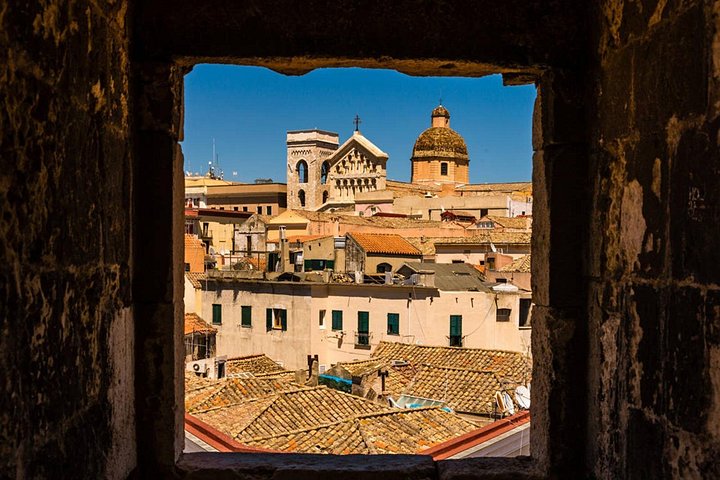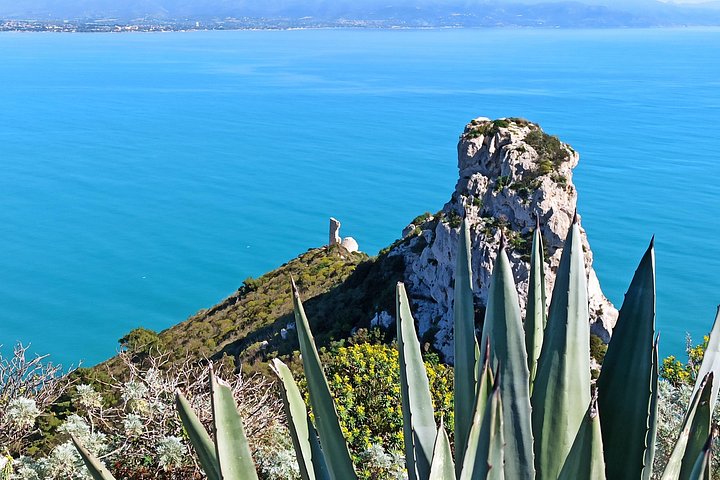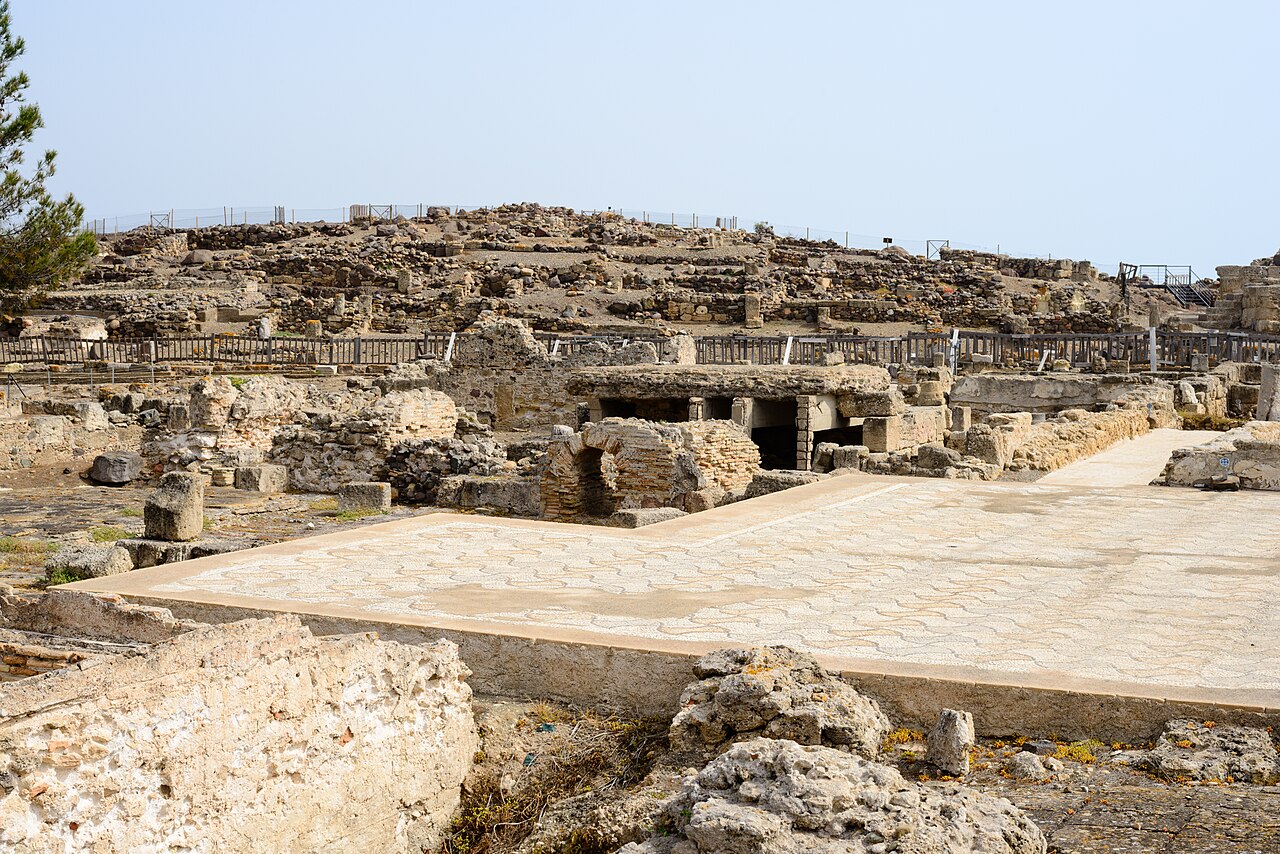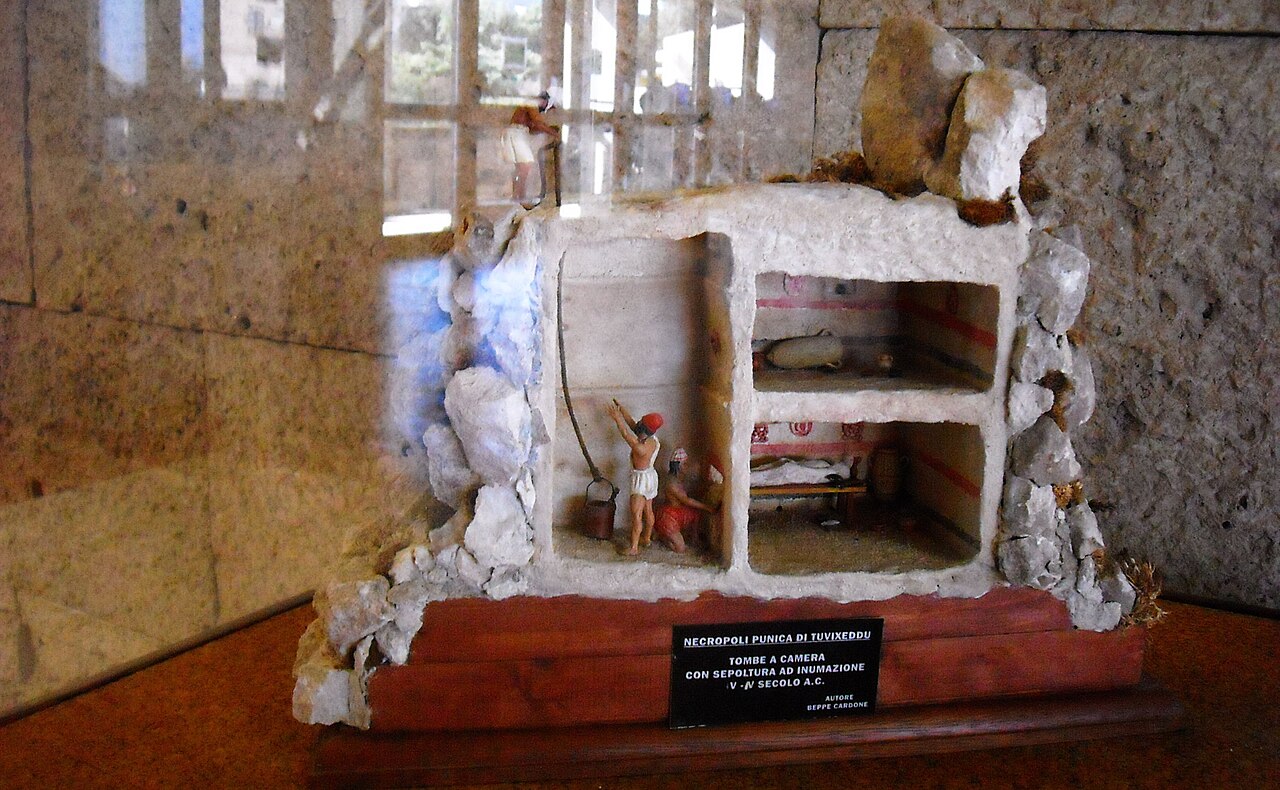
Tuvixeddu is the city of the dead that Cagliari built across a limestone ridge on its western side. The Phoenicians and then the Carthaginians used the hill as a burial ground for centuries, cutting deep shafts into the rock and hollowing out small chambers at the bottom, where the dead were laid with offerings. The cemetery grew over hundreds of years and is counted among the largest Punic necropolises anywhere in the Mediterranean, with well over a thousand tombs recorded across the hill. Later, Roman burials were added, and a few of them are still beautifully preserved. The site is a surprise for many visitors, because it sits inside the modern city, close to apartment blocks and a busy road, yet feels quiet and strangely open once you step onto the ridge. Pale rock, wild olive and scrub frame the shafts, and from the upper paths you look out over the lagoons and the rooftops of Cagliari. A guided visit is the best way to read what you are seeing, because the tombs look like a field of holes until someone explains the shafts, the chambers and the painted details that survive in a handful of them.
What you see
The heart of the site is the park on the hill, where the Punic tombs open in the rock in rows, some with their access shafts still clear and some with traces of steps cut into the walls. A few chambers keep fragments of painted decoration, and the best known of them, often called the Tomb of the Ureo, takes its name from the Egyptian cobra symbols that decorate it.
Below the hill, along the Viale Sant'Avendrace, you can also find a remarkable Roman tomb carved into the rock and known as the Grotta della Vipera, covered in Latin verses written for a wife by her husband. Together the two sites tell a long story of how the city remembered its dead.
Choosing how to do it
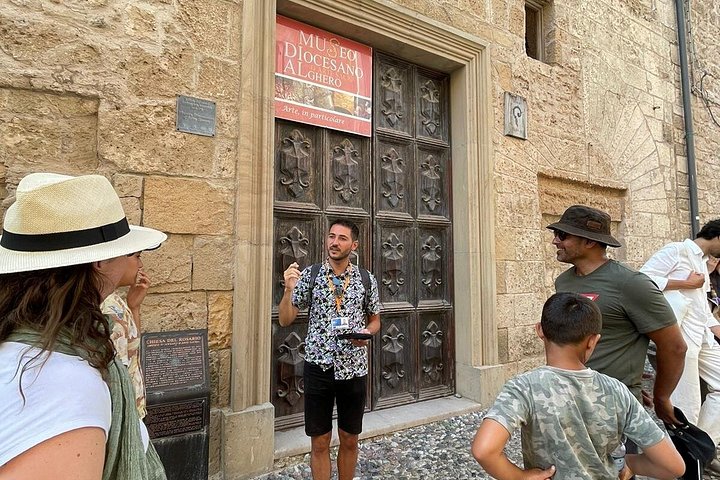
Tuvixeddu rewards a guide, because the signage is limited and the meaning of the shafts, chambers and offerings is not obvious on your own. A guided tour typically takes about two hours and covers both the Punic park and the story of the Roman tombs, with the guide setting the scene in the cultural life of ancient Carales.
Access to some tombs depends on the day and on conservation work, so check what is open before you go and be ready for a change of plan. Wear sturdy shoes, because the paths are rough and the limestone can be slippery after rain.
When to go
This is an outdoor site with little shade, so spring and autumn are the most comfortable seasons, and winter days are usually mild enough for a pleasant visit. In midsummer, go in the early morning or late afternoon and carry water. The late-afternoon light on the pale rock is the most atmospheric, and you can finish with a walk down toward the Marina district for dinner. Pair it with the Castello old town for a full day of Cagliari's layered history, from Phoenician graves to Pisan towers.
Good to know
Bring a charged phone for photographs, because the shafts and chambers make dramatic pictures, and keep to the marked paths to protect the fragile rock. If you enjoy the site, ask your guide about the archaeological museum in Castello, where objects found in tombs like these, from amulets to pottery, are displayed, so you can connect what you saw underground with the people who were buried there.
What to expect
The experience
A guided walk across the necropolis hill, stopping at shaft tombs, painted chambers and the Roman tomb carved into the rock, with the guide explaining burial customs.
Best time
Spring and autumn for mild air, or late afternoon in summer when the heat fades and the rock turns golden.
How long
Plan about two hours on site, plus travel time from the centre by taxi or bus.
Tips
Wear sturdy shoes for rough paths, bring water and sun protection, and check which tombs are open on the day of your visit.
Quick picks
- Best for
- History lovers who want something beyond the usual old town loop and enjoy a quiet, little-visited site.
- Families
- Good for curious older children who like caves and tombs; the paths are uneven and there is little shade.
- Couples
- A late-afternoon visit with the city and lagoons spread below is atmospheric and unhurried.
- Pair with
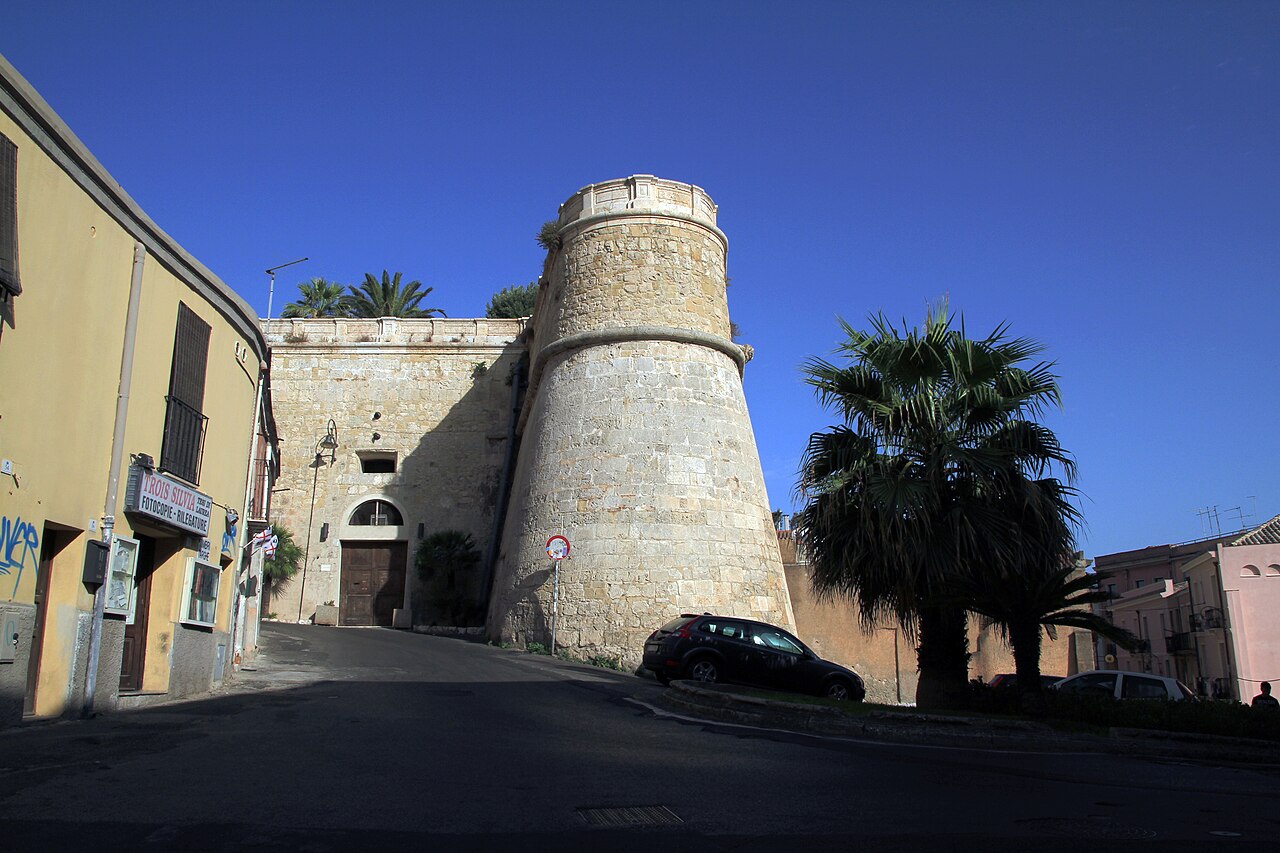
- The Castello old town, the Saint Remy Bastion and a dinner in the Marina district.
- Time needed
- Half a morning or a late afternoon.
Good questions
What is Tuvixeddu?+
It is a large ancient burial ground on a limestone hill in Cagliari, used by Phoenician and Carthaginian communities and later by Romans. It is counted among the biggest Punic necropolises in the Mediterranean.
Do I need a guide at Tuvixeddu?+
It is strongly recommended. The tombs are easy to walk past without understanding them, and a guide explains the shafts, chambers, offerings and the few painted details that survive.
How long does a visit take?+
A guided visit usually takes about two hours, depending on the route and on which tombs are open on the day.
Is the site accessible for everyone?+
Not fully. The paths are rough and sloped, with steps and uneven rock, so it suits people who are comfortable on trails. Ask the guide about the easiest route if mobility is a concern.
What is the best season to visit?+
Spring and autumn are the most comfortable, and winter is usually pleasant on sunny days. In summer, choose early morning or late afternoon because there is little shade.