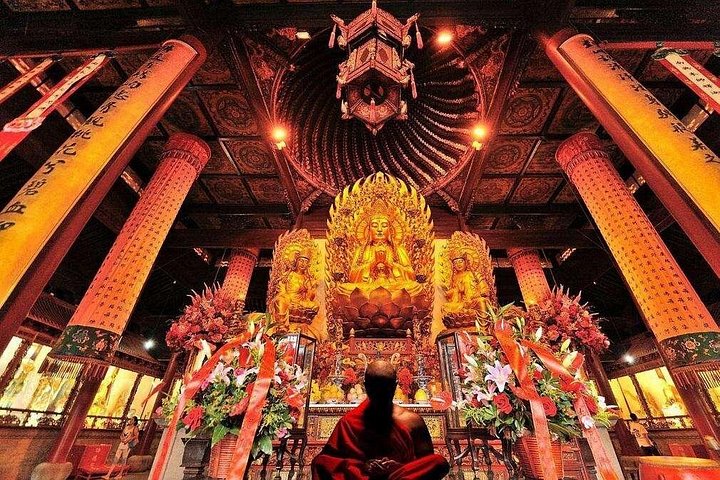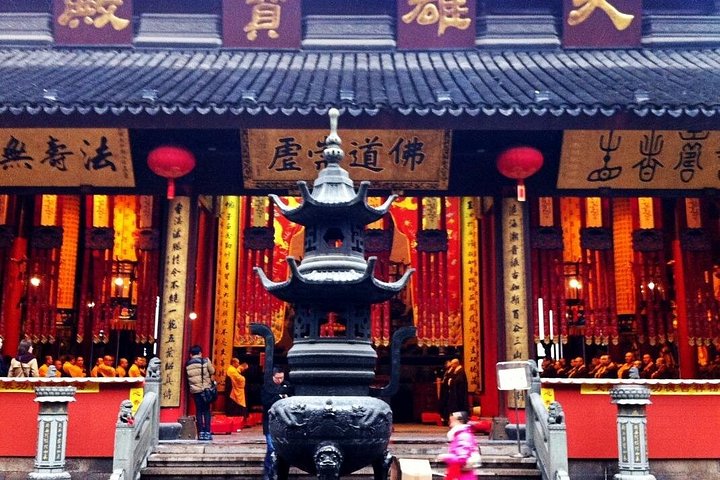
The Jade Buddha Temple is one of the few places in central Shanghai where the pace drops and the air smells of incense rather than traffic. It is an active Chan Buddhist temple, founded in the 1880s to house two jade Buddha statues that a monk named Huigen brought back from Burma. The complex you see today is a later rebuilding in the style of the Song dynasty, with sweeping tiled roofs, red walls, golden eaves and a sequence of courtyards climbing gradually from the entrance gate to the main halls. Monks live and work here, and you will see locals lighting incense and kneeling at the altars alongside tour groups, which gives the visit a living quality that museum temples lack. The two statues are the reason for the name and the reason most visitors come. A seated Buddha in milky white jade, deep in meditation, is shown in a dedicated hall on an upper floor, with a sense of stillness that is surprisingly strong even when the room is crowded. A smaller reclining Buddha, shown at the moment of entering nirvana, lies in a separate hall. Photography of the jade figures is generally not allowed, so you have to look rather than record. The earlier halls hold large gilded images of the Heavenly Kings and the Three Buddhas, and a courtyard with a bell and a drum brings the layout together. The temple also has a vegetarian restaurant, which is a pleasant way to extend the visit.
The temple rewards a slow visit. Enter by the main gate and follow the central axis through the Hall of Heavenly Kings, where four fierce guardians face the visitor, and then the Grand Hall with its three golden Buddhas. The jade statues are in the smaller buildings at the back, and the route is usually marked so that you pass them in order.
Watch how worshippers behave, as it helps you do the same: you can walk through freely and look quietly, but avoid pointing at the statues, keep your voice low and do not step on thresholds.
Working the visit
The temple charges a modest admission, with an extra ticket for the jade Buddha hall, and it is open daily during daytime hours. Arrive soon after opening to avoid the busiest periods, and note that the first and fifteenth days of the lunar month and the main festivals bring crowds of local worshippers, which is a memorable sight though not a quiet one.
Dress modestly with shoulders and knees covered, and take off hats inside the halls. A guided half-day tour that combines the temple with the old city is a good way to learn the background, and many private tours do exactly that, using a driver to cover the distance between sights.
Practical notes
The temple stands in Putuo district, west of the city centre, so it is easiest to reach by taxi or ride-hailing, though metro lines in the area can also get you close for a short walk. A visit takes about an hour, and a little longer if you want to eat in the vegetarian restaurant.
The neighbourhood around the temple is residential and local, with little tourist infrastructure, so plan to combine it with a nearby sight rather than staying for a meal on the street. Check the opening hours and any ticketing changes close to your date, and carry some small change in case you want to buy incense or make an offering.
What to expect
The experience
A guided half-day that combines the temple, with its two jade Buddha statues, with a visit to the old city, using a private driver and guide.
Best time
Soon after opening on a weekday; festival days and the first and fifteenth of the lunar month are busier but more atmospheric.
How long
About three hours for the tour, with an hour or so inside the temple itself.
Tips
Dress modestly, keep your voice low, do not photograph the jade statues and carry a little small change for incense.
Quick picks
- Best for
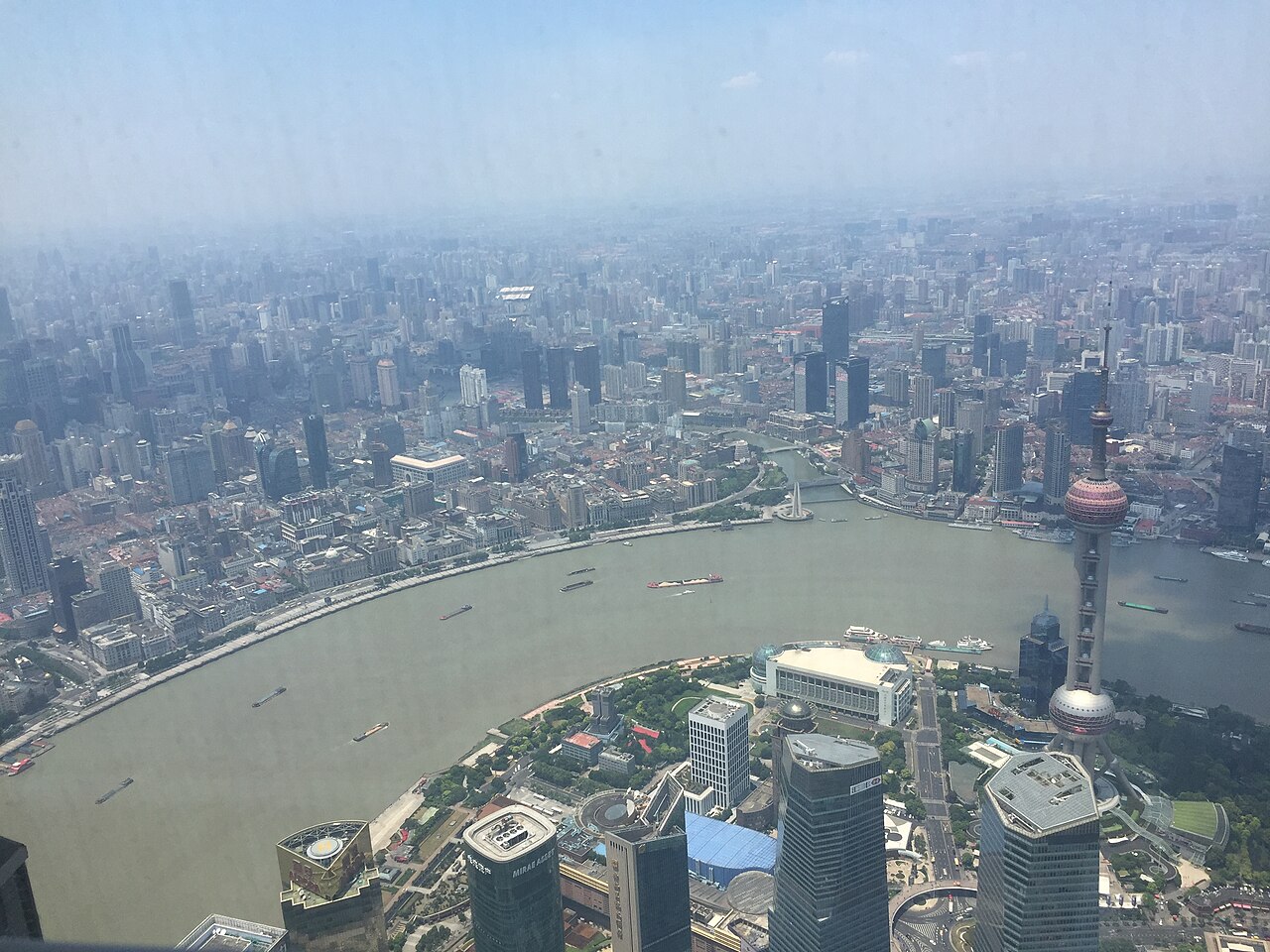
- Visitors who want a calm, living contrast to the skyline and a glimpse of Chinese Buddhist practice.
- Families
- Fine for older children who can be quiet; younger ones may tire of the halls, so keep the visit short.
- Couples
- A peaceful morning, followed by lunch in the vegetarian restaurant or a walk in the old city.
- Pair with
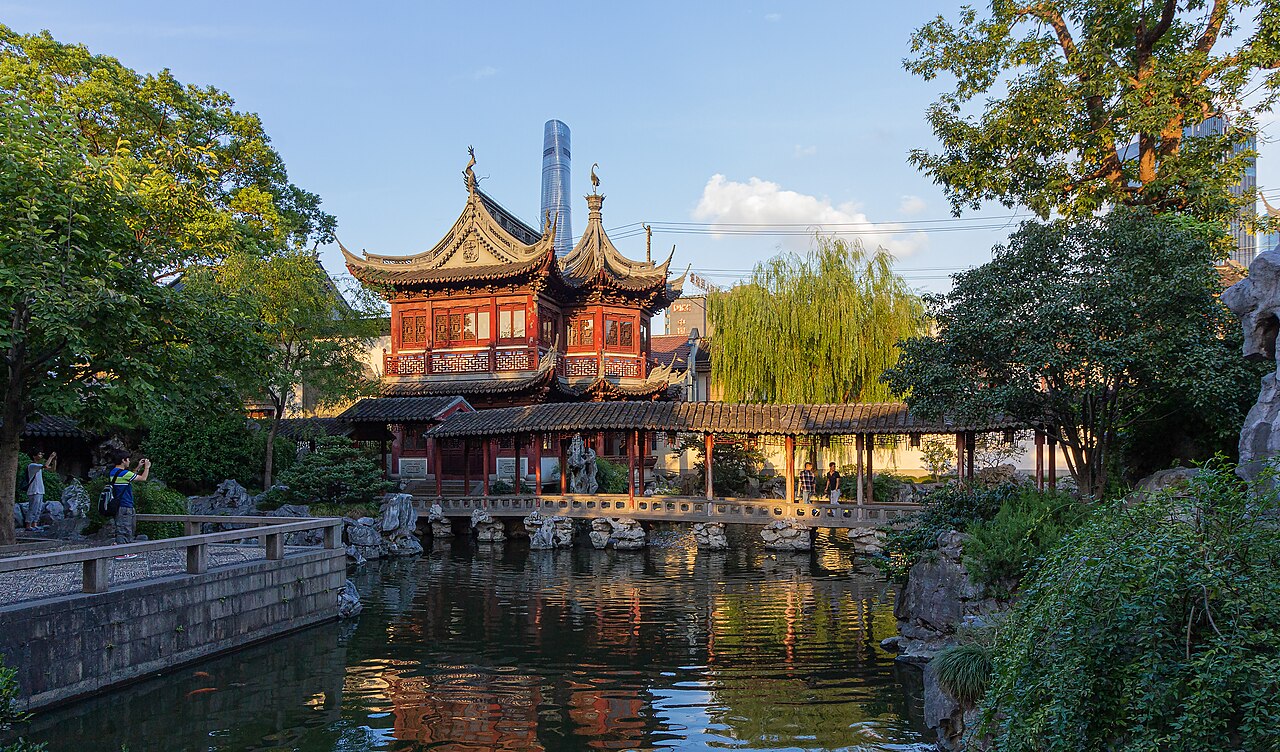
- Yu Garden and the old city, which many guided tours combine with the temple.
- Time needed
- One to three hours depending on whether you join a tour.
Good questions
What is special about the Jade Buddha Temple?+
It houses two jade Buddha statues, one seated and one reclining, that were brought from Burma in the 1880s. It is also an active temple where monks live and worshippers come daily.
Can I take photographs?+
Photography of the jade Buddhas is generally not allowed, though you can usually photograph the courtyards and exteriors. Look for signs in each hall.
What should I wear?+
Cover your shoulders and knees, and remove your hat inside the halls. Comfortable shoes are helpful because there are many steps and courtyards.
How long does a visit take?+
About an hour inside the temple, or around three hours as part of a guided half-day that includes the old city.
How do I get there?+
Taxi or ride-hailing is easiest, as the temple is in Putuo district west of the centre. Metro lines in the area can also get you close for a short walk.