Siem Reap is much more than a base for temples, and its food scene has grown into one of the best in Cambodia. Between the market stalls, the family-run restaurants, the cafe courtyards and the lively streets around the Old Market, you can eat very well at almost any budget. Here is how to get the most from it, starting with what to order and ending with practical advice for eating safely and well.
The dishes to try
Fish amok is Cambodia’s national dish, a mild, fragrant curry of freshwater fish steamed in a banana-leaf cup with coconut milk and kroeung, a spice paste of lemongrass, galangal, turmeric and kaffir lime. Beef lok lak, marinated beef stir-fried and served on lettuce with a lime and black pepper dip, is another classic. Look for khmer red curry with chicken or beef, green mango salad, fresh spring rolls, stir-fried morning glory and bowls of kuy teav, a pork noodle soup that locals eat for breakfast. Num banh chok, rice noodles topped with a green fish-based curry and fresh herbs, is a morning street food worth finding. For dessert, try fruit with sticky rice, coconut ice cream or the sweet coconut cakes sold by market vendors.
Where to eat
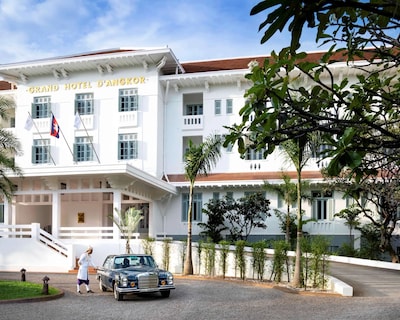
The Old Market area and Pub Street form the busiest part of town, and the alleys around them mix tourist-friendly restaurants with more local places. Pub Street itself is noisy and good for people-watching, with cheap drinks and happy hours; the lanes behind it often have better food and calmer settings. Kandal Village, near the river on the west side, has cafes, boutique shops and relaxed restaurants. Along the river, the Old French Quarter has more elegant dining rooms, including those in the grand hotels. Away from the centre, local neighbourhood restaurants serve Khmer dishes at lower prices, and your hotel or tuk-tuk driver will usually point you to one.
Markets and street food
The Old Market, known as Psar Chas, is the classic place to browse produce, spices, dried fish and crafts, and the stalls at the back serve simple meals. The night markets offer snacks, grilled meats, fresh juices and coconut ice cream in the evening, together with souvenirs and clothes. Street food is part of the experience, but choose busy stalls where food is cooked fresh and served hot, and use your judgement on anything that has been sitting out. If you are unsure, a guided food tour is a good way to taste a variety of dishes with someone who knows the safe and tasty stalls.
Food tours and cooking classes
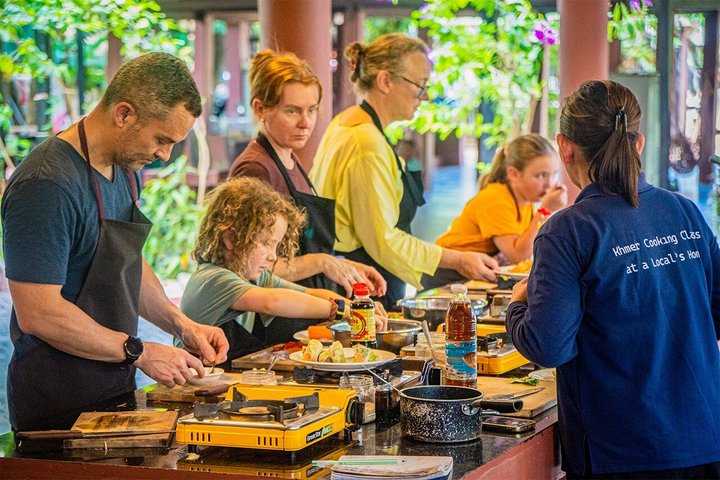
The evening food tour on this site takes you by tuk-tuk to a series of local eateries, with a guide who explains the dishes, and it is a good way to start on your first night. A cooking class is the best way to understand the flavours. The class we link to begins with a market visit and takes place in a local family’s home, where you learn to pound kroeung and cook a multi-course meal, which you then eat together. Both are good choices for a rest day between temples.
Cafes, coffee and drinks
Siem Reap has a strong cafe culture, with specialty coffee, smoothie bowls, fresh juices and Western-style breakfasts for those who need a familiar start. Cambodian iced coffee, sweet and strong with condensed milk, is a local treat. Beer is cheap and widely available, with Angkor and Cambodia brands on most menus, and cocktail bars range from rooftop lounges to garden courtyards, including the Elephant Bar at Raffles and the Scribe bar at FCC Angkor. Many bars have happy hours with two-for-one cocktails. Fresh fruit shakes are excellent, but ask for them without ice if you are cautious about the water.
Dietary needs
Vegetarian and vegan travellers can eat well in Siem Reap, as many restaurants offer vegetable curries, tofu dishes and salads, and several cafes specialise in plant-based food. Fish sauce and shrimp paste are common in Khmer cooking, so say clearly that you do not eat fish products and ask what is in each dish. Most restaurants are happy to adapt, and cooking class hosts can usually prepare vegetarian menus on request.
Practical tips
Drink bottled or filtered water, and many hotels and restaurants provide refill stations. Carry small US dollar notes or Cambodian riel, since both are used, and check whether a service charge is already included on the bill. Eat early if you are heading to a sunrise tour, and ask your hotel for a breakfast box. Pace yourself with chilli, since Cambodian food is usually milder than Thai, but sauces on the side can be hot. Finally, try to eat at least one meal in a local restaurant away from the tourist streets, because that is where you will taste the everyday flavours of Cambodia.