The temples of the Angkor Archaeological Park could fill a week, but some of the most memorable experiences around Siem Reap lie beyond the park. Within about two hours’ drive are rose-pink carvings, sacred riverbeds, jungle ruins and villages built on stilts, and most of these trips run as day tours from town. Here is how to choose between them and how to combine them sensibly.
Banteay Srei and Kbal Spean: the classic northern day
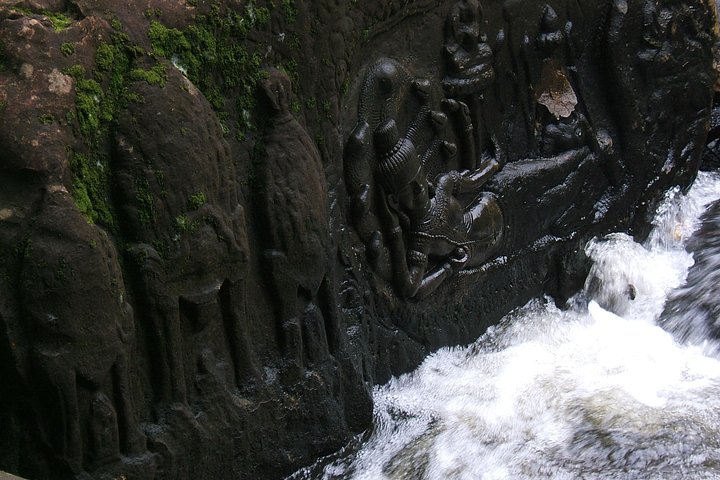
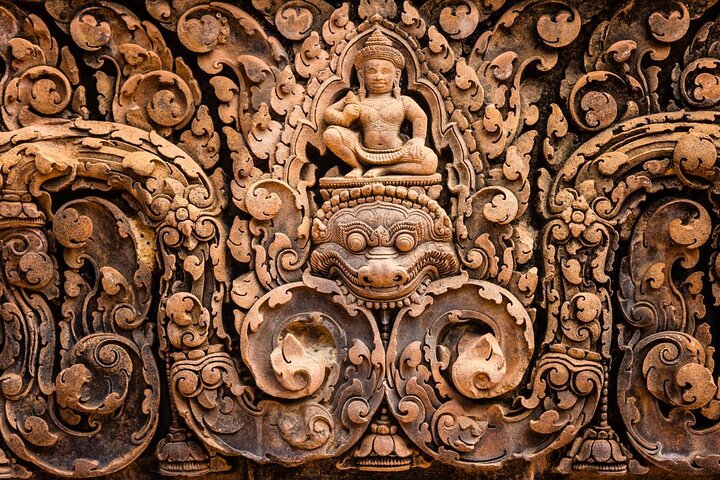
Banteay Srei, about 25 kilometres north-east of the park, is a small tenth-century temple carved in rose-coloured sandstone with astonishing detail, and it is at its best in the early morning light. It is easy to combine with Kbal Spean, where you walk through forest for thirty to forty minutes to a riverbed carved with lingas and Hindu deities, and the Cambodia Landmine Museum, which is on the same road. This is a full day, and it needs an Angkor Pass for the temple and for Kbal Spean, while the museum has its own entry fee. It is a good choice if you love detail, quiet forest walks and a mix of art and history.
Phnom Kulen: the sacred mountain
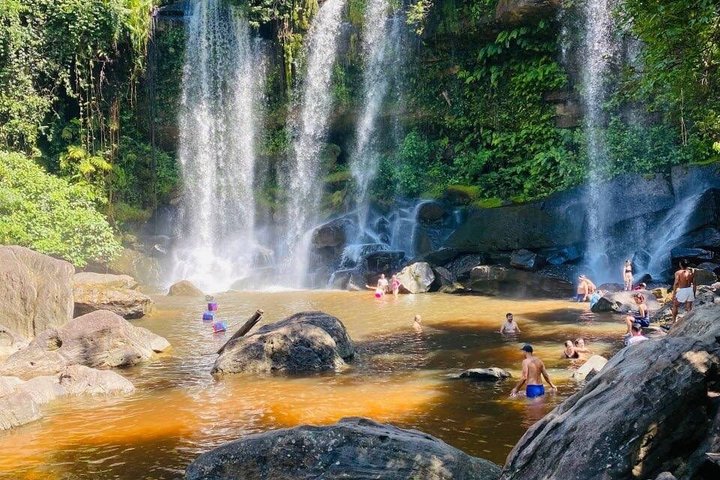
About an hour and a half from town, Phnom Kulen is the plateau where the Khmer Empire was proclaimed in the early ninth century. It is a Cambodian pilgrimage destination, with a large reclining Buddha carved into a boulder, a riverbed with carvings, and a waterfall where families swim and picnic, especially at weekends. It needs its own entry ticket, separate from the Angkor Pass. The waterfall is fullest during and just after the rainy season, so November is a good time to go, and it is cooler on the plateau than in town. If you want a quieter experience, go on a weekday and arrive early.
Beng Mealea and Koh Ker: the jungle ruins
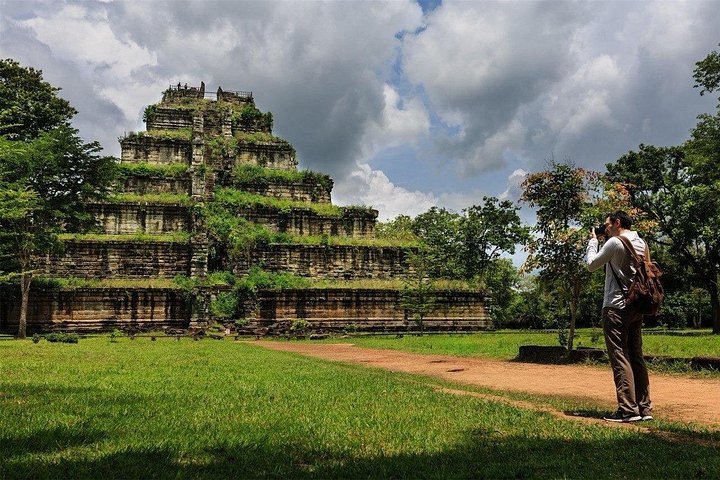
Beng Mealea, about 65 kilometres east of Siem Reap, is a large temple that has been left largely as the jungle reclaimed it, with fallen towers, root-wrapped galleries and wooden walkways that lead you through the ruins. Koh Ker, much further out, was briefly a capital in the tenth century and has a seven-tiered pyramid, Prasat Thom, that you can climb for a view over the forest. Together they make a long day, often nine to ten hours, with a lot of driving, so they suit travellers who enjoy adventure and remote sites. Koh Ker needs its own ticket, and the roads are good but the day is demanding.
The Roluos Group: where Angkor began
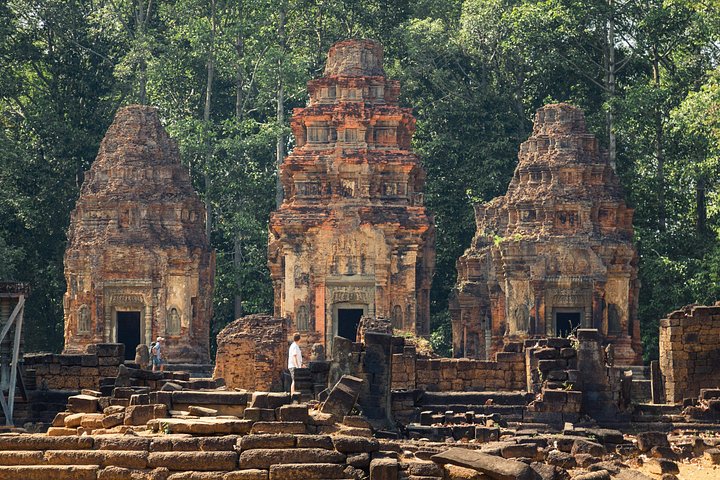
Only about fifteen kilometres south-east of town, the Roluos temples of Preah Ko, Bakong and Lolei date from the late ninth century, when the Khmer capital was called Hariharalaya. They are far quieter than the main temples and make a rewarding half day for history lovers. They use the Angkor Pass. You can pair them with a lunch stop in the countryside or an afternoon visit to a stilt village.
The Tonle Sap stilt villages
Kompong Pluk is the nearest stilt village, about an hour from Siem Reap, and its flooded forest is a highlight in the high-water months, while Kampong Khleang, further out, is larger and less visited, and can be combined with Beng Mealea in one long day. The Tonle Sap Vespa tour and a sunset boat trip are both popular ways to see the lake. Water levels shift through the year, so the experience varies by season. The tours on this site handle the boat transfers, and you usually pay small village fees separately.
Combining trips
A sensible plan is to treat one day trip as a day trip, rather than trying to cram two together. Banteay Srei and Kbal Spean make a natural pair, Beng Mealea and Kampong Khleang a second pair, and the Roluos Group and a stilt village a third. If you have only one day beyond the temples, choose Banteay Srei for art, Phnom Kulen for scenery or Beng Mealea for atmosphere. Starting early is more important than adding stops, because roads can be slow and the heat builds by midday.
Practical tips
Check which tickets you need before you go: the Angkor Pass covers Banteay Srei, Kbal Spean and the Roluos Group, while Phnom Kulen and Koh Ker need their own tickets and Beng Mealea has a separate entry fee. Bring water, sun protection, insect repellent and shoes with grip. Cover shoulders and knees at temples. Join-in group tours are the most affordable way to cover the distances, and private cars or tuk-tuks give more flexibility if you want to linger. Whatever you choose, leave time to rest, since temple fatigue is real and a pool afternoon is a good reward after a long day.