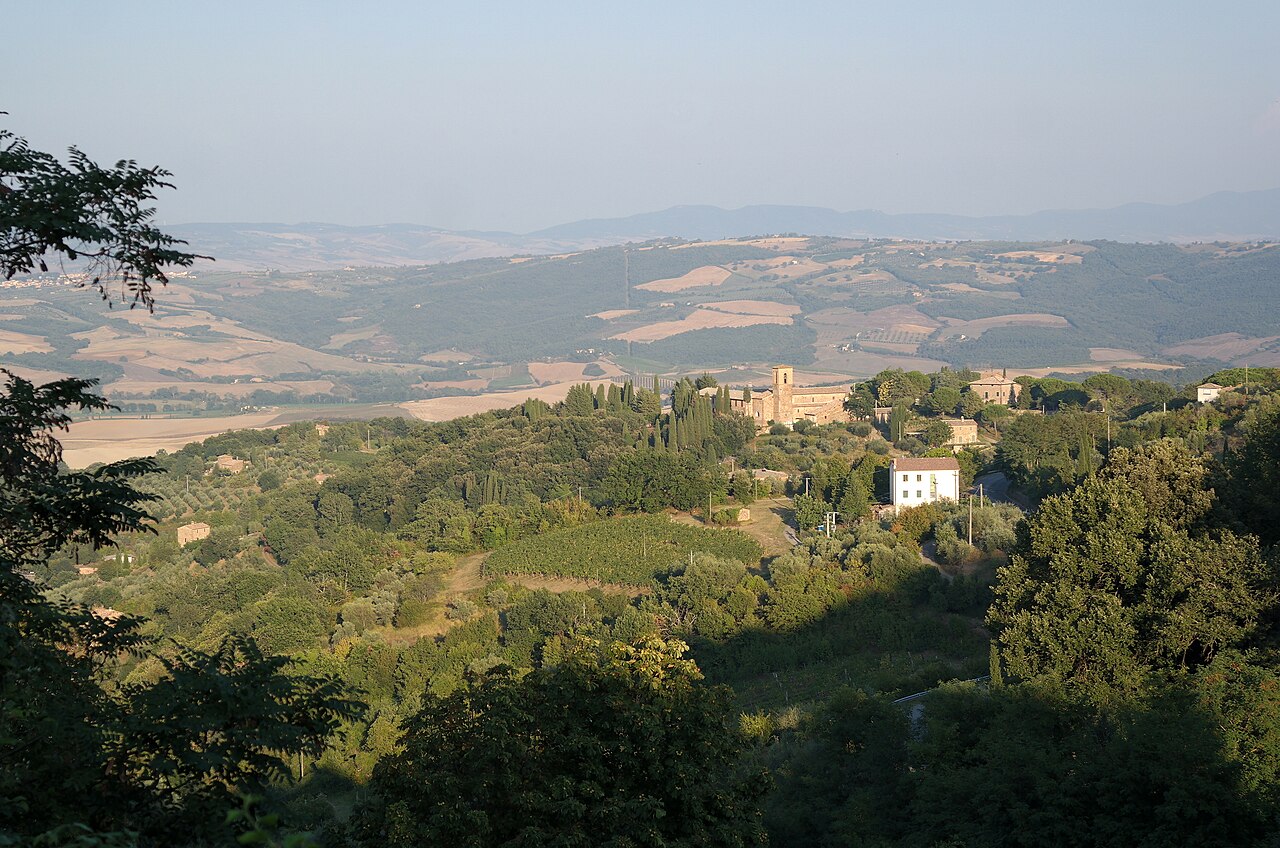
The Val d'Orcia is a UNESCO World Heritage landscape of rolling hills, ravines and cypress trees lining the roads that climb to hilltop hamlets. It lies south of Siena, with Monte Amiata, Italy's oldest extinct volcano, bordering the valley to the west. The Orcia river is mostly a dry brook in summer and swells with autumn rain. Oak forests, olive groves and vineyards produce Brunello and other Tuscan wines, and the area is known for truffles. The sights are the villages themselves: Pienza, San Quirico d'Orcia, Castiglione d'Orcia and Montalcino, plus Bagno Vignoni, where thermal water fills a basin in the town square, and the fortress of Radicofani, with views across the valley.
How to see it
The valley is a driving landscape, and the best way to see it is with a car or a private driver. Public transport is limited, so a tour from Siena is the alternative. Plan around a base such as Pienza or Montalcino and allow a full day for three villages and a long lunch. The roads are winding, and the famous cypress curves are best photographed in the soft light of early morning or late afternoon.
What to expect in late autumn and winter: the harvest is over, the fields are ploughed or green with winter grain, and mist often fills the valleys in the early morning. There are fewer visitors, though some small restaurants and hotels close for part of the winter. Montalcino holds a white truffle fair in November in most years, and artisan markets in San Quirico and Bagno Vignoni run through the warmer months and into December.
Bagno Vignoni and the baths
The village square is a large basin of hot water that visitors can admire but not swim in, and nearby sites such as Bagni San Filippo have thermal pools and mineral formations. Check access rules and any seasonal restrictions before you plan a soak. Bring a warm layer in winter, since the hills are exposed to the wind.
What to expect
The experience
A self-drive or guided day through rolling hills and hilltop villages, with stops for viewpoints, a village lunch and optionally the thermal waters at Bagno Vignoni.
Best time
Early morning and late afternoon give the softest light, and autumn mist can make the valley look especially dramatic.
How long
A full day covers three villages and a lunch, while a slower trip can take two days.
Tips
Base yourself in one village, bring a warm layer, check opening days for lunch spots, and park carefully on narrow roads.
Quick picks
- Best for
- Photographers, drivers and couples who want the classic Tuscan landscape.
- Families
- Short stops and open spaces suit children, though long drives on winding roads can tire them.
- Couples
- Pick a village for a long lunch and finish with sunset at a viewpoint.
- Pair with
- Pienza, Montalcino and Montepulciano.
- Time needed
- A full day.
Good questions
What is the Val d'Orcia?+
It is a UNESCO World Heritage landscape south of Siena, known for rolling hills, cypress roads and hilltop villages. It includes Pienza, Montalcino, San Quirico d'Orcia and Bagno Vignoni.
Do I need a car?+
A car or private driver is the easiest way to see the valley, as public transport is limited. A guided tour from Siena is the alternative.
Can I swim in Bagno Vignoni?+
The square holds a basin of thermal water that visitors can admire. Bagni San Filippo has thermal pools and mineral formations, so check access rules before you plan a soak.
What is on in the autumn?+
Montalcino holds a white truffle fair in November in most years, and artisan markets run in San Quirico and Bagno Vignoni from June to December.
What is Monte Amiata?+
It is Italy's oldest extinct volcano, bordering the valley to the west. It is a landmark seen from many viewpoints.