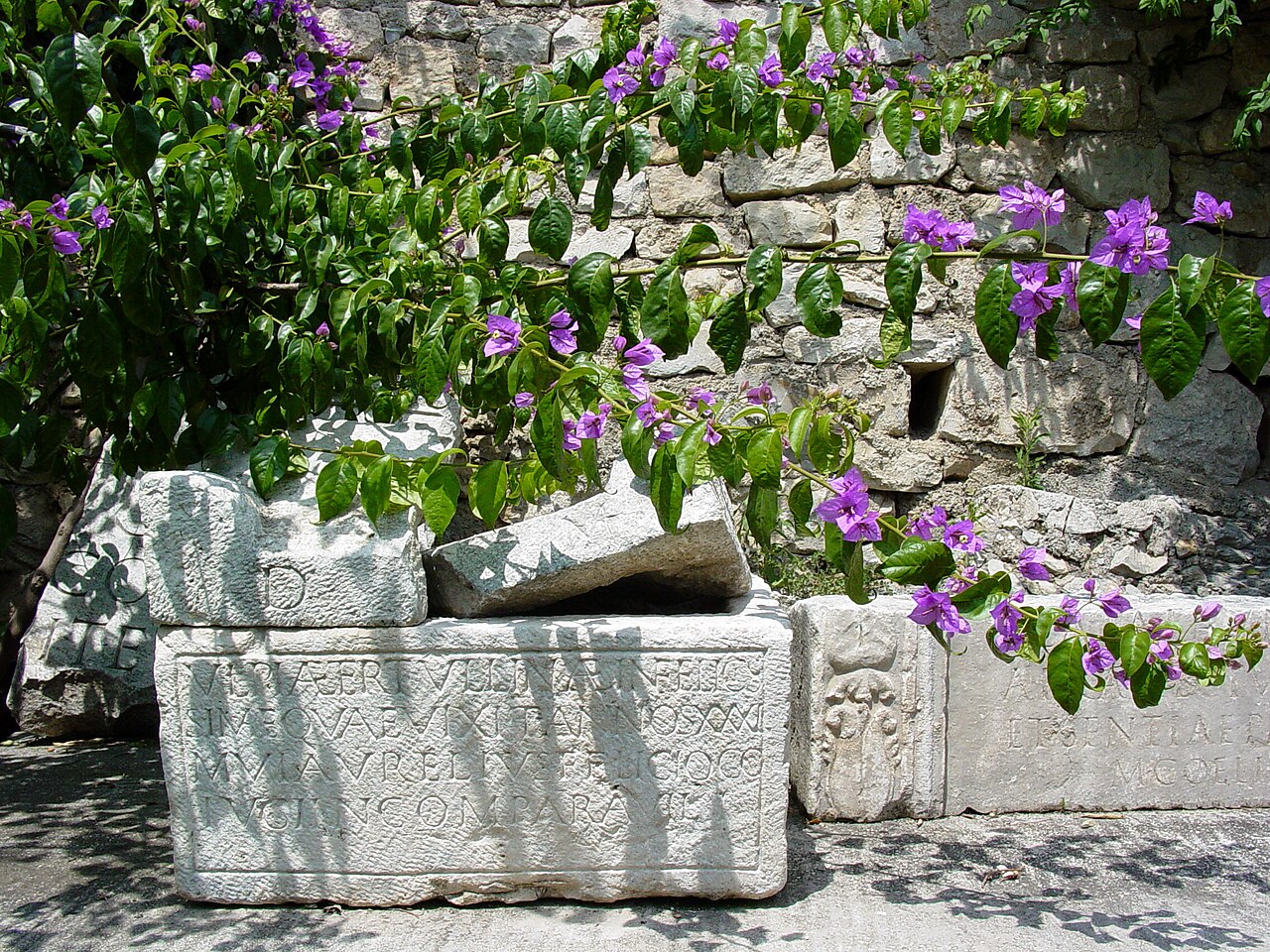
Salona was the largest city of Roman Dalmatia, and it is the reason Split looks the way it does. Diocletian was born near here, and when invaders destroyed the city in the seventh century, the survivors fled to his palace on the coast. Today the ruins lie in the suburb of Solin, about five kilometres from the old town, scattered over a green site that feels far from the tourist trail. The amphitheatre was built in the second half of the second century and held about seventeen thousand spectators, though the Venetians demolished much of it in the seventeenth century to stop it being used by besiegers. Manastirine is the largest early Christian burial ground in the area, with a basilica built over the tomb of the martyr-bishop Domnio and many sarcophagi. Kapljuč holds the Basilica of the Five Martyrs from the fourth century, and the monumental eastern gate, Porta Caesarea, still shows the ruts worn by Roman carts. Tusculum, a house built in 1898 by Don Frane Bulić, displays finds and a memorial room.
Visiting needs a little planning. The site is run by the Archaeological Museum in Split, which publishes opening hours and sells tickets online, and the individual areas of the site differ in how they are managed. Check the museum's page before you go, especially in winter, when hours can change and parts of the site may close in bad weather. A taxi, a rented car or a local bus to Solin all work, and many visitors combine Salona with Klis Fortress on a half-day trip.
Allow at least ninety minutes, more if you want to see all the main areas. Start at the amphitheatre, where the lower walls and arena outline are still clear, then move to Manastirine and its basilica, and finish at the Porta Caesarea and Tusculum. The ruins are scattered, and signage is modest, so a guide adds a great deal, or you can read up on the Split Archaeological Museum's collection, which holds mosaics, sculpture and inscriptions from Salona, including the Orpheus mosaic.
The setting is part of the appeal. There are fewer crowds than at the palace, olive trees and wild herbs grow between the stones, and the site is flat and easy to walk. Bring water and a hat in summer, and shoes with grip after rain. In late afternoon the light on the amphitheatre is excellent. For history lovers, Salona is the best way to understand why a Roman emperor built a retirement home on this coast and why a medieval town grew inside it.
What to expect
The experience
A self-guided walk through scattered Roman and early Christian ruins in the suburb of Solin, including the amphitheatre, basilicas and the eastern gate.
Best time
Morning or late afternoon, when the light is soft and the ruins are quiet.
How long
About ninety minutes to two and a half hours depending on how many areas you see.
Tips
Check the Archaeological Museum's page for current hours and tickets, bring water, and combine with Klis Fortress.
Quick picks
- Best for
- History lovers and anyone who wants to understand why Split's palace exists.
- Families
- Open space and a big amphitheatre appeal to children, but there is little shade and signage is limited.
- Couples
- A peaceful, uncrowded afternoon, best in golden light.
- Pair with
- Klis Fortress and the Archaeological Museum in Split.
- Time needed
- Two hours, or half a day with Klis.
Good questions
How far is Salona from Split?+
About five kilometres, in the suburb of Solin. You can reach it by taxi, rental car or local bus in around fifteen to twenty-five minutes.
What is the main sight at Salona?+
The Roman amphitheatre, which held about seventeen thousand people, is the headline. The early Christian basilicas at Manastirine and Kapljuč and the Porta Caesarea gate are also worth seeing.
How do I buy tickets?+
The Archaeological Museum in Split sells tickets online and manages the site. Check its page for current prices and opening hours before you go.
Is Salona open in winter?+
Usually, but hours and access to some areas can change with the season and weather, so confirm with the museum before you travel.
Is a guide necessary?+
It is not required, but the ruins are scattered and lightly signed, so a guide or a good guidebook helps you make sense of the layout.