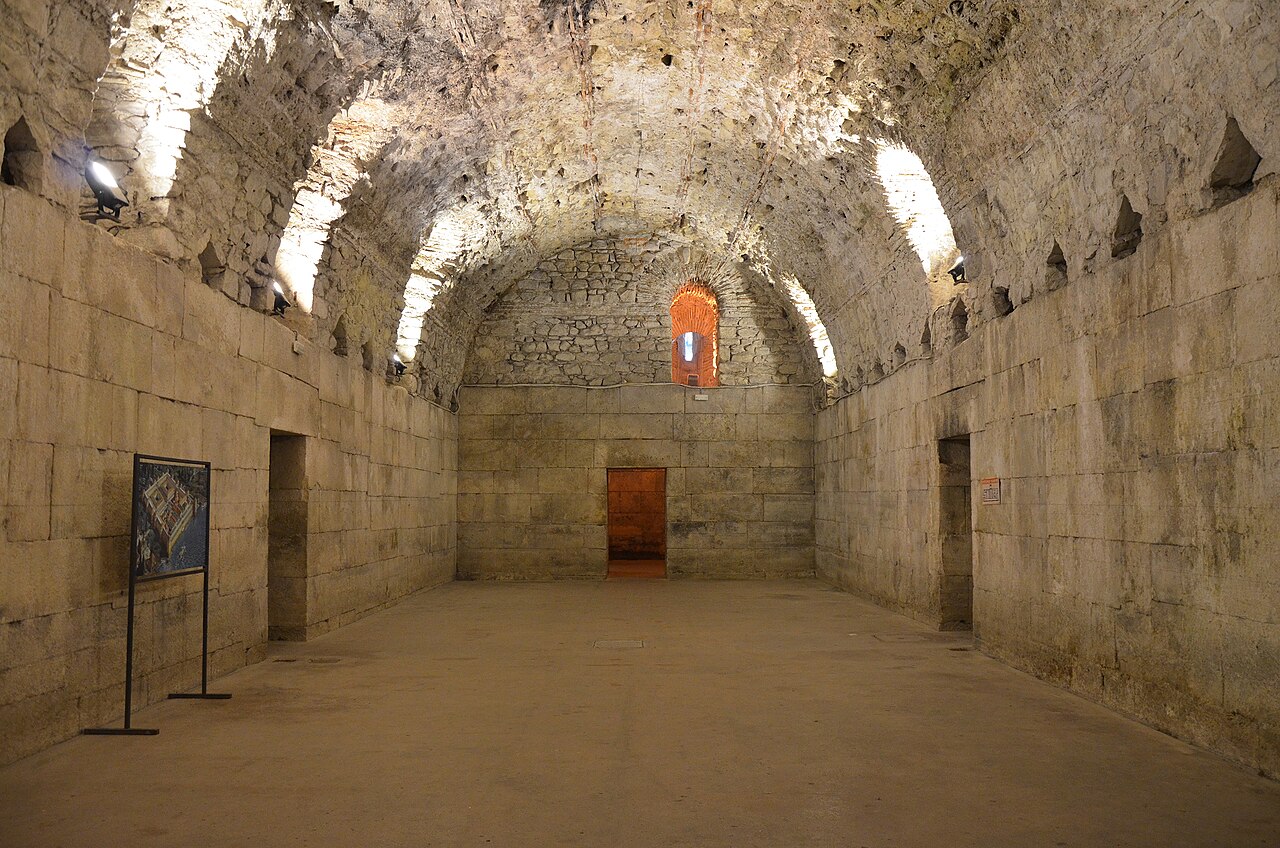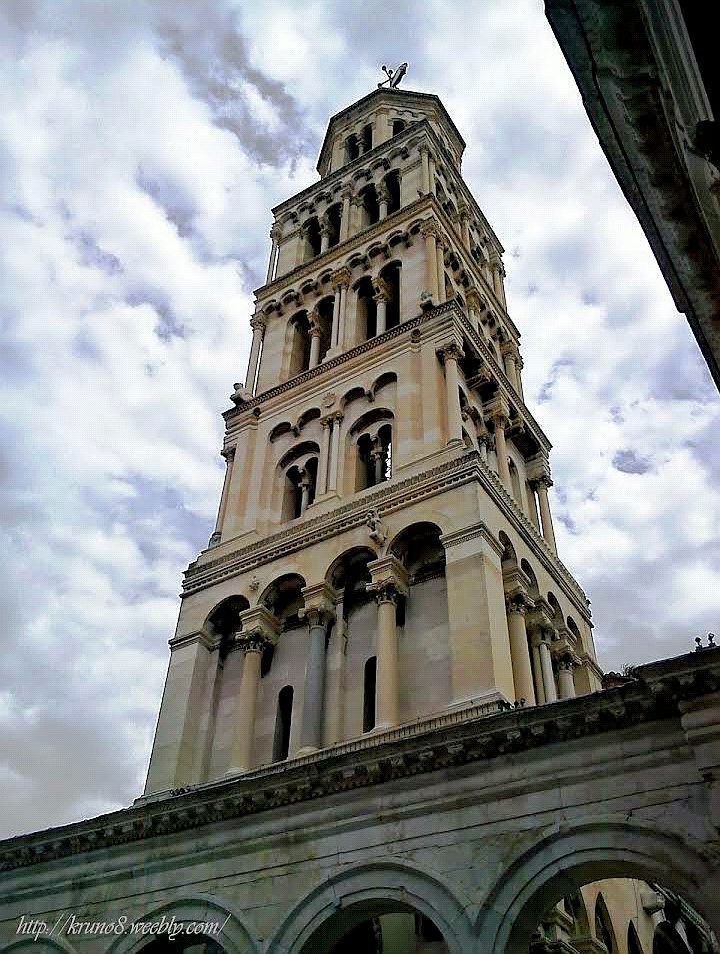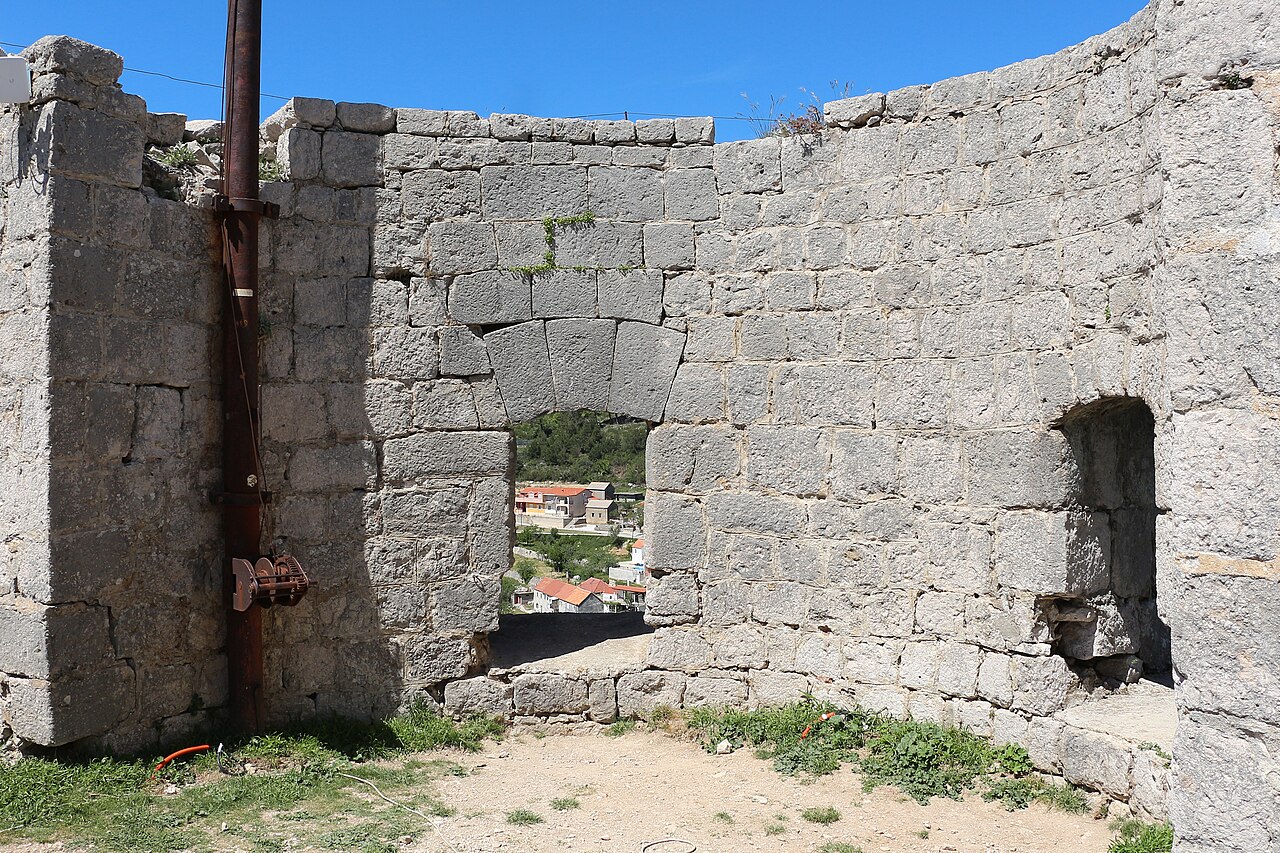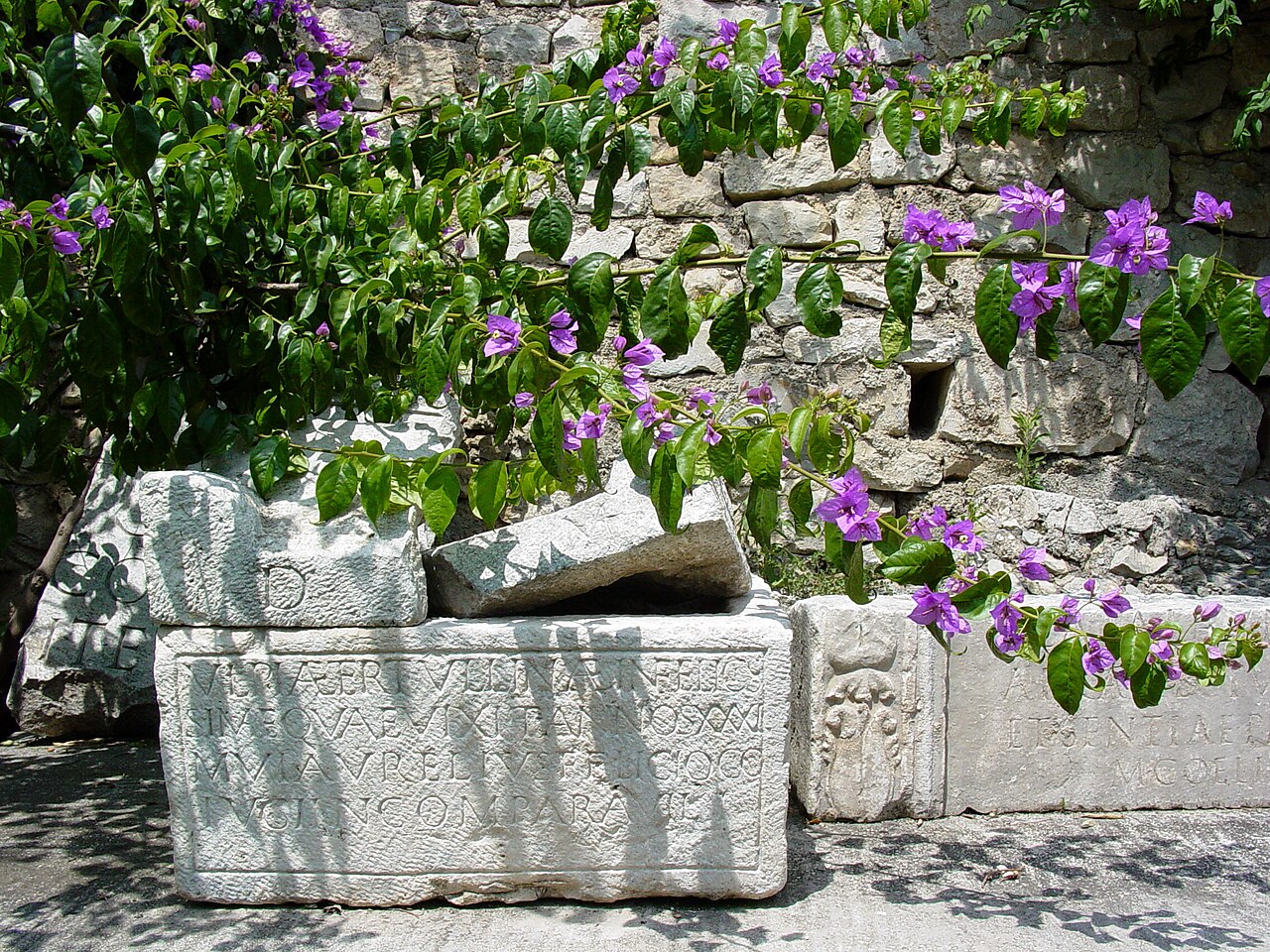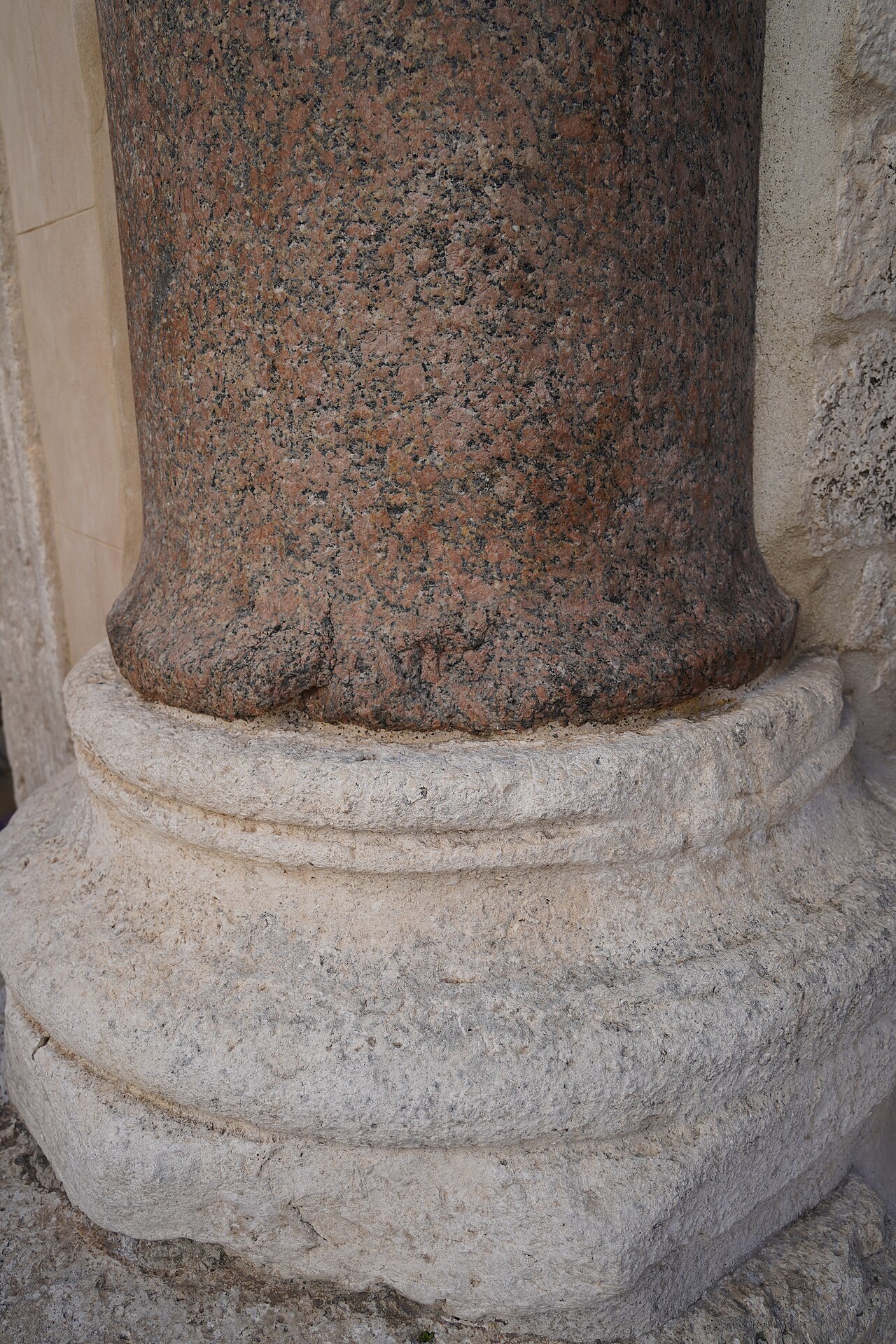
Diocletian's Palace is not a ruin you visit but a neighbourhood you walk through. The Roman emperor Diocletian, who was born nearby and retired here after abdicating in 305 AD, built a huge walled residence on the shore, part villa, part military fortress, with a sea front on the south and gates on the other three sides. When Salona fell to invaders in the seventh century, refugees took shelter in the walls and gradually built their houses into the ancient structure. Fifteen centuries later their descendants still live and work in it. The palace is part of a UNESCO World Heritage designation, and the experience is unlike any other ruin in Europe: restaurants set in Roman vaults, a Gothic palace leaning against a Roman wall, laundry hung above imperial colonnades. The heart of it is the Peristyle, the colonnaded central courtyard where the emperor appeared to his court, with a black granite Egyptian sphinx and the cathedral entrance on one side. Around it you find the Vestibule, the Temple of Jupiter, and the four gates, Golden, Silver, Iron and Brass, each with its own character. A self-guided wander is free, but without context the layers blur, which is why a guided walk repays the cost.
The most useful way to see the palace for the first time is with a local guide on a roughly ninety-minute walking tour. A good guide untangles the layers: which column is Roman, which arch is Venetian, why the Temple of Jupiter became a baptistery, and how a medieval town grew inside an imperial plan. The tour linked here covers the palace as a whole, with the cathedral and the old city clock as stops, and admission to the cathedral and other paid interiors is not included, so budget separately if you want to go inside.
Timing matters more than anything. The Peristyle and the lanes behind it are busiest between mid-morning and mid-afternoon when cruise groups arrive, and quietest at first light and after dinner, when the stone glows and the cafe tables fill with locals. In November the crowds are thin and the palace feels like a real town again, though shops and restaurants keep shorter hours. Wear shoes with grip, because the polished limestone is slippery in rain.
Plan the palace as the spine of your visit. Start at the Riva on the south front, enter through the Brass Gate, and follow the cellars and then the Peristyle. Add the cathedral and bell tower, then leave by the Golden Gate to the statue of Gregory of Nin, whose toe you are expected to rub for luck. Together these stops make a full morning and set up everything else in the city.
What to expect
The experience
A guided walk on foot through the palace gates, the Peristyle, the Vestibule and the lanes, with the cathedral and the old city clock as stops.
Best time
First thing in the morning or after dinner, when the stone is empty and warm; November is quiet but some shops close early.
How long
About ninety minutes with a guide, or a full morning if you add the cellars and the bell tower.
Tips
Wear shoes with grip, carry small cash for the cathedral and cellars, and ask the guide where the Roman, Venetian and Gothic layers meet.
Quick picks
- Best for
- Anyone spending even one day in Split, because everything else in the city grows out of the palace.
- Families
- Easy, flat walking with plenty of stops for ice cream, and children enjoy the sphinx and the maze of lanes.
- Couples
- Return after dark for a drink on the Peristyle steps when the crowds have gone and the walls are lit.
- Pair with
- The palace cellars, the cathedral bell tower and a stroll along the Riva.
- Time needed
- Ninety minutes guided, up to three hours with the cellars and cathedral.
Good questions
Is Diocletian's Palace a museum with an entry fee?+
No. The palace is a living neighbourhood and the streets, gates and Peristyle are free to walk at any hour. Paid sights inside it include the cellars, the cathedral and bell tower, and a few small museums.
Is a guided tour worth it?+
For most first-timers, yes. The layers of Roman, medieval and later building are hard to read alone, and a guide explains who lived where and why the palace became a town.
How long do I need?+
A guided walk takes about ninety minutes. Allow half a day if you also want the cellars, the cathedral and its bell tower, and time for a coffee on the Peristyle.
Is the palace open in winter?+
Yes, the streets are open all year because people live there. Winter brings fewer crowds, though some restaurants and shops shorten their hours or close for a few weeks.
Where are the gates?+
The Golden Gate is on the north, the Silver Gate on the east, the Iron Gate on the west, and the Brass Gate opens to the Riva on the south. Most visitors enter by the Brass Gate or the Golden Gate.