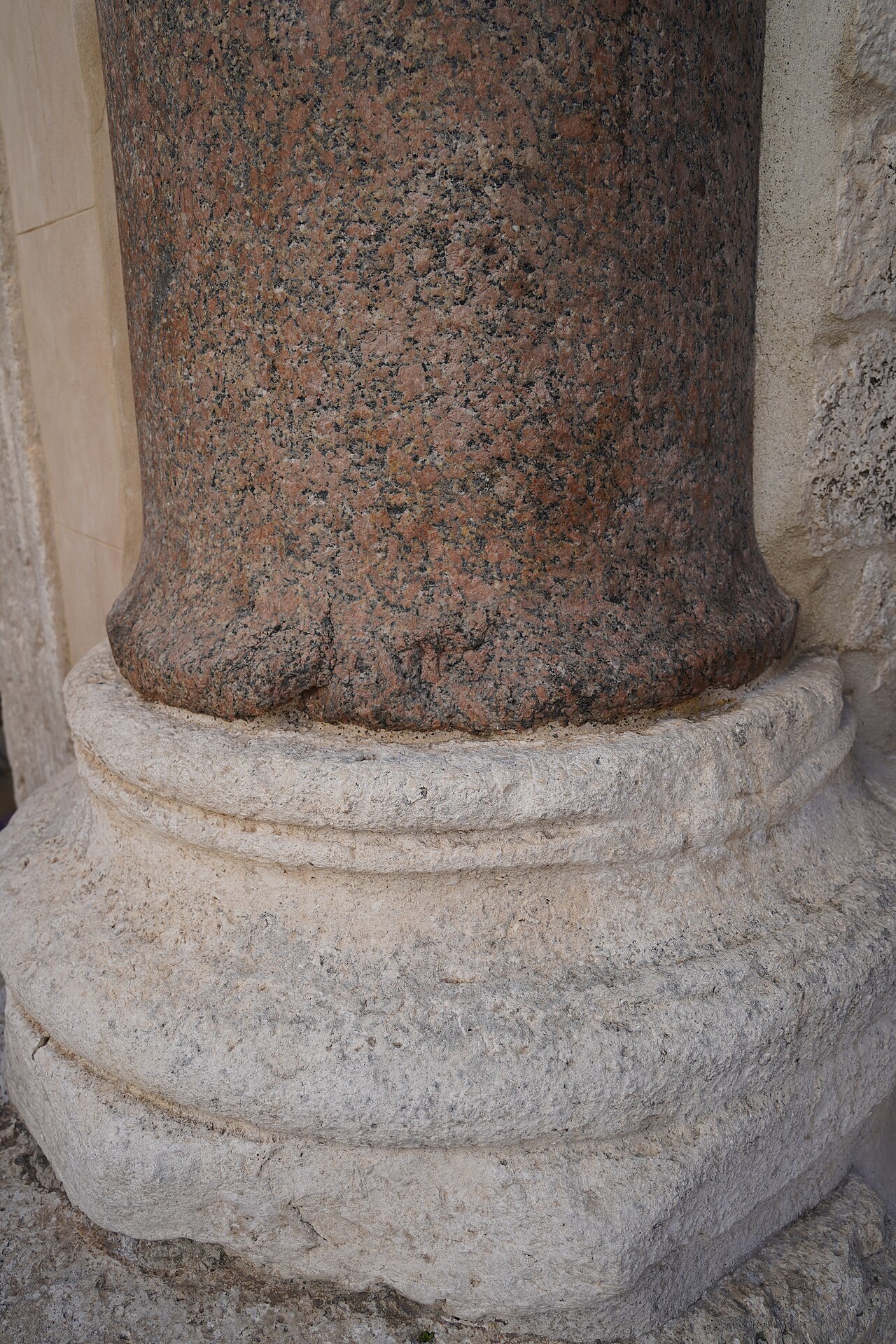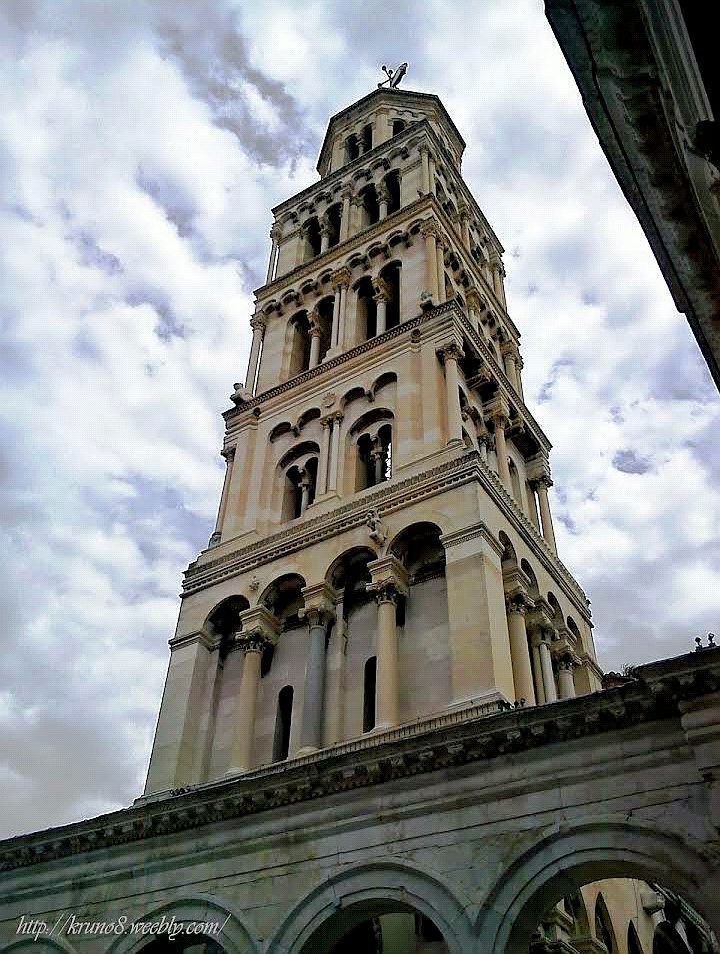
The Cathedral of St Domnius occupies the mausoleum that Diocletian built for himself, a domed octagon that became a church in the seventh century when the relics of Saint Domnius were installed. That makes it, by the city's own account, among the oldest cathedral buildings in Europe still in use. Step inside and the Roman architecture is still obvious: columns, a ring of arches, and a cupola that was once covered in mosaics. Look for the walnut doors carved by Andrija Buvina in the thirteenth century, with scenes from the Gospels on every doorpost tablet, and the hexagonal pulpit of green porphyry. The altars include a Gothic masterpiece by Juraj Dalmatinac. The cathedral complex also includes a treasury, a crypt and a baptistery in the former Temple of Jupiter, which are covered on a combined ticket. The bell tower, begun in the thirteenth century and largely rebuilt around 1900, rises from the Peristyle and defines the Split skyline.
Climbing the bell tower is the headline activity. It is about fifty-seven metres tall, and the climb is over three hundred steps with no lift. The stairs are steep, uneven and slippery in wet weather, with narrow passages and open sections where children need supervision. The reward is a panorama over the palace roofs, the harbour, Marjan Hill and the islands. The bells ring on the hour and are loud at close range, so avoid standing next to them on the stroke of the hour.
A combined ticket normally covers the cathedral, treasury, crypt, baptistery and bell tower, and is better value than buying the tower alone. Prices and hours change by season, so confirm at the ticket office on the Peristyle or on the Split tourist board page linked here. Dress modestly, as this is a working cathedral, and expect parts of it to close during services.
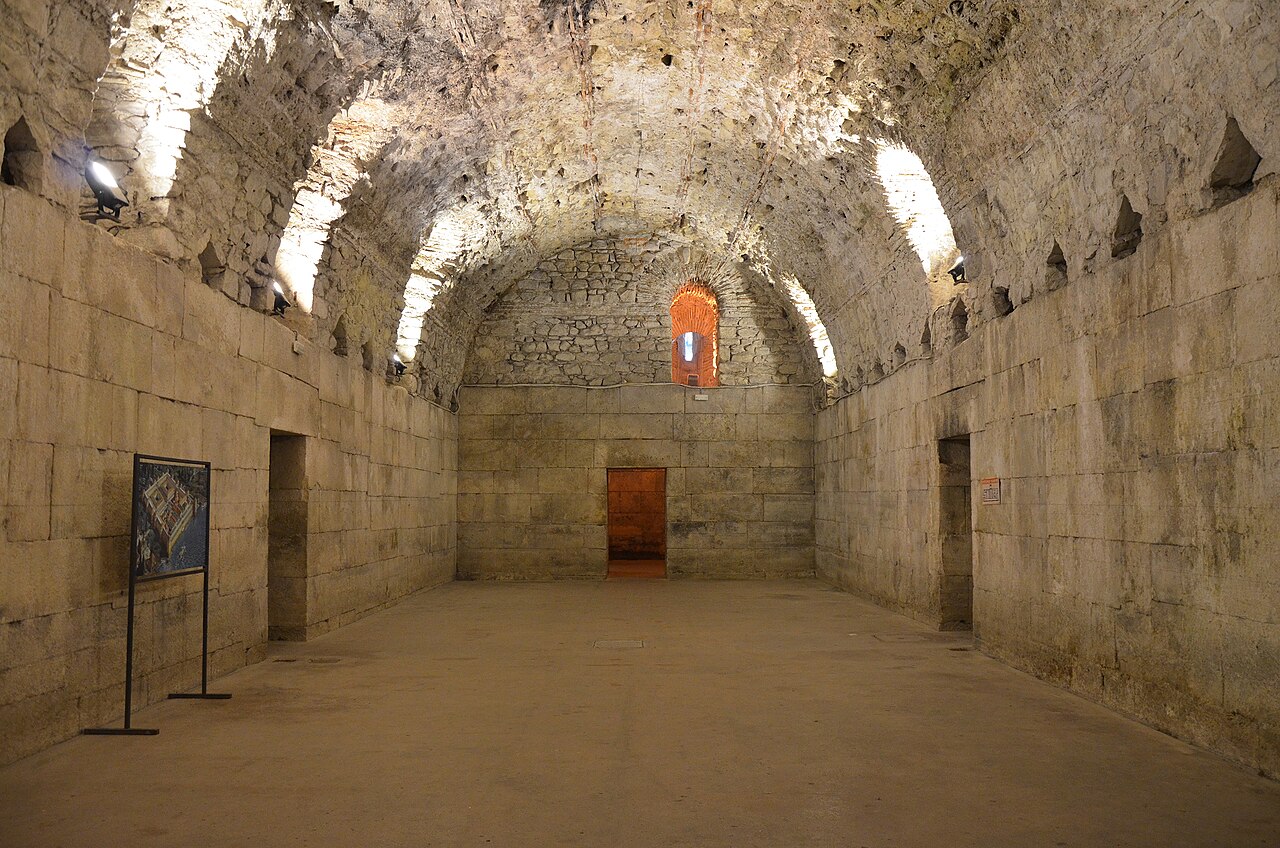
Best timing is early morning, when the stairs are empty and the light is soft on the roofs, or late afternoon for warmer colours. Pair the visit with the cellars and a coffee on the Peristyle. If you are travelling with a guide, ask them to show you the doors and the pulpit, which most visitors walk past. The tower is not suitable for anyone with limited mobility, knee problems or a fear of heights, and there is no alternative route, so decide before buying tickets.
What to expect
The experience
A self-guided visit to the cathedral, treasury, crypt and baptistery, plus a steep stair climb up the bell tower.
Best time
Early morning for empty stairs, or late afternoon for the best light over the roofs.
How long
About an hour for the cathedral and tower, longer with the treasury and crypt.
Tips
Buy the combined ticket, dress modestly, wear shoes with grip, and skip the tower with knee trouble or fear of heights.
Quick picks
- Best for
- Anyone who wants the best view over the palace roofs and a look inside a Roman emperor's tomb turned church.
- Families
- Older children enjoy the climb, but the steps and open sections are not suitable for toddlers or pushchairs.
- Couples
- A romantic late-afternoon climb, followed by a drink on the Peristyle steps below.
- Pair with
- The palace cellars, the Peristyle and a walk along the Riva.
- Time needed
- One to one and a half hours.
Good questions
How tall is the bell tower and is there a lift?+
The tower is about fifty-seven metres tall and the climb is more than three hundred steps. There is no lift, and the stairs are steep and uneven.
What does the combined ticket include?+
It normally covers the cathedral, the treasury, the crypt, the baptistery and the bell tower. Confirm the current price and what is open at the ticket office on the Peristyle.
Is the cathedral really a Roman mausoleum?+
Yes. It was built as the mausoleum of the emperor Diocletian and became a church in the seventh century. Inside, the Roman columns and domed structure are still visible.
Is there a dress code?+
Yes. It is a working cathedral, so cover shoulders and knees. Parts of the building may be closed for services.
When should I climb the tower?+
Go early in the morning for empty stairs or in late afternoon for soft light. Avoid standing near the bells at the top of the hour, when they ring loudly.