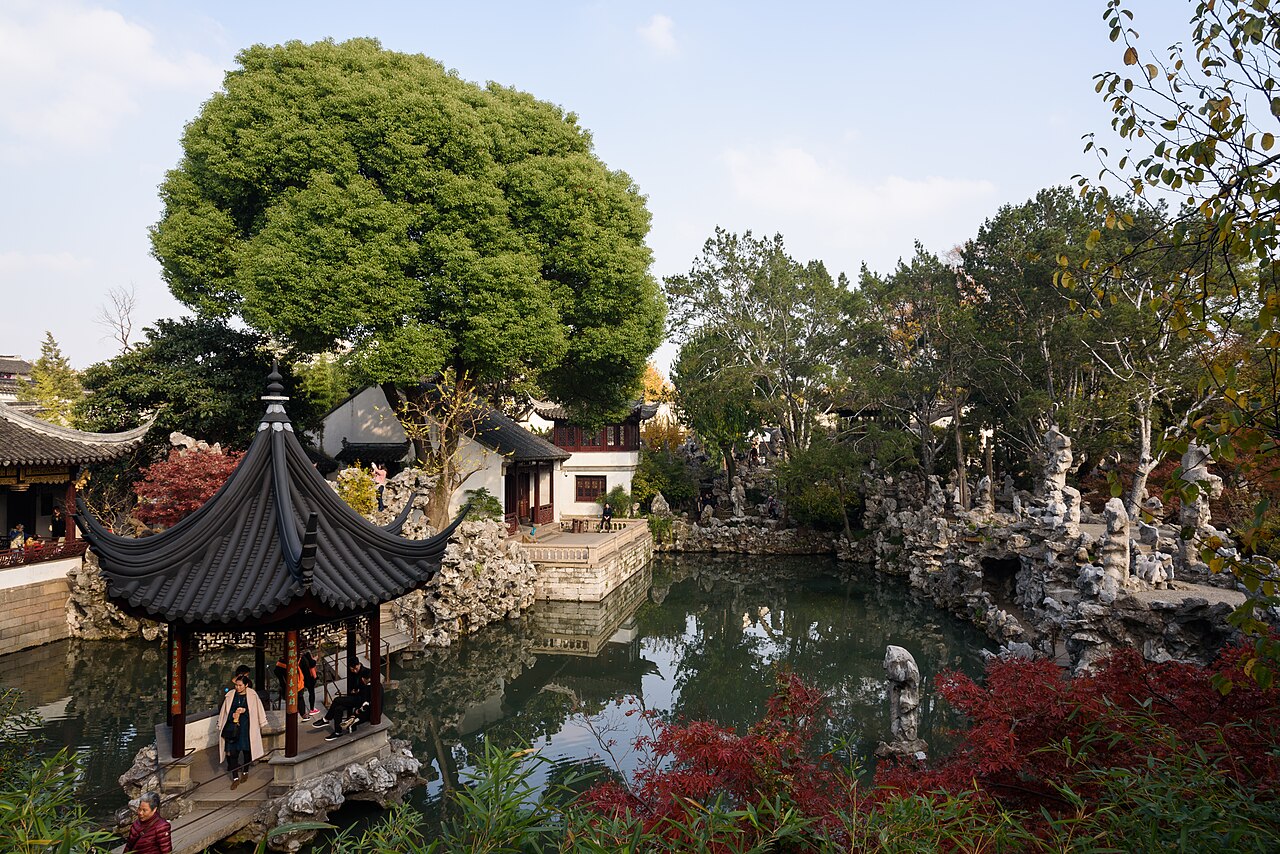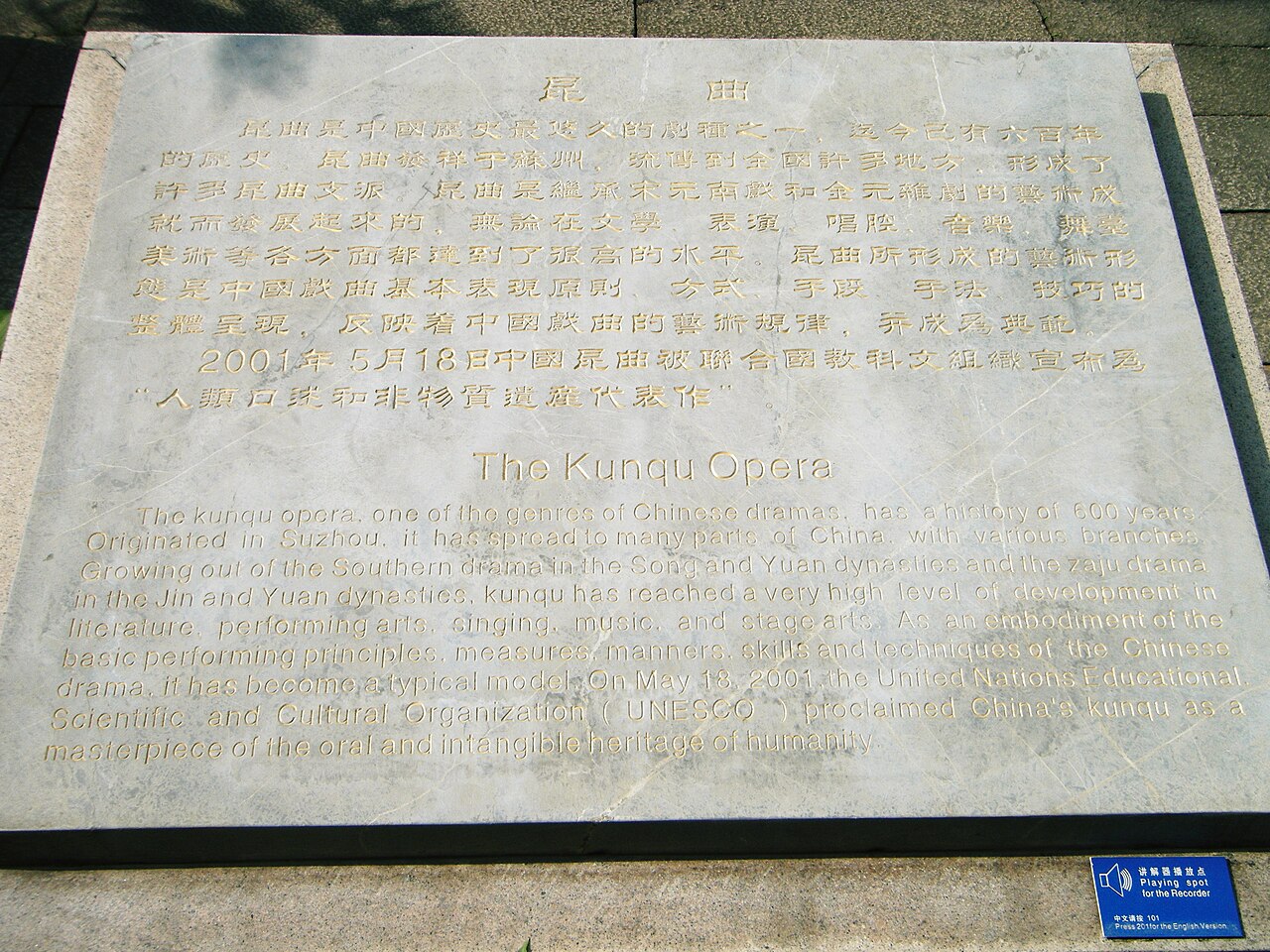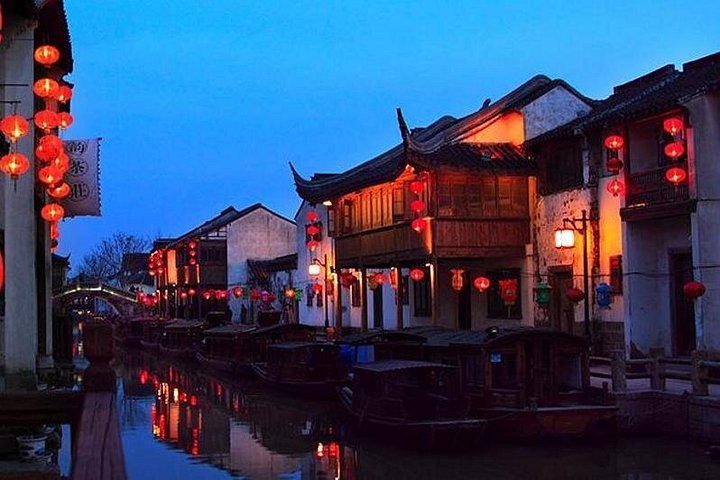
Pingjiang Road is the Suzhou of postcards: a narrow stone-paved street running about 1.6 kilometres beside the Pingjiang River, with willows, arched bridges, whitewashed houses and a steady line of teahouses and snack shops. The street plan goes back to the Song dynasty, more than eight hundred years ago, when this was a main road of the walled city, and its name appears in records from the Tang. Today it is a protected historic district, and while parts are busy with souvenir stalls, the side lanes still have a quiet residential feel. You can walk the whole length in an hour or take far longer by stopping for tea, local snacks such as osmanthus cake and rice-wine meatballs, and a ride on a small punt-style boat along the canal. A Kunqu Opera Museum occupies a late-Qing building on the road, with a theatre inside, and locals sometimes sing Kunqu in the lanes. The street is free to enter and open all day, and it is only about ten minutes on foot from the Humble Administrator’s Garden.
Getting there and getting around
The nearest stops are on Metro Line 4, and buses run to the area, though walking from the Humble Administrator’s Garden is simple. The road is paved with uneven stone, so wear flat shoes. Many visitors start at the northern end near the garden district and walk south, ending with an evening meal in the quieter lanes around the canal.
When to go
Early morning is the best time to see local life, with residents shopping and the shop shutters still closing. Late afternoon and dusk are lovely when the lanterns come on, but also the busiest. National holidays and weekends are crowded, and prices of snacks and drinks near the busiest stretches are higher than in the side streets. Boat rides are available along the canal for a modest fee, and a day tour that includes Pingjiang Road and a canal ride is a convenient way to see the water without negotiating.
Shantang Street, the other canal street
If you want a second walk, Shantang Street runs for about 3.6 kilometres from Changmen Gate to Tiger Hill and is credited to the Tang poet Bai Juyi. It is free and open round the clock, and the red lanterns come on at dusk. Metro Line 2 stops at Shantangjie. Together these two streets show the canal city that Suzhou is famous for, and both are good places to eat, shop for silk and linger.
What to expect
The experience
A free, self-guided stroll along a stone-paved canal lane, with optional paid boat rides, teahouses and snack stops.
Best time
Early morning for local life, or late afternoon into dusk for the lanterns.
How long
One hour end to end, up to three with tea, a boat ride and a meal.
Tips
Wear flat shoes, avoid holiday weekends, eat in the side lanes where prices are lower and add Shantang Street if you want a second canal walk.
Quick picks
- Best for
- Everyone, and especially first-timers who want the classic Suzhou canal scene for free.
- Families
- Easy and flat, with boats and snacks to keep children happy, but crowded on weekends.
- Couples
- A canal-side teahouse in the late afternoon, then a lantern-lit walk and dinner in a quieter lane.
- Pair with
- The Humble Administrator’s Garden, Lion Grove Garden and a Kunqu performance.
- Time needed
- One to three hours.
Good questions
Is Pingjiang Road free?+
Yes, walking the street costs nothing and it is open all day. You pay only for boats, food and shops.
How long is Pingjiang Road?+
About 1.6 kilometres, which takes roughly an hour to walk without stops. Most visitors take longer.
Can I take a boat on the canal?+
Yes, small boats run along the canal for a modest fee. A day tour that includes Pingjiang Road often includes a canal ride too.
What is the difference between Pingjiang Road and Shantang Street?+
Pingjiang Road is a compact Song-era lane by a canal in the north-east of the old city. Shantang Street is a longer canal street in the north-west that leads to Tiger Hill.
When is it least crowded?+
Early morning and weekdays are quietest. Holidays and evenings are the busiest.