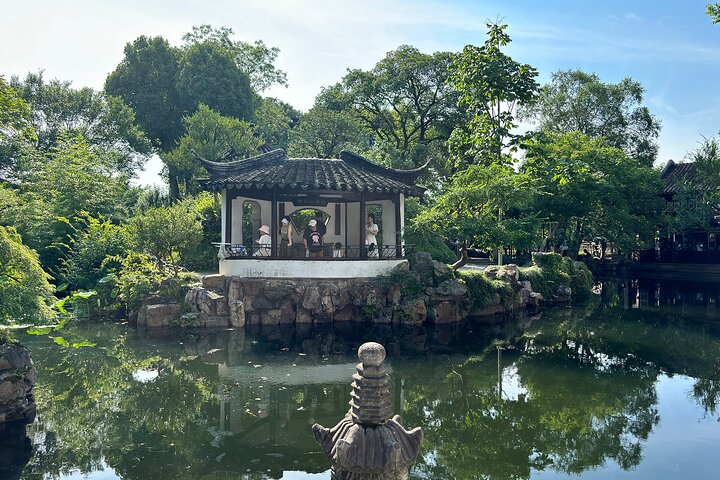
Humble Administrator’s Garden
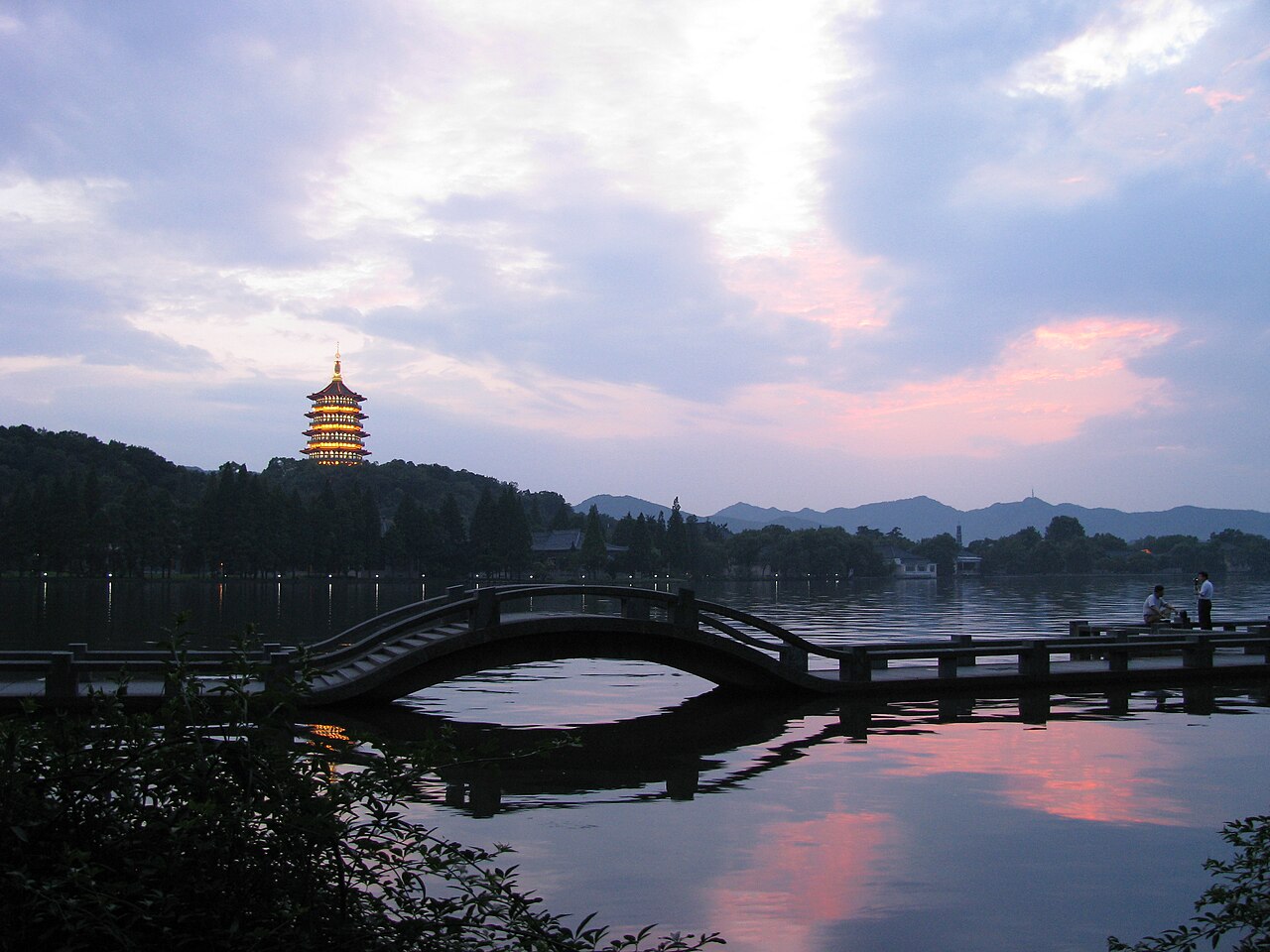
The largest and most celebrated of Suzhou’s classical gardens: ponds, pavilions, zigzag bridges and a borrowed view of a distant pagoda. Book a timed entry ahead and go early for the quietest paths.
China
Suzhou is the canal-and-garden city of eastern China, a short bullet-train ride from Shanghai, where merchants and retired scholars and bureaucrats spent centuries building private gardens of ponds, pavilions and rockeries that UNESCO now lists as masterpieces.
This guide covers the essentials: the Humble Administrator’s Garden for scale, the Lingering Garden for its corridors, the Master of the Nets Garden for its tiny perfect pond and the rock-maze Lion Grove Garden, plus the free and reserved Suzhou Museum designed by I. M. Pei, a stroll along Pingjiang Road beside the canal, the leaning pagoda of Tiger Hill and the free Silk Museum. For a day out it recommends one water town, Tongli, and for an evening it points to Kunqu, the refined opera born near the city. Then it matches you to eight hotels from a budget inn to a five-star luxury stay, because in an old city of canals and long walks, where you sleep decides how much of the evening you get to enjoy.
Humble Administrator’s Garden
The largest and most celebrated of Suzhou’s classical gardens: ponds, pavilions, zigzag bridges and a borrowed view of a distant pagoda. Book a timed entry ahead and go early for the quietest paths.
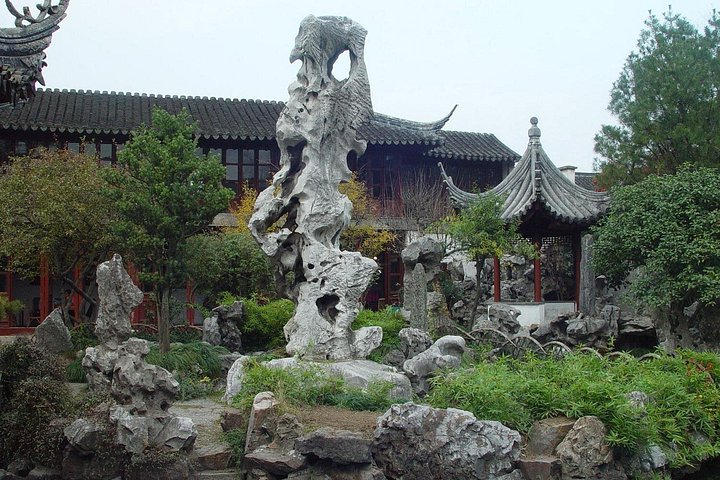
Lingering Garden (Liuyuan)
A masterclass in garden design: long covered corridors, lattice windows, a famous standing stone and halls that open onto changing views. It is quieter than the Humble Administrator’s Garden and just as rewarding.
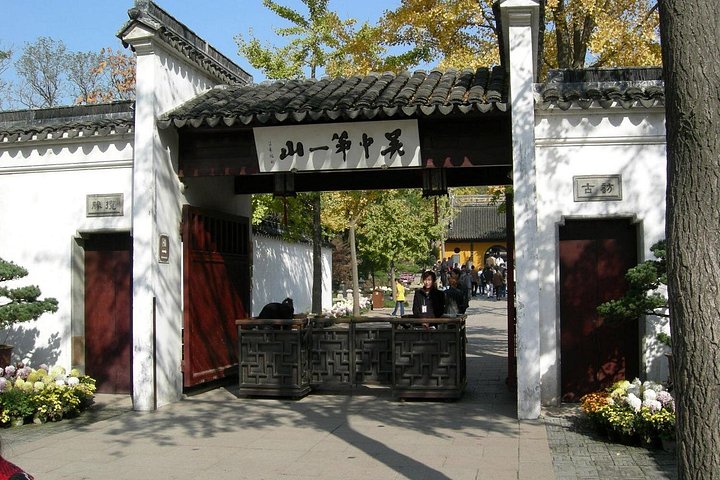
Tiger Hill (Huqiu)
Suzhou’s leaning pagoda and the legendary tomb of King Helu, on a wooded hill with ancient rocks and a sword pool. Reach it by a walk down Shantang Street or a short bus ride.
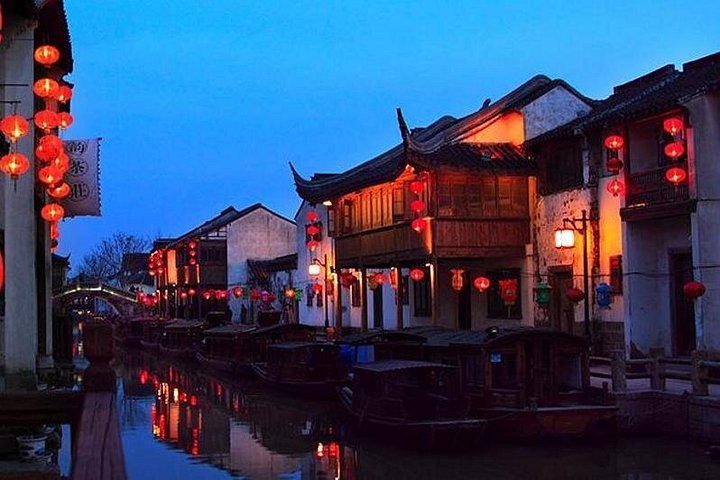
Master of the Nets Garden (Wangshi Yuan)
The smallest of the great Suzhou gardens and often the most perfect: a single pond ringed by pavilions in a space under one hectare. Evening visits and a canal-side night tour add atmosphere.
Hand-picked: every experience here has strong traveler reviews and a verified booking link.
The largest and most celebrated of Suzhou’s classical gardens: ponds, pavilions, zigzag bridges and a borrowed view of a distant pagoda. Book a timed entry ahead and go early for the quietest paths.
A masterclass in garden design: long covered corridors, lattice windows, a famous standing stone and halls that open onto changing views. It is quieter than the Humble Administrator’s Garden and just as rewarding.
The smallest of the great Suzhou gardens and often the most perfect: a single pond ringed by pavilions in a space under one hectare. Evening visits and a canal-side night tour add atmosphere.
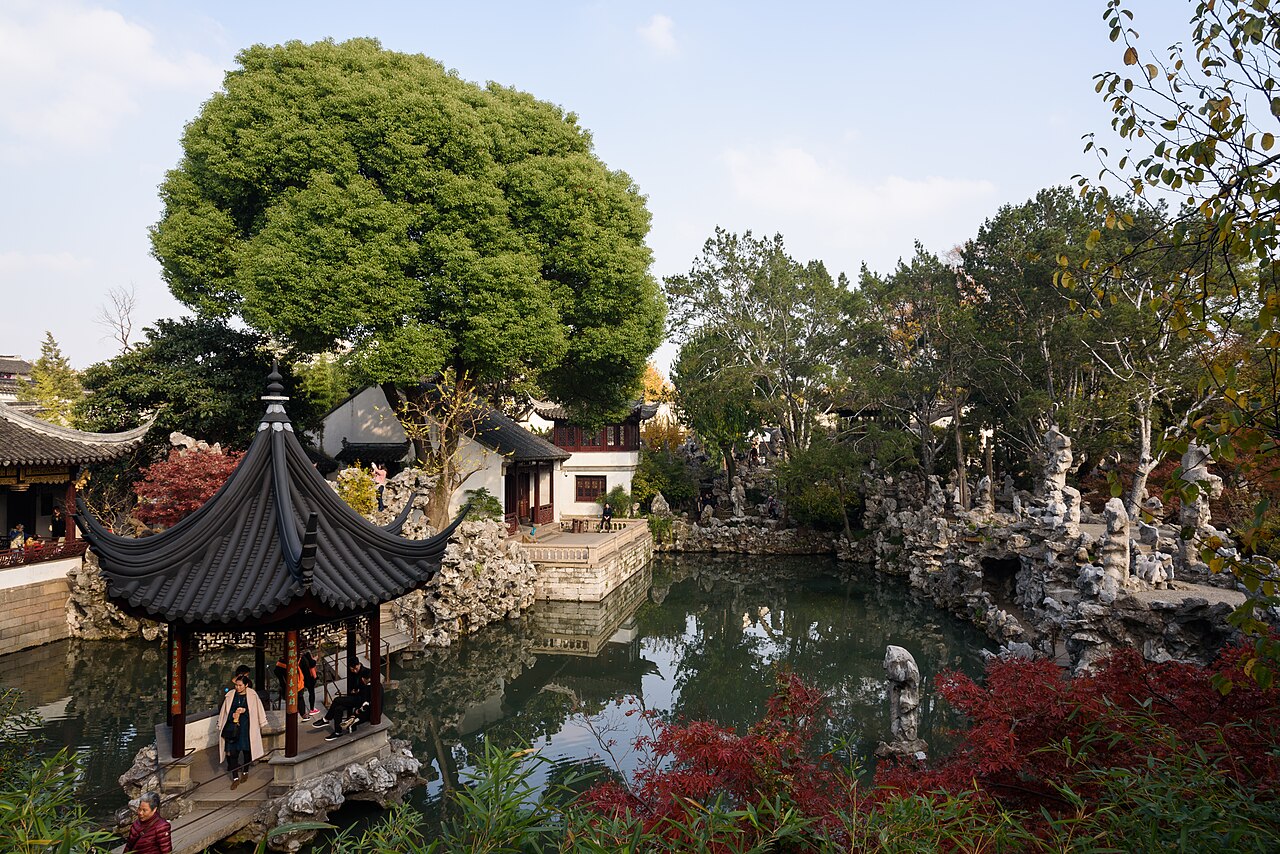
A garden of rocks: a maze of Taihu limestone peaks, tunnels and bridges that children love and that has a link to I. M. Pei’s family. Often combined with Pingjiang Road and a canal boat ride.
 Free
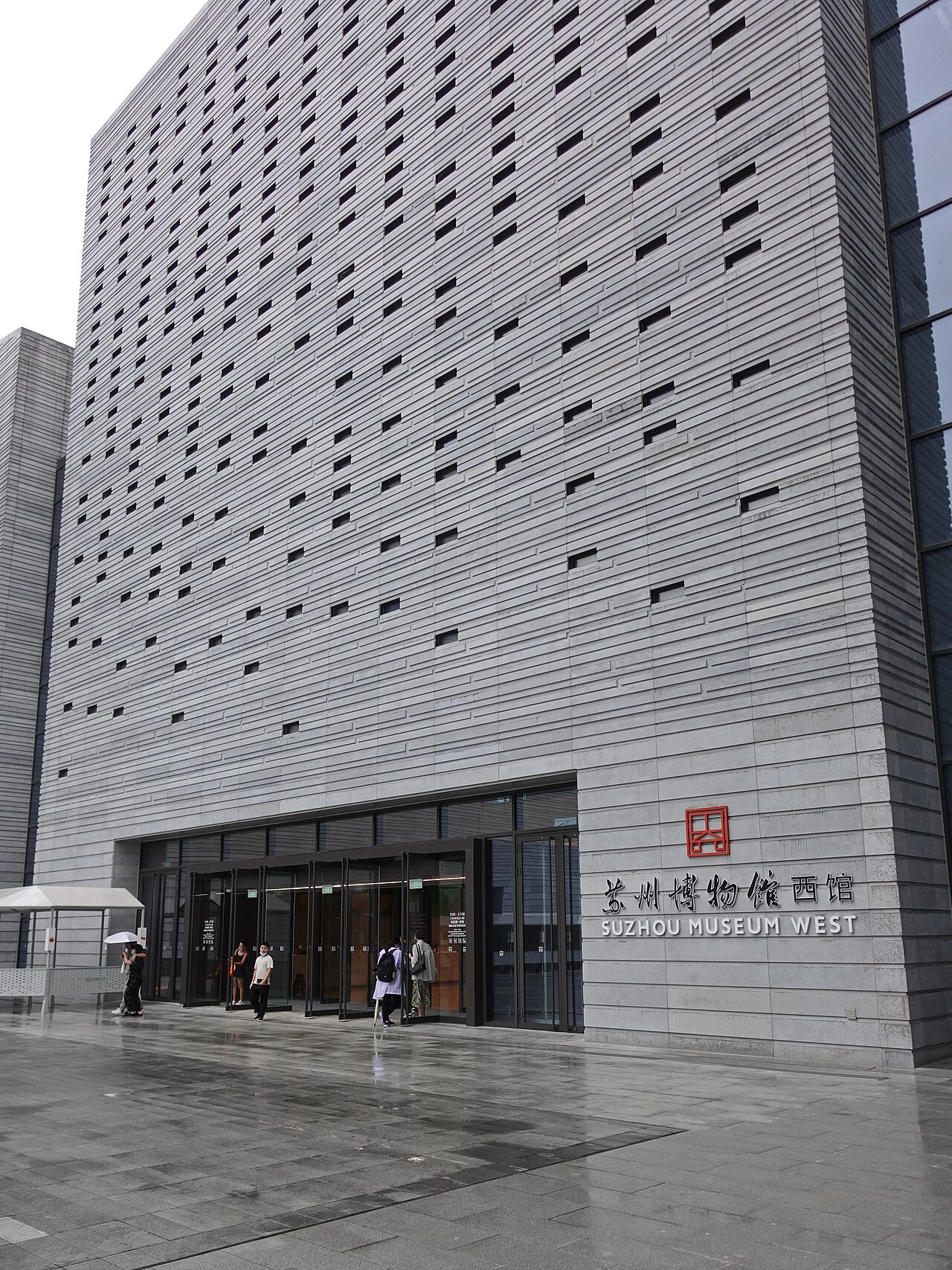
I. M. Pei’s modern take on a Suzhou garden house, with a free collection of Song to Qing treasures. Reserve a slot ahead and go on a weekday morning.
A stone-paved lane beside a canal, lined with teahouses, snack shops and Song dynasty street plans. Free to stroll, best early or at dusk, with boat rides and Kunqu close by.
Suzhou’s leaning pagoda and the legendary tomb of King Helu, on a wooded hill with ancient rocks and a sword pool. Reach it by a walk down Shantang Street or a short bus ride.
 Free
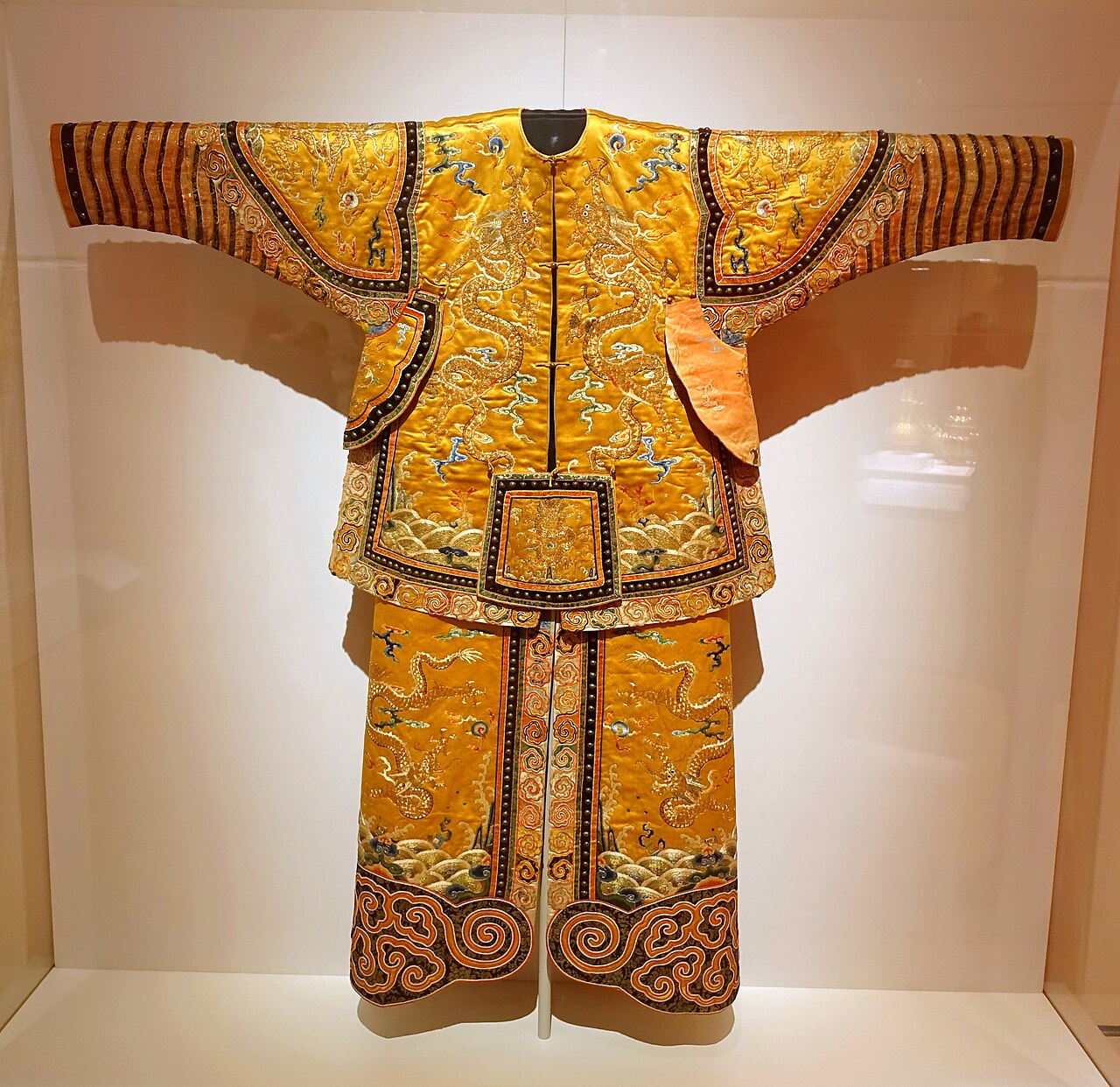
China’s first museum devoted to silk, free to enter, with mulberry gardens, working looms and Qing imperial weaving. A good rainy-day stop and a way to understand Suzhou’s craft.
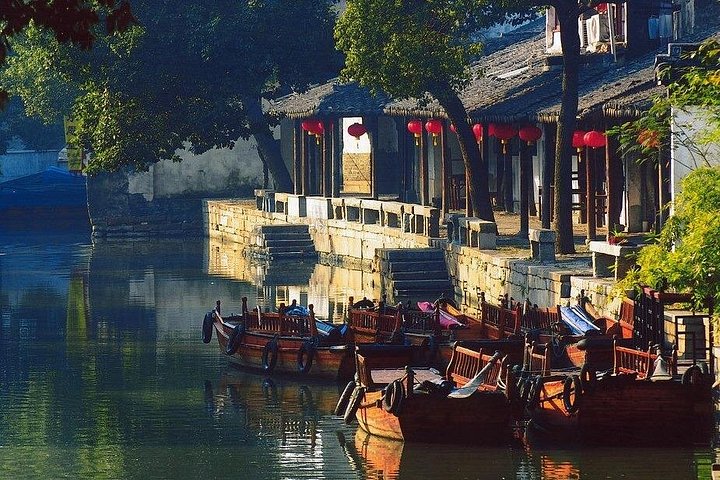
A canal town of more than a thousand years, with three famous bridges, a UNESCO-listed garden and boat rides. The one water town this guide recommends, about 18 kilometres from Suzhou.
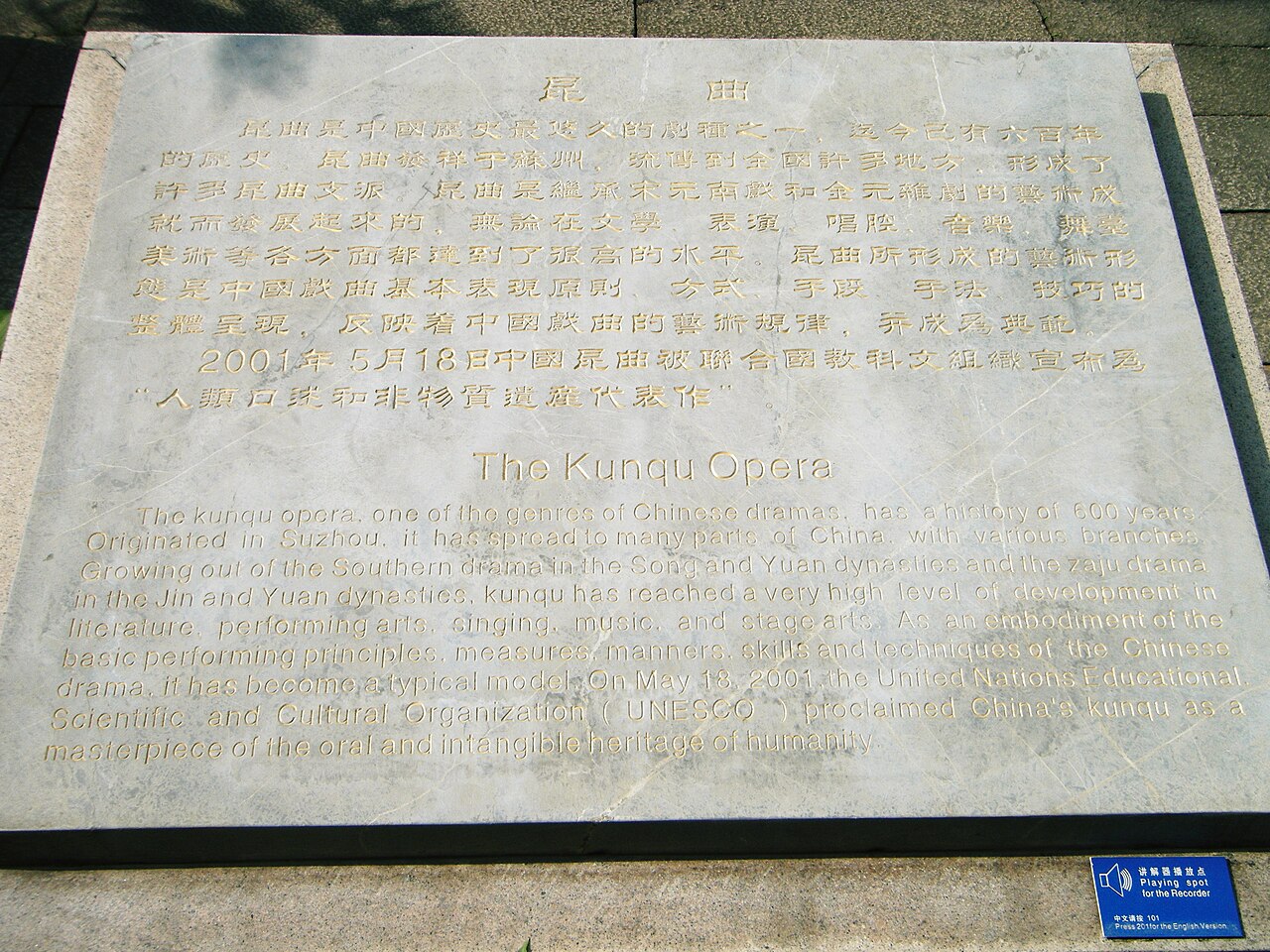
China’s most refined form of opera, born near Suzhou more than six hundred years ago and recognised by UNESCO. See it in a garden setting, in a teahouse or on a day tour that includes a show.
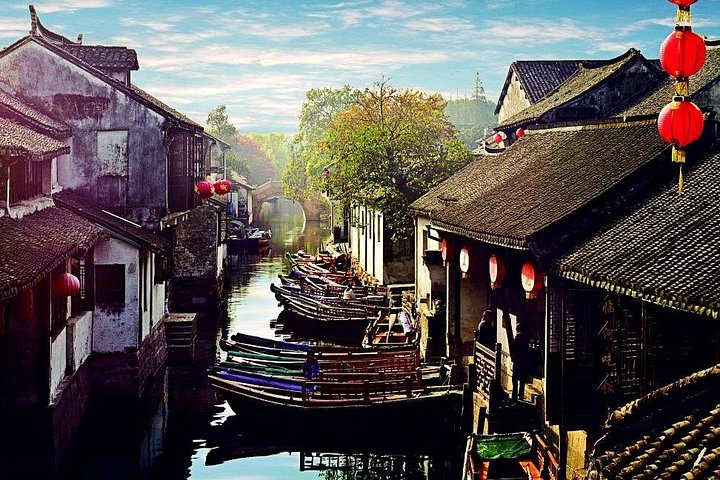
The most famous of the Suzhou-area water towns: Twin Bridges, a grid of canals, Ming and Qing mansions and boat rides under stone arches. Bigger and busier than Tongli, and at its best early or after the day trippers leave.
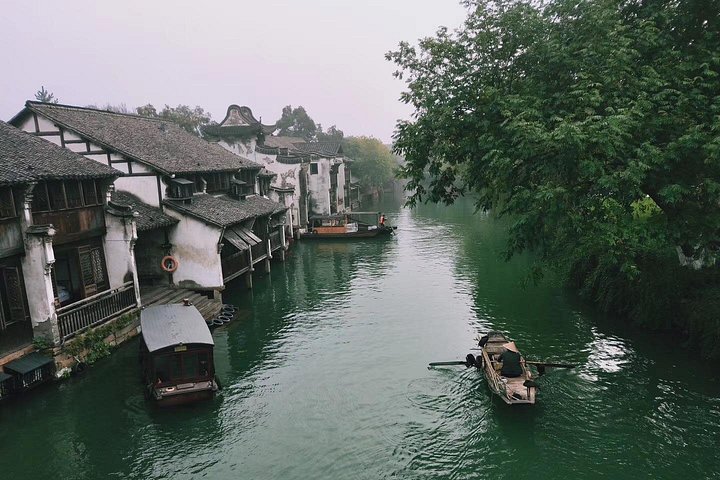
The most polished of the great water towns, with East and West sections, indigo-dyed cloth, old workshops and lantern-lit canals at night. Over the provincial border in Zhejiang, so it makes a long day trip or a rewarding overnight stay.
Hotels we would book ourselves, from splurges to good-value bases.
 $$$
Panmen (south-west old city)
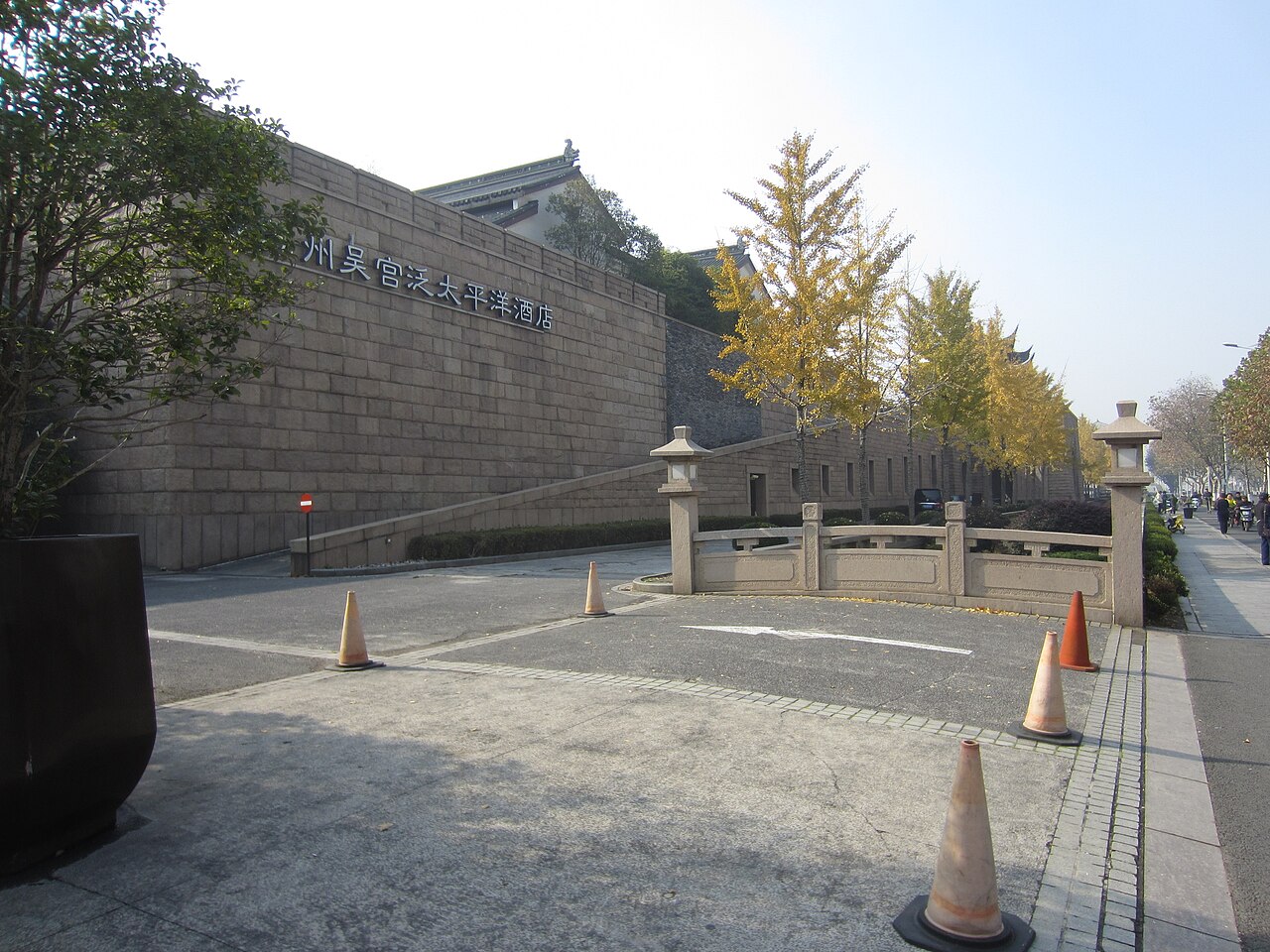
A garden-style luxury hotel beside the Panmen Scenic Area in the south-west of the old city, with an outdoor pool, four restaurants and tennis and indoor golf.
Check rates →Guanqian Street (central old city)
A four-star hotel in the heart of the old city, one minute from Guanqian Street and a short drive from the Humble Administrator’s Garden, with a gym and free parking for guests.
Check rates →Shantang Street (north-west old city)
A mid-range hotel on Shantang Street itself, one minute from the canal lanterns and a 15-minute walk to Tiger Hill, with breakfast and free parking included.
Check rates →Liuyuan Road (west old city)
A longstanding hotel set in its own gardens on Liuyuan Road, close to the Lingering Garden, with a free breakfast buffet and free parking.
Check rates →Yangyuxiang (central old city)
A simple, good-value budget hotel on Yangyuxiang in the old city, with free parking, free Wi-Fi and staff who speak several languages.
Check rates →Guangji South Road (south old city)
A five-star luxury hotel on Guangji South Road with 190 individually decorated rooms, an indoor pool, spa and three restaurants, a short drive from the Humble Administrator’s Garden.
Check rates →Ganjiang Road West (west old city)
A five-star hotel with about 300 rooms, four restaurants and an indoor pool, two minutes by car from West Garden Temple and close to the Lingering Garden and Tiger Hill.
Check rates →Suzhou Industrial Park (Jinji Lake)
A four-star hotel with about 306 rooms on Suzhou Avenue East, a four-minute walk from Jinji Lake, with lake-view rooms, an indoor pool and a metro station about a minute away.
Check rates →A practical primer for a first visit to Suzhou: the classical gardens, timed passport entry, the Suzhou Museum, Pingjiang Road, Tiger Hill, one water town, Kunqu opera and how to get around.
A neighbourhood guide to Suzhou: the Guanqian Street core, the Shantang and Tiger Hill side, the Lingering Garden area and the green south by Panmen, with five hotels from budget to luxury.
A three-day Suzhou itinerary that groups the sights by area: the north-east gardens and museum, the west side and Tiger Hill, then a water town and an evening of local performance, with rainy-day swaps.
A food guide to Suzhou: the local noodle tradition, sweet and delicate Jiangnan dishes, seasonal crab, teahouses and pastries, and where each fits into a day of sightseeing.
When to visit Suzhou: what each season looks like in the gardens and canal towns, the plum rains, autumn colour, public holiday crowds and the quietest times of the year.
The best day trips from Suzhou: Tongli, Zhouzhuang, Wuzhen and Luzhi water towns, Tianping Mountain, and Shanghai or Hangzhou by high-speed train, with advice on choosing and combining them.