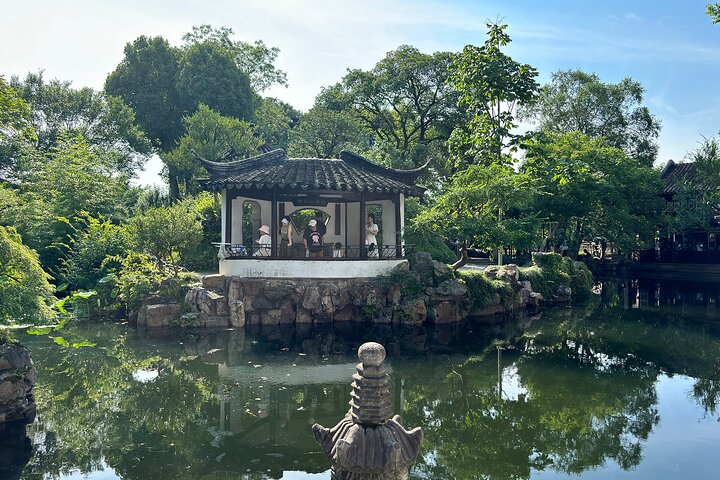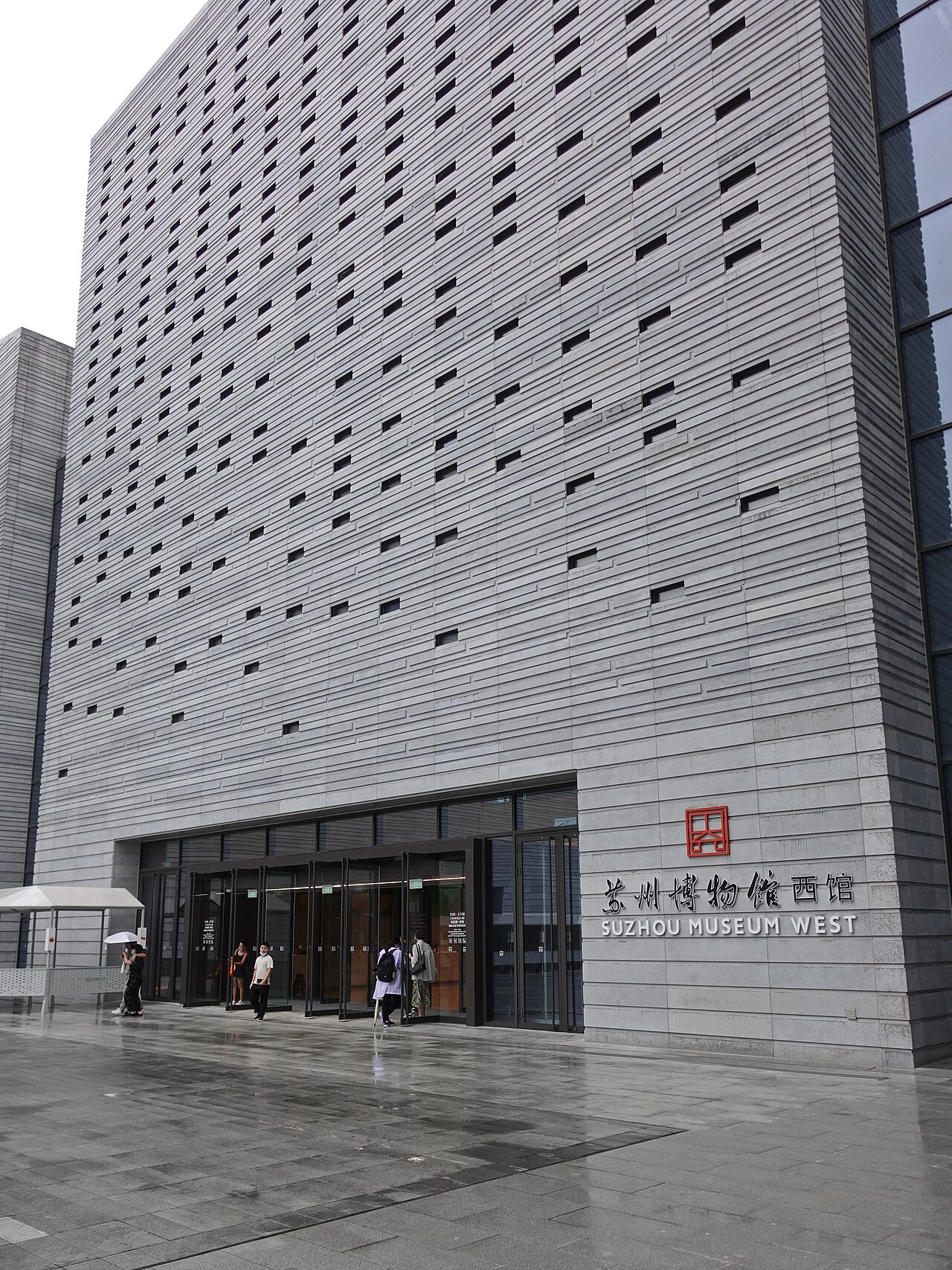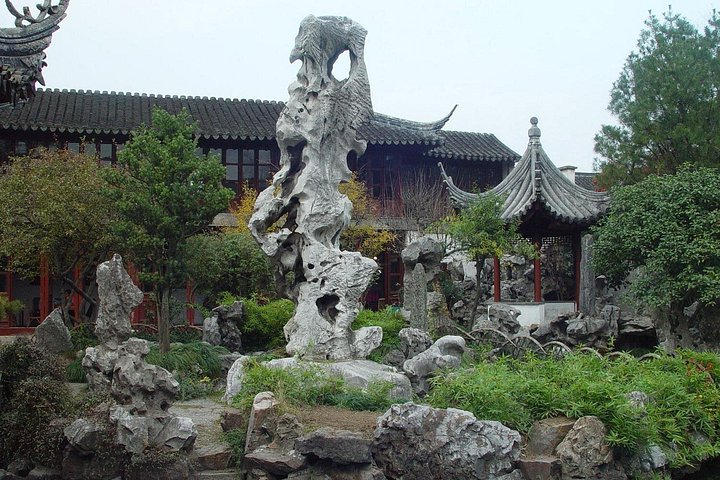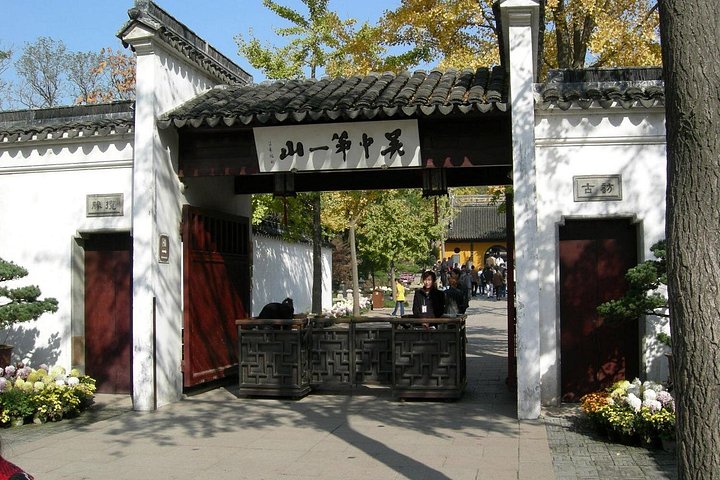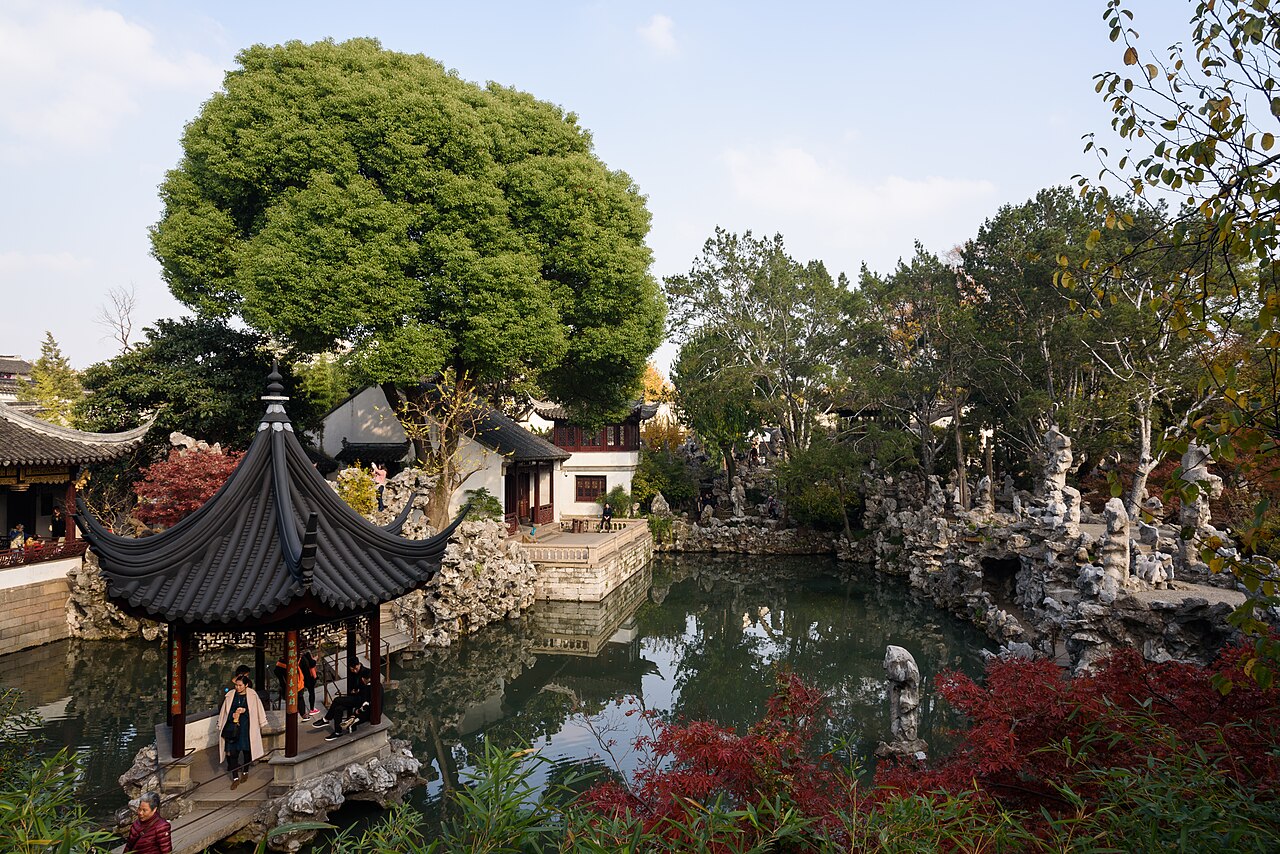
Lion Grove Garden is the playful one. Instead of ponds and pavilions, its signature is a vast rockery of Taihu limestone, built in the fourteenth century and said to resemble lions in many poses, which fills much of its 1.1 hectares with caves, tunnels, bridges and steps. The rockery has about nine paths and twenty-one openings, so a first visit usually involves getting happily lost. Around the stones are halls and pavilions, including the True Delight Pavilion and the Woyun Room, and a pond with a zigzag bridge adds the classic garden elements. The garden is part of the UNESCO group of Suzhou classical gardens, and it has a family connection to the architect I. M. Pei, whose relatives once owned it and who later designed the Suzhou Museum a short walk away. Because it is the most physical of the gardens, children and teenagers often prefer it to the more contemplative ones. It is also one of the closest to Pingjiang Road, which makes it easy to fit into a walking day.
Getting there
Lion Grove is in the north-east of the old city, near the Humble Administrator’s Garden. From Metro Line 6 at Zhuozhengyuan-Suzhou Museum it is a walk of about five to seven minutes to the south. Tickets are real-name timed entry, so bring your passport, and the hours follow the other major gardens. A visit takes about an hour and a half to two hours.
What to expect
The rockery is the draw, and it is a three-dimensional puzzle. Climb through the caves, cross the little bridges and look for the lion shapes that earned the garden its name, though it takes imagination. It can feel crowded at peak times, as many visitors pack into the narrow passages, so go early. The rock tunnels are steep and uneven in places, so wear flat shoes and watch children near the drops.
Making the most of it
A popular day plan combines Lion Grove, the Humble Administrator’s Garden, lunch, a walk along Pingjiang Road and a boat ride on the canal, and a private day tour built on that plan is a convenient way to do it if you want a guide and a driver. Done independently, the same route is walkable because the gardens, the museum and the start of Pingjiang Road all sit within a short distance of each other. Spring and autumn are the most pleasant seasons, and in summer the shade inside the caves is welcome.
What to expect
The experience
A self-guided scramble through a limestone rockery maze, with halls, a pond and pavilions around it.
Best time
At opening on a weekday, before the narrow passages fill up.
How long
About an hour and a half to two hours.
Tips
Wear flat shoes for the steep tunnels, bring your passport for the real-name ticket and watch children near the drops.
Quick picks
- Best for
- Families and anyone who prefers an adventurous garden to a contemplative one.
- Families
- The best garden in Suzhou for children, who will love the tunnels and bridges, but keep a close eye on them.
- Couples
- Pleasant, though the crowds break the mood, so go early or choose a quieter garden for romance.
- Pair with
- The Humble Administrator’s Garden, the Suzhou Museum and Pingjiang Road, all a short walk away.
- Time needed
- Two hours including queues.
Good questions
Why is it called Lion Grove?+
The rockery’s peaks are said to resemble lions in many poses. The garden’s name also has Buddhist associations from its origins.
Is Lion Grove good for children?+
Yes, the cave and tunnel maze is the most fun of the major gardens. Supervise young children because the paths are steep and uneven.
How do I get there?+
Take Metro Line 6 to Zhuozhengyuan-Suzhou Museum and walk about five to seven minutes south. It is also close to Pingjiang Road.
Do I need to book in advance?+
Entry uses real-name timed tickets and weekends and holidays can sell out, so booking a few days ahead with your passport is wise.
What is the link to I. M. Pei?+
The architect’s family once owned the garden, and Pei later designed the Suzhou Museum near it.