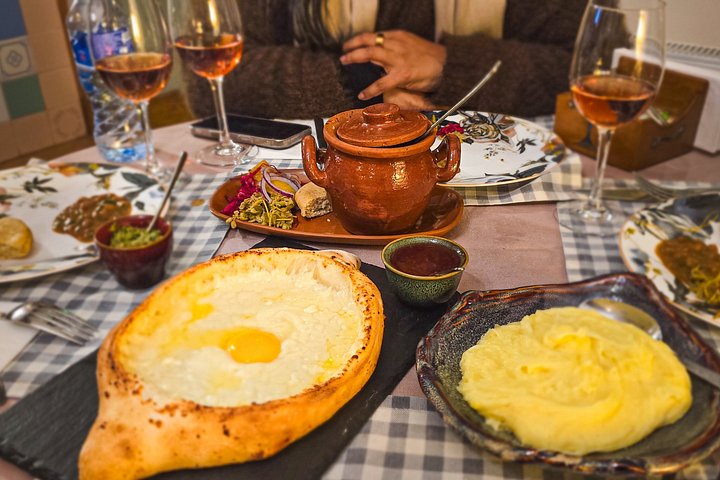
Georgian food is easy to love and surprisingly easy to cook, and a class in a local home is the best way to see how. This hands-on session focuses on the two dishes that every visitor meets first: khinkali, the large twisted dumplings filled with spiced meat and broth, and khachapuri, the cheese bread that appears in many regional forms. You work alongside your host at a kitchen table, kneading dough, mixing the filling and learning the pleating technique that gives khinkali its topknot and a proper khinkali its signature burst of juice. Along the way you pick up the etiquette of eating them, which involves holding the dumpling by the knot, taking a small bite, sipping the broth and leaving the knot on the plate. Then you sit down to a meal of what you have made, usually with a glass of Georgian wine, and talk about the country’s table traditions with someone who lives them.
How to visit
Classes run in a private home or small studio in Tbilisi, usually for two to three hours, and take small groups so everyone gets a turn at the dough. Come hungry, because the meal is the reward, and tell the host about dietary needs when booking; vegetarians can be catered for with cheese and vegetable fillings. Classes are conducted in English, and there is no experience needed. Wear something you do not mind getting floury, and check when you book which drinks and extras are included.
What to expect
You will usually start with the dough, which is simple, and move on to the filling, then spend the longest time on the pleating, which is harder than it looks. Hosts often explain the difference between the round imeruli khachapuri from the west and the boat-shaped adjaruli from the Black Sea coast, topped with an egg and a knob of butter, and may show you how to bake it.
The tradition of the long, convivial supra feast comes up naturally, along with the toasts, and many hosts will offer wine and sometimes chacha, the grape spirit. Recipes are usually shared so you can try again at home.
Making the most of it
Book this early in your stay, because it will change what you order in restaurants for the rest of the trip. It is also a good option for a rainy afternoon or for families, because children enjoy shaping dough and the meal is always a hit. Ask your host for suggestions for restaurants, bakeries and markets, and buy a bag of the right flour and spice blends to take home.
If you want a larger food experience, combine the class with the Sololaki food tour or a visit to a market, and you will leave with a full picture of Georgian cooking.
Good to know
Classes are often held in a family home or a small studio, so you may meet the host’s family or pets, which is part of the charm. Group sizes are kept small, so book ahead in busy months, and let the host know if you are left-handed or have any mobility needs. If you cook the recipes at home, look for Georgian cheese in specialty shops or substitute a mix of mozzarella and feta, and use a good strong flour for the dough.
What to expect
The experience
A small-group, hands-on cooking class in a local home where you make khinkali and khachapuri, then eat the meal together.
Best time
Early in your stay, at lunchtime or in the early evening.
How long
Two to three hours.
Tips
Come hungry, tell the host about dietary needs and ask for the recipes.
Quick picks
- Best for
- Food lovers and anyone who wants a hands-on experience with a local host.
- Families
- Children enjoy shaping dough, and khachapuri is a guaranteed hit.
- Couples
- A warm, social evening activity that ends with a shared meal.
- Pair with
- The Sololaki food tour, for a full picture of Georgian cuisine.
- Time needed
- Half a day.
Good questions
What will I cook in the class?+
You will make khinkali, the Georgian soup dumplings, and khachapuri, the cheese bread, then eat them together. Exact fillings and shapes can vary with the host.
Do I need cooking experience?+
No. The class is designed for beginners, and the host guides you through each step, from the dough to the pleating.
Is the class suitable for vegetarians?+
Usually yes, as cheese and vegetable fillings are easy to arrange. Mention dietary needs when you book.
How do you eat khinkali?+
Hold the dumpling by the knot, take a small bite, sip the broth, then eat the rest. By tradition you leave the knot on the plate.
Is wine included in the cooking class?+
Many hosts serve Georgian wine with the meal, but inclusions vary. Check when you book.