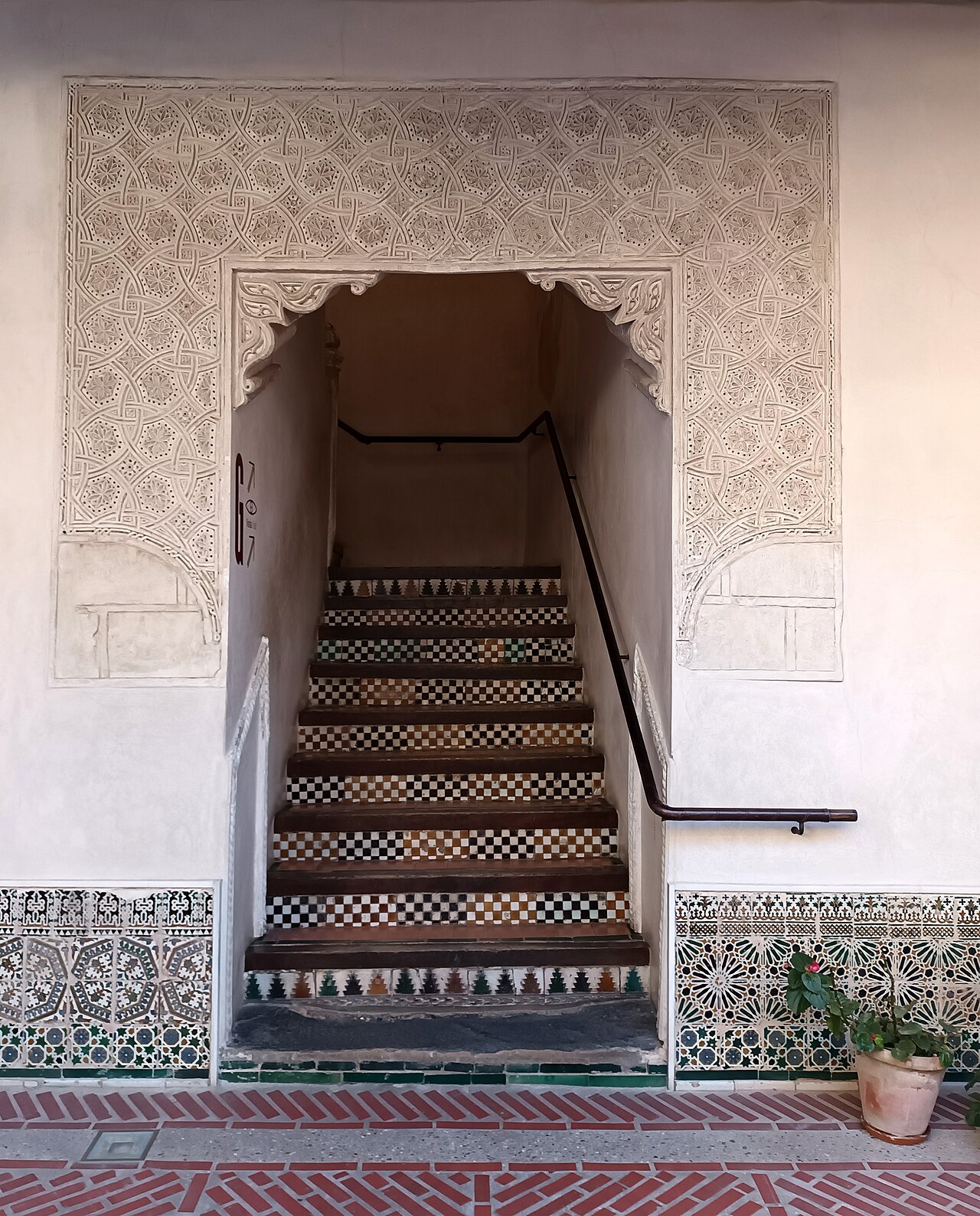
You cannot miss the Alcazar. Its four corner towers and strict, pale facade sit on the highest point of the old city and anchor almost every postcard view. The site has held a Roman palace, a Visigothic and Moorish fortress, and the residence of Castilian kings, and the building you see today owes most of its look to the 1530s, when Emperor Charles V had architects Alonso de Covarrubias and later Juan de Herrera give it a Renaissance face. It has been burned, bombarded and rebuilt more than once, most famously during the siege of 1936 at the start of the Spanish Civil War, when its defenders held out for weeks in the cellars while the upper floors were reduced to rubble. After careful rebuilding it now houses the Army Museum, a large, well-organized collection that walks through centuries of Spanish military history, from medieval arms and armor through the age of empire to the modern era. Even if uniforms and cannon are not your passion, the building is worth the visit for the cool Renaissance courtyard, the monumental staircase, and the views from the upper terraces back across the red rooftops to the cathedral spire.
The museum is organized chronologically and is easier than it looks. Begin on the lower floors, where early weapons, banners and the story of the Reconquista set the scene, then follow the route up through the Habsburg period, with helmets, swords, flags and large-scale models of famous battles. The collection includes a good deal of armor and a long run of uniforms, and texts are available in several languages, though audio guides help if the scale of the building feels overwhelming.
Look for the display recording the siege itself; it is sober, specific and, whatever your politics, a reminder of how recently the walls were blown apart.
Space is generous, so even on a busy day the building feels navigable, and families will find the large models and weapons engaging for older children. The sloping approach from Plaza de Zocodover is part of the experience: you climb a short, steep street to a wide forecourt, with the shadow of the towers growing as you reach the entrance.
Bag checks and metal detectors are in place, so travel light. The museum keeps regular weekly closing days and varied opening hours across seasons, so look up the schedule before you plan the day around it.
Combine the Alcazar with the Plaza de Zocodover, where you can buy the town's famous marzipan, and with a walk down to the Puerta del Sol or the cathedral. The terrace views are particularly good in late afternoon, when the stone turns honey colored and the Tagus gorge below catches the light.
Allow around two hours for a thorough visit. If you only have time for a quick look, focus on the courtyard, the main staircase, and the upper floors with the panoramic windows; that gives you the essence of the building in under an hour.
What to expect
The experience
A self-guided museum in a Renaissance fortress, arranged chronologically from medieval arms to modern Spain, with courtyard, grand stair and upper-floor viewpoints.
Best time
Weekday mornings are calmest. The terraces look best in late afternoon light. The museum keeps weekly closing days, so check ahead.
How long
About two hours for the full route; under an hour for the highlights.
Tips
Travel light because of bag screening. Follow the chronological route rather than wandering. Combine with Zocodover for marzipan afterward.
Quick picks
- Best for
- History fans, families with older kids, and anyone chasing a skyline view.
- Families
- Large models, armor and open spaces keep school-age kids interested.
- Couples
- Late-afternoon terraces, then a stroll down to the old gates.
- Pair with
- Plaza de Zocodover and the cathedral, both a short walk away.
- Time needed
- Two hours is ideal.
Good questions
Is the Alcazar a palace or a museum?+
Both in spirit, but today it is the Army Museum, with a public library in part of the complex. The fortress itself is the star.
Was the Alcazar damaged in the Civil War?+
Yes, heavily, during the siege of 1936. It was rebuilt in the following decades and the story is told in the museum.
Are there good views?+
Yes. Upper floors and terraces look over rooftops, the cathedral and the Tagus valley.
Is it suitable for children?+
Generally yes for school-age kids who like armor and models; strollers may need to be left at the entrance.
How do I get there?+
It is a short uphill walk from Plaza de Zocodover, itself the main arrival point for many visitors.