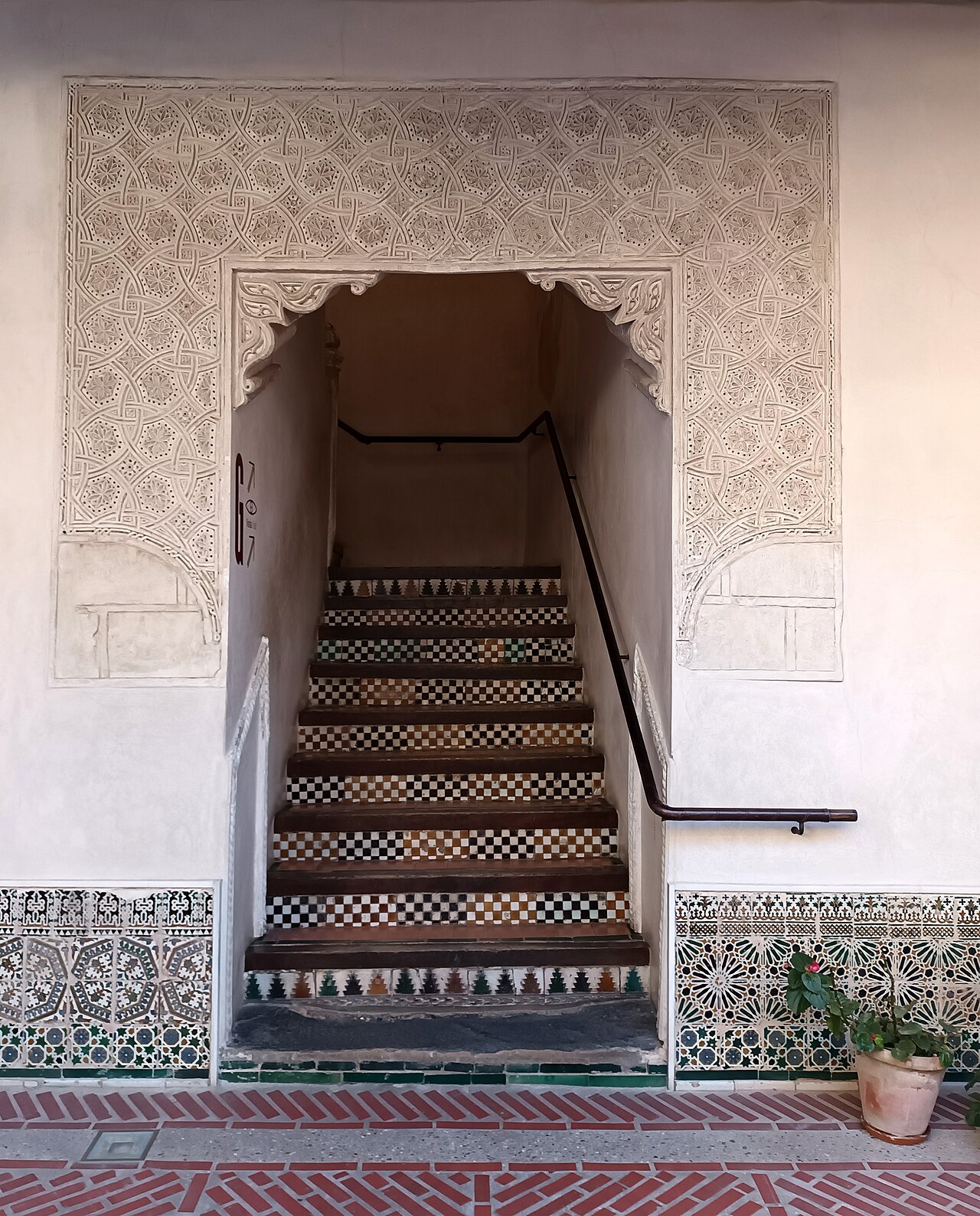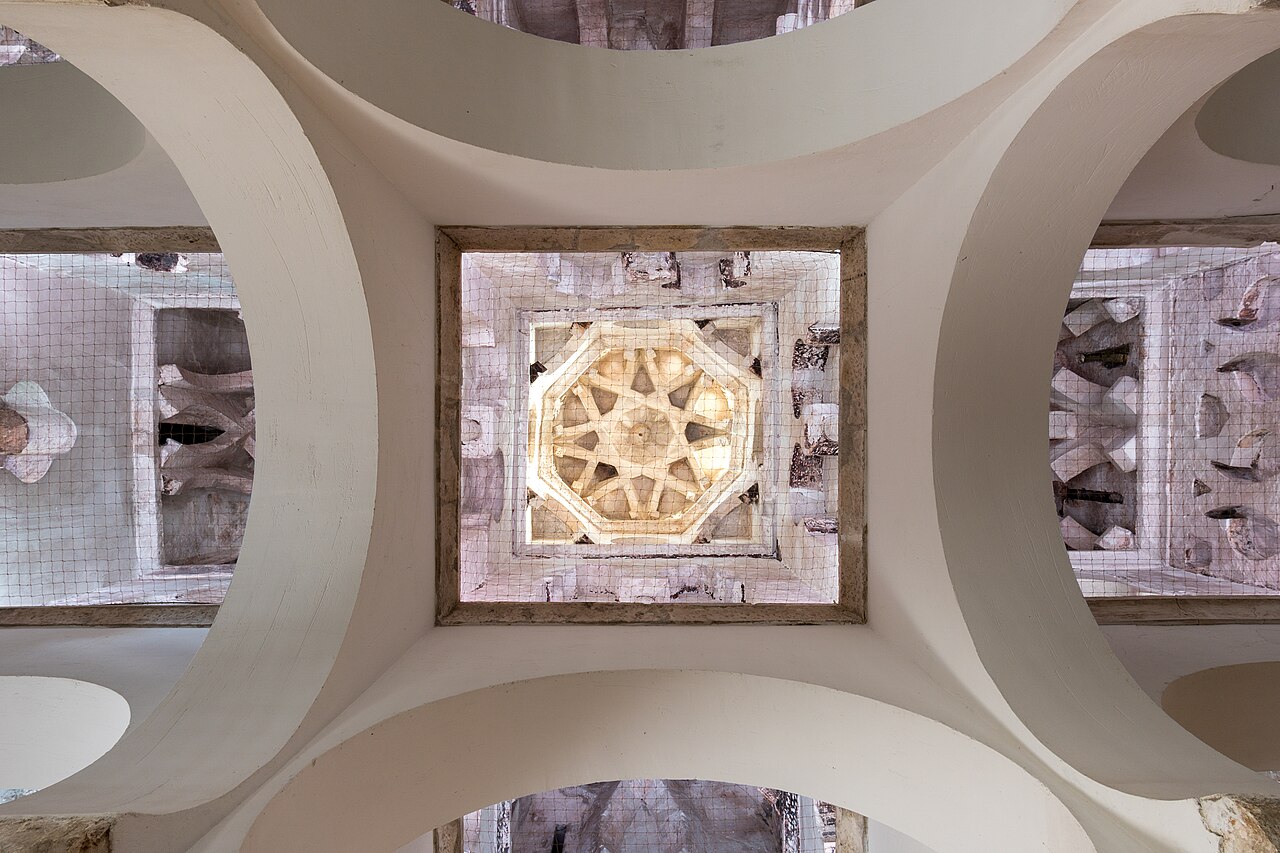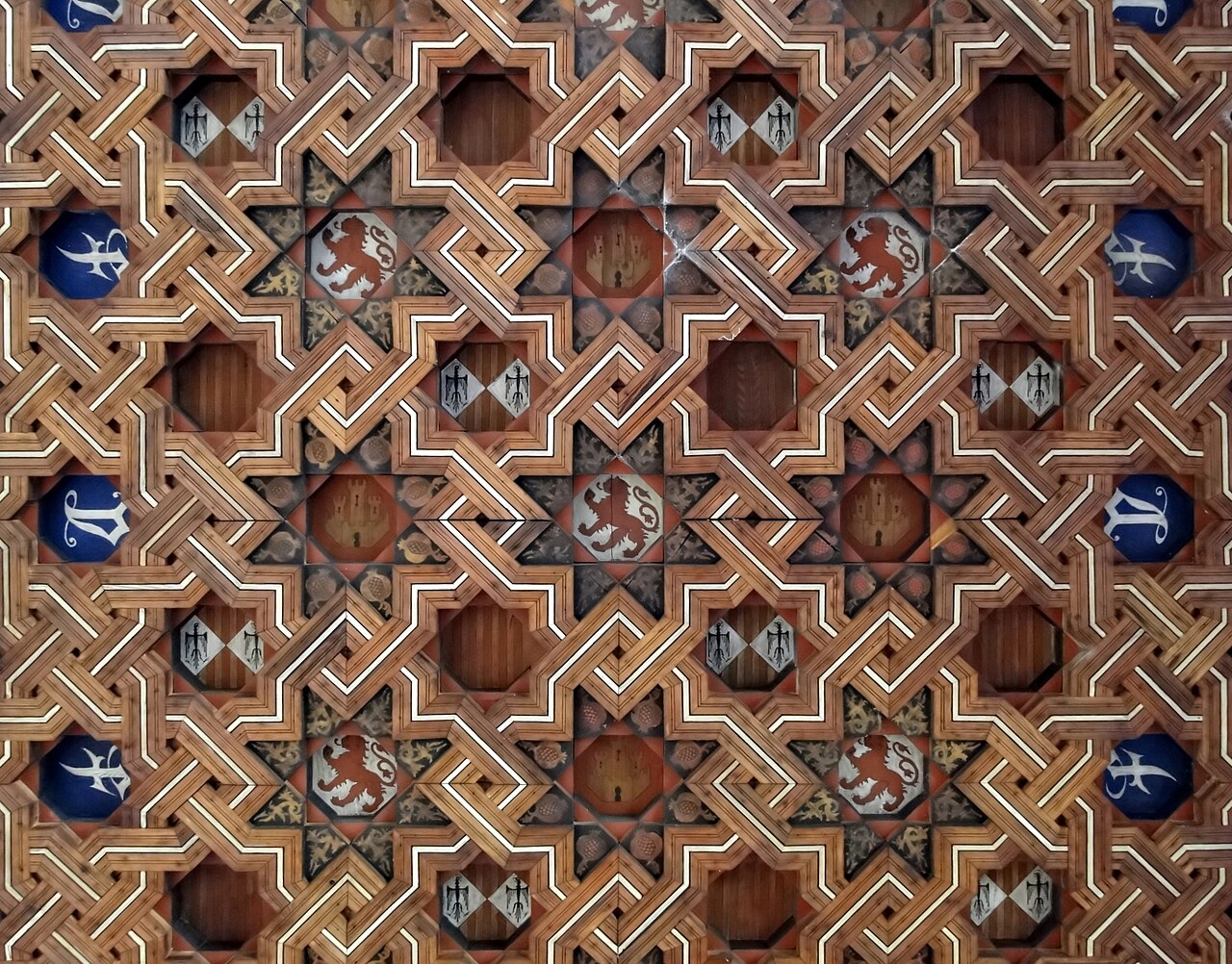
Ferdinand and Isabella commissioned this monastery in 1477 to celebrate their victory at the Battle of Toro and to serve as their burial place. Architect Juan Guas, born in France and trained in the late Gothic tradition, delivered the most extravagant example of what Spain calls the Isabelline style: a single wide nave, soaring ribbed vaults, a crowded frieze of heraldry, and a dense forest of sculpted detail that seems to sprout from every wall. The royal couple eventually chose Granada for their tombs after the conquest of the Nasrid city, but the heraldic eagles, yokes and arrows of their emblems still dominate the interior. On the exterior, a long run of iron chains hangs from the north wall, left by Christian prisoners freed from Muslim captivity at the fall of Granada. The monastery is set on the lip of the Tagus gorge with a calm cloister at its heart, where arched galleries wrap around a courtyard of garden and fountain. The upper level of the cloister is carved in Mudejar-flavored woodwork and gives some of the best photographs in the city.
Entering from the quiet street, you find yourself in the church first. Look at the transept, where tiers of niches and pinnacles climb above the crossing, and at the lanterns that filter light across the stone. The interior was damaged in the Napoleonic wars and again in later periods, and extensive restoration has returned much of its glow. Heraldic carving of the Catholic Monarchs, with a double-headed eagle of Saint John, runs everywhere, a reminder that this was as much a statement of royal power as an act of devotion.
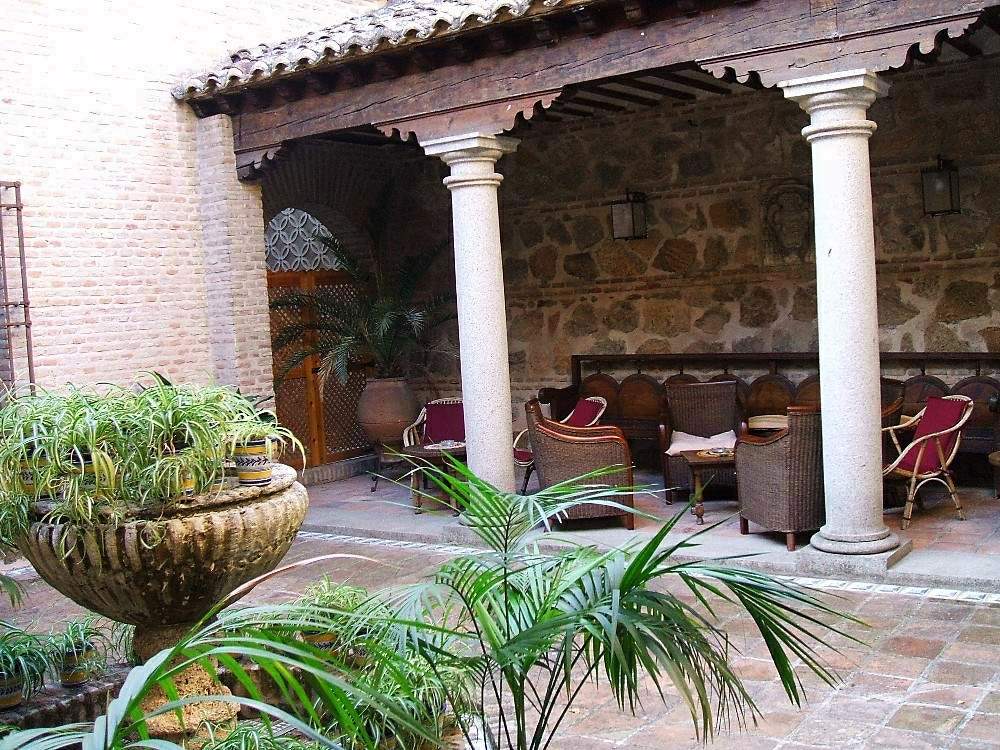
The cloister is the high point of the visit. Walk it slowly on both levels. The lower gallery is purely Gothic, with delicate tracery; the upper gallery adds a Mudejar timber ceiling that gives the space a different warmth. Gargoyles, small figures and plant motifs fill the capitals, and it is easy to spend twenty minutes just studying them. A garden at the center, with orange trees and a quiet fountain, offers a place to sit and breathe.
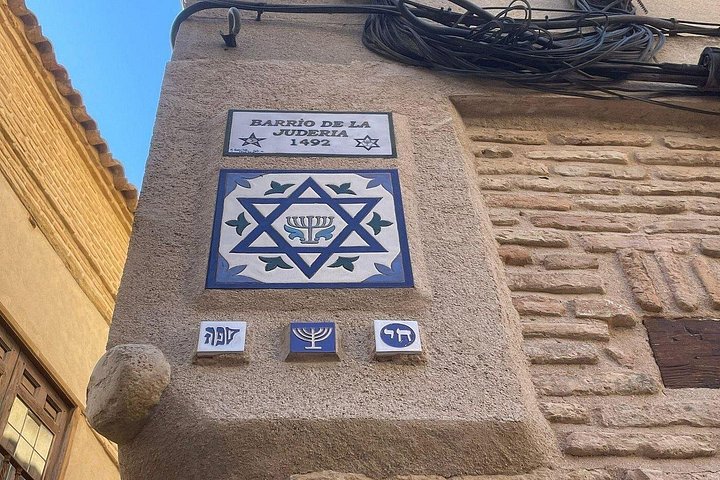
The monastery lies at the far west end of the old town, so many visitors reach it on a walk from the Jewish Quarter along Calle San Juan de los Reyes, a gentle downhill stroll past craft shops. Consider continuing from here to the Puente de San Martin, the medieval bridge that crosses the Tagus nearby, and returning along the river path for views of the monastery from below.
Entry is paid, usually through the Toledo Monumental scheme or a standalone ticket, and the monastery is still a working Franciscan community in part, so some areas stay private. Allow an hour, and wear comfortable shoes for the cobbles.
Timing and photography deserve a mention. The church interior is dim in places, so a phone camera with night mode or a camera with a stabilized lens will serve you better than flash, which is generally discouraged. The cloister, by contrast, is bright and rewards a wide-angle view. If you enjoy detail, bring binoculars or use your zoom to pick out the carved figures high up on the walls.
The garden benches are a good place for a short rest before the climb back to the center. Visiting just before closing, when the groups have gone, gives the quietest atmosphere of the day.
What to expect
The experience
A self-guided visit through the church and the two-level cloister, with a garden courtyard and chains hanging on the exterior wall.
Best time
Mornings or late afternoon for softer light in the cloister.
How long
Around one hour.
Tips
Walk both levels of the cloister. Follow with the Puente de San Martin and a riverside return.
Quick picks
- Best for
- Architecture lovers and photographers.
- Families
- The garden courtyard and chains give kids something to look at.
- Couples
- One of Toledo's most romantic cloisters, especially late in the day.
- Pair with
- Puente de San Martin, Santa Maria la Blanca and the Jewish Quarter walk.
- Time needed
- One hour plus the walk.
Good questions
Why are chains on the wall?+
They were left by Christian captives freed from Muslim captivity when Granada fell.
Are Ferdinand and Isabella buried here?+
No. They chose Granada for their tombs after conquering it.
What style is the building?+
Isabelline Gothic, with Mudejar woodwork in the upper cloister.
Is it a working monastery?+
Part of it is, so some areas stay closed to visitors.
How do I get there?+
It is a gentle downhill walk from the Jewish Quarter.