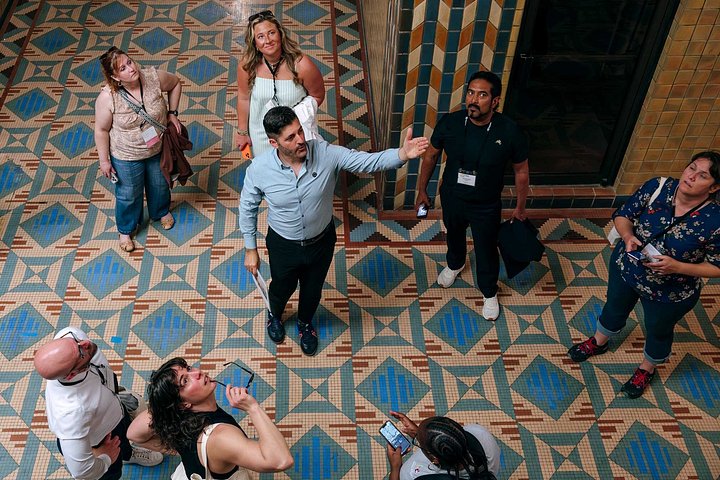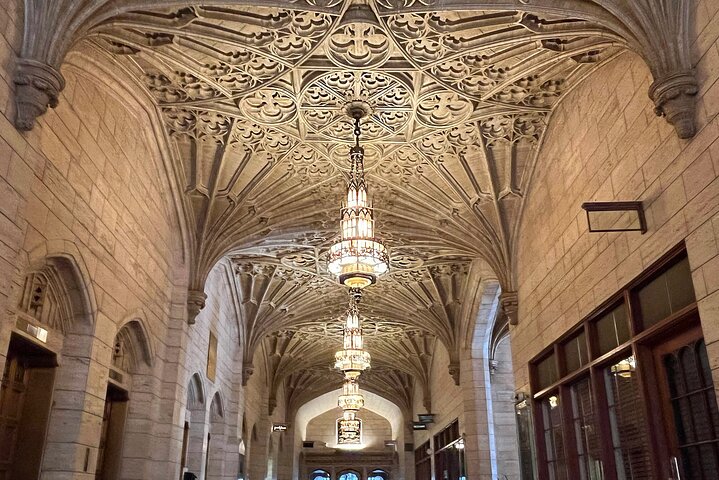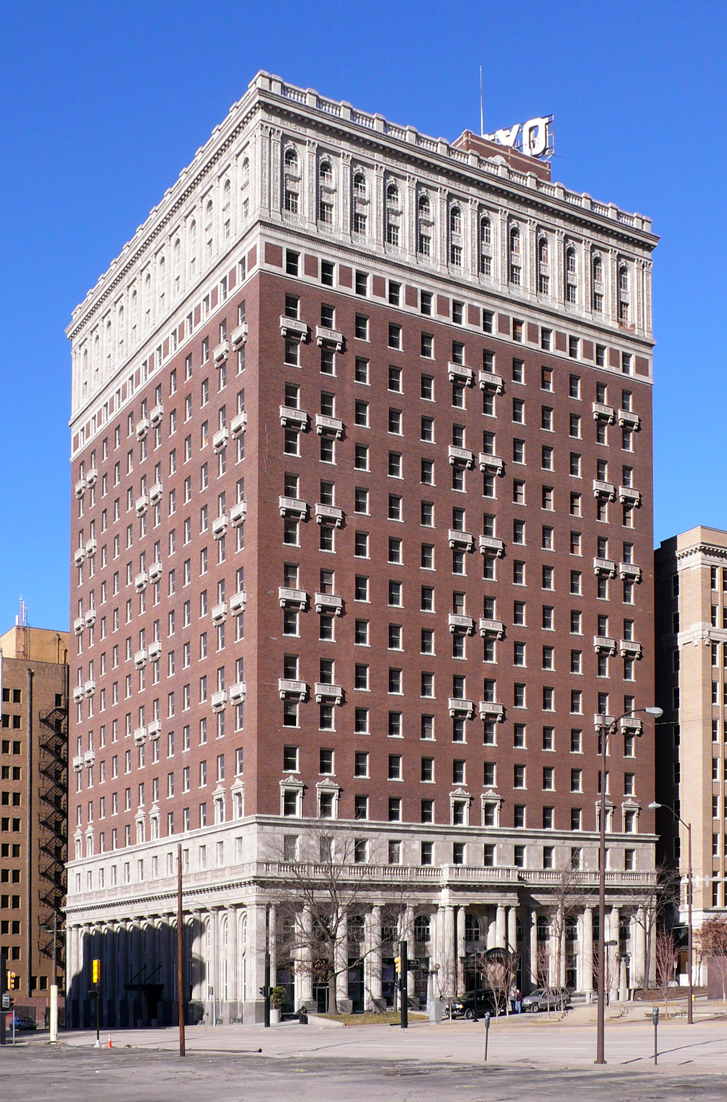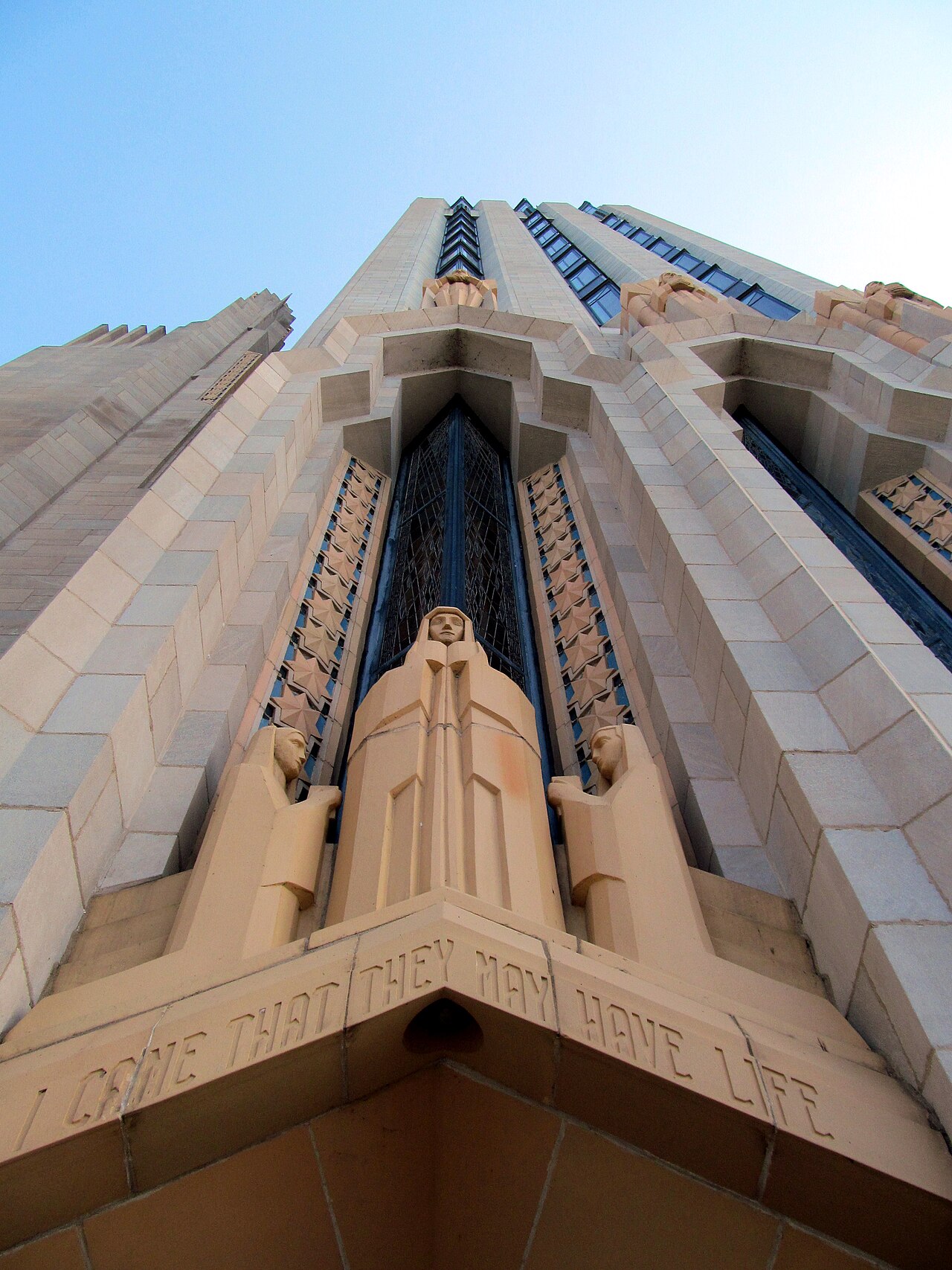
Boston Avenue Methodist Church is the building that architecture lovers come to Tulsa to see. Completed in 1929, it rises as a tall limestone tower with stepped setbacks, vertical lines and richly sculpted ornament, a design that blends Art Deco with ideas from early modernism. The church was designed with the creative involvement of local artist and teacher Adah Robinson and her student, the architect Bruce Goff, who later became a celebrated figure in American architecture. The result is a building that feels both sacred and dazzlingly modern for its age. The interior continues the story. Sculpted figures, symbolic panels, geometric patterns and stained glass fill the sanctuary and the corridors, with themes that range from faith and nature to progress and community. The church was recognized as a National Historic Landmark, which reflects its importance in American architecture. Even from the sidewalk the tower is a striking sight, and it anchors the south side of downtown with real presence.
Allow about thirty to sixty minutes. Exterior viewing is free at any time, and the best photographs are usually taken in morning or late afternoon light when the limestone glows. Interior access depends on the church's schedule: it is an active congregation, so visits may be limited around services and events. Check the church's website or call ahead to ask about visiting hours or tours, and be respectful of worshippers and staff.
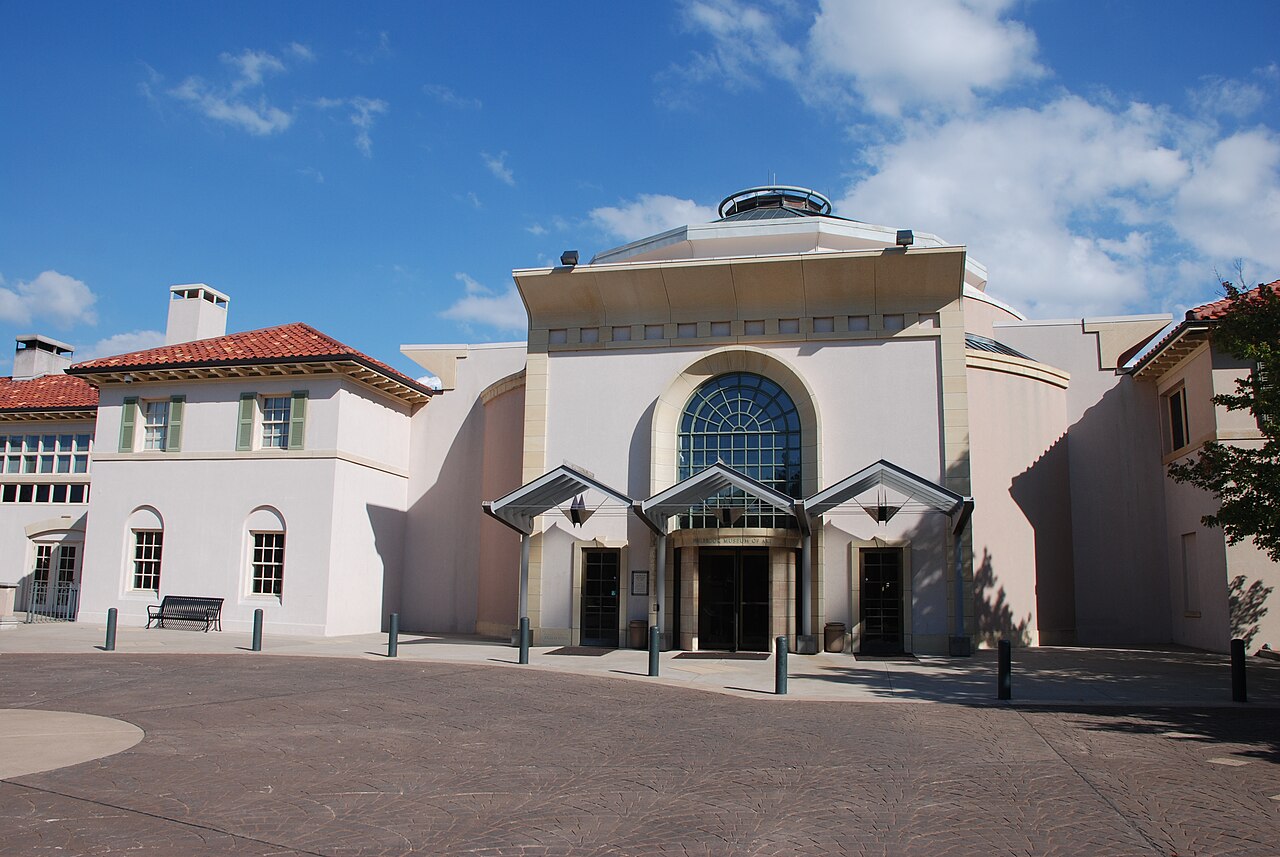
The building pairs naturally with the Art Deco walking tour, which covers downtown towers and lobbies, and with the Philbrook Museum of Art, which sits in the same part of the city. For architecture fans, a day built around Boston Avenue, the downtown towers and the Union Depot gives a rich picture of how Tulsa expressed its wealth in the 1920s and 1930s. If you enjoy photography, bring a wide lens and a tripod friendly mindset for the upward angles.
Parking is available near the church, and the area is walkable from nearby streets, though visitors staying downtown may prefer a short rideshare. The surrounding neighborhood has restaurants and coffee shops where you can pause. Dress modestly if you plan to enter the sanctuary, and ask before photographing inside. Because the building is a working church, treat the visit as a quiet moment in a busy sightseeing day rather than a long attraction.
The church is also a lesson in how a religious building can embrace its own era. The designers wanted a structure that expressed upward movement and optimism, and the tower, with its stepped profile and carved details, does exactly that. Visitors often walk around the block to see the building from several angles, and the contrast between the tower and its quiet neighborhood setting is part of the pleasure. If you cannot go inside, a few minutes of exterior viewing and photography still gives a strong sense of the building's character.
What to expect
The experience
An Art Deco church and National Historic Landmark with a soaring limestone tower, sculpted ornament and a richly decorated interior.
Best time
Morning or late afternoon light for the exterior; check interior access ahead.
How long
Thirty to sixty minutes.
Tips
Call ahead about interior visits, be respectful of worship, and combine with an Art Deco tour.
Quick picks
- Best for
- Architecture fans and photographers.
- Families
- A short stop for older children interested in buildings.
- Couples
- A quiet cultural stop.
- Pair with
- The Art Deco walking tour and the Philbrook Museum of Art.
- Time needed
- Thirty to sixty minutes.
Good questions
When was it built?+
It was completed in 1929.
Who designed it?+
Adah Robinson and Bruce Goff were closely involved in the design.
Can I go inside?+
Interior access depends on church schedules, so check ahead.
Is it free?+
Viewing the exterior is free.
What should I pair it with?+
The Art Deco walking tour and the Philbrook.