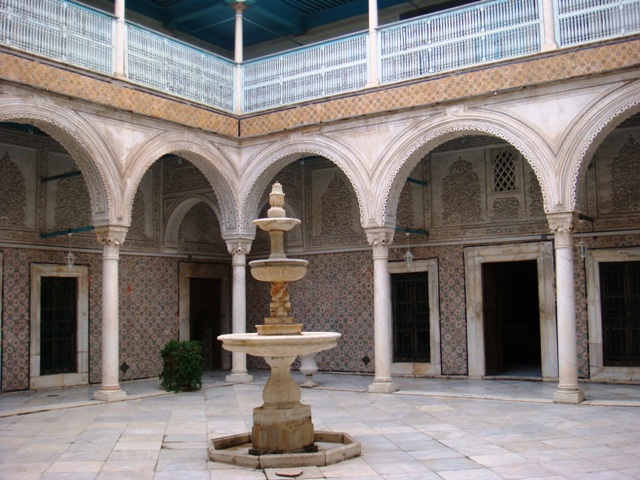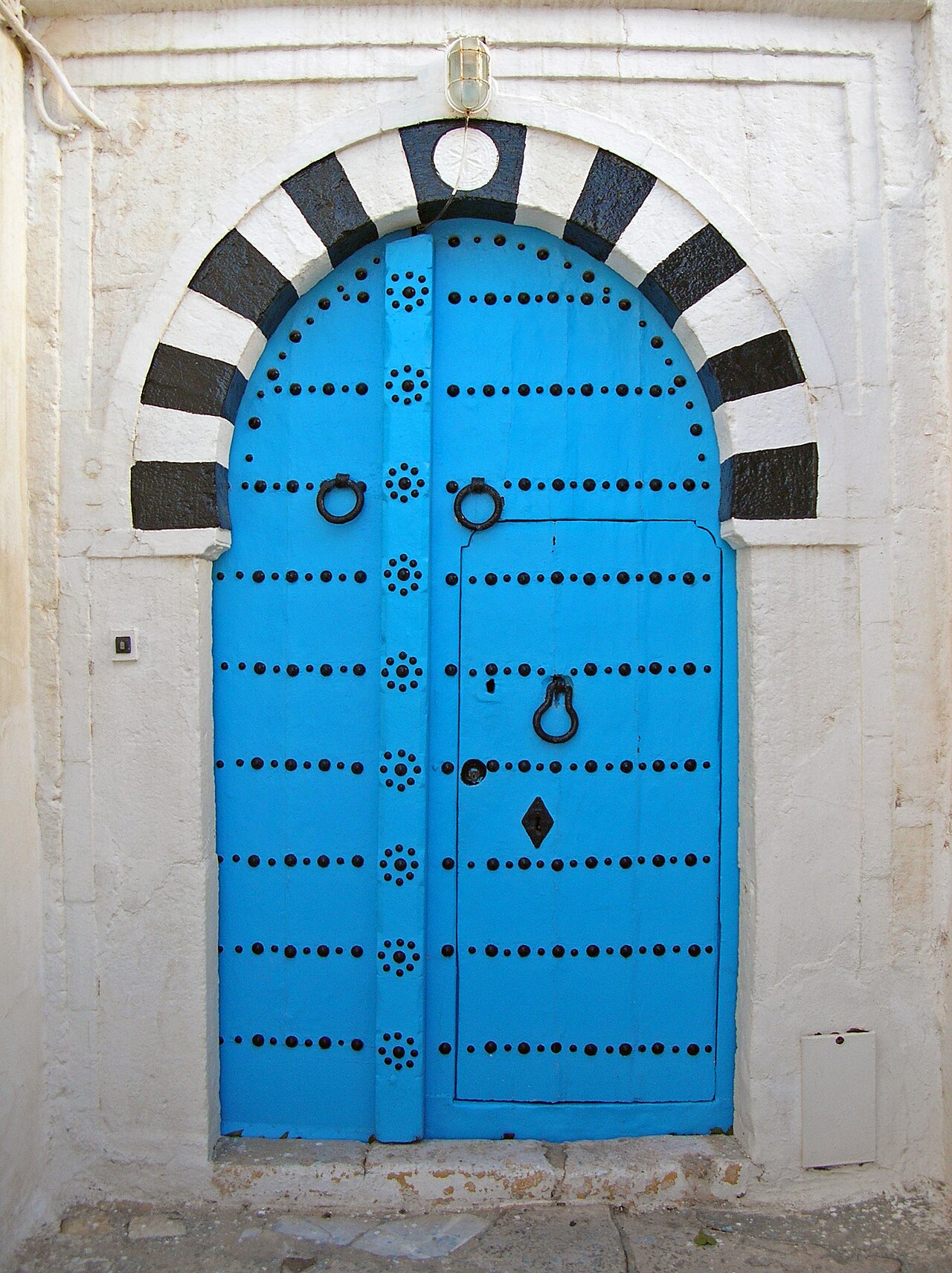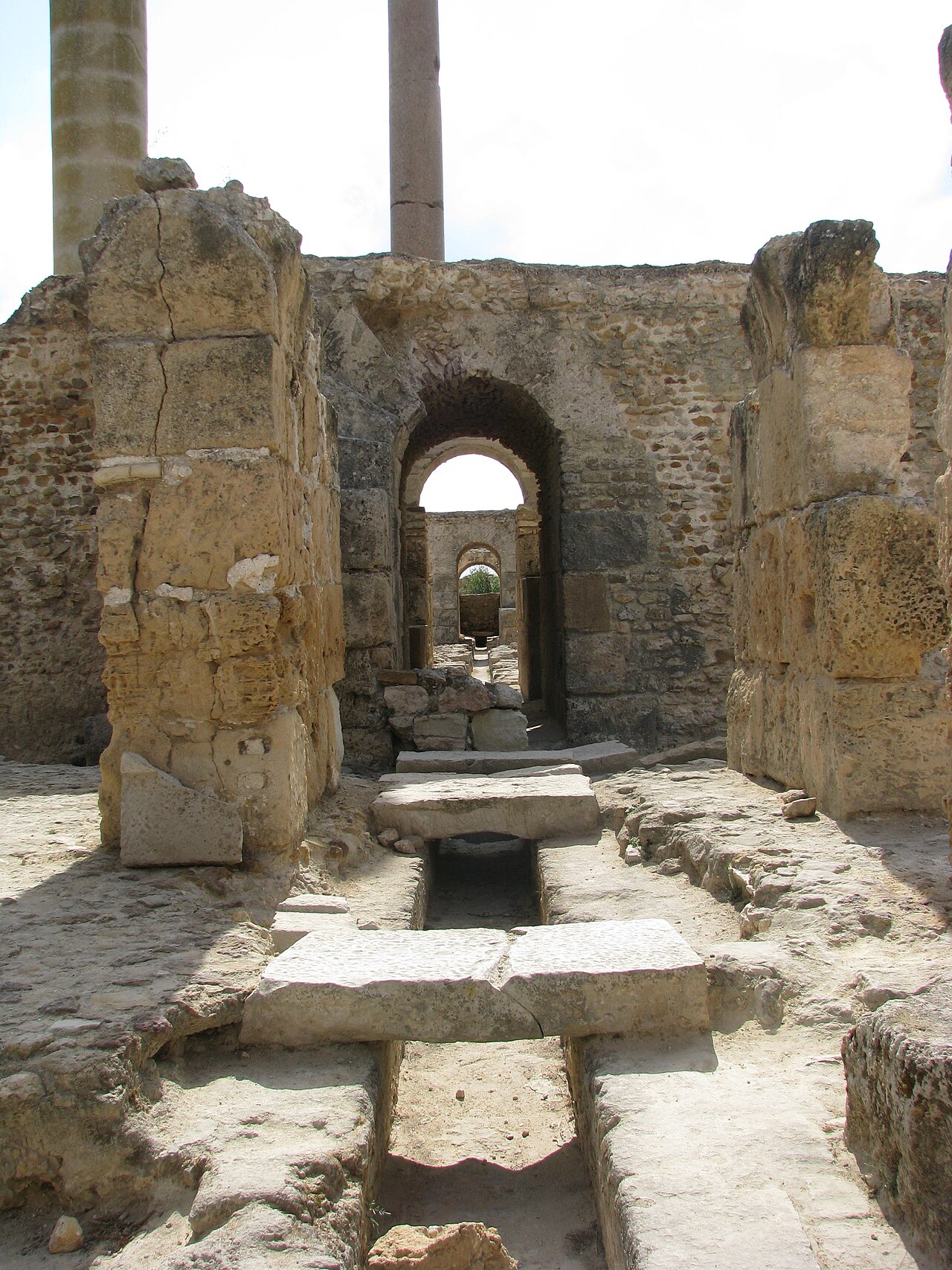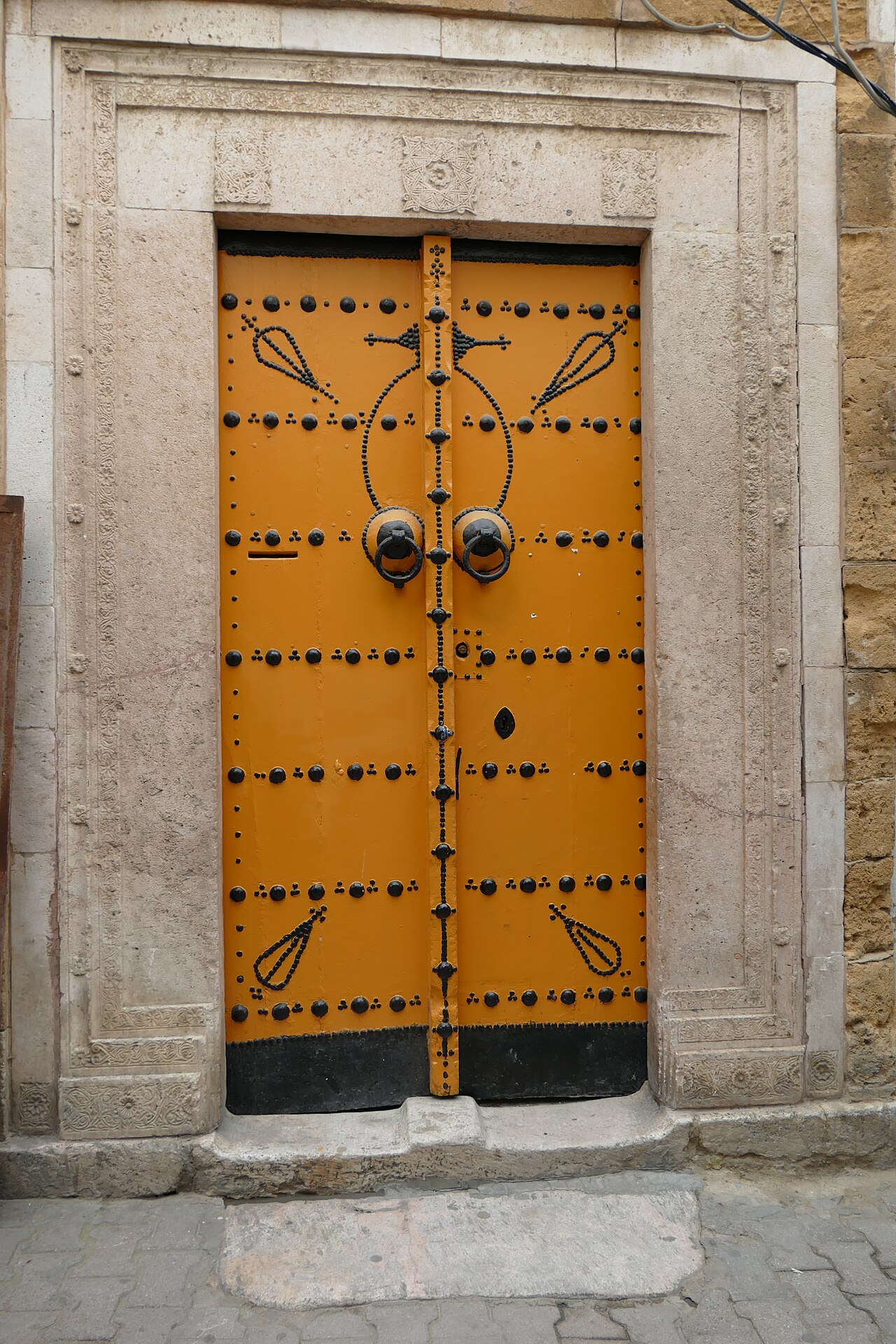
The medina is the oldest part of Tunis and the reason the city is on the UNESCO list, inscribed in 1979. It grew around the Zitouna Mosque, which sits at its centre, and spreads outward in a web of narrow lanes, covered markets, courtyard houses, mausoleums, hammams and madrasas, most of it built under the Hafsid dynasty from the thirteenth century and the Ottoman-era beys who followed. The doorway into it is Bab el Bhar, the old Porte de France, which stands at the end of Avenue Habib Bourguiba and marks the border between the colonial grid and the older city. From there the main axis, Rue Jemaa Zitouna, leads to the souks. Each trade has its lane: perfumers and incense sellers, the chechia hat-makers who once supplied the whole Mediterranean, goldsmiths, leather, brass, spices, carpets. Most of the medina is still a working neighbourhood rather than a stage set, which is its charm, and also why a good guide helps. Doors that look like private houses are workshops or museums, and the best rooftop views are reached through shops you would not notice alone.
Understanding the layout makes the visit easier. The inner ring around the Zitouna Mosque holds the most prestigious souks, the perfumers and the old booksellers, because the trades nearest the mosque were the ones considered cleanest. Further out sit the noisier crafts such as metalwork and leather. The medina slopes gently from the Kasbah side on the west to the Bab el Bhar side on the east, so if you get lost, walking downhill will usually bring you out near the modern city. Beyond the souks are the palaces: Dar Ben Abdallah, now a museum of popular arts, the Youssef Dey mosque with its octagonal minaret, and the Tourbet el Bey, the mausoleum of the Husainid rulers. Non-Muslims are generally limited to the courtyard and exterior of the Zitouna Mosque, so check at the entrance on the day.
Doing it well: go in the morning, when the souks are opening and the light falls into the covered lanes. A walking tour is the quickest way to learn the layout, and the pay-what-you-want format means you set the price at the end. Wear flat, grippy shoes, carry small notes for tips and purchases, and treat the first price in a shop as a starting point for a polite bargain. Friday is the quietest day for shopping because many stalls close around the midday prayer, and the souks are generally calmer on Sunday afternoon. Photographing people needs permission, and shopkeepers appreciate a greeting in French or Arabic before a sales conversation.
What to expect
The experience
A guided or self-guided walk from Bab el Bhar through the souks to the Zitouna Mosque area and out to the palaces and rooftop viewpoints.
Best time
Morning, when the shops are opening and the covered lanes are cool and calm.
How long
Two to three hours for a guided loop; half a day if you shop and stop for tea.
Tips
Carry small notes, expect gentle haggling, and ask permission before photographing people or workshops.
Quick picks
- Best for
- Every first-timer: it is the historic heart of Tunis and the best single morning in the city.
- Families
- Good with older children who enjoy markets; busy lanes and low doorways are tough with a stroller.
- Couples
- A slow wander, a rooftop mint tea and a late lunch in a restored courtyard house.
- Pair with
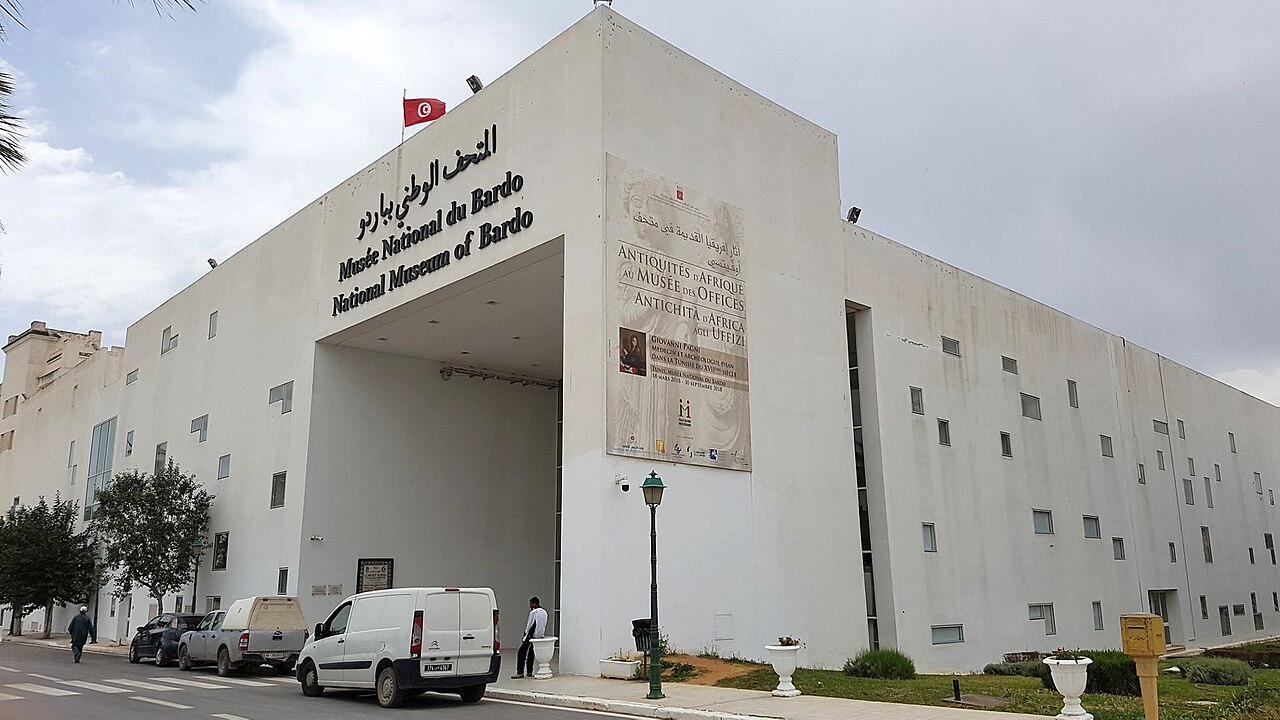
- Dar Ben Abdallah museum, a street food tasting and the Bardo Museum for the afternoon.
- Time needed
- Half a day with shopping and lunch.
Good questions
Is the medina of Tunis safe to walk around?+
Yes, in daylight it is a busy, lived-in neighbourhood and visitors walk it every day. Keep valuables out of sight, stay on the main lanes after dark and use a guide if you want the quiet corners.
Do I need a guide for the medina?+
A guide is not required, but the lanes are confusing and the history is easy to miss. A pay-what-you-want walking tour is a low-risk way to get your bearings in the first hours.
Can non-Muslims enter the Zitouna Mosque?+
Access is generally limited to the courtyard and exterior, and the prayer hall is for worshippers. Rules can change, so ask at the entrance and dress modestly.
When are the souks open?+
Most shops open in the morning and trade through the day, with many closing in the late afternoon and on Friday around prayer time. Sunday afternoons are usually quiet.
How do I get to the medina?+
Walk from Avenue Habib Bourguiba to Bab el Bhar, or ride the Metro Leger to Place Barcelone or Bab el Bhar. Taxis are cheap, but agree on the meter first.