Uluru is the headline, but the red centre rewards those who look further. The landscape around Yulara is part of a much larger desert region of ranges, gorges, salt lakes and sand ridges, and the best way to feel its scale is to travel through it. This guide explains the main ways to go beyond the rock: Kings Canyon, multi-day camping tours and scenic flights, and how to decide between them on a trip with limited time.
Why go further
Uluru and Kata Tjuta can be seen in two or three days, and many visitors leave with a sense that they have seen the desert. Travel to Kings Canyon, however, shows a different side of it: sandstone walls, hidden pools and long views across the ranges. Camping tours add something else, which is the night itself, with a fire, a sky full of stars and the quiet that comes with distance from any town.
Kings Canyon as a day trip
The Kings Canyon day trip from Uluru is a long day, because the canyon is several hours by road from Yulara. Tours leave early, spend time on a walk, and return in the evening. The advantage is simplicity: you stay in the same hotel and do not need to pack. The disadvantage is time in a vehicle. If you are fit and enjoy a big day, it works well. If you prefer a slower pace, consider staying a night at Kings Canyon Resort or joining a camping trip that includes the canyon.
The rim walk
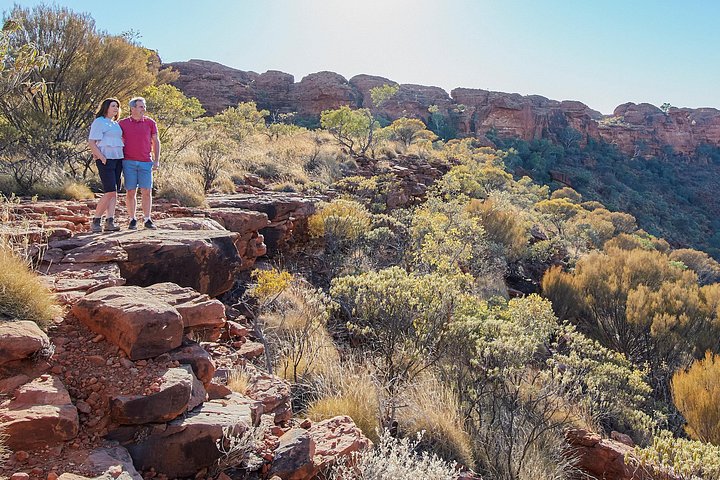
The best-known walk at Kings Canyon runs along the rim, with views into the canyon and a side trip to a green pool known for its contrast with the dry rock around it. It is a demanding walk with an early steep climb, and it is best done in the cool of the morning, since the rim is exposed and tracks may close in extreme heat. A shorter creek walk along the canyon floor is easier and suits those who want the scenery without the climb. Wear sturdy shoes, carry more water than you think you need and follow signs about safe areas.
Multi-day camping tours
Guided camping trips from Yulara link Uluru, Kata Tjuta and Kings Canyon in a loop, usually over two to four days. A guide drives, cooks and leads the walks, and nights are spent in a swag at a simple camp. The advantage is that you cover a huge area without driving, and you share meals and stories with a small group. The disadvantages are early starts, basic facilities and little privacy. These trips suit active, adaptable travellers, groups of friends and families with teenagers. Longer itineraries, such as five-day trips that include the West MacDonnell Ranges, appeal to those who want to travel between Uluru and Alice Springs.
The one-night option
If you want a taste of camping without a long commitment, a one-day, one-night outback experience covers Uluru and Kata Tjuta and gives you a night in the desert. It is a good way to add a night sky to a Yulara stay without changing your base.
Scenic flights
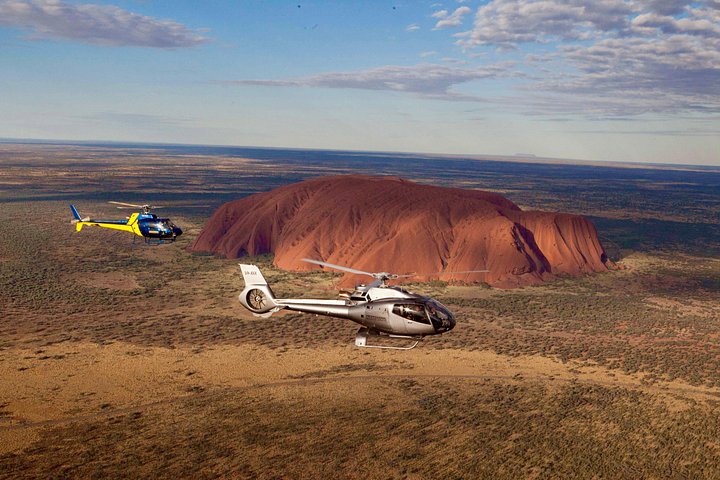
If you want to see the scale of the landscape without travelling by road, a scenic flight is the quickest way. A plane flight covers both Uluru and Kata Tjuta and shows the surrounding desert, while a helicopter flight flies lower and closer to the rock. Flights depend on weather and visibility, so allow some flexibility. A flight early in a trip gives you a mental map that makes everything on the ground make more sense.
Choosing between them
If you have two days, stay at Yulara and spend them on Uluru and Kata Tjuta, perhaps adding a scenic flight. If you have three or four days, add Kings Canyon, either as a day trip or as a night at the canyon. If you want adventure and are comfortable with simple facilities, a camping tour is the most immersive choice. If you want comfort, base yourself at Yulara and take day tours.
Practical points
Distances are long, fuel and food are limited between towns, and mobile coverage is poor outside the resorts. Carry plenty of water, check weather and road conditions, and tell someone your plans if you drive yourself. Book the main experiences early for the cooler months, which are the busiest. Park passes are needed for Uluru-Kata Tjuta National Park and may be separate from tour prices, so check what is included.
Respect
The country you travel through belongs to Aboriginal communities who have cared for it for tens of thousands of years. Follow signs, stay on tracks, leave plants, rocks and sand where they are, and listen to local guides. The more you learn, the more the red centre opens up.