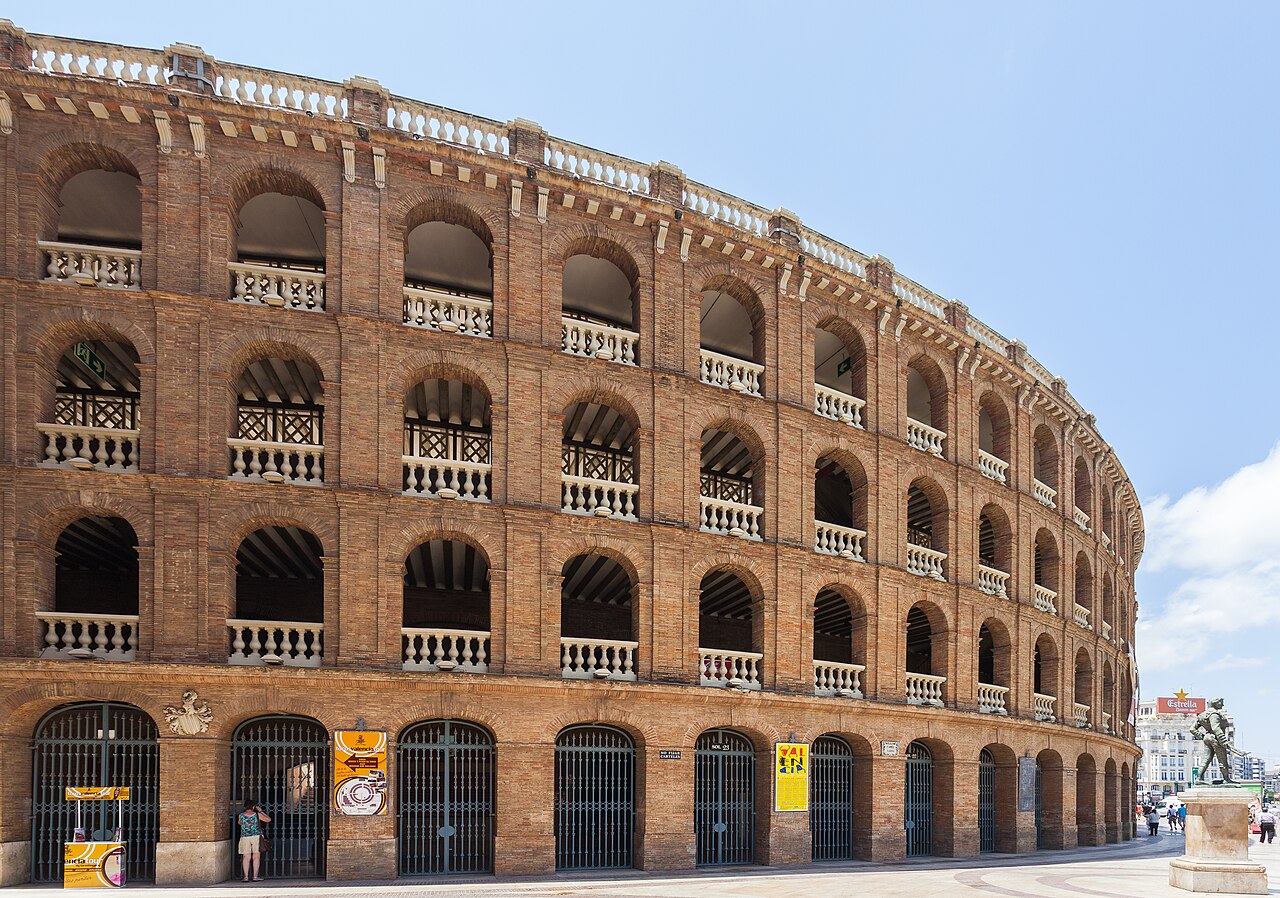
The Plaza de Toros stands right beside the Modernist North Station and the Ayuntamiento, so most visitors walk past it without trying the door. It is one of the most imposing buildings of nineteenth-century Valencia: a vast circular arena of red brick, built in the 1850s in a neoclassical style that borrows the arched galleries of Roman amphitheatres. Inside, the arena is a ring of tiers around the sand, with a covered arcade running around the upper level. Visitors can walk into the ring, see the corrals and the chapel where bullfighters traditionally pray before a fight, and visit the small bullfighting museum, which holds capes, posters and costumes. Bullfighting divides opinion in Spain as elsewhere, and many locals and visitors dislike it. A visit does not need to be an endorsement. Think of it as a look at the architecture and the history of a tradition that shaped the city’s festivals; the arena is also used for concerts and events through the year, and the main bullfighting season is tied to the Fallas festival in March and the July fair. A ticket in advance saves time, and opening arrangements can change around events, so check before you go.
How to see it
Enter by the main gate, take the audio guide if you want the story of the building, and start at ground level where the ring and the corrals are. Walk up into the stands for the view across the sand and the roofline of the city beyond. The museum is compact and can be seen in under half an hour. Allow time to circle the outside, where the arcades and the large entrance arches are best seen in morning light.
What to expect
A modest, quiet visit rather than a big day out. Most of it is open to the sun, which makes the arena warm in summer and lovely in spring and autumn. Stairs are steep in places, so it is not ideal for anyone with limited mobility. The arena may be closed to visitors for events and bullfighting days, and the museum may follow different hours, so confirm opening before you travel. Some visitors will find the museum’s subject matter uncomfortable, and children may not enjoy it.
Making the most of it
The bullring is a five-minute walk from the Plaza del Ayuntamiento and the North Station, with the Central Market, the Silk Exchange and the old town beyond, so it fits neatly into a morning of architecture. Pair it with the station’s Modernist hall, which is free to walk into, and the Colón market for a coffee. If you prefer your history without the bullfighting angle, the Silk Exchange and the Serranos and Quart towers tell the story of the city’s medieval wealth and defences instead.
What to expect
The experience
A self-paced visit to the arena and its museum, with an optional audio guide.
Best time
Morning, outside event days, in spring or autumn when the sand is not baking.
How long
About 45 minutes to an hour.
Tips
Check opening before you go, wear comfortable shoes for the steps and decide in advance whether the subject suits you.
Quick picks
- Best for
- Architecture and history lovers.
- Families
- Not an obvious family stop; the architecture is the draw and the museum subject may not suit children.
- Couples
- A short, quiet cultural stop before lunch in the old town.
- Pair with
- The North Station hall, the Central Market and the Silk Exchange.
- Time needed
- One hour.
Good questions
Where is the Valencia bullring?+
It is beside the North Station and the Plaza del Ayuntamiento, a few minutes on foot from the old town.
Do I have to watch a bullfight to visit?+
No. Visits to the arena and museum are separate from bullfights. They focus on the building and the history of the tradition.
Is the bullring open every day?+
Opening can change around events and bullfighting days, so check the current hours before you go.
How old is the building?+
It was built in the 1850s in a neoclassical style that echoes Roman amphitheatres.
Is it accessible for wheelchairs?+
Parts of the building have steep stairs, so access can be limited. Ask the venue about the current arrangements before you visit.