Winter is the reason most people fly to Yellowknife, and the days are not just a gap between aurora nights. The city has a compact set of cold-weather activities that all start within a short drive of downtown, and choosing between them is easier once you know what each one feels like. This guide compares the main options, explains how to sequence them around late nights and suggests how to pack the days so that you stay warm, rested and ready for the sky.
Dog sledding
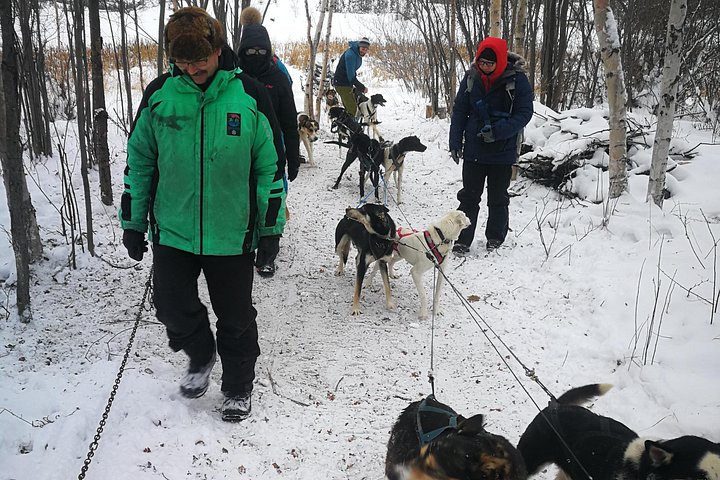
Dog sledding is the classic northern activity and the one most visitors put at the top of the list. You ride a sled pulled by a team of huskies, sometimes with a chance to stand on the runners and drive. The dogs are loud with excitement before the start and silent once they run. Trips usually include a briefing, time with the dogs and a ride through snowy forest or across frozen terrain. It suits nearly everyone, including children and older adults, because you can sit as a passenger. Read the Dog Sledding page for how to choose between operators, and book early for late February and March, which are the busiest months.
Snowmobiling
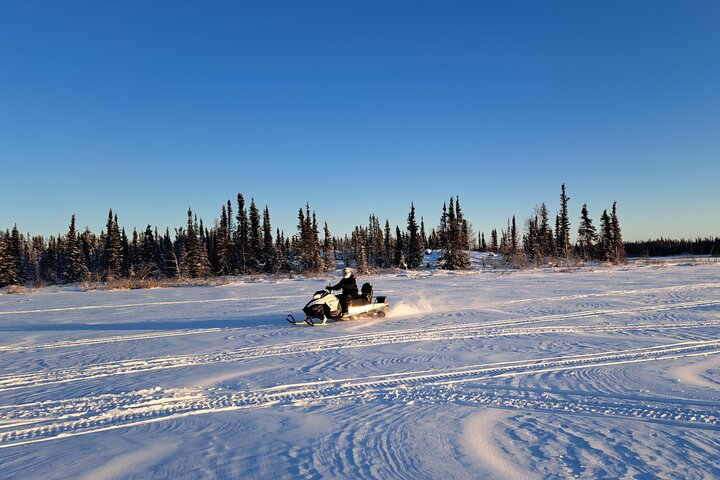
If dog sledding is about the animals, snowmobiling is about speed and distance. A guided outing covers more ground in an hour than a sled team covers in a morning, and beginners are welcome on tours designed for first-timers. You usually need a driver's licence to operate a machine yourself, and passengers can ride behind. The Snowmobile Adventure page covers what to expect. Dress in a windproof outer layer, because wind chill on a machine is much more severe than the air temperature suggests.
Ice fishing
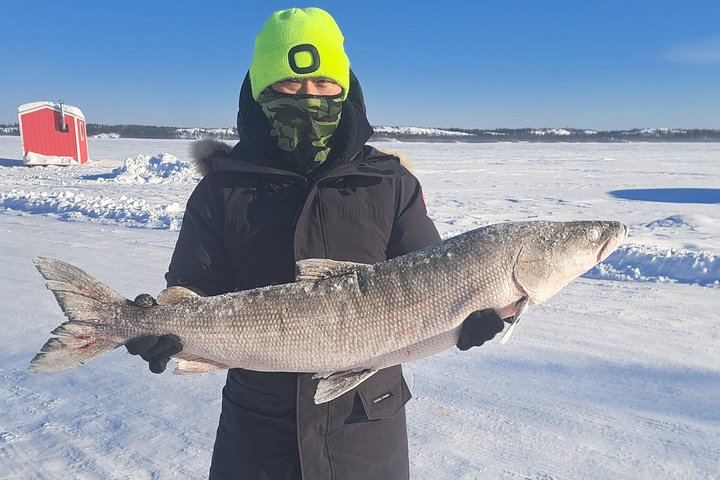
Ice fishing on Great Slave Lake is slower and sociable. You sit in a heated hut or on a bucket beside a hole in the ice and wait for a bite, which makes it ideal for families and for anyone who wants a quiet outdoor day. Guides provide the gear, drill the holes and often cook a shore lunch. Even if the fish are not biting, the lake itself is the draw: a white plain that stretches to the horizon under a pale blue sky. Read the Ice Fishing page for the format and tips.
Fat biking
A guided fat bike ride is the active choice, and it appeals to people who find vehicle-based activities too passive. The wide tyres float over packed snow, and a guide leads the route. It is physical but not extreme, and it keeps you warmer than standing still. The Winter Guided Fat Bike Tour page explains the format and what to wear.
Walking and wandering
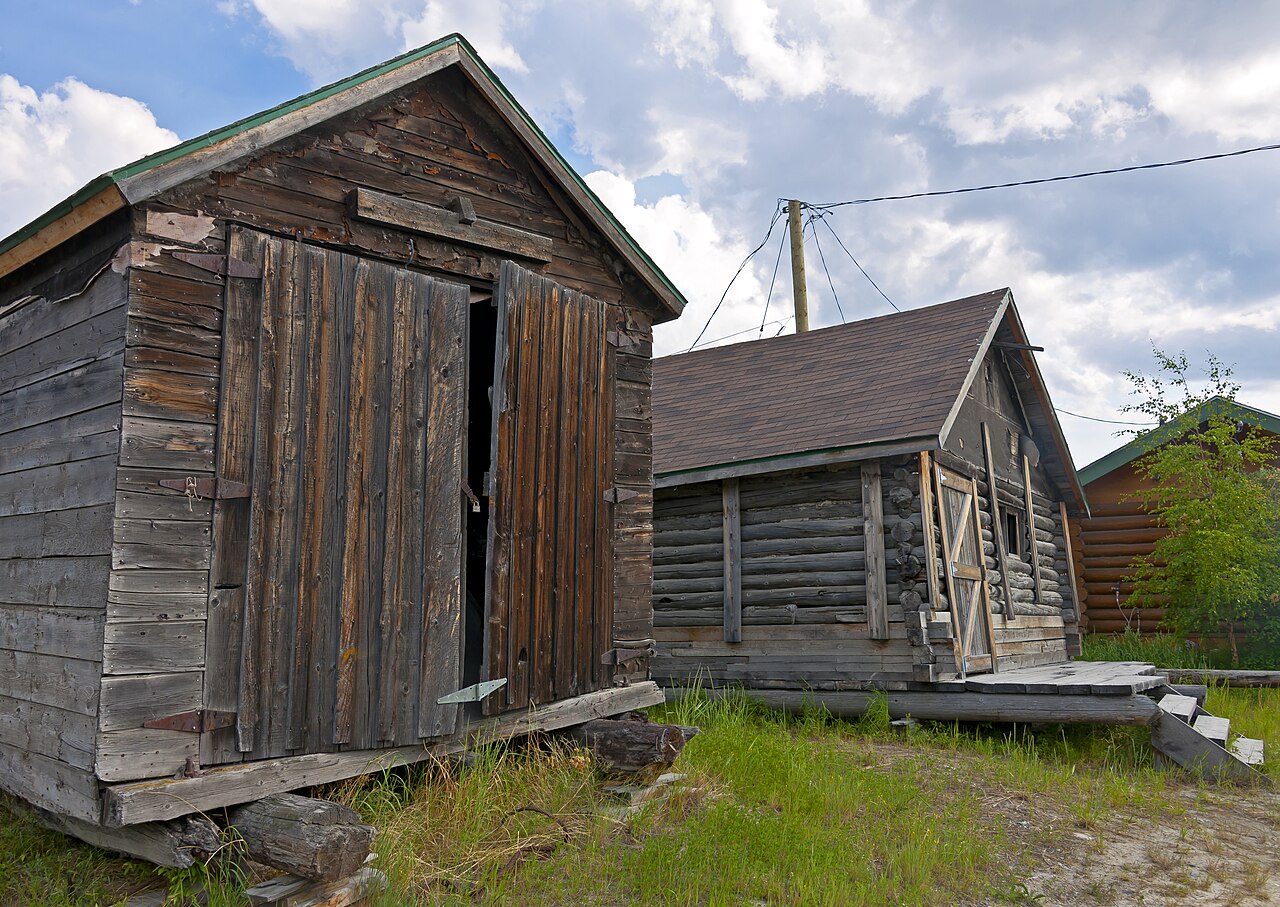
Not every winter activity needs a booking. Old Town is a free walk that looks wonderful under snow, the Frame Lake Trail has a paved section beside downtown, and the Northern Heritage Centre and the Legislative Assembly are warm, free places to spend an hour. If the weather is brutal, a museum visit is a very good plan. On days with a cold snap, check what is open and consider indoor options such as axe throwing, which keeps a group entertained without standing outside.
How to sequence your days
Aurora nights run late, so keep your first day light and schedule the most demanding activity for the day after your first good night of sleep. Dog sledding or a snowmobile outing in the morning, a long lunch and an afternoon rest, then an evening aurora tour is a workable rhythm. Do not stack an early-morning departure after a very late aurora session unless you are prepared to be tired. If the sky is cloudy, you will want a flexible plan, so avoid prepaying for too many activities on a single day.
What to wear for all of them
The rule is layers. Start with a thermal base layer, add an insulating mid-layer, and finish with a windproof, insulated outer layer. Insulated boots rated for deep cold, warm socks, mitts rather than gloves, a hat that covers your ears and a face cover or neck gaiter are essential. Many operators supply outer clothing or boots, so ask when you book and save the luggage space. Keep spare gloves and a battery pack inside your jacket, because phones and cameras lose charge quickly in the cold.
Booking and timing
The busiest months are late February and March, when days are longer and the weather is more comfortable than in December and January. Book activities as soon as your dates are fixed. Remember that winter activities depend on snow and ice, so they run from roughly the start of winter to early spring, and operators set their own season dates. For a first visit, pick two daytime activities that differ in character, such as dog sledding and ice fishing, and leave the rest of your time for the aurora, the museums and rest. A smaller number of well-chosen activities usually makes a better trip than a packed schedule.