Bromo and Ijen are two of the great volcano experiences in Indonesia, and Yogyakarta is the usual starting point for travellers heading east across Java. The trip linked here is a multi-day overland tour, sold as five days and four nights, that links the city with the Bromo-Tengger area and the Ijen plateau, with the option of finishing in Bali. Bromo is a smoking cone rising from a vast sandy caldera, usually seen at dawn from a viewpoint on the rim when the first light lifts the mist from the sea of sand and the neighbouring peaks. Ijen is a different kind of drama: a trek up to a turquoise crater lake ringed by yellow sulphur deposits, with a famous blue flame seen on the crater floor in the dark hours before sunrise and miners who carry sulphur baskets down the slope. Both involve very early starts, steep or sandy footing and cold, thin air at altitude. This is a big commitment of time and energy, and it is best for adventurous travellers who are happy to trade comfort for spectacle. Expect long hours in a vehicle between each stop, basic or mid-range accommodation, and schedules that depend on weather and volcanic activity. If you have only a few days in Java, stay with Borobudur, Prambanan and the palace; if you have a week or more, this is the classic way to continue east.
The Bromo experience
Most tours reach the viewpoint before dawn, often by jeep from the nearby villages, then walk or ride across the sand sea to the base of the cone and climb the stairs to the crater rim. The weather is cold at that hour, so bring a warm jacket, gloves and a scarf even though the lowlands are hot.
A face covering helps with fine volcanic dust. Cloud can hide the sunrise entirely, especially in the wet season, which runs roughly from November to March, so the dry months give a better chance of a clear view, though they are also busier.
The Ijen experience
The blue fire hike starts in the middle of the night, climbing a steady path for a couple of hours to the crater rim, with a steep and slippery descent if you go down to see the flames. Gas masks are essential because of sulphur fumes, and a good operator will supply or advise on them.
Volcano authorities can restrict access at short notice when gas levels or activity change, so itineraries may be altered or cancelled for safety. Do not push to go where you are told not to, and be respectful of the miners, who are working, not performing.
Planning the trip
This is a long transfer from Yogyakarta, often with overnight stops and a long day or two in the vehicle, and itineraries vary between operators, so read the tour page carefully for the route, accommodation standard, entrance fees and whether the finish is Bali or a return to the city.
Check the physical demands honestly
Both hikes involve early starts, altitude and rough footing. Book sturdy shoes, warm layers and a head torch, and keep the first days of your Java trip flexible in case you want to adjust. Travel insurance should cover trekking at altitude and potential volcanic disruption.
What to expect
The experience
A multi-day overland tour east across Java with a dawn visit to the Bromo caldera and a night trek to the Ijen crater, usually ending in Bali.
Best time
The dry season, roughly May to October, gives the best odds of clear sunrises; the wet months bring cloud and rain.
How long
Several days, with long drives between stops; check the tour page for the exact itinerary.
Tips
Pack warm layers, sturdy shoes, a head torch and a face covering, and expect itinerary changes if volcanic activity restricts access.
Quick picks
- Best for
- Adventurous travellers with a week or more in Java who want volcano scenery.
- Families
- Better for older teenagers; the pre-dawn starts, cold and rough footing are hard on young children.
- Couples
- Dramatic sunrises and shared adventure, with a Bali finish if you choose it.
- Pair with
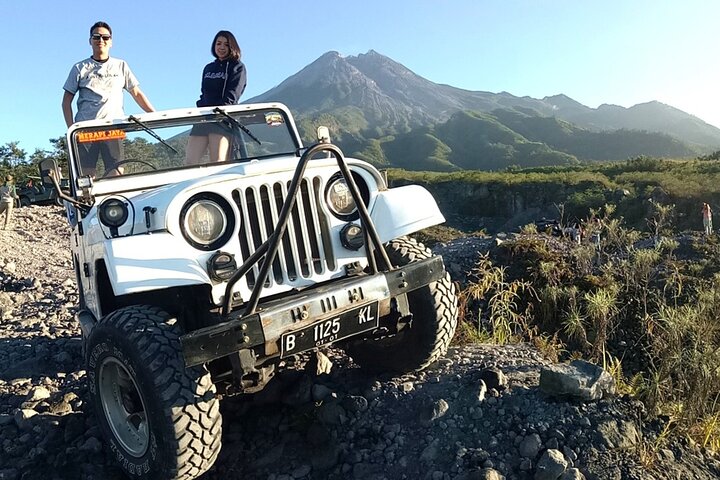
- Borobudur and Prambanan before you leave Yogyakarta, or the Merapi jeep tour for a taste of volcanoes close to the city.
- Time needed
- Four to five days.
Good questions
How long is the journey from Yogyakarta to Bromo?+
It is a long overland transfer, usually a full day in a vehicle with an overnight stop, so tours are built as multi-day trips.
What is the blue fire at Ijen?+
Burning sulphurous gases that glow blue in the dark on the crater floor. It is best seen before dawn, with gas masks, and access can be restricted when activity changes.
Is this suitable for children?+
It is better for older teenagers and adults, because of the pre-dawn starts, cold weather, long drives and rough footing.
When is the best time to go?+
The dry season, roughly May to October, gives the clearest views, though it is busier. The wet season often means cloud at sunrise.
Does the tour finish in Bali?+
This product is a Yogyakarta to Bali tour, so check the page for the drop-off details and what is included.