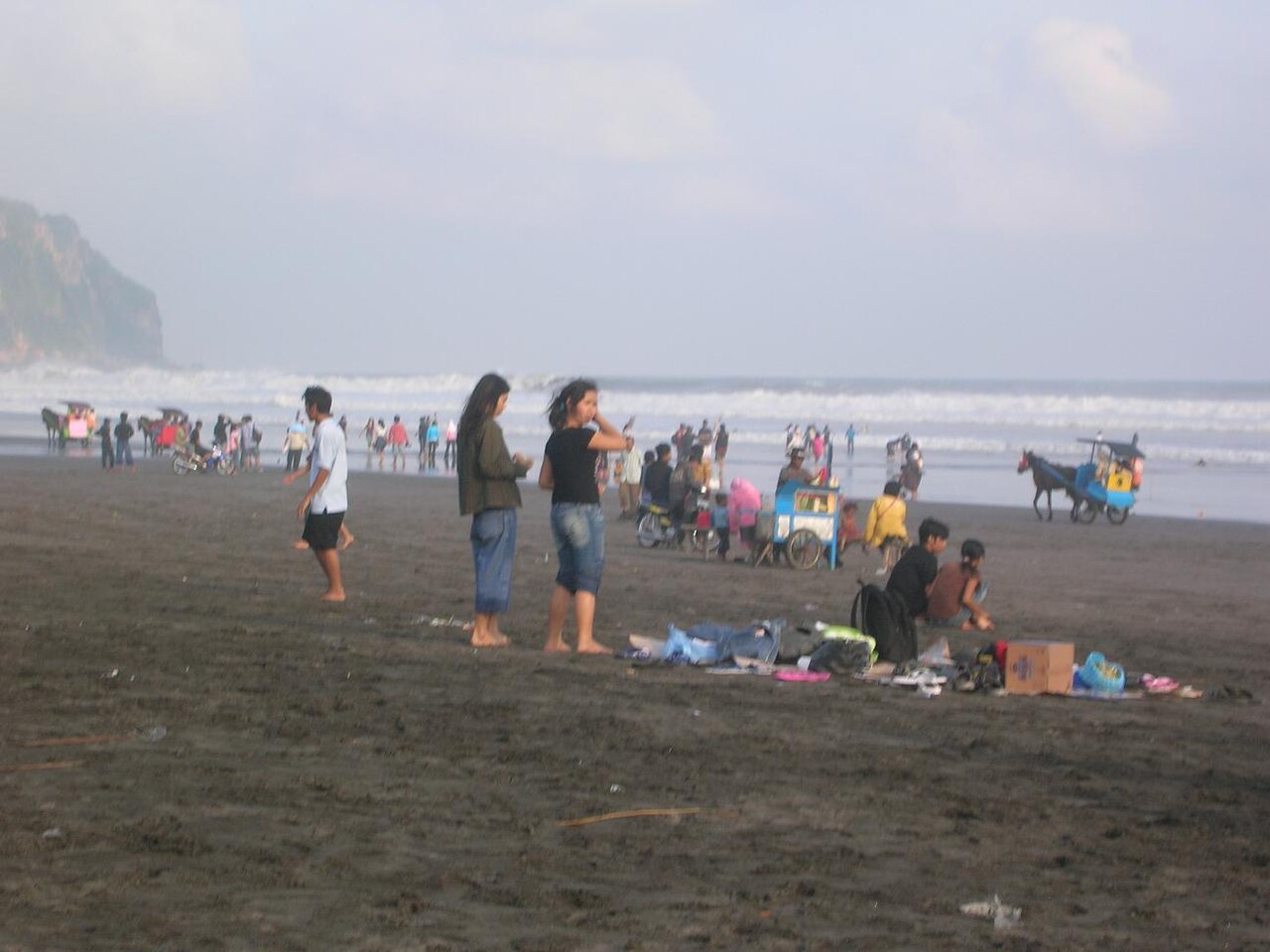
Parangtritis is the beach closest to Yogyakarta, about twenty-eight kilometres south of the city, and it is as much a cultural place as a seaside one. The sand is dark, the waves are large and the Indian Ocean rolls in with real force, with green hills rising behind and sand dunes nearby. The coast is regarded as sacred in Javanese tradition and is associated with Kanjeng Ratu Kidul, the Queen of the Southern Sea, a figure bound up with the sultans of Yogyakarta. Local people say that wearing green here is unwise, and visitors will see offerings and ceremonies at certain times. For most travellers, the draw is simply the coast: a long strip of beach, a stretch of shore lined with food stalls and shelters that charge a small fee for shade, horse-cart rides, and a sunset that can be spectacular on a clear evening. The sea itself is dangerous, with strong currents, so it is best treated as a place to walk along the water's edge and watch the surf, not to swim. Nearby, the Parangwedang hot springs offer a short soak for a small fee. It is a very popular weekend and holiday spot for local families, so expect crowds on those days, and expect a more relaxed atmosphere on weekdays. As a half-day outing it pairs easily with the Kraton and Taman Sari, or with a visit to the cliffs and caves further east.
Safety and local customs
The southern coast of Java is known for strong rip currents and heavy surf, and warning signs and lifeguards are there for good reason. Do not swim beyond the shallows, keep children well back from the waterline, and follow local guidance. The sacredness of the coast is taken seriously, so be respectful, avoid wearing bright green out of courtesy to local belief, and ask before photographing ceremonies. Dress modestly away from the beach, and do not leave valuables unattended on the sand.
Getting there and when to go
Driving from the city takes roughly an hour in normal traffic, and the road can be congested on weekends and holidays. Ride-hailing can be hard for the return journey at night, so arrange a driver, or hire one for the whole outing.
Late afternoon is the best time, because the heat has eased and the sunset falls over the water, but make sure you leave before the roads are dark and busy. The dry season from about May to October gives clearer skies, and the wet months can bring storms and rougher seas.
Making a day of it
Along the beach you will find simple food stalls selling grilled fish, snacks and drinks, and you can ride a horse cart along the sand, which is a pleasant treat for children. Sand dunes near the coast are a favourite with photographers and sandboarders, though conditions vary.
If you want to see more of the coast, the cliff-lined beaches of Gunungkidul further east are wilder and quieter, but need a full day. Bring sun protection, a hat, cash for small purchases and a change of clothes, since the wind carries sand and spray.
What to expect
The experience
A self-guided visit to a wide dark-sand beach with surf, dunes, food stalls and the sunset, about an hour south of the city.
Best time
Late afternoon for sunset; weekdays are quieter than weekends and holidays.
How long
Allow three to four hours including the drive from Yogyakarta.
Tips
Do not swim beyond the shallows, arrange a return driver, and respect local beliefs about the coast.
Quick picks
- Best for
- Sunset watchers, families on a weekday and travellers who want a break from temples.
- Families
- Fun for children on the sand and with a horse cart, but keep them well away from the surf.
- Couples
- A long sunset walk on a wild beach.
- Pair with
- The Kraton and Taman Sari in the morning, or a Gunungkidul day with Jomblang.
- Time needed
- A half day.
Good questions
Can you swim at Parangtritis Beach?+
It is strongly discouraged. The currents and surf are dangerous, so treat it as a place to walk and watch, not to swim.
How far is Parangtritis from Yogyakarta?+
About twenty-eight kilometres, roughly an hour by road in normal traffic, longer on weekends and holidays.
Why do locals avoid wearing green there?+
The coast is associated with the Queen of the Southern Sea in Javanese tradition, and green is considered unwise to wear. Visitors usually follow the custom out of respect.
Is there an entrance fee?+
The beach is a public place. Small fees apply for parking, shelters and activities such as horse carts or the hot springs.
When is the best time to go?+
Late afternoon for sunset on a clear evening, and weekdays for fewer crowds.