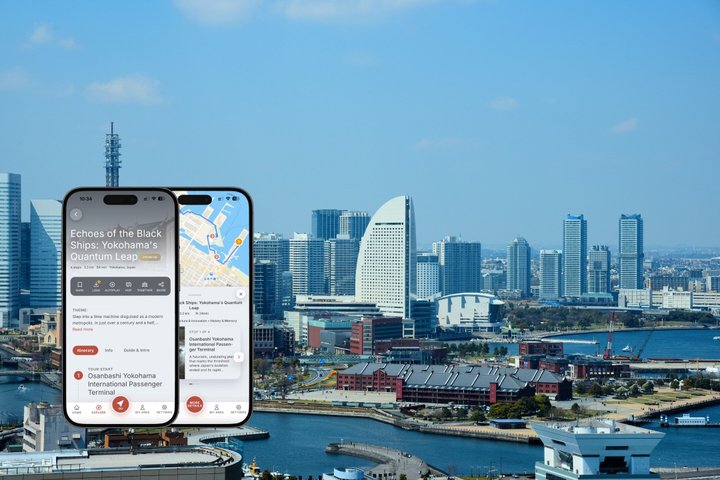
Yokohama exists because of a diplomatic standoff. In 1853 a squadron of American warships, painted black and nicknamed the Black Ships, anchored off the coast near Uraga and demanded that Japan open its ports. The following year Commodore Matthew Perry returned with more ships and the two sides signed the Treaty of Kanagawa at a site in what is now central Yokohama. In 1859 the nearby fishing village was developed as a treaty port, and foreign merchants, diplomats and missionaries settled on the waterfront. The city's whole identity, from its Western-style architecture to its Chinatown and its jazz and beer traditions, flows from that moment. A self-guided podcast walk tells the story street by street and is one of the cheapest ways to understand where you are.
Audio walks are flexible and suit independent travellers. You download the tracks, put on headphones and follow a route through the old foreign settlement in the Kannai district, usually starting near the memorial to the treaty and continuing past the former British consulate, now a history museum, and the stretch of waterfront where goods were landed.
Along the way the narration explains who lived where, how the settlement was governed, and how Japanese and foreign cultures began to mix. You can pause for coffee, skip a section or dwell on a building that catches your eye, which makes the format ideal for a relaxed morning.
The story is richer than the usual textbook summary. The Black Ships carried gifts as well as guns, including a small steam locomotive and a telegraph, and the Japanese delegation responded with silks and lacquerware. In the decades after 1859, Yokohama became the main gateway for silk exports, introduced Japan to gas lighting, ice cream, beer, baseball and newspapers, and grew quickly into one of the country's largest cities. The Great Kanto Earthquake of 1923 and wartime bombing destroyed much of the old settlement, but traces survive in street names, stone buildings and memorial markers.
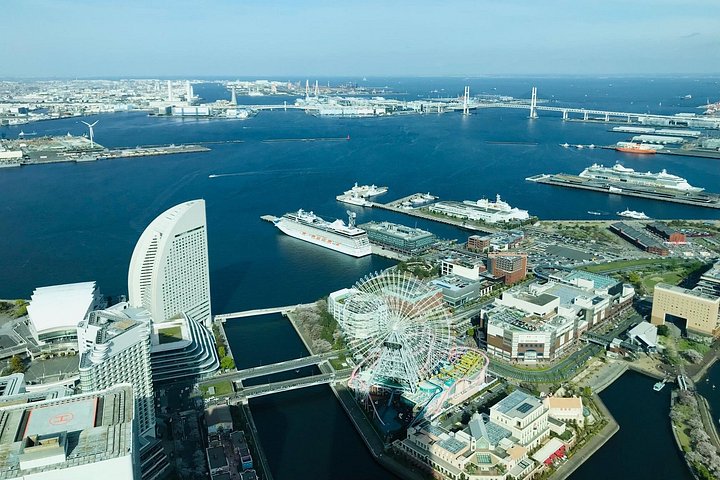
To make the most of the walk, combine it with the Yokohama Archives of History, which displays documents and models of the port, and with a stroll to the Red Brick Warehouse and Yamashita Park. Wear comfortable shoes, charge your phone and download the audio before you leave your hotel in case of weak signals.
The route is flat and mostly pedestrian-friendly, with benches and cafes along the way. It works in any season, although summer humidity makes early morning or evening a better time. Because it is self-guided, you can finish in about ninety minutes or stretch it into half a day.
A few stops reward extra time. The former British consulate building displays maps, photographs and artefacts from the early settlement, and the memorial to the treaty marks the site where the negotiations took place. Street signs and plaques along the route label the former locations of banks, trading houses and hotels, so a careful reader can almost overlay the old town on the new one. Bring a small notebook or a photo album on your phone to remember the details you discover.
Local volunteers sometimes offer free guided walks in English, so ask at the tourist information centre.
What to expect
The experience
A self-guided audio walk through the old foreign settlement, with narration at each stop about the treaty, the port opening and the early residents.
Best time
Morning on a weekday, when the streets are quiet and the light is good for photographs.
How long
Ninety minutes at a steady pace, up to half a day if you add museums and cafes.
Tips
Download the audio before you go, bring headphones and combine with the Red Brick Warehouse.
Quick picks
- Best for
- History fans on a budget who like to explore at their own pace.
- Families
- Better for older children and teens, since the audio is narrative and the route is long.
- Couples
- A relaxed morning walk followed by coffee in Kannai.
- Pair with
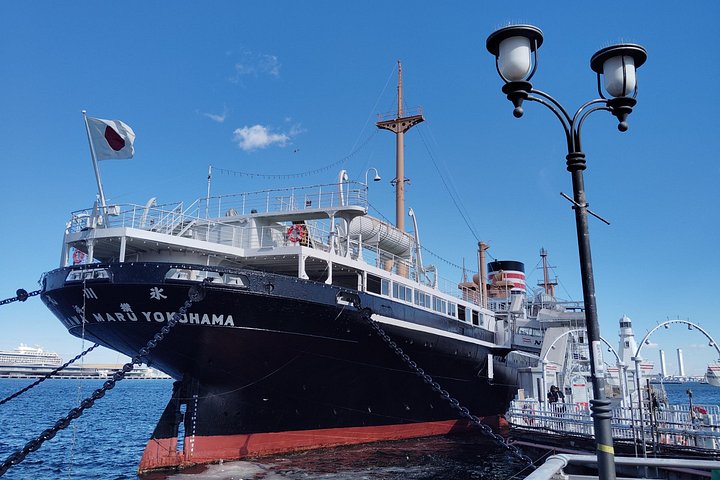
- The Red Brick Warehouse, Yamashita Park and the Hikawa Maru.
- Time needed
- Ninety minutes to three hours.
Good questions
What were the Black Ships?+
They were the American warships of Commodore Perry's squadron, painted black, that arrived in 1853 and pressed Japan to open its ports.
What happened in 1854?+
Perry returned with a larger fleet and the Treaty of Kanagawa was signed, ending Japan's long period of seclusion.
Do I need a guide for this walk?+
No. The audio tour is self-guided and lets you set your own pace.
Is the route accessible?+
The route is mostly flat and paved through the Kannai district, which suits most visitors.
Can I combine it with other sights?+
Yes. It leads naturally to the Red Brick Warehouse, Yamashita Park and the Hikawa Maru.