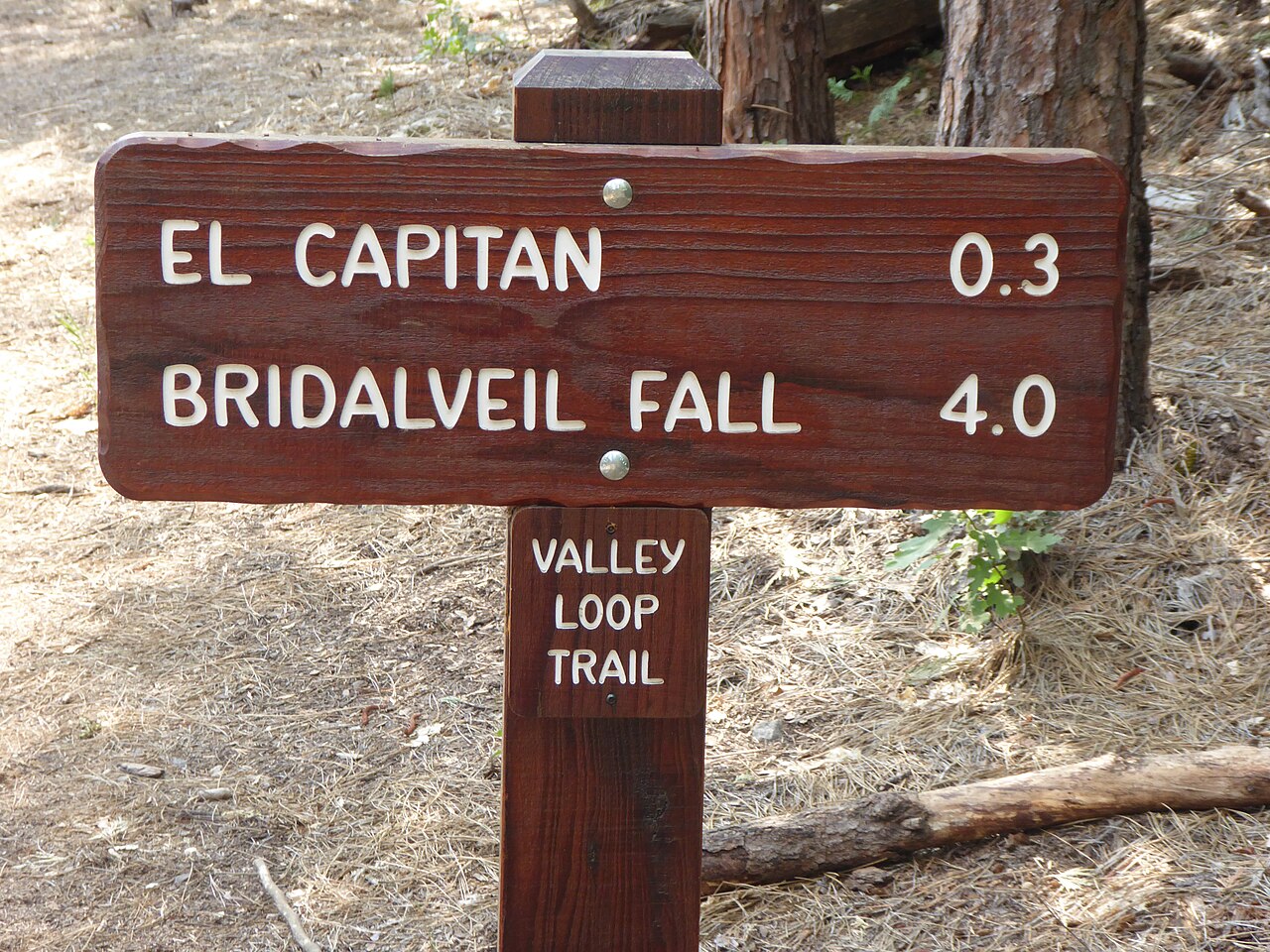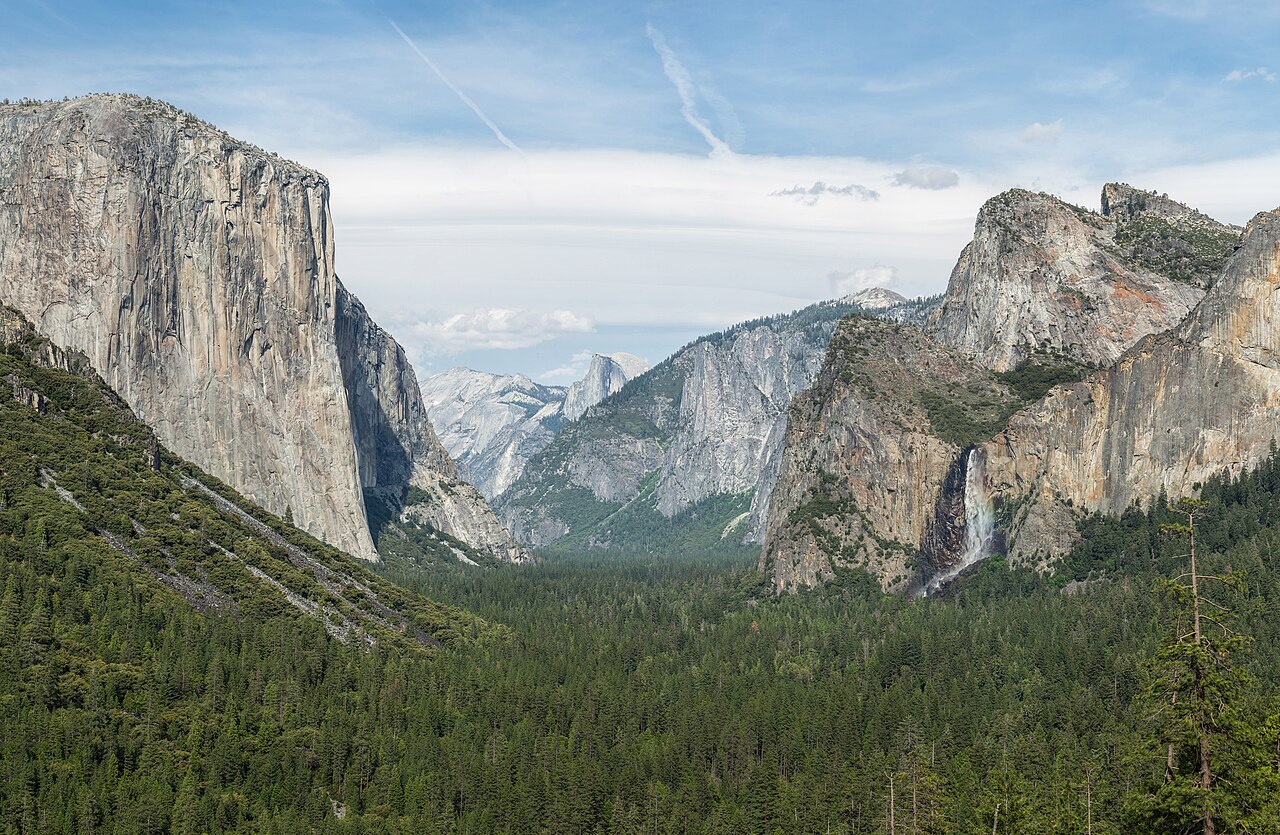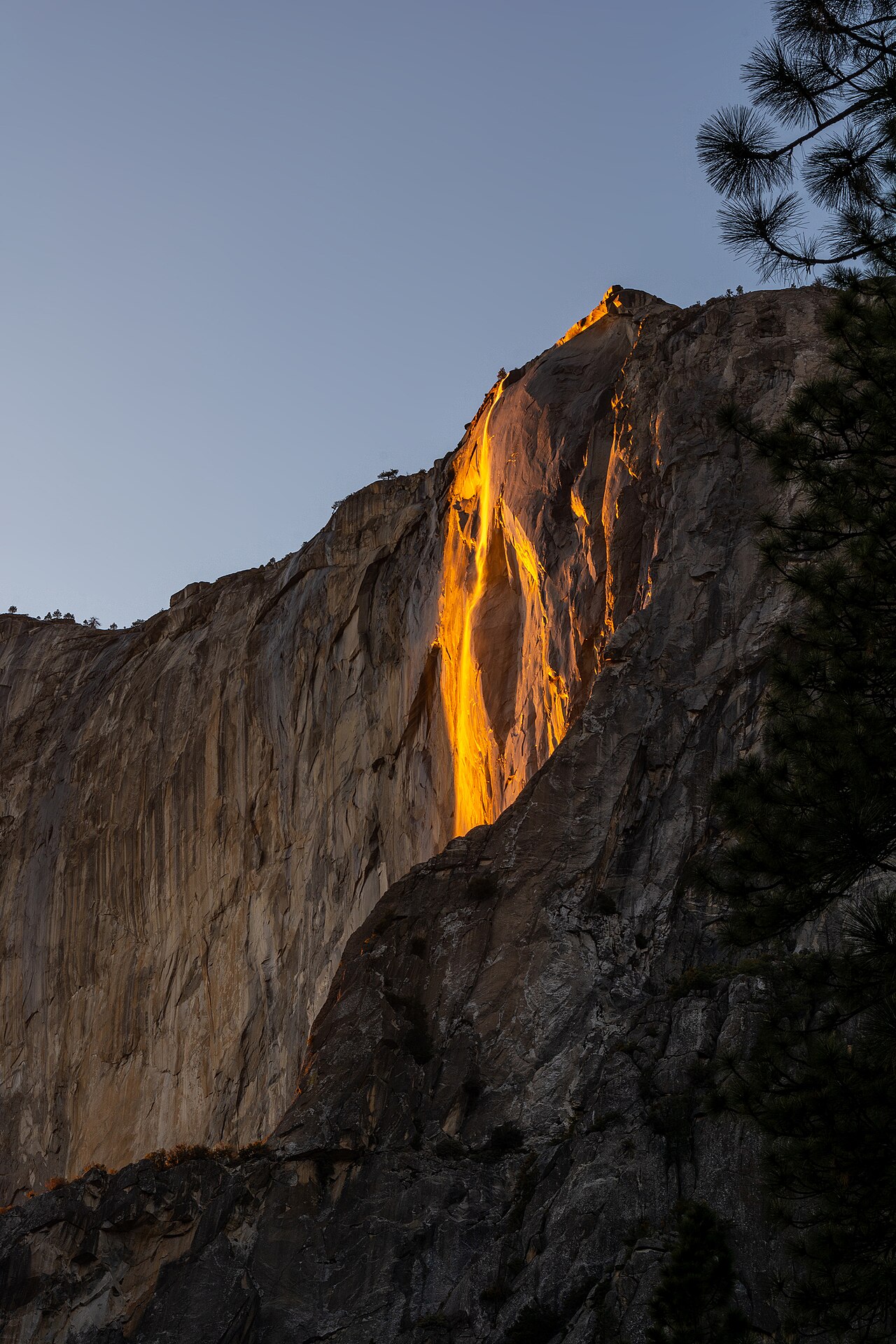
Horsetail Fall flows only in winter, and on rare occasions in mid to late February the setting sun backlights it so that the water glows orange against the granite of El Capitan. The National Park Service stresses that this happens only on clear evenings, and that haze or light clouds can greatly reduce or erase the effect, so even a planned trip can end with a grey wall. For the 2026 viewing period the park did not require a reservation to visit Yosemite or the Horsetail Fall area in February, but restrictions were in effect daily during mid to late February. Viewers were asked to park at Yosemite Falls parking, just west of Yosemite Valley Lodge, and walk about 1.5 miles each way to the viewing area near El Capitan Picnic Area, with the free shuttle available from Yosemite Village or Curry Village if that lot is full. Along Northside Drive one lane was closed to cars so pedestrians could walk to the viewing area, with no parking, stopping or unloading between Lower Yosemite Fall and El Capitan Crossover, while on Southside Drive no parking or stopping was allowed in certain stretches and the riverbank in places was closed to entry. Conditions and rules can change from year to year, so always read the current announcement before planning. Expect cold, ice and darkness on the way back, so bring warm layers, a headlamp and traction devices.
Why people come. The spectacle is real but fickle, and the fun is in the unpredictability. Even when the glow is partial, the scene of a winter waterfall catching the last light on a 3,000-foot wall is memorable, and the crowd of photographers gives the event a festival feel. Many visitors say the walk, the cold and the shared anticipation are as much of the experience as the colour itself.
Doing it well. Arrive early to secure parking and a viewing spot, and plan for a long walk back in the dark. Stay out of meadows and fenced areas, keep to the trails and obey all closures, as the park enforces them strictly. Carry a thermos, hand warmers, a tripod if you photograph, and a headlamp. Be flexible: the best nights are clear and cold, and cloud can ruin an otherwise perfect evening, so consider staying a few days to improve your chances.
Who it suits. Photographers, couples and winter travellers who enjoy a bit of a pilgrimage and do not mind cold. It is not a good choice for people who dislike crowds or who need guaranteed results. Pair it with a skating session at Curry Village, a winter walk at Cook's Meadow or a dinner at the Ahwahnee.
What to expect
The experience
A mid to late February sunset event when Horsetail Fall on El Capitan can glow orange, viewed from the El Capitan Picnic Area after a walk of about 1.5 miles each way.
Best time
Clear evenings in mid to late February; cloud or haze can ruin the effect.
How long
Three to four hours including the walk in and out.
Tips
Read the current viewing rules, arrive early, bring warm layers, a headlamp and traction devices, and stay on trails and out of closed areas.
Quick picks
- Best for
- Photographers and winter visitors who enjoy a once-a-year spectacle.
- Families
- Possible for older children who can handle cold and a long walk.
- Couples
- A shared winter adventure under a glowing wall.
- Pair with
- Skating at Curry Village and a winter valley walk.
- Time needed
- An evening.
Good questions
When does Horsetail Fall glow?+
On rare clear evenings in mid to late February, when the setting sun backlights the waterfall. Haze or light clouds can greatly reduce the effect.
Do I need a reservation?+
Not in February 2026, according to the National Park Service, but daily restrictions applied. Rules can change, so check each year.
Where do I park?+
At Yosemite Falls parking just west of Yosemite Valley Lodge, then walk about 1.5 miles each way, or use the free shuttle from Yosemite Village or Curry Village.
What should I bring?+
Warm clothes, a headlamp or flashlight and traction devices for icy conditions. Expect a cold walk back in the dark.
Is it guaranteed?+
No. The waterfall must be flowing and the sky must be clear, so some years and evenings produce little or no glow.