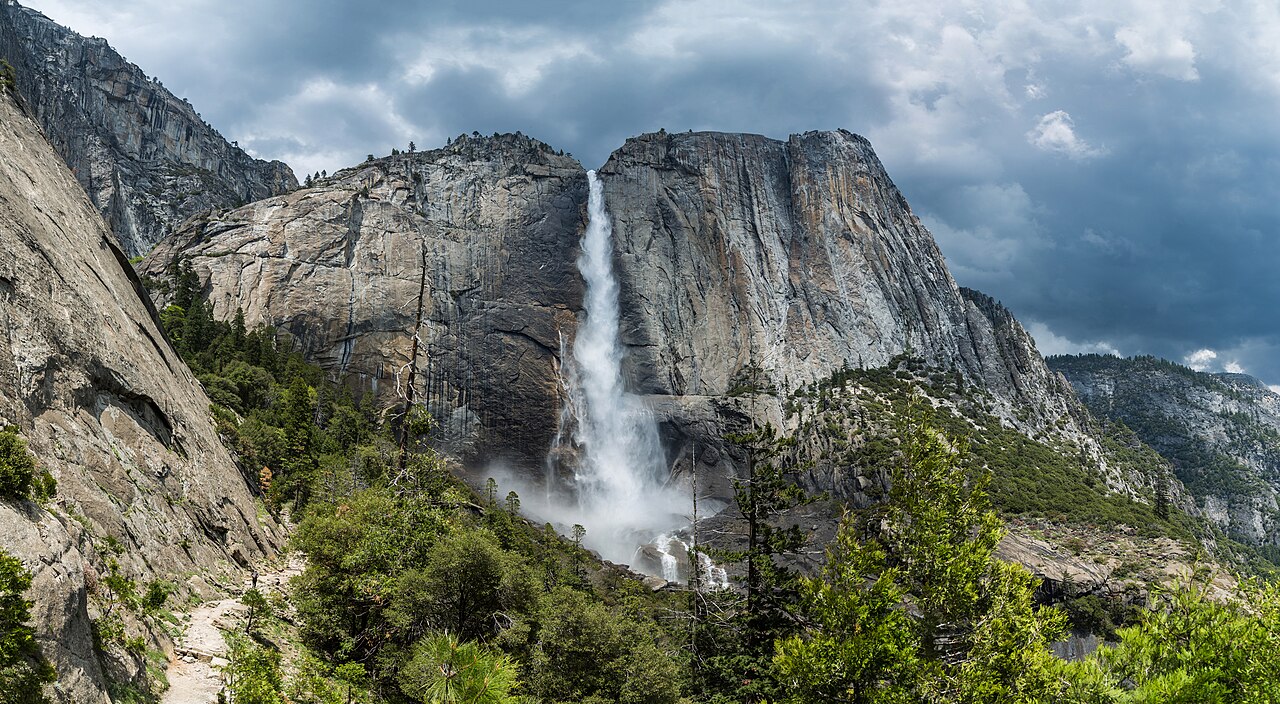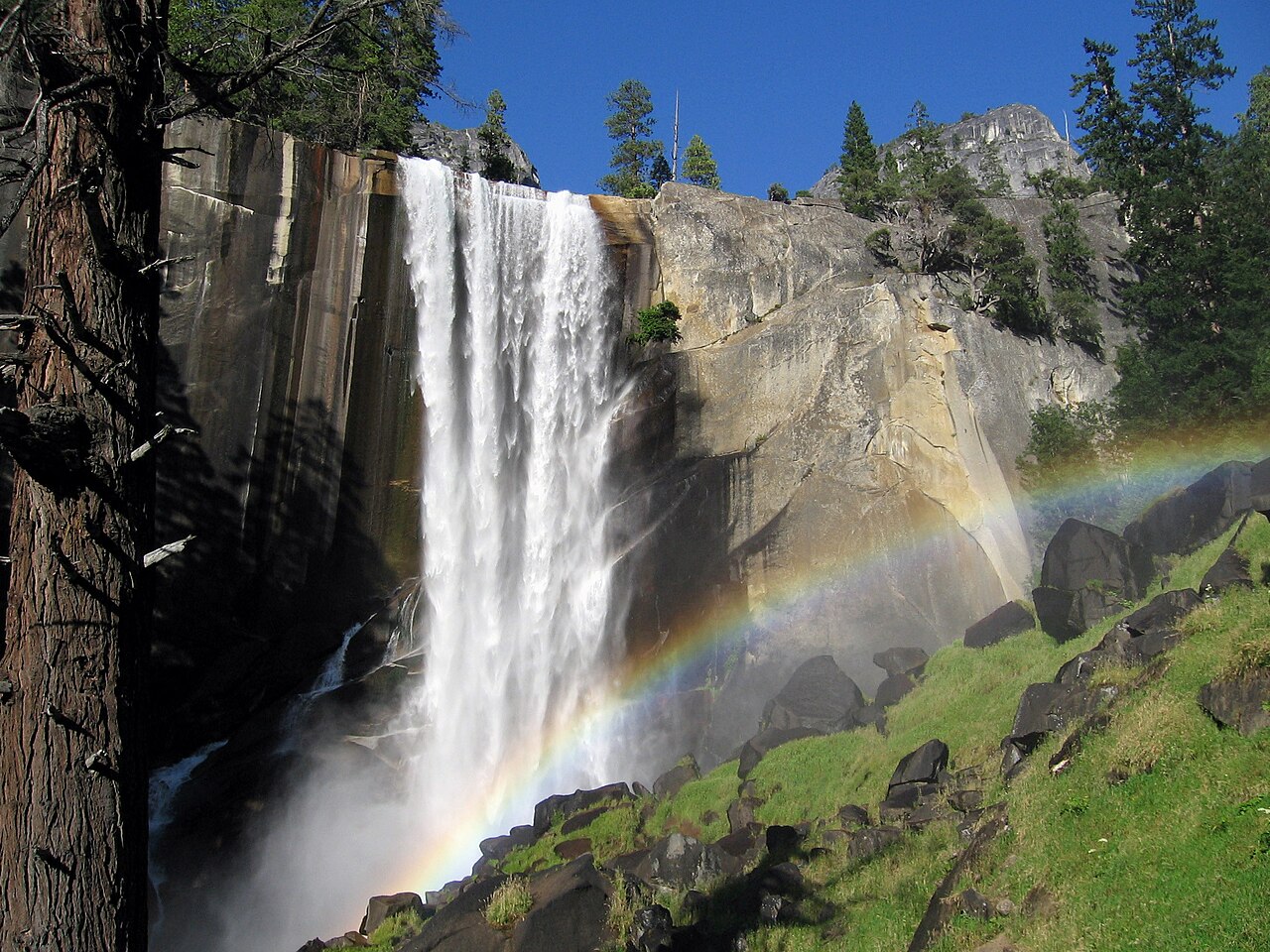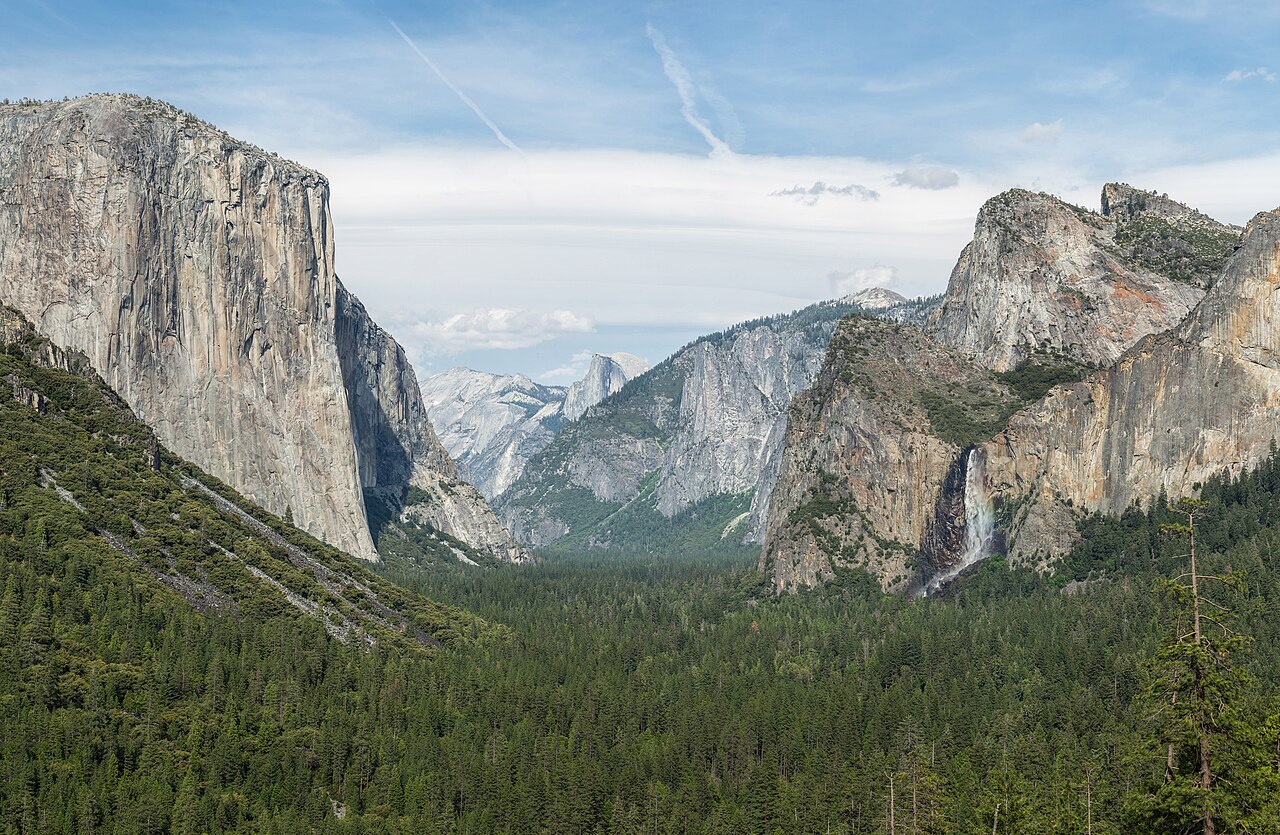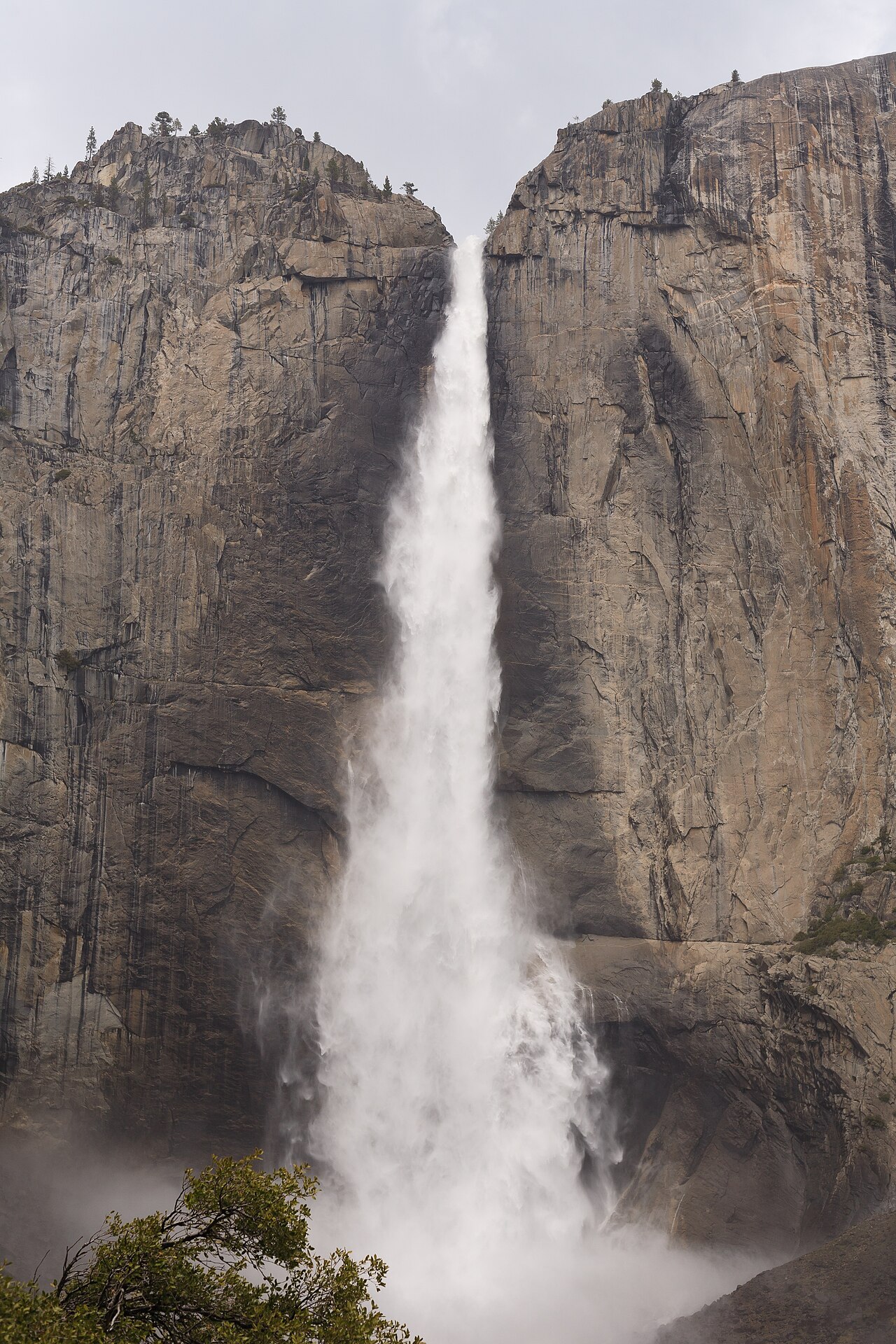
Most visitors look up at Yosemite Falls from the valley floor. The Upper Yosemite Fall Trail takes you to the top. The National Park Service lists the Yosemite Falls Trail at 7.2 miles round trip with about 2,700 feet of climbing for the upper-fall hike, rated moderate to strenuous, in contrast to the 2-mile Lower Yosemite Fall loop. The path starts near Camp 4 and climbs in tight switchbacks up the north wall, with the first stretches in the shade of oak and cedar and the middle sections open to the sun. Along the way, the Columbia Rock viewpoint provides a first panorama over the valley, Half Dome and the Merced River, and beyond it the trail climbs steeply toward the cliff-top and the tumbling creek. The upper fall alone drops about 1,430 feet, and the entire three-stage cascade is roughly 2,425 feet, which makes it the tallest waterfall in North America. The experience varies with the season. In May and June, when snowmelt is at its peak, the top of the trail is a mist-drenched thunder of sound and spray, and the final viewpoint is slick and loud. By late summer the creek often dwindles to a trickle or dries completely, so the hike becomes a viewpoint walk rather than a waterfall one. In winter the trail may be icy, with snow on the upper switchbacks.
What makes it worth the effort. The payoff is not just the waterfall but the vantage point: from the rim you can see the valley laid out from a bird's-eye perspective, a sense of scale that valley-floor views cannot provide. It also offers the park's classic moderate challenge. It is easier than Half Dome, requires no permit and is open to anyone who is willing to climb patiently. Many hikers choose to stop at Columbia Rock for a shorter round trip.
Planning and safety. Start early because the middle section is exposed and hot on summer afternoons. Carry at least two liters of water, sunscreen and a hat, and wear shoes with good grip, as the granite steps and spray zones can be slippery. Stay behind the railings at the top and away from the creek, because the current is deceptively strong in spring. Bring layers because it can be windy and damp at the brink, and carry traction devices in winter when ice remains on the upper switchbacks.
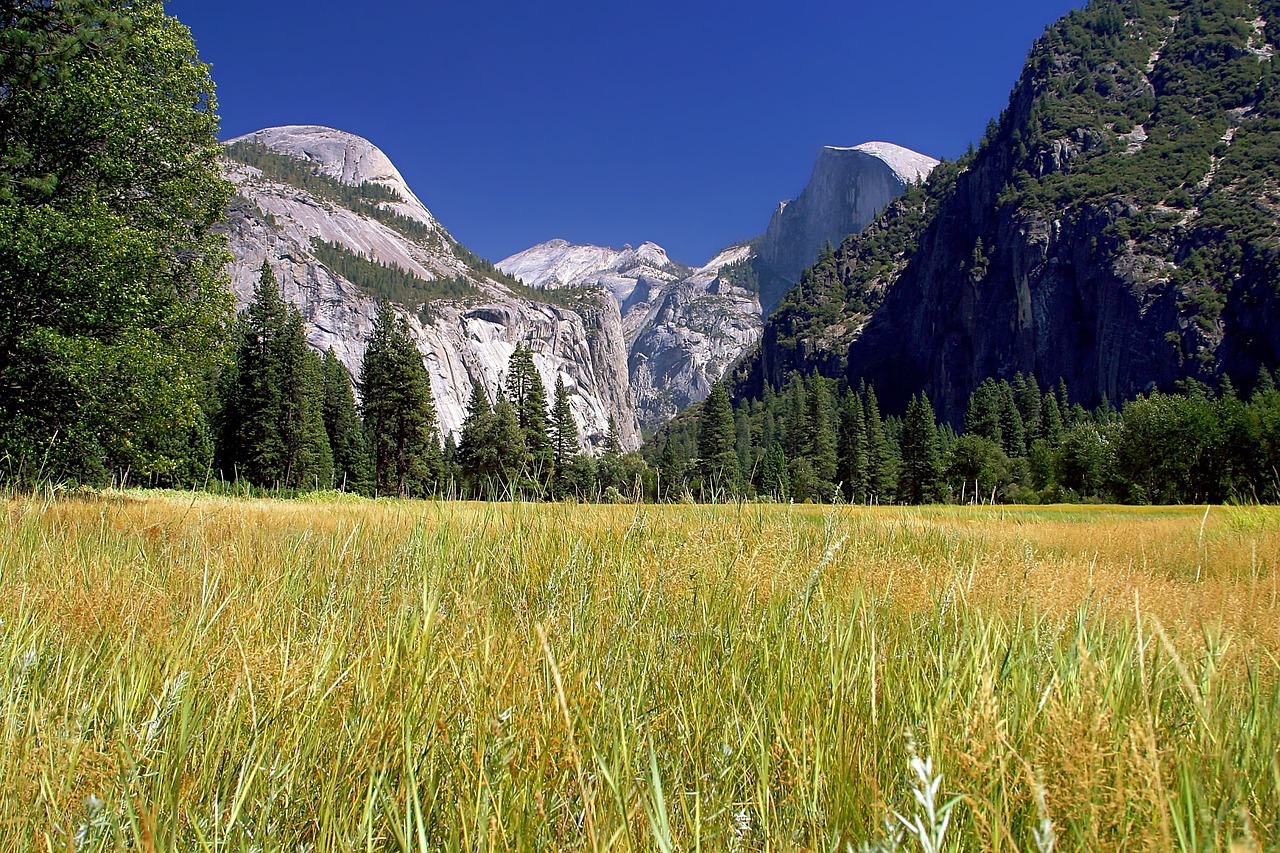
Who it suits. Fit hikers, photographers who want views of the valley from above and anyone who enjoys a steady climb. It is less suitable for young children and anyone with knee or heart concerns. Pair it with the lower fall in the morning light, lunch at the village and a relaxed stroll along Cook's Meadow afterwards.
What to expect
The experience
A 7.2 mile round trip with about 2,700 feet of climbing to the top of Upper Yosemite Fall, with a shorter turnaround at Columbia Rock.
Best time
Late spring for peak flow and spray; autumn and winter for quiet, but expect little water in late summer.
How long
Six to eight hours to the top and back; two to three hours to Columbia Rock and back.
Tips
Start early, carry water and sun protection, stay behind railings at the brink and bring traction devices when ice is possible.
Quick picks
- Best for
- Fit hikers who want to stand on top of the tallest waterfall in North America.
- Families
- Columbia Rock is a manageable goal for older children; the full climb is not.
- Couples
- A challenging shared hike with a big payoff view.
- Pair with
- Lower Yosemite Fall in the morning and a village lunch.
- Time needed
- A full day for the top; half a day for Columbia Rock.
Good questions
How long is the Upper Yosemite Fall hike?+
The National Park Service lists the upper-fall hike at 7.2 miles round trip with about 2,700 feet of gain, rated moderate to strenuous.
Is there water in the fall year-round?+
No. It is strongest in spring and early summer and often dwindles to a trickle or dries in late summer and autumn.
Where does the trail begin?+
Near Camp 4 on the north side of the valley, a short walk or shuttle ride from the village area.
Can I turn around early?+
Yes. Columbia Rock is a popular shorter objective with a broad valley view, and many hikers stop there.
Is the top dangerous?+
Stay behind the railings and away from the creek. Spray makes rock slick, and the current is strong during snowmelt.