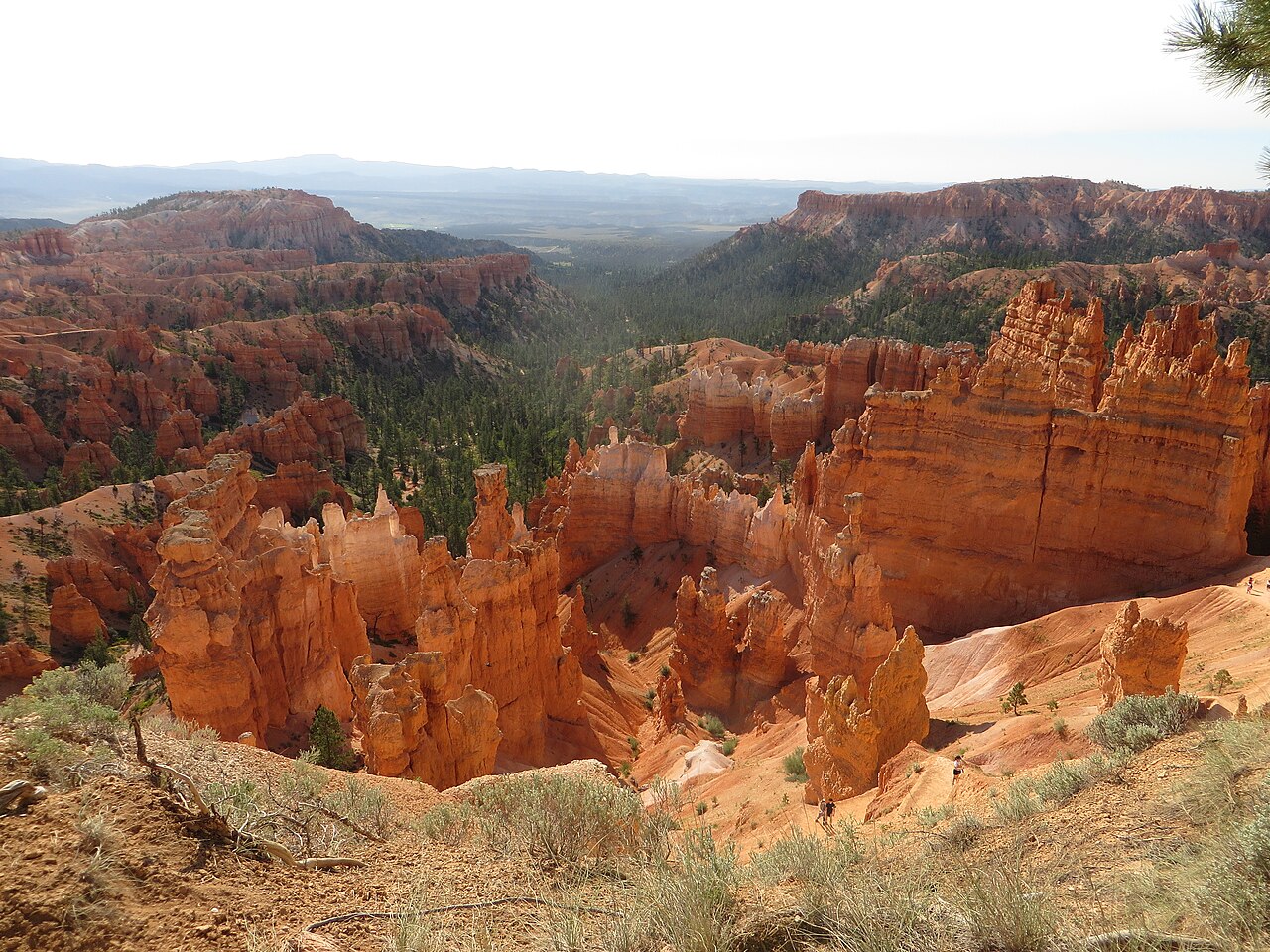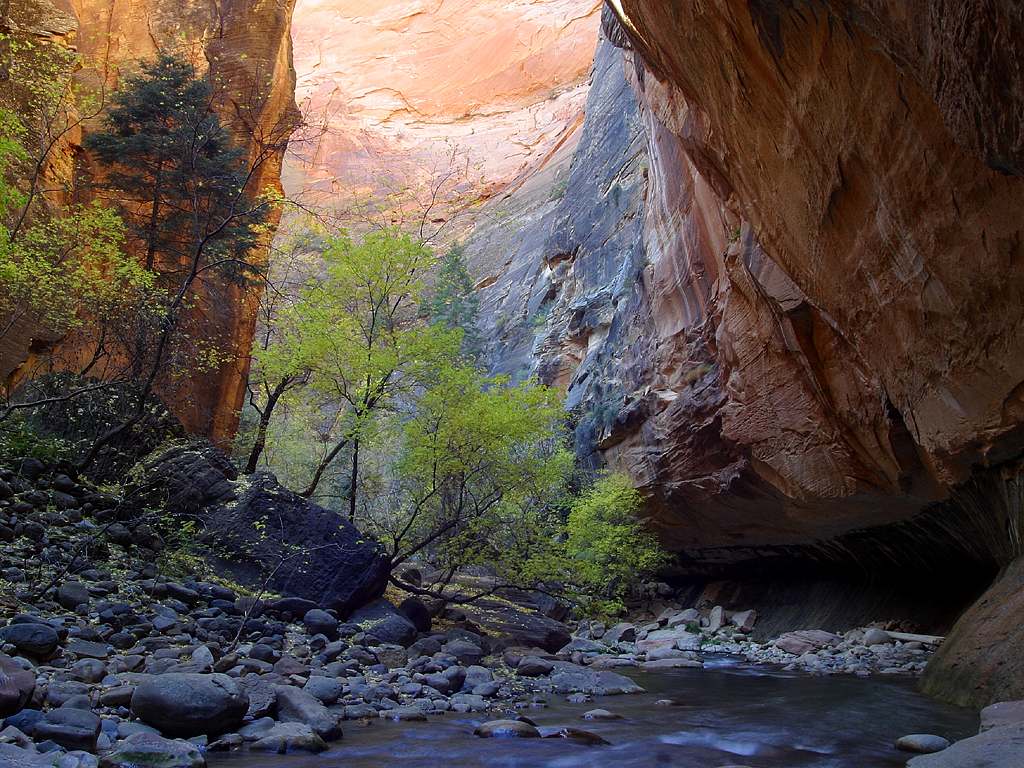
Zion and Bryce Canyon are open every day of the year, but the experience changes dramatically with the seasons, and the two parks often have different weather on the same day. Zion's canyon floor sits around 4,000 feet in the desert; Bryce's rim is around 8,000 to 9,000 feet in the forest. It is common to hike in shirtsleeves in Zion and walk through snow at Bryce in the same week. Here is how to pick your season.
Spring: March to May
Spring brings mild temperatures to Zion, blooming desert plants and waterfalls running at the Emerald Pools, and it is one of the busiest times of year. The Zion shuttle runs daily from March, so plan to ride it. Snowmelt often raises the Virgin River above 150 cubic feet per second, closing The Narrows for weeks, sometimes into early summer. At Bryce, snow lingers on the rim and trails can be muddy or icy into May, and the Wall Street side of the Navajo Loop opens only when freeze-thaw conditions end. The Lodge at Bryce Canyon typically opens in early April. Book lodging early for spring break and Easter, and enter the Angels Landing spring lottery, which in 2026 ran in February.
Summer: June to August
Summer is peak season. Zion's canyon floor is hot, with afternoons that make exposed hikes like Angels Landing dangerous, so hike at dawn and save The Narrows, the coolest trail in the park, for midday. From July into September, the monsoon brings afternoon thunderstorms and flash floods; The Narrows closes during any Flash Flood Warning, and in August 2026 a flash flood in Bryce's amphitheater trapped hikers and closed trails. Bryce is pleasant in summer, with warm days and cool nights, and its astronomy programs and dark skies are at their best. Expect crowds everywhere and book well ahead.
Fall: September to November
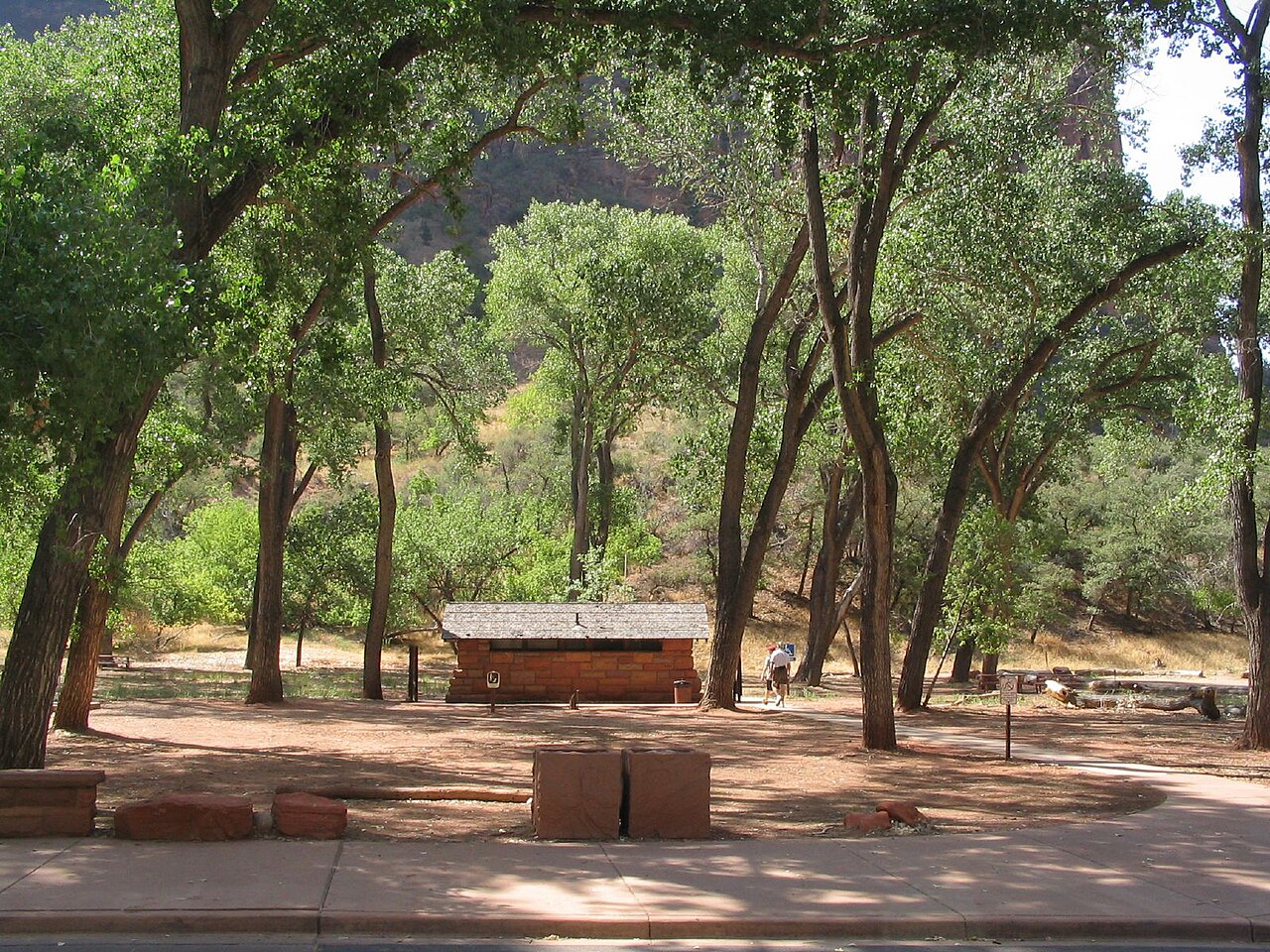
Fall is many people's favorite season. Temperatures drop, the monsoon fades, the cottonwoods along the Virgin River turn gold, usually peaking in late October or early November, and The Narrows is often at its best, with low flows and pleasant water. Crowds remain significant in September and October. The Zion shuttle runs through November 28 in 2026, with shorter hours from late October. Bryce gets its first snow in fall, and The Lodge at Bryce Canyon closes at the start of November. Rockfall can happen at any time; in 2026, a major rockfall closed the Zion-Mount Carmel Highway from September 30 until October 9.
Winter: December to February
Winter is the secret season. Crowds disappear, lodging prices drop, and the parks take on a new beauty: snow dusting Zion's red walls, and Bryce's hoodoos capped in white against a deep blue sky. In Zion, the shuttle does not run from November 29 to December 25, 2026, so you can drive Zion Canyon Scenic Drive yourself — a rare chance to stop wherever you like, though small parking lots may fill and the road may close temporarily. The shuttle returns for the holidays from December 26 to January 2, then winter brings another drive-yourself period. Angels Landing requires a winter or day-before permit, and snow and ice can make it dangerous; The Narrows is cold, so rent a drysuit. Kolob Canyons Road and the higher Kolob Terrace Road can close for snow. At Bryce, the main road is plowed but some viewpoints and the Bryce Point to Inspiration Point section of the Rim Trail can close; snowshoes and cross-country skis turn the rim into a winter playground, and traction devices are essential below the rim. The Lodge at Bryce Canyon is closed, so stay in Bryce Canyon City or Tropic.
The Bryce Canyon Winter Festival
Held every Presidents Day weekend in February at Ruby's Inn in Bryce Canyon City, the festival is a long-running celebration of the snowy season, with free clinics, workshops, tours and competitions. Recent editions have included cross-country ski tours and clinics, snowshoe tours and races, archery and biathlon events, people-powered sled races, photography workshops, arts and crafts, and yoga, many requiring online registration. The 2026 festival ran February 14 to 16; check Ruby's Inn for the 2027 schedule, which falls on Presidents Day weekend.
Winter safety
Drive carefully on icy roads, especially on Scenic Byway 12 and US 89, and carry chains or ensure your rental has good tires. Days are short, so start early and plan to be off trails by dark. Layer for freezing temperatures at Bryce, where nights are often well below zero Fahrenheit in mid-winter. Carry traction devices for icy trails, and check road and trail conditions every morning. Snow Canyon State Park near St. George, at a much lower elevation, makes a mild alternative on cold days.
Fees and passes in any season
Both parks charge a per-vehicle fee valid for seven days, or accept the America the Beautiful pass. Since 2026, non-U.S. residents aged 16 and over pay a $100 per-person surcharge at Zion and Bryce unless they hold the $250 nonresident annual pass, and fee-free days now apply to U.S. residents only. Factor this into your budget, especially for families with teenagers.
Our verdict
For the best balance of weather, conditions and crowds, aim for late September to early November, or April to May if you can accept that The Narrows may be closed. For solitude and photography, consider winter, especially the shuttle-free weeks in Zion before Christmas and the snowy days at Bryce. Avoid midsummer if you dislike heat and crowds, but if summer is your only option, hike early, rest in the afternoon and enjoy the stars at night.