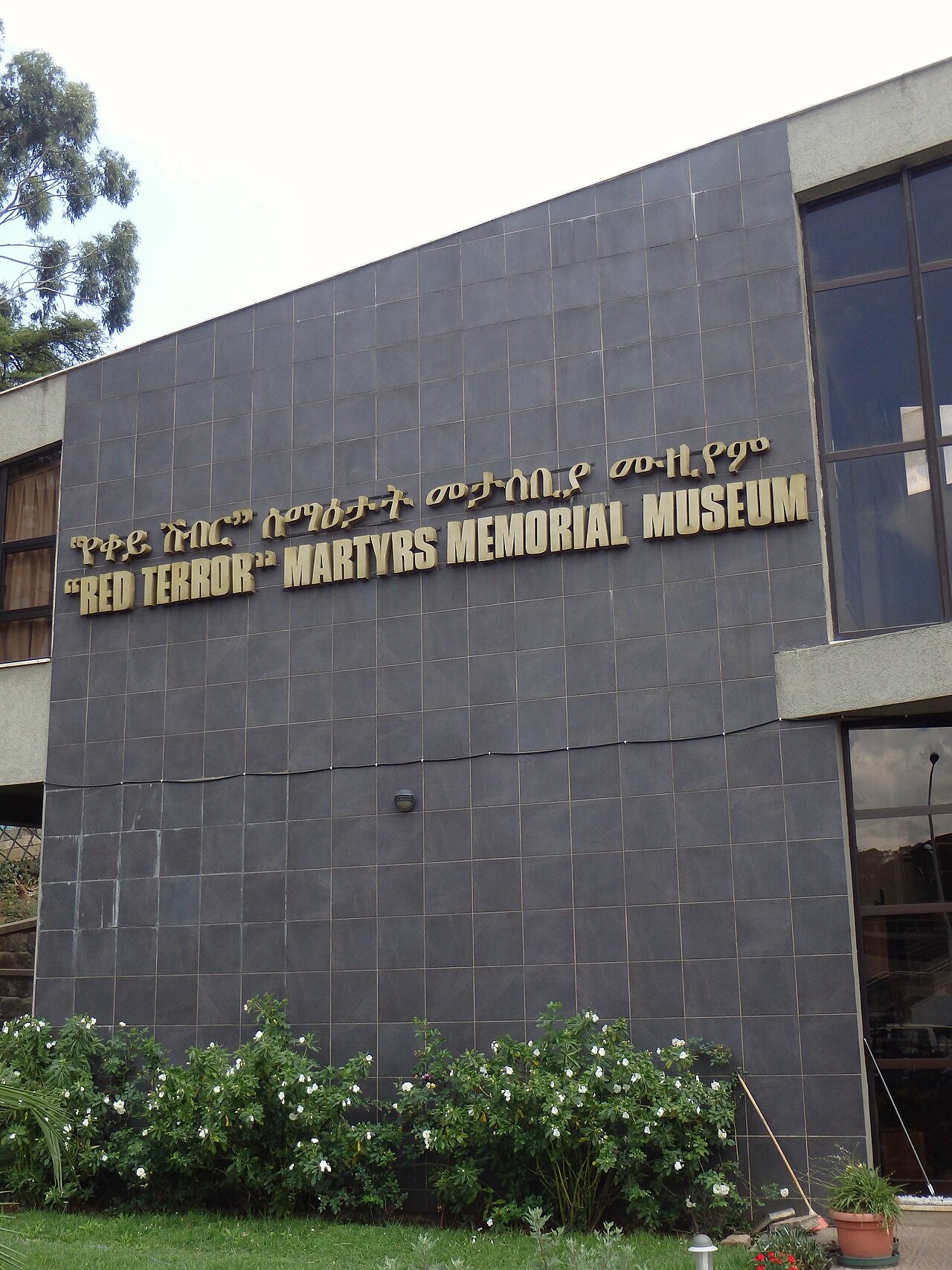
The Red Terror Martyrs’ Memorial Museum documents the violent campaign of repression carried out by the Derg military regime, mainly in 1977 and 1978, in which many thousands of people were killed or imprisoned. It opened in 2010 and was created by survivors and families of victims, so it is a deeply personal place. Exhibits include photographs of victims, clothing and belongings, instruments of torture, and displays of skulls and bones that are confronting. Guides, often people with a personal connection to the history, take visitors through the rooms and explain the context. It is heavy but important, and gives a necessary counterweight to the grand imperial sights elsewhere in the capital. Visit with an open mind, expect an emotional experience, and plan something calm afterwards. The museum is not suited to young children.
What to expect
The museum is arranged around the stories of individuals, with photographs, letters and personal objects, along with documents and displays on the political background. A guide leads most visits, and the testimony is often given first hand. The rooms with remains and instruments are graphic, so prepare yourself, and do not hesitate to step out if you need to.
Visiting practicalities
The museum is in the city centre near Meskel Square, so it is easy to combine with other central sights, and a short taxi ride reaches it from most hotels. Admission has generally been free or by donation, with a contribution expected for the guide, but this can change, so confirm on arrival. Photography may be limited in the most sensitive rooms. Allow about one to two hours, and check opening days before you go.
Making the most of it
Go with respect, listen to the guide and ask questions gently. Avoid visiting immediately before a heavy day of other sightseeing, and consider following it with a quiet cafe stop or a walk in Unity Park or Entoto. The museum fits well with a day on modern Ethiopian history that includes the Adwa Victory Memorial and the National Museum. Dress modestly and leave bags at the entrance if asked.
What to expect
The experience
A guided walk through a memorial museum with photographs, documents and personal testimony.
Best time
A calm morning, with a gentle plan for the hours afterwards.
How long
One to two hours.
Tips
Dress modestly, expect graphic displays, carry a little cash for a guide contribution and not for young children.
Quick picks
- Best for
- Visitors who want an honest picture of modern Ethiopian history beyond the imperial sights.
- Families
- Not suitable for young children because of the graphic content.
- Couples
- A thoughtful visit for those interested in history.
- Pair with
- The Adwa Victory Memorial or the National Museum, then a calm cafe stop.
- Time needed
- One to two hours.
Good questions
What was the Red Terror?+
It was a campaign of violent repression by the Derg regime, mainly in 1977 and 1978. Many thousands of people were killed or imprisoned.
Is the museum free?+
Admission has generally been free or by donation, with a tip expected for the guide. Check on arrival as arrangements can change.
Is it suitable for children?+
No, it is not suited to young children because of graphic displays. Older teenagers may be able to cope with a parent’s guidance.
Where is it?+
It is in the city centre near Meskel Square, a short taxi ride from most central hotels.
How long should I plan?+
Allow one to two hours, and leave time afterwards to reflect. A guide is usually part of the visit.