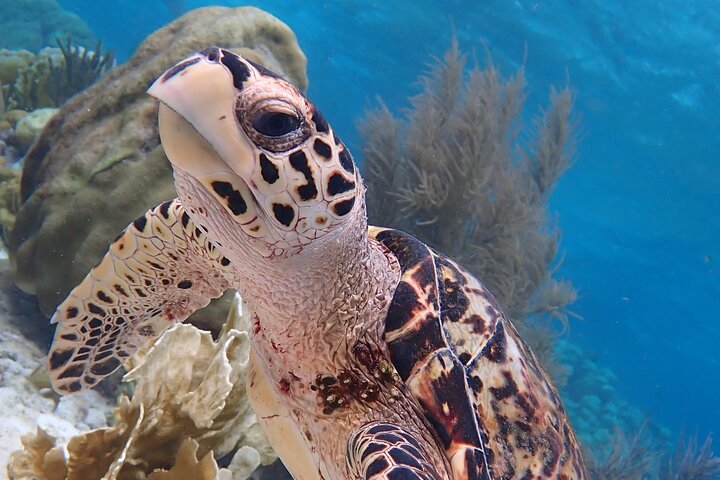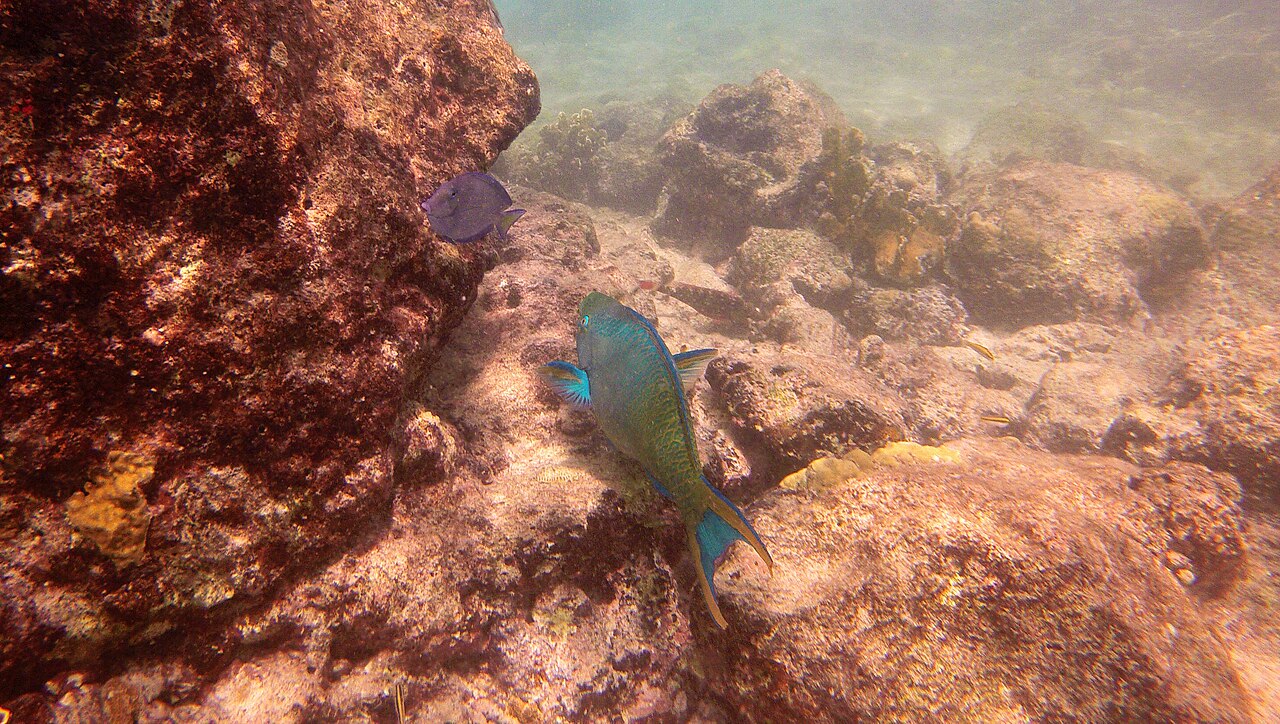
Bonaire’s identity is built on its reef. The entire coastline, from the high-tide mark down to sixty meters, is a protected marine park, and the reef starts so close to the shore that many visitors snorkel or dive from the beach. This guide explains the main ways to get in the water, how the marine park system works and how to choose between a boat and the shore.
The marine park and the nature fee
The park is managed by STINAPA, and all water users pay a nature fee that is valid for the calendar year. Carry photo ID, because rangers and operators may ask for proof. The fee also covers entry to Washington Slagbaai. The rules protect the reef: do not touch or stand on coral, do not feed fish, use only reef-safe sunscreen and rinse and check your gear as the park asks. Following them keeps visibility high and the reef healthy.
Shore snorkeling and diving
Along the coast road you will see small yellow-marked stones that identify shore sites, each with its own entry and parking. Many are simple: a short walk into the water, a sandy patch and then a reef that drops away. The Thousand Steps is a popular spot with a stairway down to a cove. Check the entry before you go, since rocky shorelines can be slippery, and consider water shoes. A vehicle makes shore diving easy, and many divers rent a pickup so they can load tanks and move between sites at their own pace. Certified divers can dive unlimited hours from the shore, while snorkelers can enjoy the same reefs with only a mask, snorkel and fins.
Boat snorkeling
A boat gives you reach and reassurance. The Klein Bonaire excursion takes small groups to two stops around the uninhabited islet, while the Double Dip trip also offers two reef stops from Kralendijk. The Chill and Grill catamaran adds sailing, a barbecue and a relaxed pace. Crews brief you before each swim, help with flotation and point out marine life. For something different, the guided sea scooter tour lets you cover more reef with less effort. Boat trips are the best choice for first-time snorkelers, families and anyone who prefers to follow a guide.
After dark
Night snorkeling reveals nocturnal animals such as crabs, shrimp and octopus, and sleeping fish tucked into the coral. Torchlight brings out colors that the water filters during the day. A faint glow in the water can appear on some nights, depending on the moon and conditions. These trips are best for confident swimmers, and a guide keeps the group together. Divers can add night dives with their operator.
Learning to dive
Bonaire is one of the easiest places to learn, thanks to calm water, good visibility and plenty of operators. Many resorts have their own dive centers, including Buddy Dive and Habitat Bonaire, which cater to divers with packages, courses and equipment services. Beginners can try a discover scuba session, while certified divers can choose boat dives to sites around Klein Bonaire or unlimited shore packages. If you are returning to diving after a break, ask about refresher sessions.
Choosing a base
If diving is your priority, choose a dive resort with a house reef and gear facilities: Habitat Bonaire, Buddy Dive and Courtyard by Marriott Bonaire Dive Resort all focus on divers. For a mix of snorkeling and sightseeing, a central base in Kralendijk such as Divi Flamingo or the Plaza resort works well. Wherever you stay, plan a rest day before flying after diving and follow your operator’s guidance on flight timing.
What to bring
Bring a rash guard, reef-safe sunscreen, water shoes, a dry bag and a waterproof camera case. Many operators supply masks and fins, but your own mask fits better and avoids leaks. Respect the reef, take only photographs and let the marine life set the pace.
Safety basics
Always snorkel or dive with a buddy, check the wind and swell before entering the water and know your limits. Boats and currents can be a hazard in some areas, so a bright float or dive flag is a sensible precaution. Carry water and a basic first aid kit in your vehicle, and tell someone where you are going. If anything feels wrong, get out and rest. The reef will be there tomorrow, and the best dives are the ones that end with a smile.