If the Mezquita is the grandest face of Córdoba, the patio is its most intimate one. Behind plain whitewashed doors, many houses in the old quarters open onto a courtyard full of plants, tiles and the sound of water. These patios are a central part of the city's identity, and understanding them will change the way you walk its streets.
What is a Cordoban patio?
A patio is an interior courtyard, open to the sky, around which the rooms of a house are arranged. It served as a living room, kitchen garden and cooling system at once. Plants and a central well or fountain freshen the air in summer, thick walls and shaded galleries keep the heat out, and the open sky brings light into the rooms. The form owes something to the Roman atrium house and more to the Islamic courtyard house, and it was adapted by generations of Cordobans, from noble families to the shared tenement houses known as casas de vecinos, where several families lived around a common patio.
What you will see
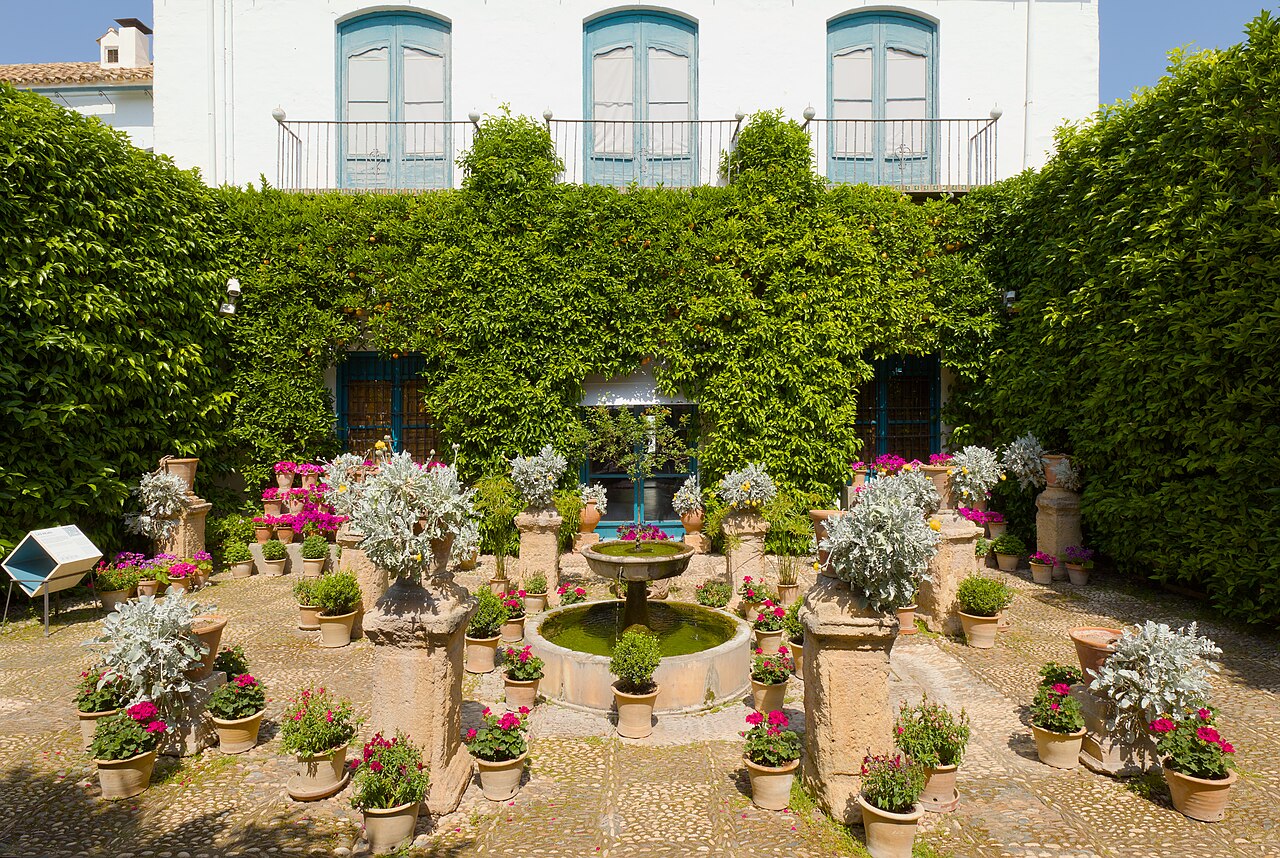
The classic patio has white walls, a floor of stone or pebbles, a well, potted plants arranged on the walls and in rows, and a few climbing plants. Geraniums, carnations, jasmine, gardenias, aspidistras, roses and citrus trees are all common, and the blue flowerpots hung on the whitewash are the symbol of the tradition. Wrought-iron grilles, tiled benches and arches add detail. Some patios are tiny, a few square metres, and others are grand, with columns, fountains and gardens, as in the noble palaces.
The patios festival
Each spring, Córdoba holds its famous patios festival, in which owners open their courtyards to the public and compete for prizes. The tradition is recognised by UNESCO as part of the world's intangible cultural heritage, and neighbours work for months to prepare their plants. For a few days in May, the old quarters are full of visitors queuing to peek into courtyards, and the city is at its busiest. The festival is a joyful, social event, and the best way to enjoy it is to book your hotel and any tours well in advance, go early in the day, and accept that the queues are part of the experience. Entry arrangements change from year to year, so check the current rules before you go.
Where to find patios
The best-known areas are San Basilio, near the Alcázar, where the patios are close together and often open to visitors, the Alcázar Viejo, San Lorenzo and Santa Marina. Some patios are public or semi-public, such as those of cultural institutions, and a few hotels and restaurants have beautiful courtyards that are open to guests. You can find a patio almost anywhere in the old town by looking through open doorways and iron gates, but remember that most are private homes, and visitors should be respectful and ask before entering or photographing.
Seeing patios outside May
You do not need to visit during the festival to enjoy them. The Palacio de Viana, a noble palace, has twelve patios and a garden that are open throughout the year, and each has a different character, from a formal courtyard with a fountain to an orchard-like garden. A guided patios tour, led by a local guide, can arrange access to private courtyards in the old quarters and explain the history of the tradition. In autumn and winter the plants are green and the citrus is in fruit, and the courtyards are quiet, which many people prefer to the spring crowds.
Tips for visitors
Wear flat shoes for the cobbles, carry a small amount of cash for tips or donations, and take your time. Look up, because ironwork and tilework are often at eye level or above. Keep your voice low, never block a doorway and follow any signs asking visitors not to enter. If you want to photograph, ask permission before taking pictures of residents and respect rules in private homes.
Staying in a patio
Several of the city's hotels are built around courtyards, which let you enjoy the tradition at breakfast or in the evening. The historic houses of the Jewish quarter, the Balcón de Córdoba, the Hospes Palacio del Bailío and the budget-friendly Hotel Maestre all offer patios of their own, and they are among the nicest places in the city to relax after a day of sightseeing.