Most visitors see Corfu from a beach or the old town, but the island interior is where its character shows. Olive groves, stone villages, cypress-lined lanes and a mountain that tops nine hundred metres make the countryside worth a day or two of your trip. This guide explains the best ways to explore it, from a gentle walk to a guided drive.
Why the countryside looks the way it does
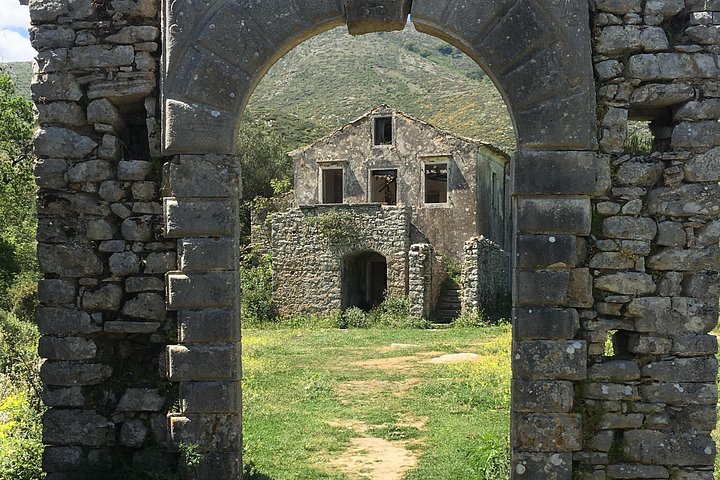
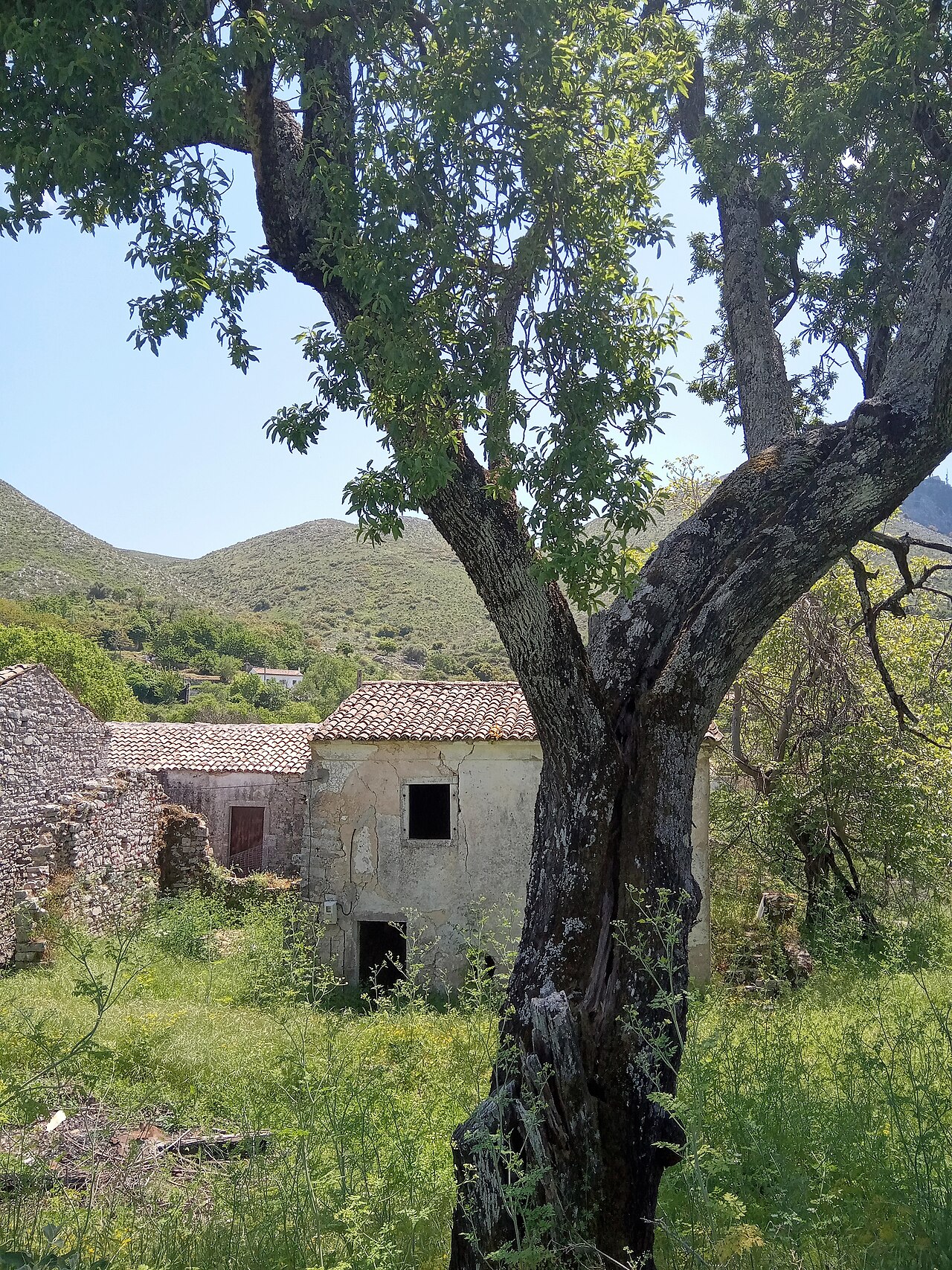
Under Venetian rule the island was planted with vast numbers of olive trees, and many of those groves still shape the landscape. The trees form a silvery canopy over lanes and terraces, and in the cooler months nets are laid out for the harvest. Small villages grew around churches and squares, and in the north the mountain slopes hold older settlements that were abandoned as people moved to the coast.
Old Perithia and Mount Pantokrator
Old Perithia is a nearly deserted stone village beneath Mount Pantokrator, with a handful of tavernas that open mainly in the warm season and at weekends. Walk the lanes, look at the ruined houses and the church, and take lunch in the square. The mountain above can be reached by a guided excursion or by car on a steep, winding road, and the summit offers views across the island to the Albanian coast. Clouds can cover the top, so choose a clear day.
West coast villages and viewpoints
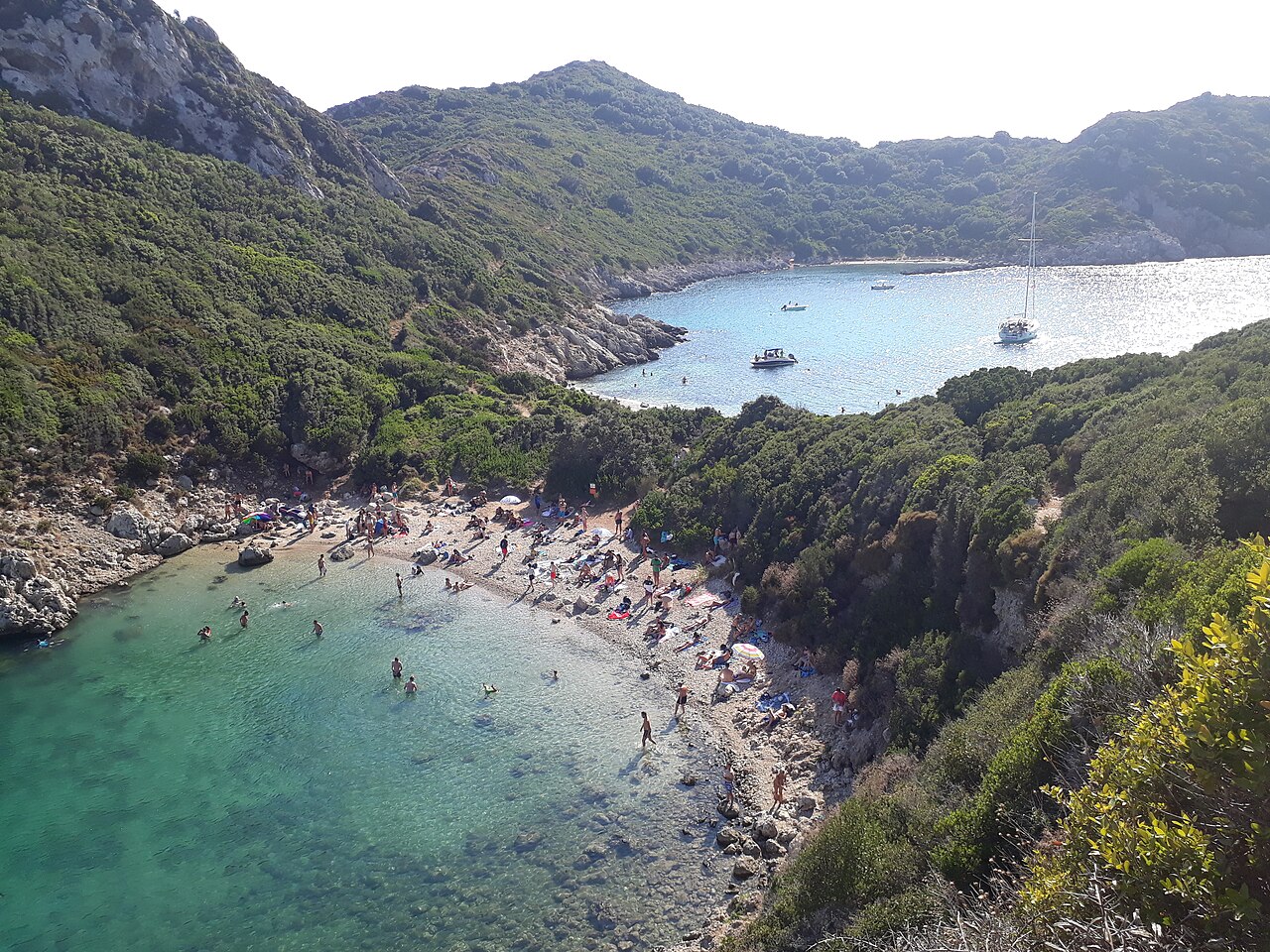
Behind Paleokastritsa, the village of Lakones sits on a ridge above the sea and offers one of the best coastal views on the island. Further north, Porto Timoni and Afionas combine a village stroll with a famous double bay: the path to the viewpoint is rough and rocky, so wear proper shoes and bring water. Take it slowly in the heat.
Walking
Corfu has marked trails and old paths, including the long-distance Corfu Trail, which runs the length of the island. You do not need to walk all of it. Short sections near villages give good scenery with modest effort. Paths can be overgrown in places, so wear long trousers in spring, carry water and tell someone your plans. In midsummer, walk early in the morning, because the afternoon heat is intense.
Cycling and e-bikes
A guided e-bike ride is an easy way to cover more ground without the climb, and it often includes village stops and a wine tasting. Roads are narrow and shared with cars, so ride in single file and follow your guide. Spring and autumn are the best seasons, when the air is mild and the countryside is green.
By Land Rover or minibus
If you would rather not walk or cycle, a Land Rover safari through the north west takes you along back roads, through olive groves and into villages that coaches miss. A guided drive to the north coast adds Kassiopi, with its harbour and castle ruins, and the sandstone coves near Sidari. These trips suit mixed groups and give you a guide's context.
Food from the countryside
Visits to farms and mills show how olive oil is made, and tastings of local wine and products turn a drive into a lunch. Look for village tavernas serving grilled meat, salads, local cheese and greens, and try the ginger beer that dates from the British period.
When to go
Spring brings wildflowers and green hillsides, which makes April and May the best months for walking. Summer is hot but rewards early starts and shaded villages. Autumn is mild and quiet, with the olive harvest beginning in the cooler months. In winter, rain can make paths muddy and some village tavernas close, but the light is soft and the roads are empty. Check opening times before you drive far for lunch.
Photography and pace
Late afternoon light is the best time for the olive groves and the stone villages, and mornings give clearer views from high points. Leave time for unplanned stops, because a church door left open or a view over a terrace often becomes the memory of the day. Carry a little cash for village cafes, which may not take cards.
Practical tips
Narrow roads, sharp bends and few road signs make navigation slow, so download an offline map. Fuel up before heading into the hills. Wear shoes with grip, carry water and sun protection, and respect private land and gates. With a little planning, the countryside becomes the part of Corfu that stays with you longest.