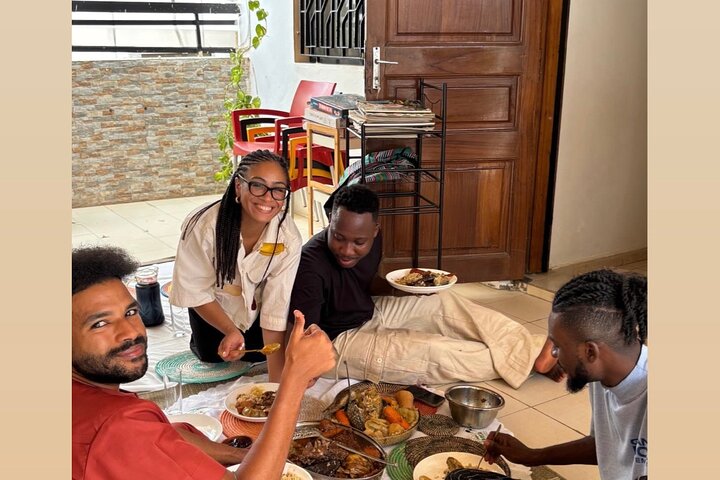
Dakar is a food city. Senegalese cooking is built on rice, fish, onions, peppers and slow-cooked sauces, and eating well here is as much about the way meals are shared as the dishes themselves. The Wolof word teranga, often translated as hospitality, shows up at the table, where a big bowl is usually placed in the middle and everyone eats from the part in front of them. This guide covers the dishes to try, the places to look for them and a few habits that make eating out easier.
Start with the national dish
Thieboudienne, sometimes written ceebu jën, is fish cooked with rice in a tomato-based sauce with vegetables such as cassava, carrot, cabbage and aubergine. It is the dish most people mean when they talk about Senegalese food, and it is often served at lunch. Its close relative is jollof rice, a spiced one-pot rice dish found across West Africa, and a hands-on jollof cooking class is the best way to learn the method and to taste home-style cooking. Ask the host about the differences between the two and how families vary them.
Other dishes worth ordering
Yassa is chicken or fish slow-cooked with onions, mustard and lemon, with a tangy sweetness that works well with plain rice. Mafé is a rich stew built on peanut sauce, usually with beef or lamb. Dibi is grilled meat, typically lamb, served by the roadside with onions, mustard and bread, and it is a favourite late-night meal. Thiou is a lighter stew, and fataya are small fried pastries filled with fish or meat, ideal as a snack. For breakfast, look for fresh baguettes with spreads, coffee or tea, and bean or chickpea sandwiches from street stalls. Vegetarians can find rice with vegetables, bean dishes and salads, but should say clearly that they want no fish or meat stock, because many sauces are made with it.
Seafood by the sea
Dakar sits on the Atlantic, and the fish is as fresh as it gets. Around Soumbédioune you can see boats landing their catch, and the beach restaurants of Ngor and the Almadies serve grilled fish, prawns and lobster with rice or chips. A boat trip to Ngor Island followed by a long lunch of grilled fish is one of the easiest and most enjoyable food outings in the city. Ask the price before you sit down, check whether sides and drinks are included and expect the fish to be sold by weight in some places.
Drinks and sweet things
Bissap is a tart, ruby-coloured drink made from hibiscus flowers, bouye is made from baobab fruit, and gingembre is a zingy ginger juice. Attaya, strong sweet green tea served in three rounds, is a ritual of hospitality, so accept it when offered. Café Touba, spiced coffee, is a staple of street stalls. For something sweeter, thiakry is a yoghurt and millet dessert, and fresh fruit from markets is excellent. Bottled water is the safe choice for visitors, and it is wise to be cautious with ice and unwashed salads in simple places. Alcohol is available in hotels, bars and many restaurants, but Senegal is a predominantly Muslim country, so drink discreetly outside of those venues.
Where and how to eat
Hotels have reliable restaurants, particularly the larger ones such as Terrou-Bi Resort, Noom Hotel Dakar Sea Plaza and Pullman Dakar Teranga, and a hotel meal is a safe first night. For local flavour, ask your hotel or guide for a busy neighbourhood restaurant where the lunch dish is served from a pot, because turnover is the best sign of freshness. Street food is part of the culture, so choose stalls with a steady crowd and food cooked in front of you. Carry small notes, agree prices when there is no menu and remember that lunch is the main meal for many Dakarois, with a more relaxed dinner late in the evening.
Plan a food day
Start with a market visit and a coffee in the Plateau, take a jollof class in the late morning, spend the afternoon at Soumbédioune and the corniche, and finish with grilled fish at sunset. Mention allergies or dietary needs in advance, and check opening times around religious holidays and the fasting month, when some restaurants change their hours.