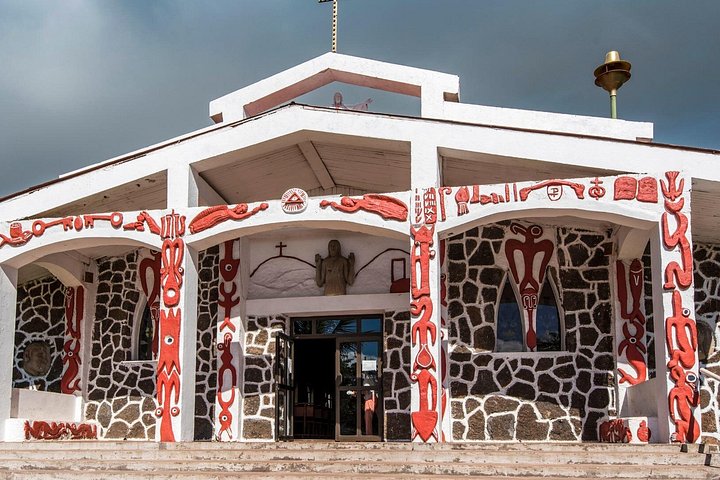
Almost everyone on Easter Island lives in Hanga Roa, a low-rise, relaxed town on the southwest coast with a few main streets, a small harbour and a handful of cafes and restaurants. It is easy to treat the town as a base and head straight out to the sites, but an afternoon spent here pays off. The anthropological museum, named for Father Sebastian Englert, a missionary who spent decades studying the island, holds the best collection of artefacts on Rapa Nui, including carved wooden figures, obsidian tools, coral eyes and photographs that help you picture the island before it changed. The church of the Holy Cross, with carved saints and altars in Rapa Nui style, is a lovely example of how Catholic and traditional symbols have blended. Down at the harbour, fishermen still land tuna and lobster, and small restaurants serve the day's catch.
The museum rewards a slow visit. Its exhibits cover the mysterious rongorongo script, which has never been deciphered, along with detailed models of the island and displays on navigation and settlement. Opening days and hours can vary by season, so check on arrival, and consider joining a guide if one is available. A visit also helps you understand what the island lost when its people were taken and its artefacts were removed, a theme that comes up often in conversations with islanders. The museum gift shop sells books that are hard to find elsewhere.
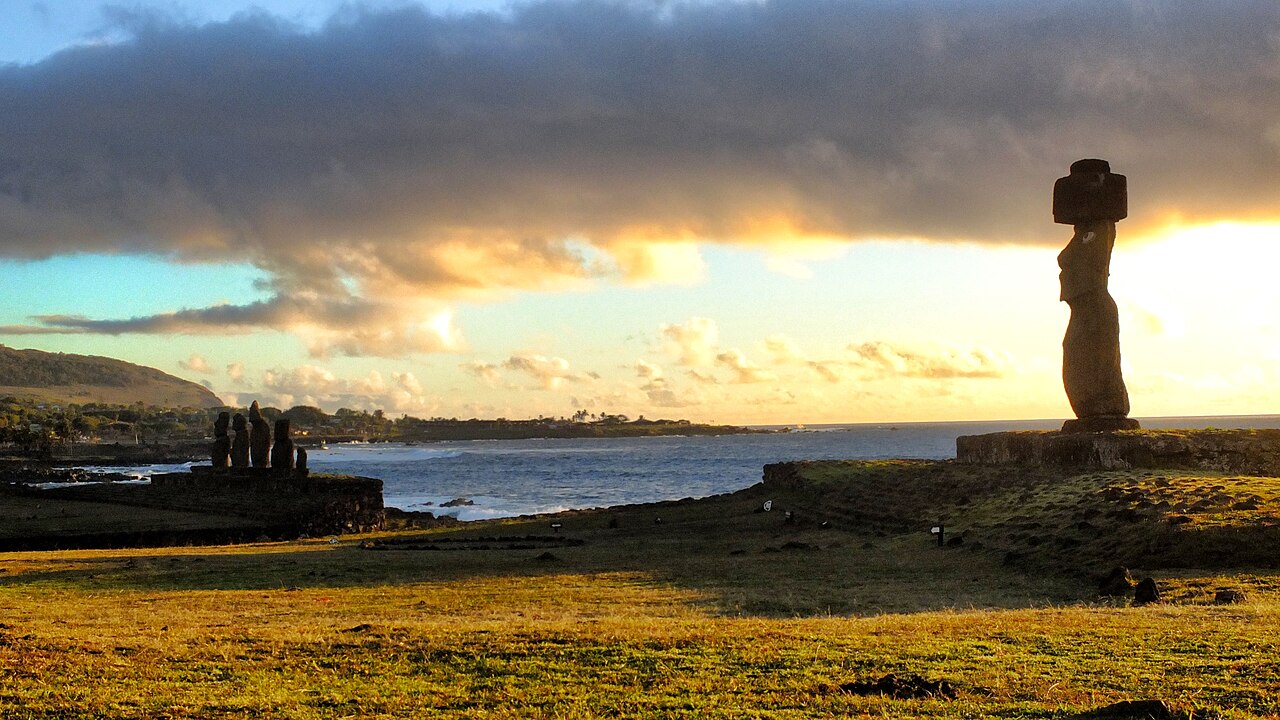
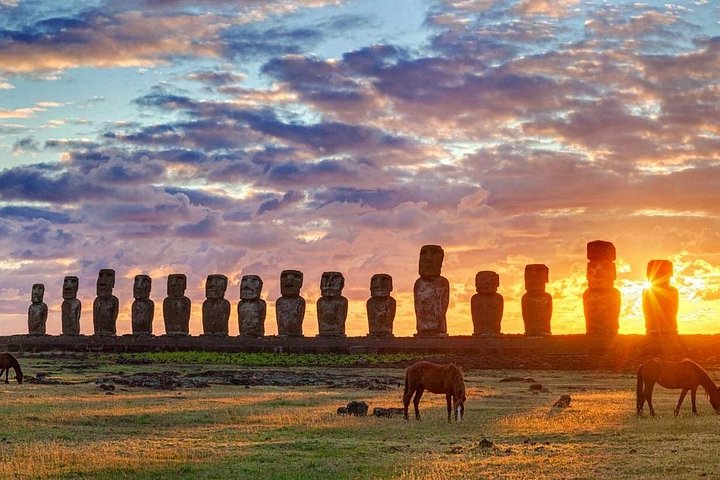
Elsewhere in town, the craft market is a good place to buy souvenirs made by local artisans, from wood carvings to stone figures and woven items. Prices vary, and bargaining is not the norm. Look for items made on the island rather than imported, and remember that taking archaeological objects or volcanic stone off the island is prohibited. The cemetery, with its brightly decorated graves, is another quiet stop, and you can easily walk along the coast to the Tahai sites in the evening.
The town works best on foot, and its dining scene is a highlight. Expect fresh fish, ceviche, empanadas and tropical juices, plus a few places that serve modern interpretations of island food. Prices are higher than on the mainland because most goods are flown in, so budget accordingly. Many cafes close mid-afternoon and some restaurants are closed one day a week.
The tour linked here is a guided walk through Hanga Roa with a local, and it is a good option on your first morning, when you want orientation and a gentle start. Combine it with sunset at Ahu Tahai, and the harbour at dusk, for a slow and satisfying day.
Add a few small experiences to the standard walk. Visit the harbour at dawn to watch fishermen launch their boats, or at dusk when they return with their catch. Try a local bakery for breakfast, sample fresh juices at a market stall, and look at the murals and carvings that decorate public buildings.
If you attend church on a Sunday, be respectful and quiet, since services are important to the community. Take a few minutes at the cemetery to see how Christian and traditional symbols mix, and carry small change for donations or purchases. A slow day in town is a fine counterbalance to the long tours.
What to expect
The experience
A guided walk around Hanga Roa taking in the museum, the church, the harbour and the craft market, with local commentary.
Best time
Morning for the museum and market; late afternoon for the harbour and sunset.
How long
Three to four hours.
Tips
Check museum opening days on arrival. Carry some cash for the market and small cafes.
Quick picks
- Best for
- First-day visitors and anyone interested in culture beyond the sites.
- Families
- Good for children in short stretches; the harbour and market are the highlights.
- Couples
- A relaxed afternoon followed by sunset at Tahai.
- Pair with
- Ahu Tahai and the dinner show.
- Time needed
- Three to four hours.
Good questions
What is in the museum?+
Artefacts including carved wooden figures, stone tools and coral eyes, plus displays on the undeciphered rongorongo script.
Is Hanga Roa walkable?+
Yes. The town is small, and most places are a short walk apart.
Where can I buy souvenirs?+
At the craft market and local shops. Look for items made on the island, and never take archaeological objects or volcanic stone.
Is food expensive?+
Prices are higher than on the mainland because many goods are flown in.
Do I need a guide in town?+
No, but a guided walk adds context and helps on the first day.