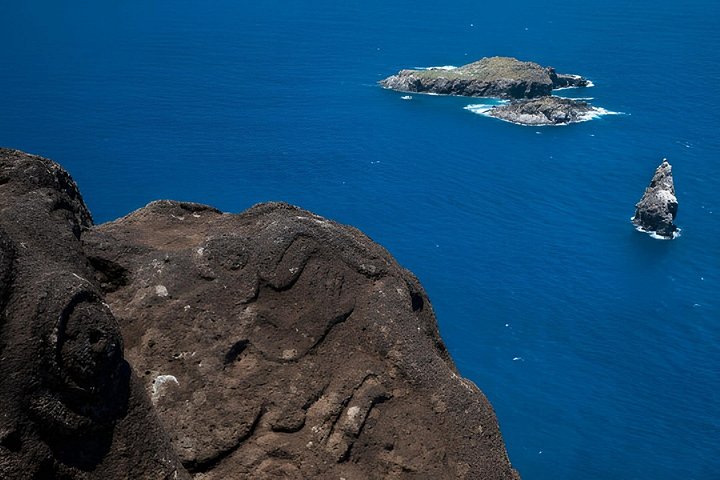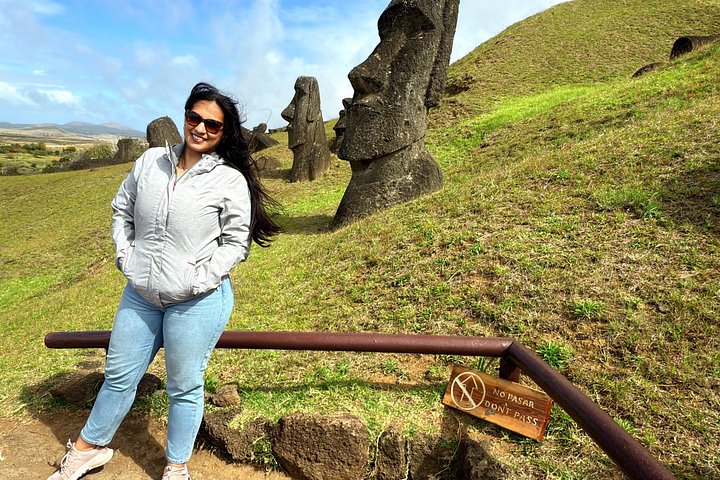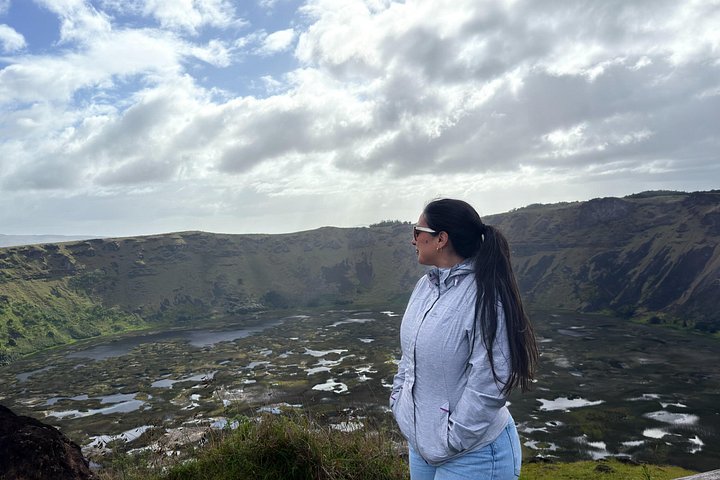
Orongo sits on a narrow ridge between the Rano Kau crater and the open Pacific, and it is one of the most dramatic positions on the island. The crater below is more than a kilometre wide, filled with a reed-covered lake, and the sea cliffs drop away on the other side toward three small offshore islets. This was the ceremonial centre of the Birdman cult, which took over from the moai tradition in the later centuries before European contact. Every year, young men representing chiefs climbed down the cliff, swam to the islet of Motu Nui, and waited for the sooty terns to lay their first egg. The first to bring an egg back, tied to his forehead, won the title of Birdman for his sponsor. Today you can walk the restored line of low stone houses with turf roofs and look at the petroglyphs of the birdman figure and the creator god Make-make carved into the volcanic rock.
The site rewards a slow visit. The houses are small and oval, built of flat basalt slabs with narrow entrances, and they were used only during the ceremonial season. Beyond them, the rock outcrops carry hundreds of carvings: birdman figures with a human body and a bird head, hooked beaks, and curled shapes that guides interpret as fertility symbols.
A modern visitor centre helps put the village in context, and the path is kept clear so you can look over the edge without leaving the permitted area. The view from the rim is among the best on Rapa Nui, with the inner crater wall, the lake and the three islets all in one frame.
A famous object connects Orongo to the wider world. In the nineteenth century the moai known as Hoa Hakananai'a was taken from a house here and shipped to Britain, where it still stands in a museum. Rapa Nui has campaigned for the return of that statue and others, and local guides bring this up when they talk about the site. It is a good reminder that Orongo is not a dead monument but a living part of a story that is still unfolding.
Practical points matter here. Orongo can be entered only once per park ticket, and it often closes in strong wind or heavy rain. The site is high and exposed, so the temperature can feel several degrees colder than in Hanga Roa, and wind gusts are common. Morning visits tend to be clearer, and afternoon cloud sometimes rolls in over the crater.
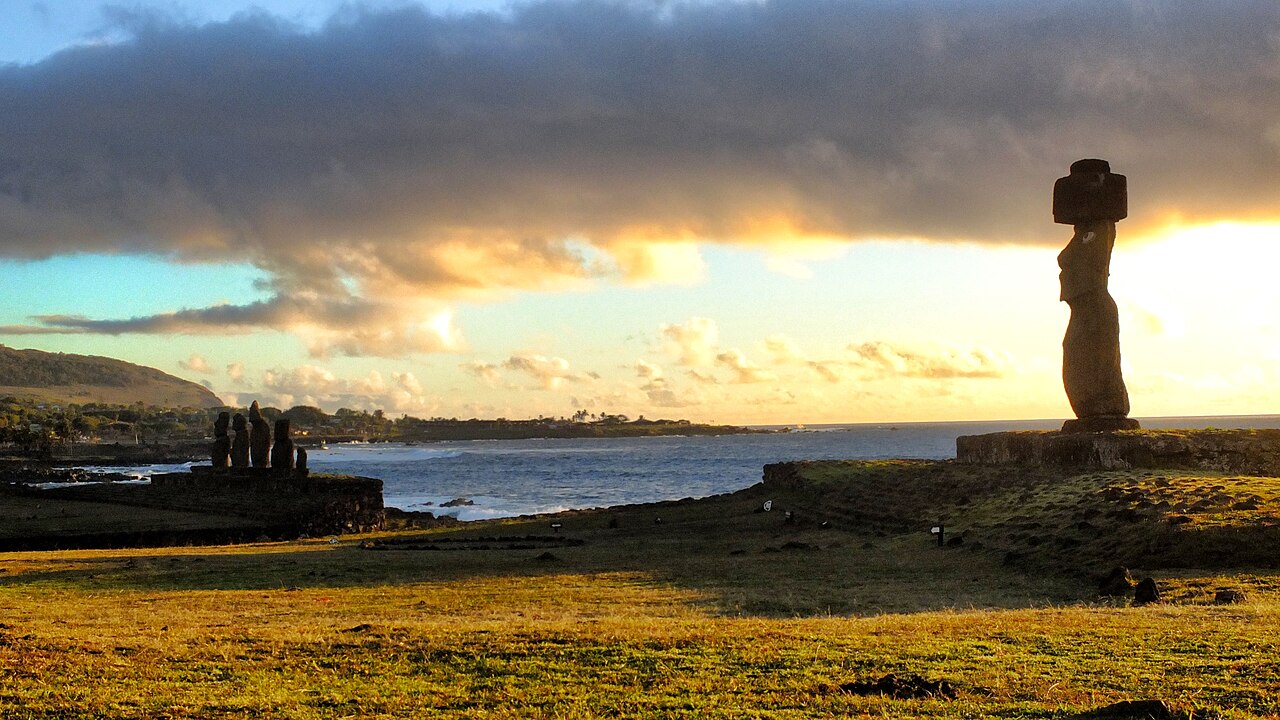
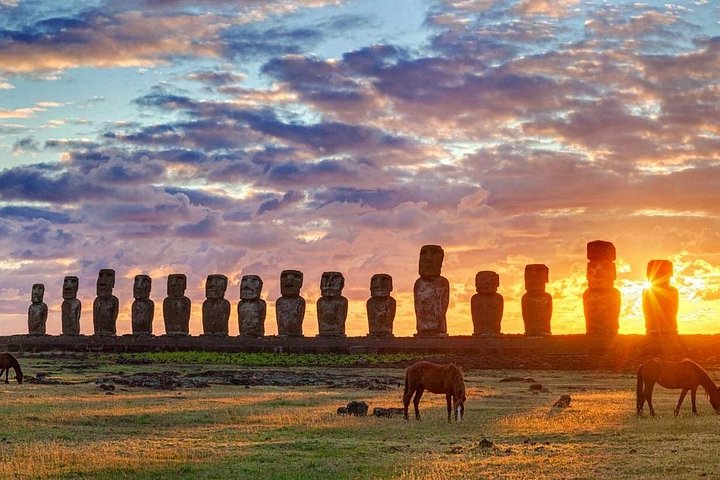
You can drive up in about 15 minutes from town, or hike, and the half-day tour linked here follows the Birdman ceremonial route through Orongo and the crater rim with a guide. It is one of the better-value paid products on the island, and it pairs well with a sunset at Ahu Tahai the same day.
Combine Orongo with the crater rim for the full picture. From the car park, the rim path gives long views over the lake, and on clear days you can see the whole sweep of the southern coast. Take a moment to look back toward the town and the runway, and notice how the village was positioned for outlook and ritual, not comfort.
The visitor centre is worth a short stop before you walk the site, as it explains the Birdman calendar. Remember that photographs from the cliff edge are tempting but dangerous, so stay inside the barriers, hold your hat, and let the wind do the shouting.
What to expect
The experience
A guided walk through the restored stone houses and rock carvings at the crater rim, with views down into the lake and across to the offshore islets.
Best time
Morning, when visibility is best and the crater is least likely to be clouded over. Strong wind or rain can close the site.
How long
Around two hours including the drive from Hanga Roa.
Tips
Entry is once per park ticket. Bring a windproof layer, stay behind the barriers, and ask your guide about the Birdman competition.
Quick picks
- Best for
- History and culture lovers, and anyone who wants a crater view as well as an archaeological site.
- Families
- Fine for older children, but there are steep drops beyond the paths, so keep a close eye on young ones.
- Couples
- Dramatic and quiet, particularly in the early morning light.
- Pair with
- The Rano Kau crater rim and the warrior path hike, or sunset at Ahu Tahai.
- Time needed
- Two to three hours.
Good questions
What was the Birdman competition?+
A yearly contest in which representatives of rival chiefs swam to Motu Nui to retrieve the first sooty tern egg of the season. The winner's sponsor was honoured as Birdman for the year.
How many times can I visit Orongo?+
Park rules allow one entry per ticket, so plan the visit rather than popping back.
How far is Orongo from Hanga Roa?+
About 15 minutes by car, or a longer walk or hike along the crater road.
Is the site ever closed?+
Yes. High wind, heavy rain or conservation works can close paths. Ask your hotel or guide for the day's conditions.
Why is Hoa Hakananai'a not at Orongo?+
The statue was removed in the nineteenth century and is now in a museum in London. Many Rapa Nui people have asked for its return.