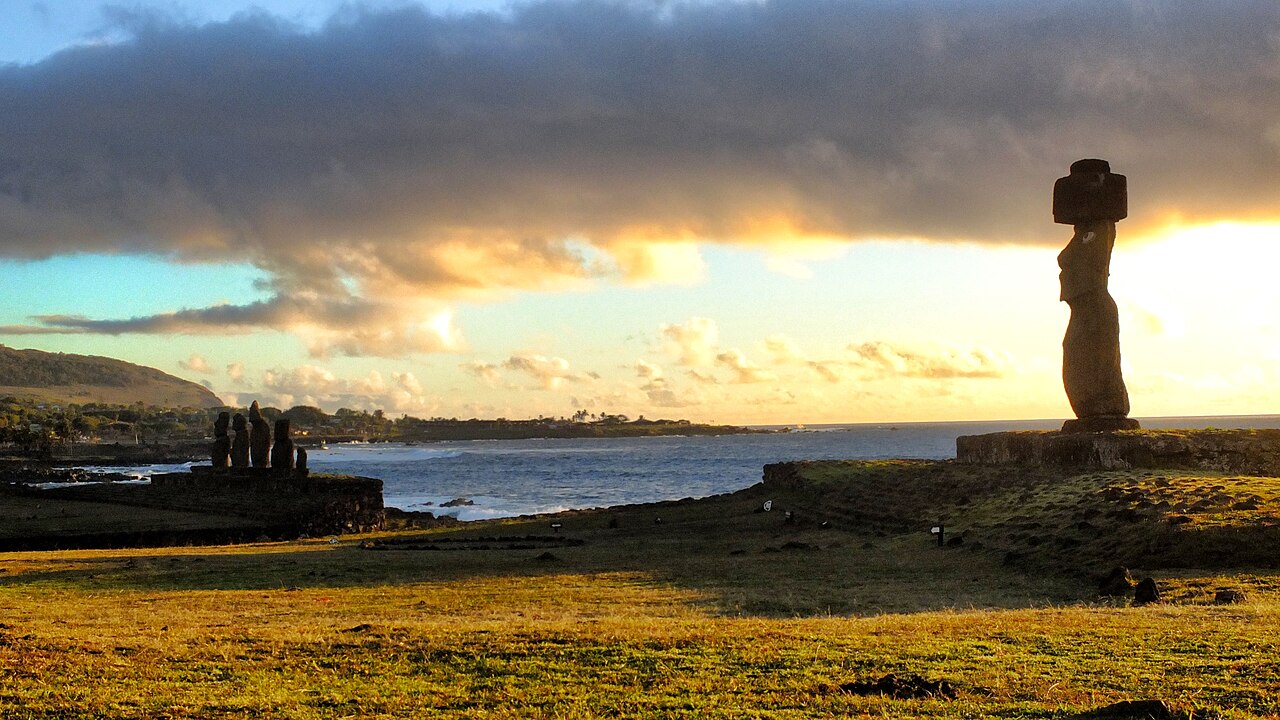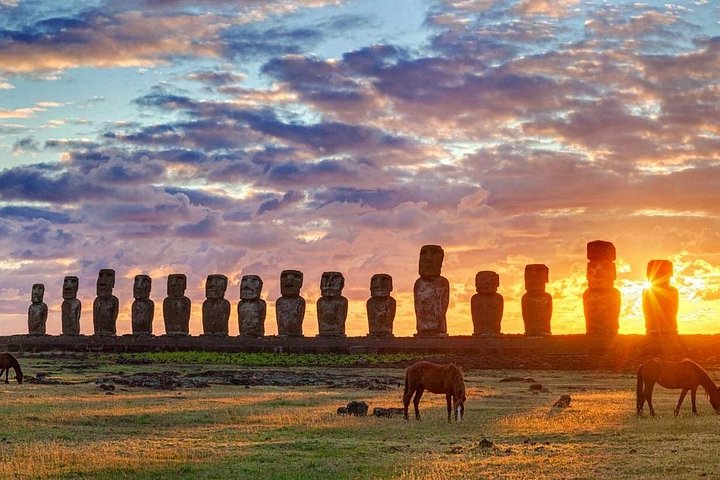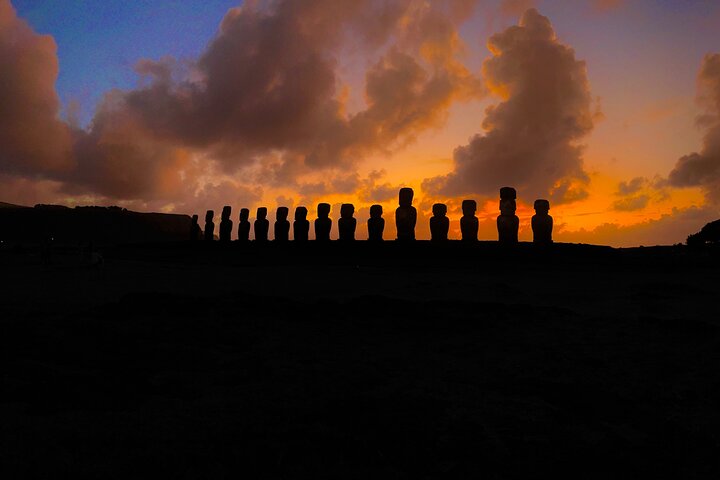
Ahu Tongariki is the image most people carry in their heads when they think of Easter Island: fifteen moai standing shoulder to shoulder on a long stone platform, backs to the sea inlet and faces to the grassland, with the Poike volcano rising behind. It is the biggest ahu ever built on Rapa Nui, and the platform alone, a ramp-and-wall structure of fitted stone, is an engineering statement before you even look at the statues. The moai here vary in height and character, and a few still wear traces of the eroded surface detail that makes the figures feel individual rather than identical. Because the platform faces inland and the sea sits behind the figures, sunrise is the classic hour: the sky lightens behind the statues, the silhouettes sharpen, and for a few minutes the whole line catches warm light from the front. Around the December solstice the sun rises in line with the platform, and the photography crowds gather accordingly. Tongariki is also open from first light, unlike most park sites, which is why dawn tours exist at all.
The story of the site is as striking as the sculptures. In 1960 a tsunami, generated by the huge Chilean earthquake, swept inland and scattered the moai across the grass like toys, snapping some and burying others. For decades the platform lay in ruins. A long restoration in the 1990s, supported by Japanese engineers who lent heavy lifting equipment, put the fifteen figures back on the ahu, and the project is now regarded as one of the major archaeological reconstructions in the Pacific.
Today you can see which parts are original stone and which are rebuilt, and the guides who work here are good at explaining why. One of the moai travelled to Japan for an exhibition in the early 1980s, and that trip helped launch the restoration campaign that finished the job.
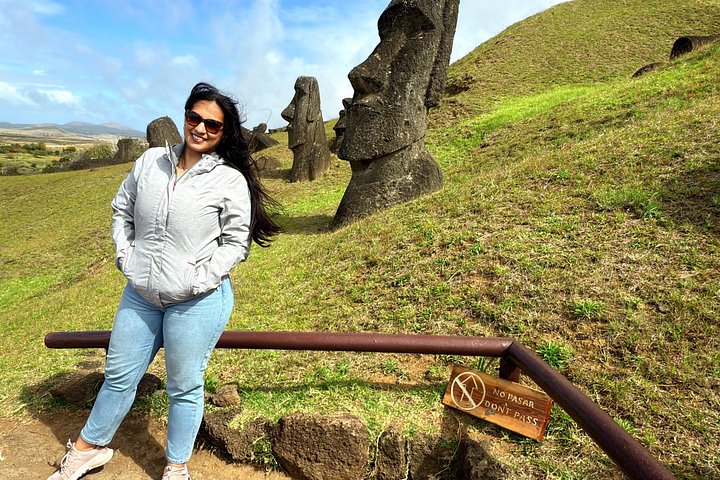
Think about the practicalities before you set an alarm. Tongariki is on the far side of the island from Hanga Roa, roughly a 30-40 minute drive each way, and sunrise tours collect guests from their hotels in the dark. Wear layers, because the wind off the sea is cold before the sun clears the horizon, and bring a torch or use your phone light for the first walk. Park rules require you to stay on the marked paths and behind the barriers: no climbing on the platform, no stepping onto the ahu.
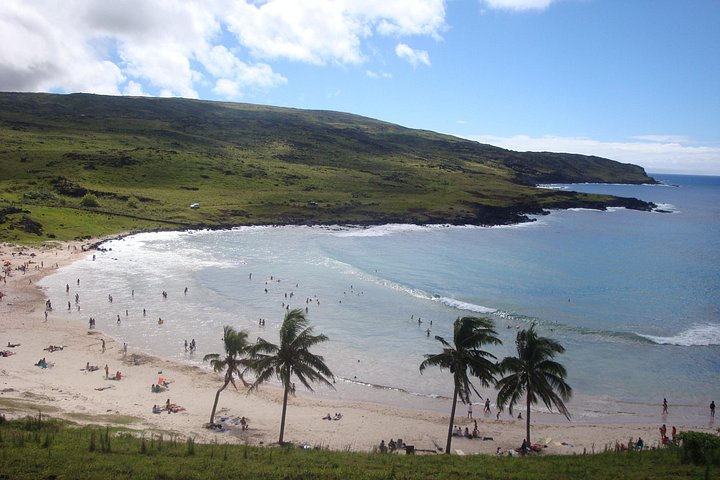
Cloud is a gamble in any season, and a clear horizon is not guaranteed, though cloudy dawns still give soft, dramatic light and fewer people. Many visitors combine the sunrise stop with a full day along the southern coast, continuing to the Rano Raraku quarry and Anakena beach, and then return for a second, quieter visit later in the day when the crowds have thinned.
If you can only afford one early morning on the island, spend it here. The tour listed for this sight is a shared sunrise experience that includes transport, which solves the single biggest logistical problem: reaching a remote platform in the dark. Check what is included, in particular whether your park ticket is covered or needs to be bought separately, and confirm the pickup time the night before.
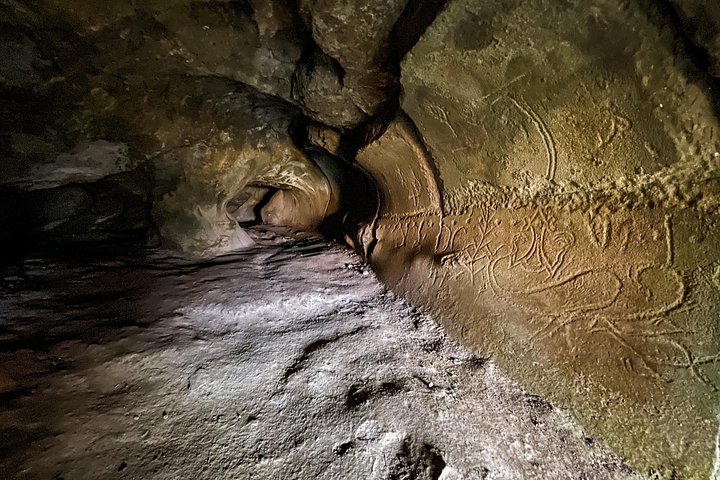
One more tip for photographers and early risers: after the sunrise crowd leaves, stay for a few minutes and walk quietly along the path to see the platform from the side and from the rear, where the scale of the ramp and the restored stonework becomes clear. Behind the line of statues you will find the remains of boat-shaped house foundations and a few petroglyphs, and the view toward Poike and the sea is superb.
Bring a thermos if the operator allows it, and wear a hat, because the sun rises quickly. The memory of that light stays with most visitors for years.
What to expect
The experience
A pre-dawn drive to the east coast, a guided walk to the platform, and an hour or two watching the light change on fifteen statues, usually followed by breakfast or a continuation to the quarry.
Best time
Sunrise, any time of year. The December solstice gives the sun directly behind the platform, but any clear morning works, and midday visits are quieter if you miss dawn.
How long
Allow two to three hours including the drive; a full-day south coast tour adds Rano Raraku and Anakena.
Tips
Dress warmly and bring a head torch. Stay behind the barriers, and expect a cold wind. A second visit after sunrise tours leave is often nearly empty.
Quick picks
- Best for
- Anyone who wants the single definitive Rapa Nui image, and photographers of every level.
- Families
- Early starts suit older children poorly; consider a later morning visit instead of sunrise.
- Couples
- Sunrise on the east coast is the island's most romantic hour, followed by a slow breakfast.
- Pair with
- Rano Raraku, the quarry where the moai were carved, is five minutes away by car.
- Time needed
- Half a day, or an early start to a full-day tour.
Good questions
Why is Ahu Tongariki so famous?+
It is the largest ceremonial platform on the island and holds fifteen moai in one line, restored after a tsunami scattered them in 1960. The sunrise light behind the statues is the most photographed scene on Rapa Nui.
When is the best time of day to visit?+
Sunrise is the classic choice, and the site is open from first light. If clouds spoil the dawn, mid-morning light is clear and the crowds are smaller.
How far is it from Hanga Roa?+
Roughly 30 to 40 minutes by car on the southern coast road. Tours pick up from hotels, which saves you the dark drive.
Do I need a park ticket?+
Yes. Tongariki is inside Rapa Nui National Park, so you need the park ticket plus an accredited guide or host. Check whether your tour includes the ticket.
Can I touch or climb on the moai?+
No. Climbing on platforms and statues is prohibited and can bring fines under national monument law. Stay on the paths and behind the barriers.