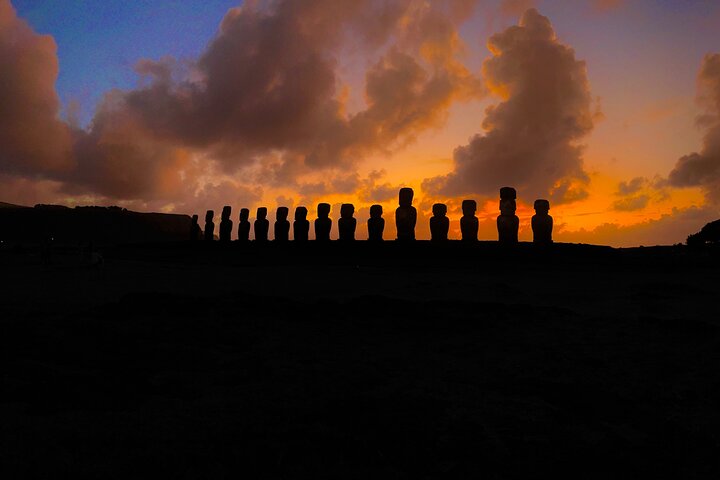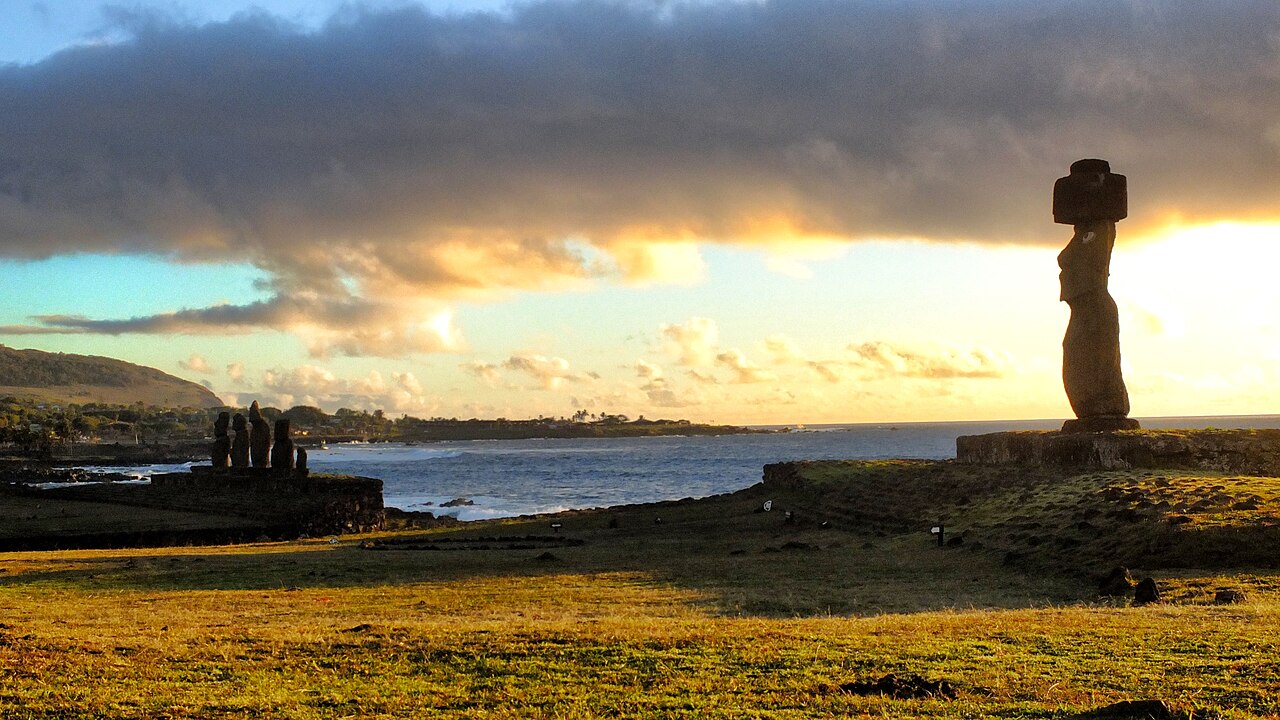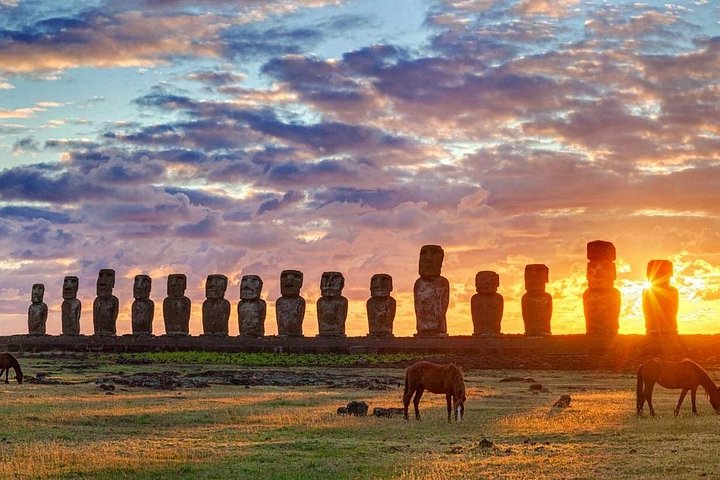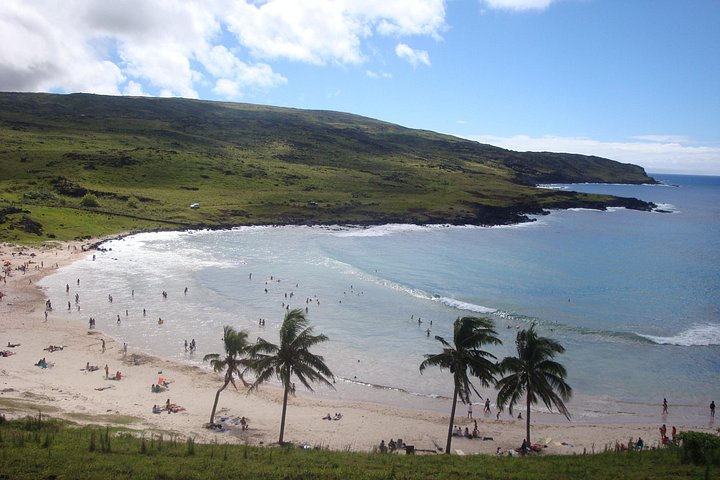
Anakena is the postcard beach of Rapa Nui, a crescent of pale coral sand on the north coast, sheltered by low headlands and shaded by coconut palms. It matters for more than swimming: tradition names this cove as the landing place of Hotu Matu'a, the legendary founder who arrived with his people after a long voyage across the Pacific. Behind the beach, on a low rise, stand the moai of Ahu Nau Nau. Several of them wear their red topknots, and the stone has been protected from weather by sand, so the carving detail on the backs and bellies is better preserved than at almost any other site. A second platform, Ahu Ature Huki, stands nearby with a single figure raised in 1956 in an experiment led by Thor Heyerdahl with local islanders. The combination of beach, history and shade makes this the natural place for a relaxed lunch after a morning among the ruins.
The sand here is the island's main attraction for families, because the island has few beaches. Entry into the water is gentle, with clear shallow water and a sandy bottom, and a small area of picnic tables, shops and toilets sits behind the palms. Weekends and holidays attract local families, so you may share the beach with cooking fires and music. Swimming conditions are normally calm, though currents and swell can arrive without warning, and there is no lifeguard on duty at all times. Check conditions with your guide and keep children within their depth.
Ahu Nau Nau repays a slow look. The platform holds seven moai, some of which stand upright with topknots and others which are fragments. Their surfaces are crisp enough that you can make out the long ears, the belts carved on the backs, and the details of hands. Archaeologists have used these statues to understand how the figures were carved and decorated.
The red topknots, called pukao, came from a separate quarry at Puna Pau and were rolled up ramps to be placed on the heads, a feat that still prompts debate. Hotu Matu'a's landing is celebrated in local stories, and guides often tell it here with real feeling.
Anakena is part of the standard north-coast day, usually combined with Ovahe or Te Pito Kura on the way. Park rules treat the beach area differently from the rest of the park, so you can swim without a guide, though the Ahu Nau Nau sector has its own requirements. The tour linked here pairs Anakena with Rapa Nui cultural stops, which is a good way to add context without driving yourself on the island's rough tracks.
Bring sun protection, because shade is limited on the sand, and carry cash for the small food stalls, which can run short in the busy summer season.
A little planning makes the day easier. Arrive in the late morning so that you can swim before the afternoon crowd, then walk to the platform when the light softens. Pack a picnic, water and a snorkel mask if you like, and wear shoes you can take off easily, since the sand is soft.
The palms provide welcome shade, but do not stand under coconuts. Visit the platforms before lunch if you can, because the stone warms quickly in the sun. Finally, remember that Anakena is a sacred place for the Rapa Nui, so keep voices low near the moai and take all your rubbish with you.
What to expect
The experience
A beach stop with swimming, shade and picnics, plus a guided walk to the restored moai of Ahu Nau Nau and the platform of Ahu Ature Huki.
Best time
Late morning to afternoon for swimming; late afternoon for softer light on the moai.
How long
Two to four hours depending on how long you swim.
Tips
Bring sun protection and a hat. Check the sea conditions before swimming, and carry small cash for the food stalls.
Quick picks
- Best for
- Families and anyone who wants a swim between the heavy archaeology days.
- Families
- The best place on the island for children: shallow water, sand and shade.
- Couples
- A relaxed afternoon with a swim and a quiet walk among the moai.
- Pair with
- Ahu Tongariki and Rano Raraku for the classic east coast loop.
- Time needed
- A half day, or a long lunch on a full-day tour.
Good questions
Can I swim at Anakena?+
Yes. It is the island's main swimming beach, with calm shallow water in normal conditions. There is not always a lifeguard, so check the sea and keep children close.
Why is Anakena important historically?+
Tradition says Hotu Matu'a, the founder of the Rapa Nui people, landed here. The moai of Ahu Nau Nau stand just behind the beach.
Do I need a guide at the beach?+
The beach area is treated differently from the rest of the park, but the Ahu Nau Nau sector has its own rules, so check on the day.
Are there facilities?+
There are picnic tables, toilets and small food stalls, which can be crowded in summer and on weekends.
How far is it from Hanga Roa?+
Around 25 to 35 minutes by car along the north coast road.