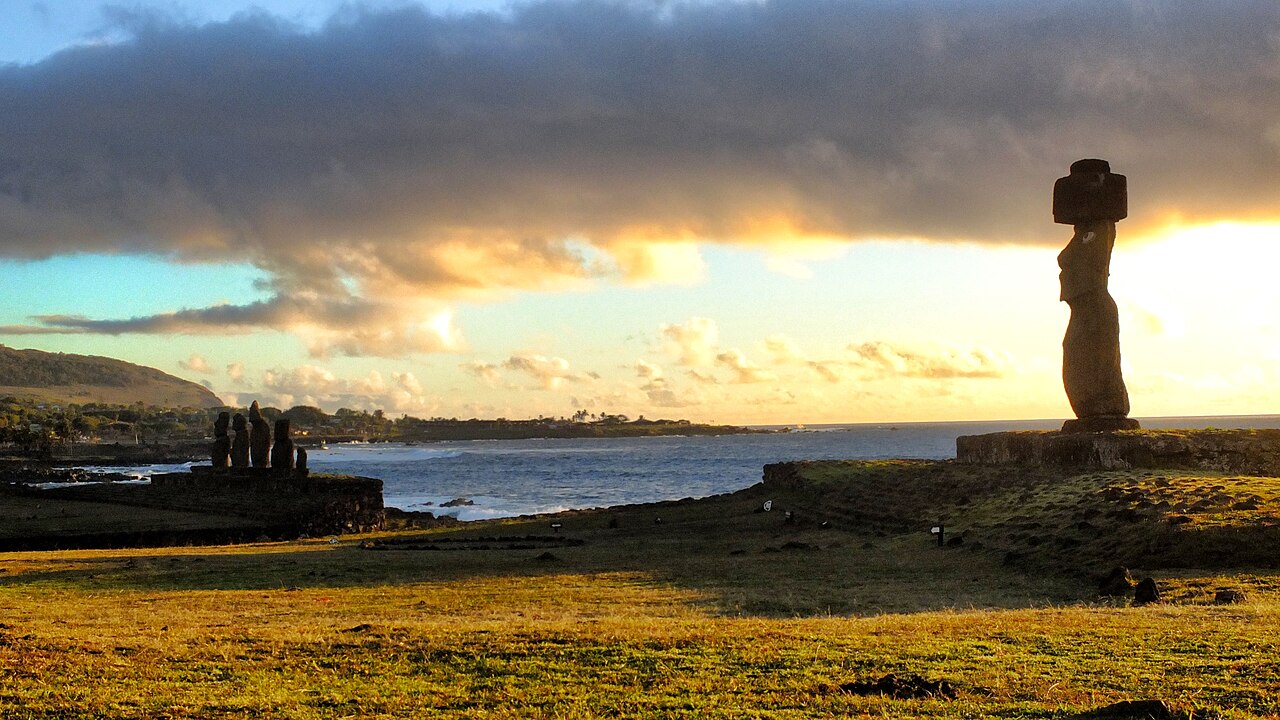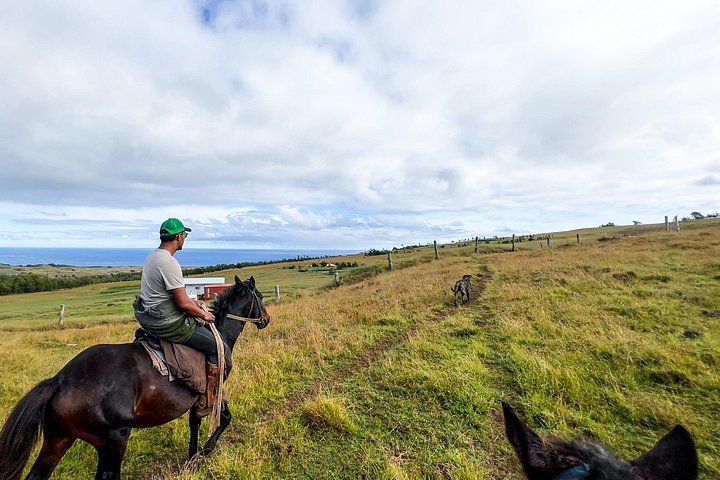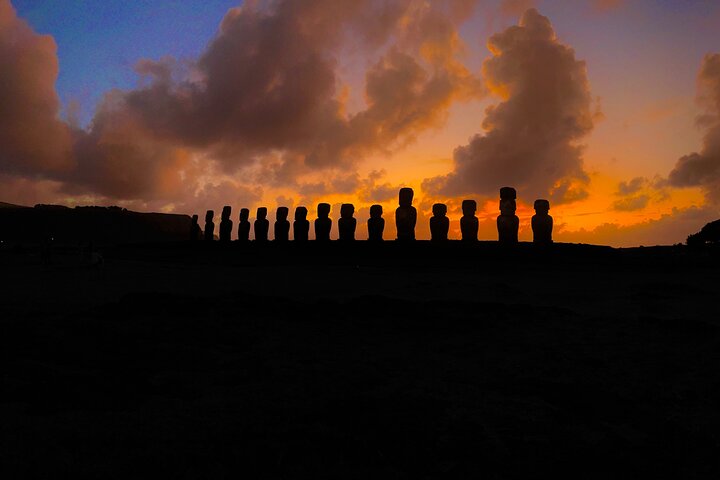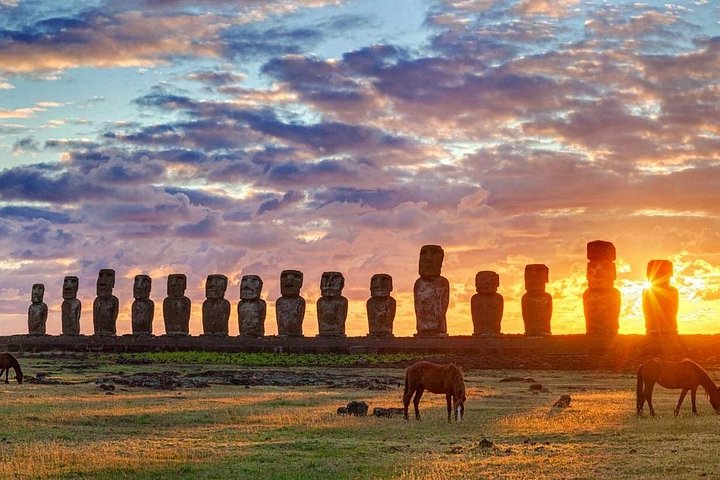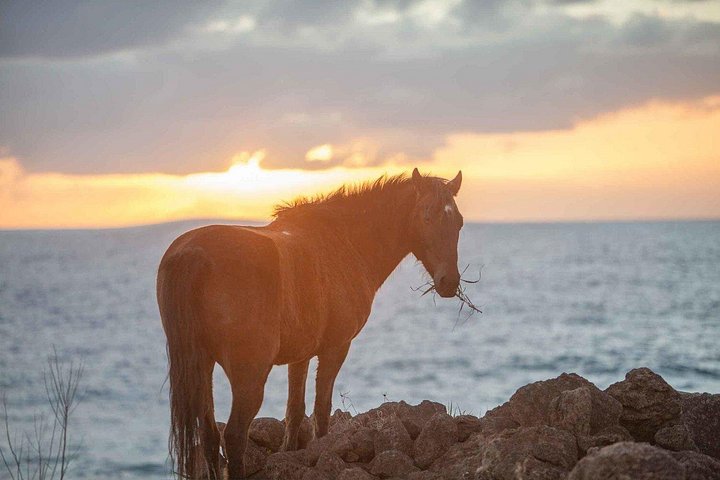
Horses are everywhere on Rapa Nui. Thousands of them graze on the open pasture, wander near the roads and stand silhouetted against the old platforms, and for many islanders riding is as natural as driving a car. A guided ride lets you join that tradition. You set out from a stable near Hanga Roa, and your guide leads you along tracks over the grassland, past small craters and along the cliff tops with the Pacific on one side and the volcano slopes on the other. The pace is gentle, and horses are chosen to suit your experience. The rides range from short walks to longer routes toward Ahu Tahai or the northern coast, and many include a stop at a viewpoint or a small beach. It is a relaxed way to see the landscape and a favourite of visitors who prefer to avoid a long minibus day.
The horses of Rapa Nui have a long story. Introduced in the nineteenth century with sheep ranching, they multiplied and became part of the island's life. Today they are used for work, for recreation and in the horse races held during the Tapati festival. Local riders are skilled and relaxed, and a good guide will adapt the route to your confidence.
Beginners should be honest about their experience, since the terrain can be uneven and the wind can unsettle horses on exposed ridges. Children can usually ride with supervision, and some stables offer pony rides for smaller ones.
Prepare for a few hours in the saddle. Wear long trousers, closed shoes or boots and a hat, and carry sun protection and water. Helmets are usually available, and you should use one. Avoid loose clothing that can catch on the saddle, and remember that the Pacific wind can chill you on the ridges even on a warm day. Some operators set weight limits for safety, so mention your size when you book, and make sure to listen to the briefing on how to steer and stop.
Riding is a useful way to reach places that are hard to visit on foot, but it must respect the archaeological sites. Guides keep horses away from platforms and ruins, and you should never ride over the ahu or stray from the track. Combined with a sunset at Ahu Tahai or a morning on the north coast, a ride gives you a sense of how people have moved across the island for generations.
The product linked here is a guided horseback ride, which includes the equipment and a local guide. It suits families and couples, and it is a fine way to spend the day after an early start at Tongariki.
Choose your ride carefully and communicate clearly. Tell the guide about your experience, any fears and any injuries, and ask to be matched with a calm horse. Listen to the briefing, hold the reins gently and keep your heels down. Sit up straight and relax your shoulders, since horses sense tension.
Bring a small bag for a camera and water, but keep your hands free. If your horse becomes anxious in the wind, speak calmly and let the guide lead. At the end of the ride, thank the horse and the guide, who work hard to keep both animals and visitors happy.
What to expect
The experience
A guided ride on a gentle horse along grassland tracks and cliff tops near Hanga Roa, with photo stops and a briefing for beginners.
Best time
Morning or late afternoon, when it is cooler and the light is soft.
How long
Two to three hours.
Tips
Wear long trousers and closed shoes, use a helmet and bring sun protection. Mention your experience and weight when you book.
Quick picks
- Best for
- Riders of all levels who like slow, scenic travel.
- Families
- Often suitable for children with supervision. Ask about age limits.
- Couples
- A scenic outing, particularly toward sunset.
- Pair with
- Ahu Tahai at sunset or the north coast.
- Time needed
- A half day.
Good questions
Do I need riding experience?+
No. Horses are matched to your level, and beginners can join. Be honest about your experience.
What should I wear?+
Long trousers, closed shoes or boots, a hat and a windproof layer.
Are helmets provided?+
Usually yes. Ask when you book.
Can children ride?+
Often yes, with supervision. Ask about minimum ages and pony options.
Where do rides go?+
Typically across grassland and along cliff tops near Hanga Roa, sometimes toward Ahu Tahai or the coast.