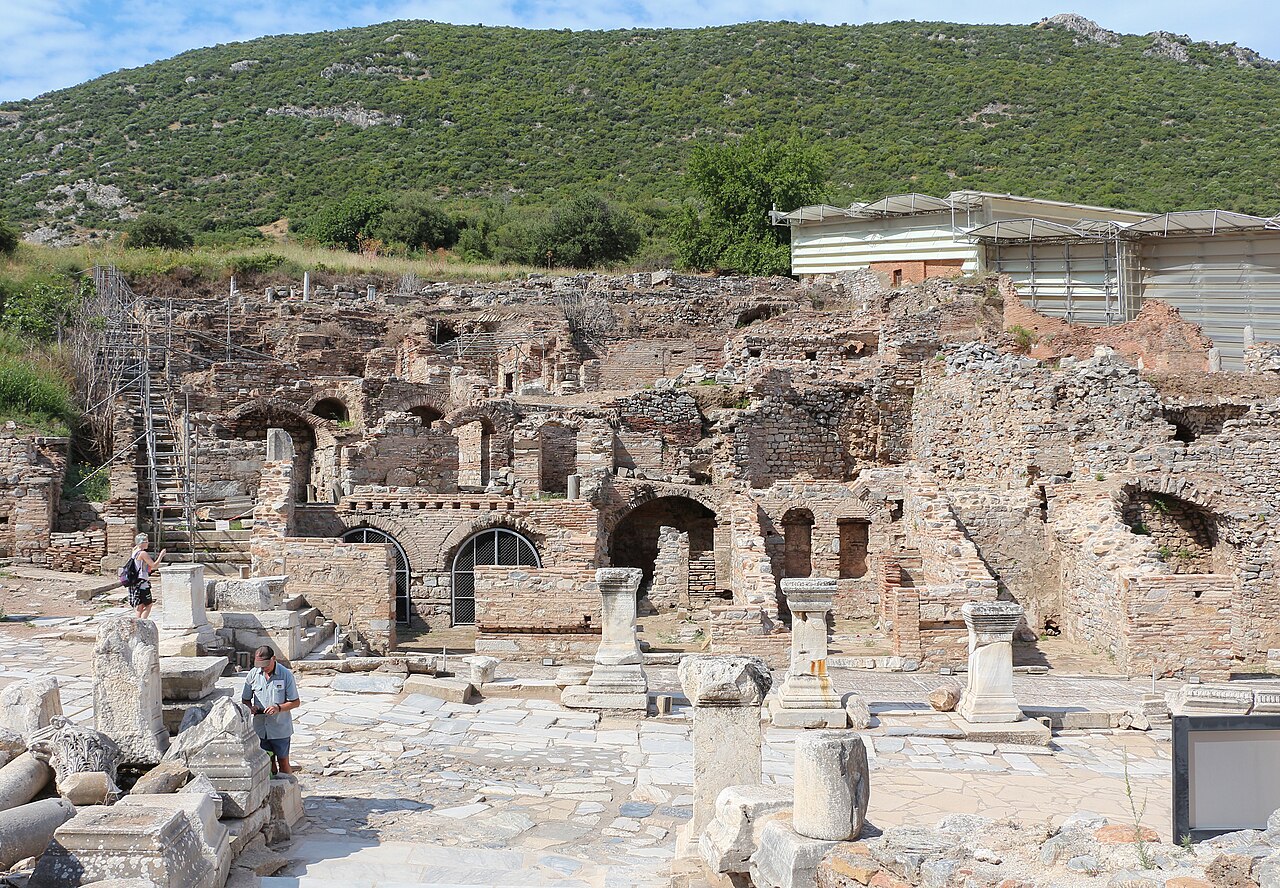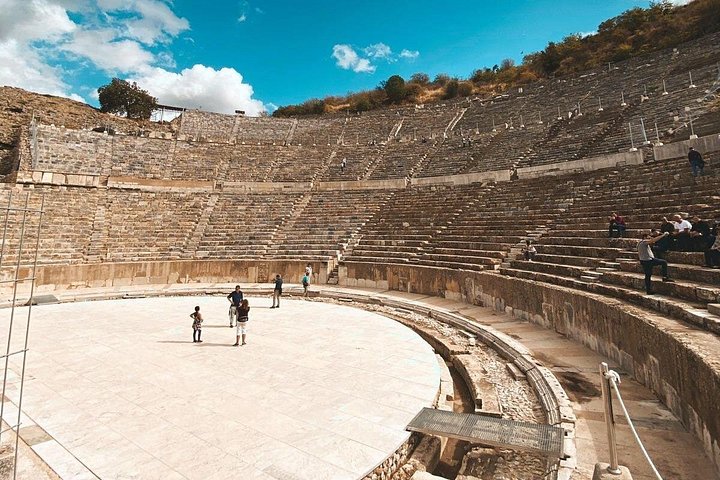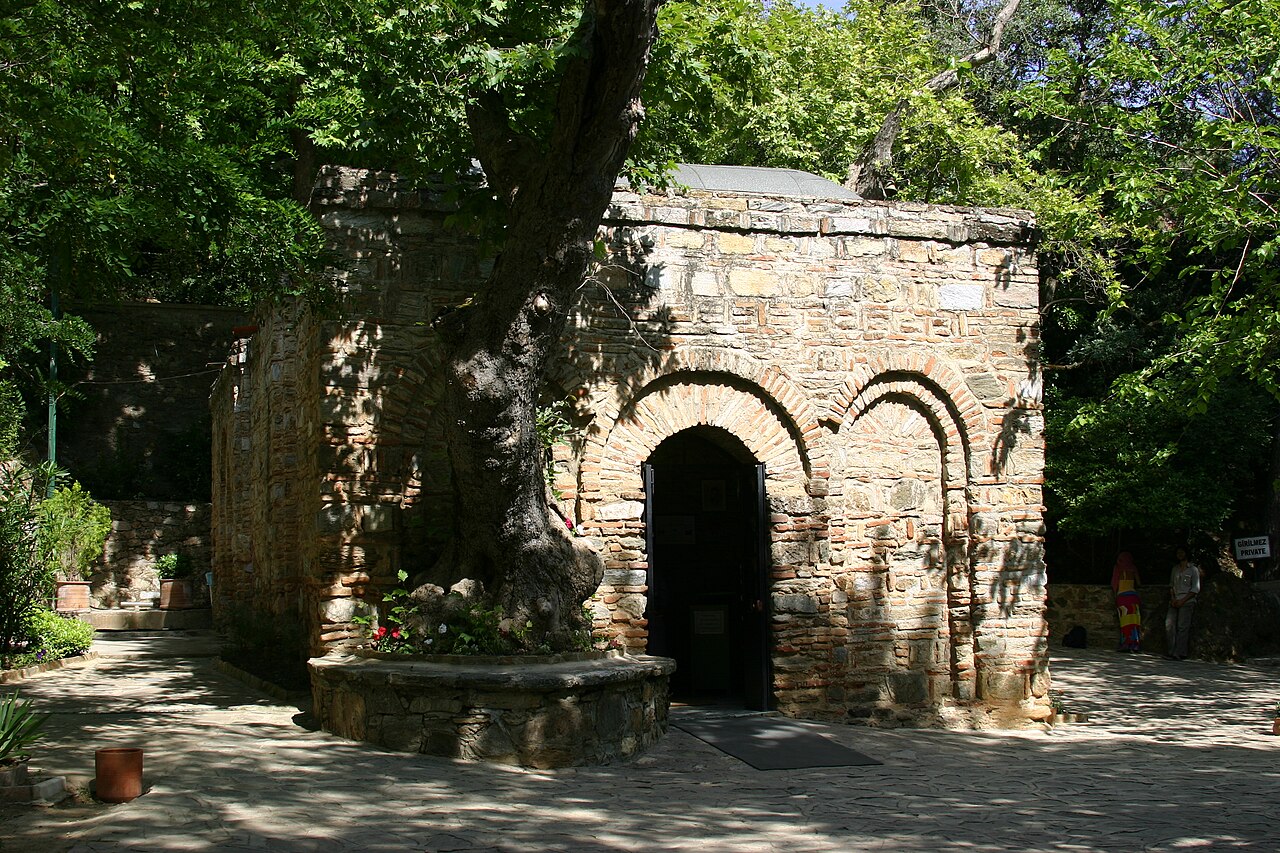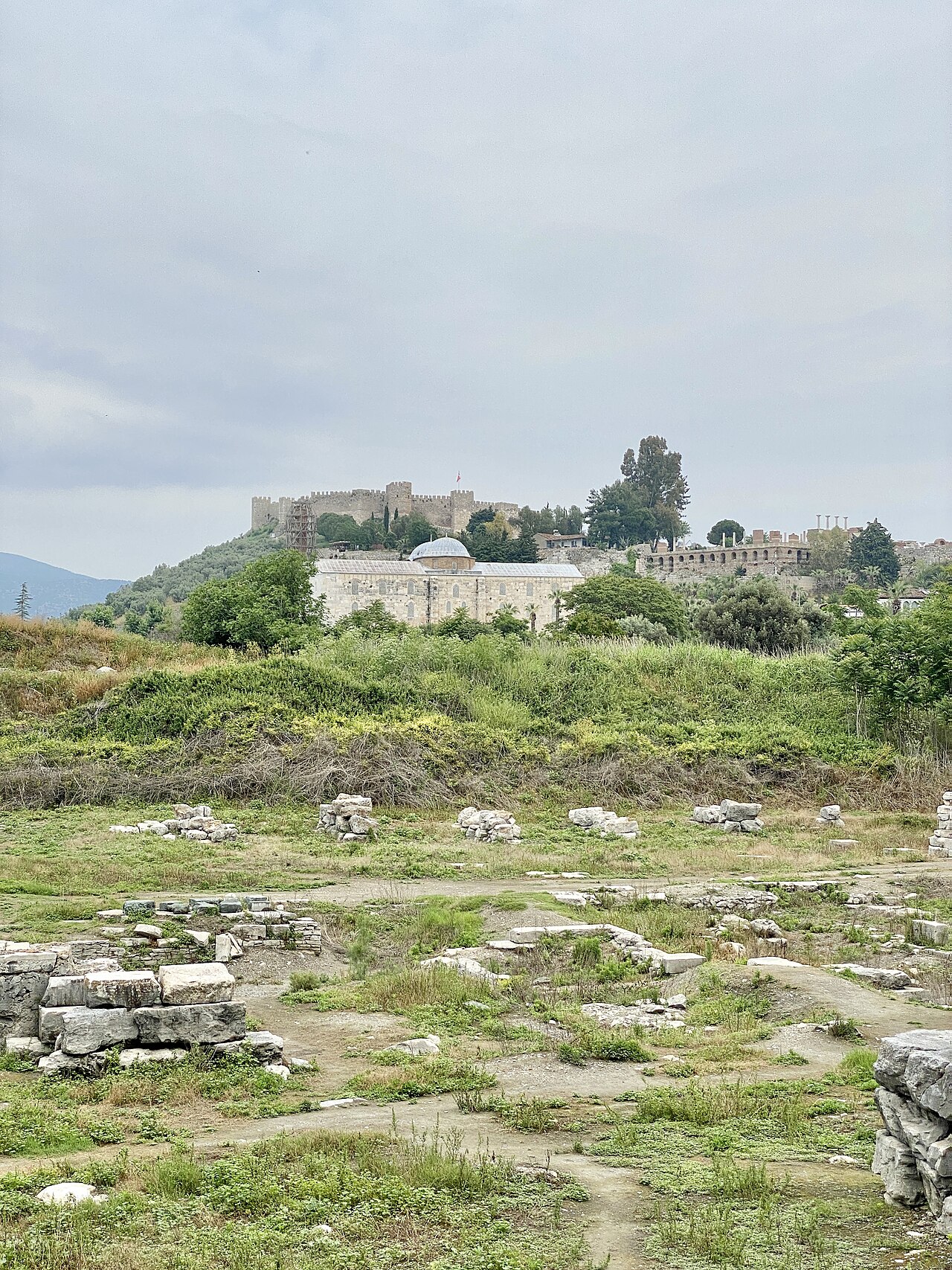
The Isa Bey Mosque is one of the finest early Turkish buildings on the Aegean coast and one of the least visited. It stands in the old centre of Selçuk, below Ayasuluk Hill and a few minutes on foot from the Basilica of St John and the Ephesus Museum. The mosque dates from the late fourteenth century, during the emirate of Aydin, and an inscription dated January 1375 names its architect as Ali, son of Mushimish of Damascus. Its plan is unusual and grand, with a wide, open courtyard and a prayer hall supported by columns, and its black granite columns are said to have been recycled from Roman baths of ancient Ephesus. That reuse is part of the charm: the mosque is a physical link between the classical city and the Turkish town that grew beside it, and the stone you see was carved long before the mosque was built. The courtyard is peaceful and shaded, a good place to sit after the sun and the crowds of the ruins, and the setting beneath the basilica and fortress hill makes a memorable photograph.
How to visit it respectfully matters. It is a working mosque, so visitors can usually go in outside prayer times, but you should dress modestly, with shoulders and knees covered, and women should carry a scarf for the head. Remove shoes before entering the prayer hall, keep your voice low and do not photograph worshippers. Entry has generally been free, as for most working mosques, though it is wise to check locally and to leave a small donation if a box is provided.
Hours depend on prayer times and the weather, so it is not a place to plan to the minute, and if the doors are closed you can still see the courtyard walls and the setting.
What makes the visit rewarding is context. Before you go, read a short account of the Seljuk and Aydin periods and of how Selçuk replaced Ephesus as the settlement as the harbour silted up, because the mosque then explains itself. Look for the carved details of the portals, the brick and stone work, and the juxtaposition of Roman columns and Turkish architecture.
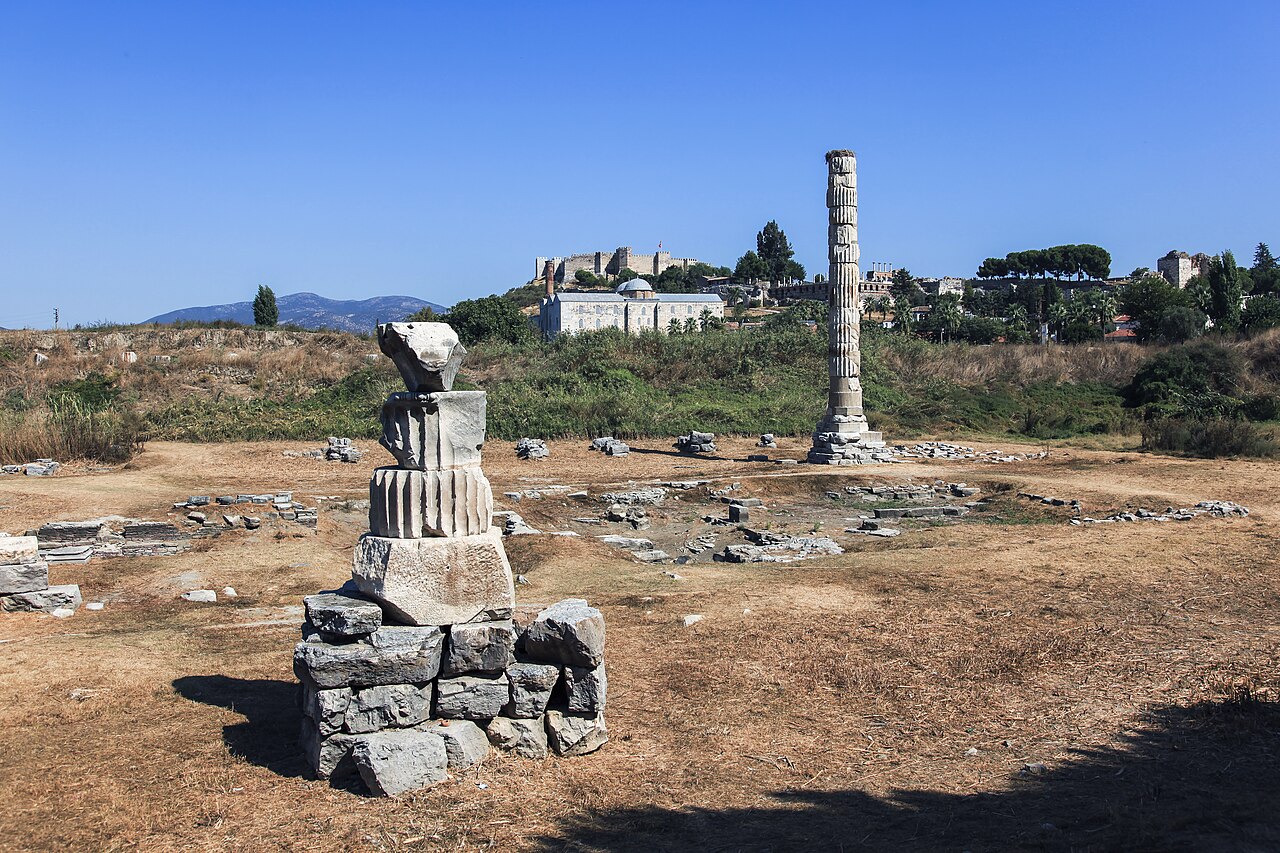
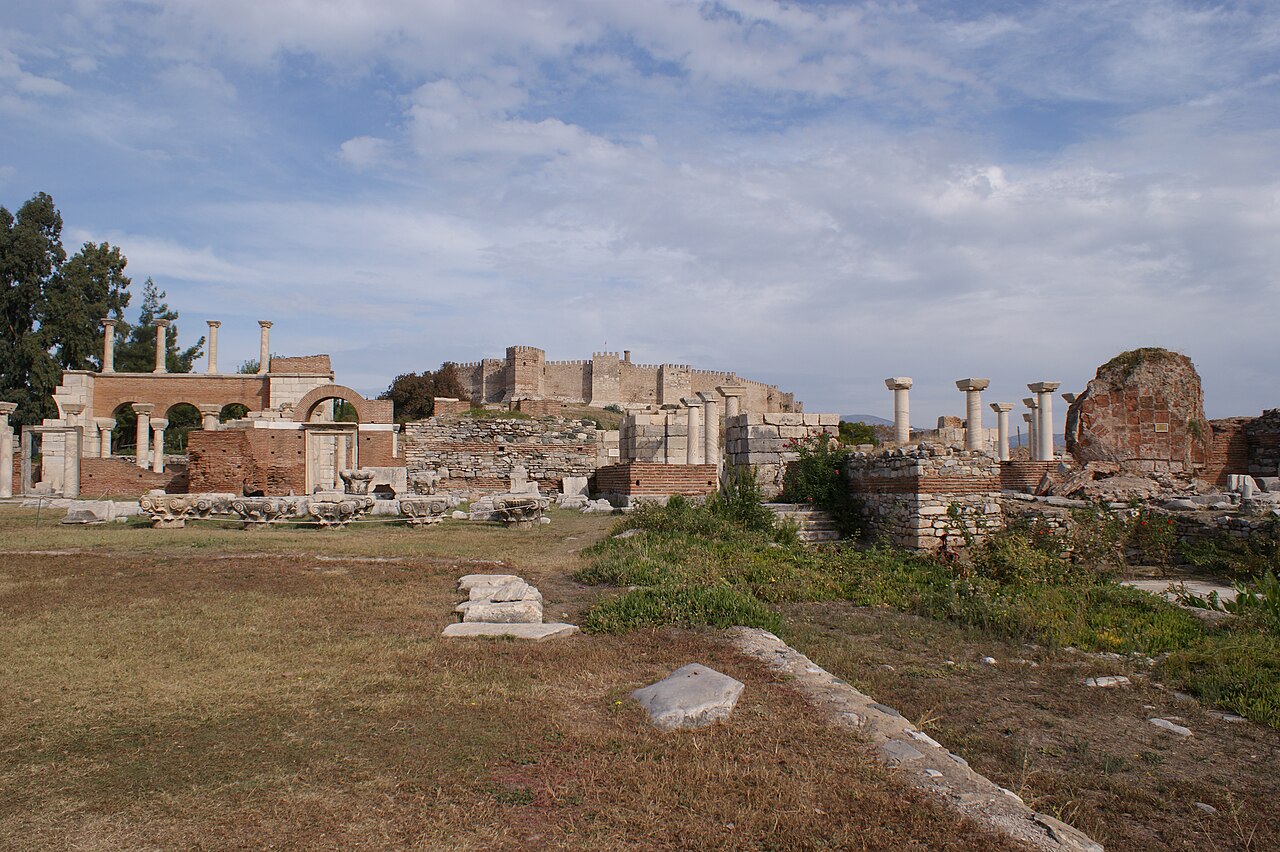
From the courtyard you can look up at the walls of Ayasuluk fortress and the basilica of St John, and the whole complex reads as one long story in stone. It takes about twenty to forty minutes, which makes it an easy addition to a Selçuk walk that also includes the Ephesus Museum, the Temple of Artemis and the basilica.Who is it for? Anyone who wants a quiet, free counterweight to the bigger sights, and especially visitors interested in architecture or in the layers of history that Selçuk contains: Greek, Roman, Byzantine, Seljuk and Ottoman.
It is also a fine early-evening stop, when the light on the stone is warm and the courtyard is calm. Because it is outside the main tour circuit, you may well have it nearly to yourself. Pair it with a coffee or a meal in the lanes of Selçuk, and use it as a reminder that Ephesus is only one chapter of the story.
What to expect
The experience
A short visit to a working Seljuk mosque with a large courtyard, entered outside prayer times with modest dress.
Best time
Early morning or late afternoon, when the light is soft and the courtyard is calm; avoid prayer times.
How long
Twenty to forty minutes.
Tips
Cover shoulders and knees, bring a scarf, remove your shoes and keep your voice low.
Quick picks
- Best for
- Visitors interested in architecture and the layers of Selçuk's history who want a quiet, free stop.
- Families
- A calm, shaded courtyard where children can sit, with a reminder to be respectful.
- Couples
- A peaceful early-evening wander beneath Ayasuluk Hill.
- Pair with
- The Basilica of St John, the Ephesus Museum and the Temple of Artemis.
- Time needed
- Half an hour.
Good questions
Is the Isa Bey Mosque free to enter?+
Entry is generally free outside prayer times, as at most working mosques, but check locally and leave a small donation if a box is provided.
What is the dress code?+
Cover shoulders and knees, and women should bring a scarf for the head. Shoes are removed before the prayer hall.
When was it built?+
It dates from the late fourteenth century, and an inscription from January 1375 names the architect as Ali, son of Mushimish of Damascus.
Why are Roman columns inside a mosque?+
Its black granite columns are said to have been recycled from Roman baths in Ephesus, a common practice that links the classical city to the Turkish town.
How long should I allow?+
Twenty to forty minutes, as part of a walk that includes the basilica and the Ephesus Museum.