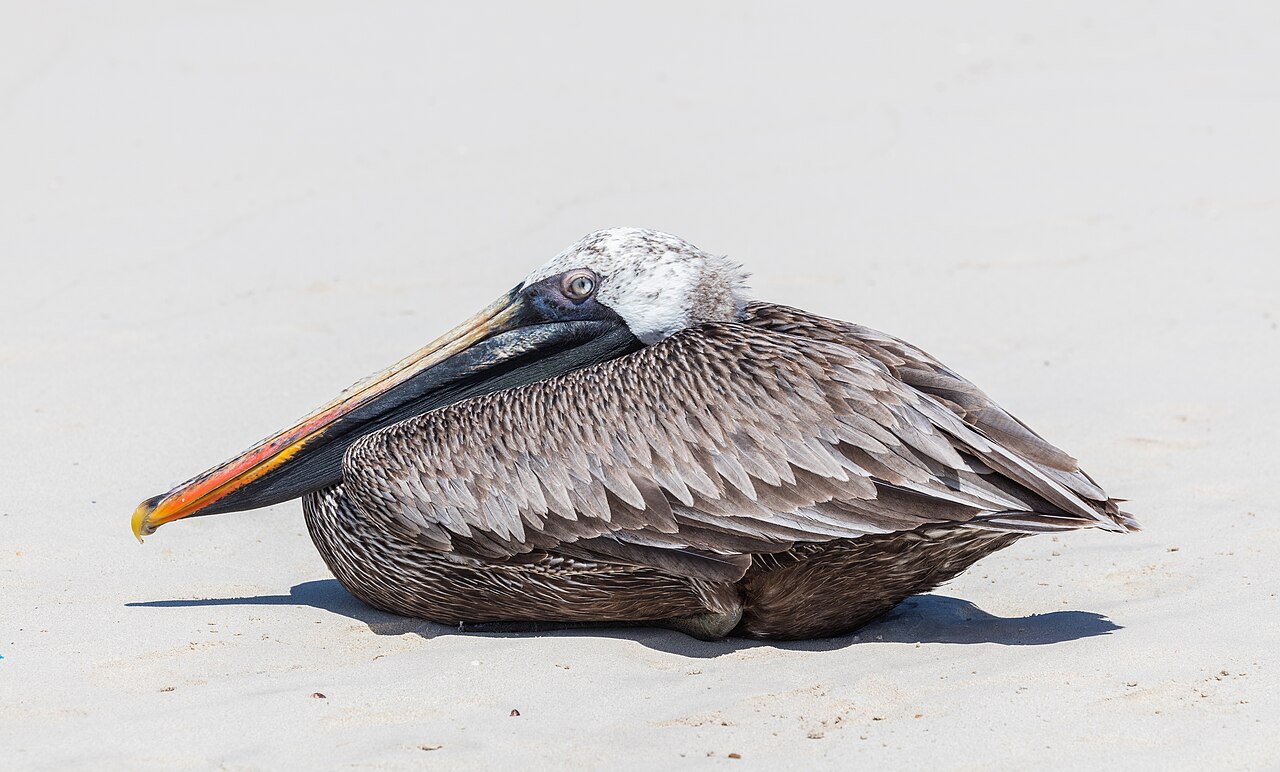
The Galápagos Islands reward travellers who stay put. Instead of a week on a cruise ship, you can base yourself in Puerto Ayora on Santa Cruz, sleep in the same bed every night and head out each day: to a research station, a beach with iguanas, a highland full of tortoises or a boat to a nearby island. This guide covers what to know before you go and how to fit the sights together. Multi-day cruises exist and suit travellers who want to reach the farthest islands, but they are outside the scope of this guide, which sticks to single-day trips you can book from land.
What you pay on arrival
Two charges catch first-timers out. The Galápagos National Park entry fee is paid in cash at the island airport when you land, on Baltra or San Cristóbal, and it is $200 for most adult visitors and $100 for children under 12. The Transit Control Card is a separate $20 charge, bought at the airport counter in Quito or Guayaquil before you check in for your flight, and you must keep it for the trip. Bring clean US dollar bills, since torn notes are often refused, and confirm both amounts and the current payment rules before you travel, because they change. You will also need to complete a biosecurity declaration before the flight, and your bags are checked and sealed on the mainland.
Getting there and around
Most travellers fly from Quito or Guayaquil to Baltra, then take a bus and a short ferry across the channel to Santa Cruz, a journey of roughly an hour and a half to Puerto Ayora. In town, everything central is walkable, taxis are cheap and water taxis cross the bay for a dollar or two. Ferries link Santa Cruz with San Cristóbal and Isabela, take about two hours and usually leave in the morning and mid-afternoon, so book ahead in busy months.
How many days
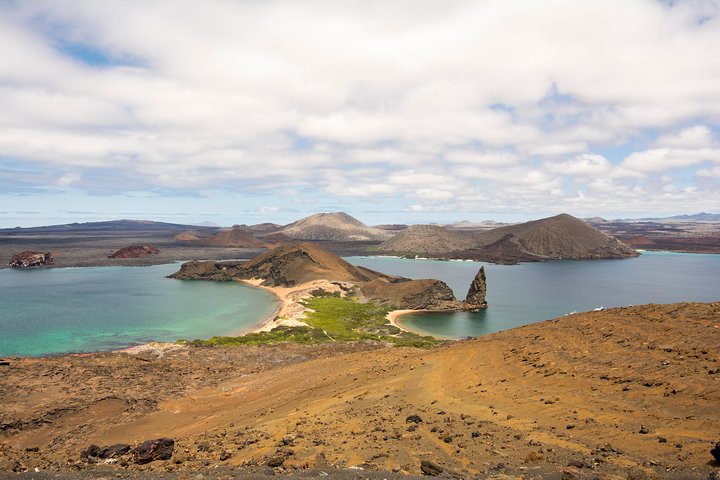
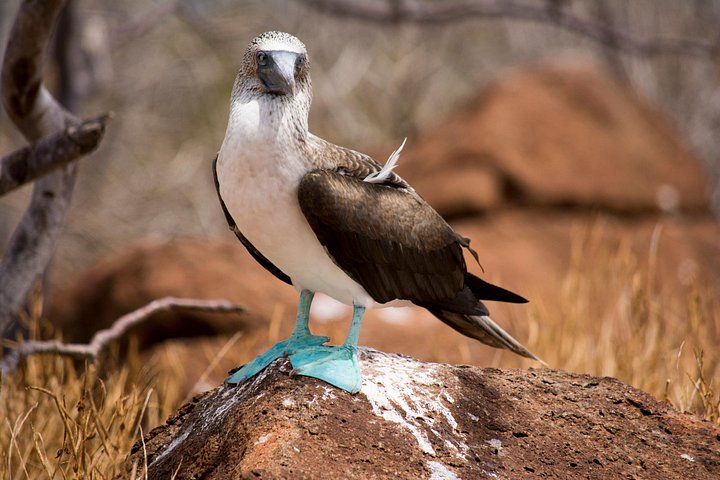
Five to seven nights works well. Plan a first day at the Charles Darwin Research Station and the harbour front, a morning walk to Tortuga Bay, a highland morning among the giant tortoises and lava tunnels, and an afternoon swim at Las Grietas. Then add three or four boat days, which are the core of the trip: North Seymour for blue-footed boobies, Bartolomé for the famous view and snorkeling, South Plaza for land iguanas and Santa Fe for a turquoise bay and sea lions. Operators run different islands on different days under park rules, so book boat days early in your stay and keep a spare day in case the weather or schedule shifts.
Going farther
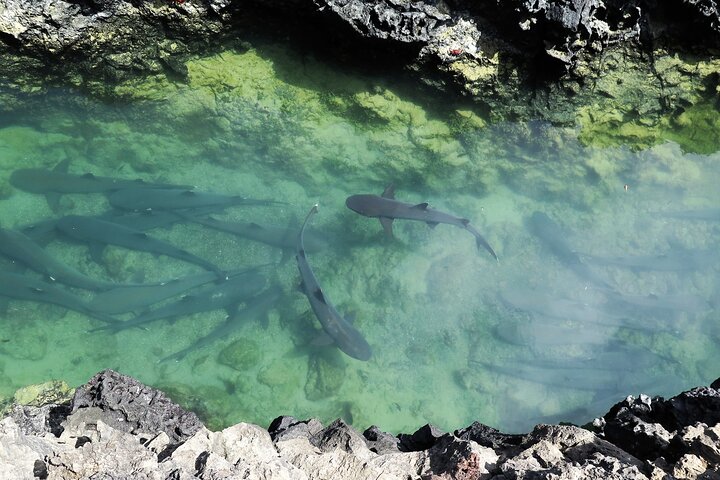
If you have time, add a day trip to Isabela, the largest island, for Tintoreras islet, resting sharks and flamingos, or better, stay a night or two there. For Kicker Rock you take the ferry to San Cristóbal and join a tour from Puerto Baquerizo Moreno, so plan at least one night on that island. The Kicker Rock snorkel is for confident swimmers, as it has open-water currents.
What to book ahead
Boat day trips, especially to Bartolomé, sell out in busy months, and inter-island ferries fill up. Hotels in Puerto Ayora also book early for the peak seasons, so reserve those first. Free sights such as the Darwin Station, Tortuga Bay and Las Grietas need no booking, which leaves room in your plan for rest days. Pack a hat, reef-safe sunscreen, a refillable bottle, closed shoes with grip and motion sickness tablets, and keep a respectful distance from every animal. The wildlife is not afraid of you, and the rules exist to keep it that way.