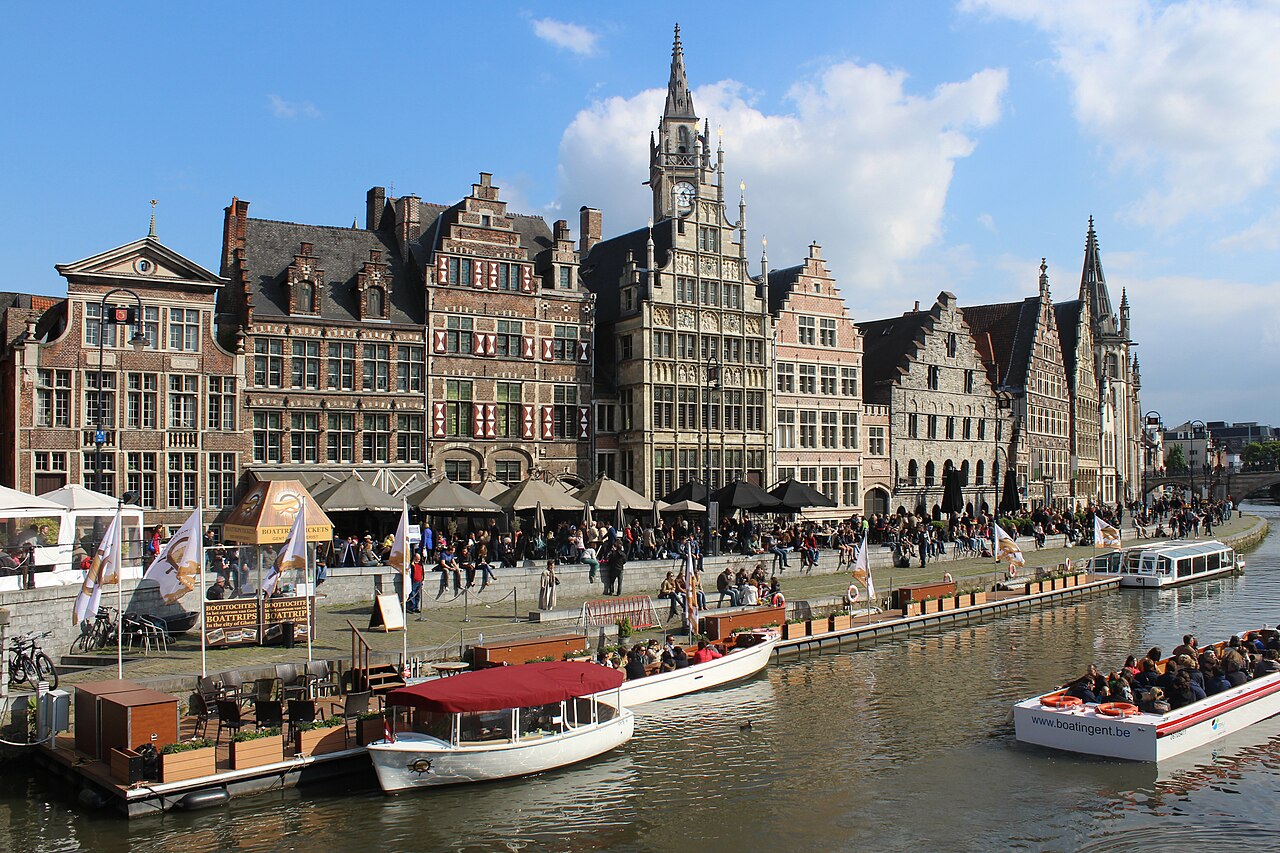
Ghent is one of the more affordable cities in Belgium, and it has an unusually generous list of free things to do. The old centre is made for walking, the best views cost nothing and a handful of paid highlights can fit around them. With a little planning you can see the main sights, eat well and sleep centrally without a large budget.
Free sights
Start with the quays. The Graslei and Korenlei, lined with guild houses, are the postcard view of Ghent, and they cost nothing to enjoy at any hour. St Nicholas' Church on the Korenmarkt is free to enter and is one of the three great towers of the skyline. Graffiti Alley, a narrow street where spray-can artists paint freely, is open to all, and the city publishes a street art map that leads you to murals around the centre. The Small Beguinage Our Lady ter Hoyen, a walled community founded in the thirteenth century, is free to walk through, as is the larger Great Beguinage in Sint-Amandsberg. The free Van Eyck walk links fourteen stops over about two and a half kilometres and doubles as a self-guided tour of the centre.
Paid sights worth the money
Be selective. Gravensteen is the one castle you should enter, and the audio guide is included in the ticket. The Belfry gives a lift ride and a view over the three towers in under an hour. For art, MSK holds the Flemish masters, and the cathedral visitor centre tells the story of the Ghent Altarpiece. STAM and Huis van Alijn are strong museums for a wet day. A canal boat tour is one of the cheapest ways to see the city from the water, and it takes only about forty minutes. Museum Pass and city card options may reduce costs if you plan several visits, so compare before you buy.
Cheap tours
Guided experiences can be good value if you choose well. A walking tour with a local guide orients you on your first day and often costs less than a single museum ticket. Self-guided options with audio or a trail let you go at your own pace. Skip the private tours unless you are in a group, since the price per person is much higher than a small-group walk.
Where to stay
Rates in the old centre rise on weekends, in summer and in December, so a midweek stay can save a lot. Erasmus Hotel on Poel is a smart value choice with a free breakfast buffet included in the rate, which cuts your daily spending, and it is a few minutes from the Korenmarkt. ibis Gent Centrum Opera is another budget option, a short walk from the centre. Hotel Gravensteen is a three-star hotel beside the castle that costs less than the grand names while keeping the location. Check whether breakfast is included and compare rates with and without it.
Eating on a budget
Lunch is the secret. Many restaurants offer a set lunch or dish of the day that costs noticeably less than dinner, so make lunch your main meal. Take-away chips from a friterie, fresh waffles from a stall and a coffee in a student cafe are all easy ways to eat cheaply. Markets, including the Friday market square, are good places for snacks. Beer bars have long lists, but house beers are often the least expensive. Tap water is safe to drink, so ask for it with meals. Service is included in Belgian prices, so you do not have to tip.
Getting around
Walk. The old centre is compact and mostly pedestrian, so you will rarely need transport. For the museums in the south, a tram or a twenty to thirty minute walk is enough. Hiring a bicycle or joining a bike tour is a cheap and quick way to cover more ground. Avoid driving, since the centre is a low emission zone and parking is limited. Trains from Brussels and Bruges take under an hour.
A sample plan
Day one: quays, St Nicholas' Church, Graffiti Alley and the Van Eyck walk, with lunch from a bakery. Day two: Gravensteen, a canal boat tour and the Belfry. Day three: MSK or Huis van Alijn and the Small Beguinage. That is a rich weekend for a modest outlay.