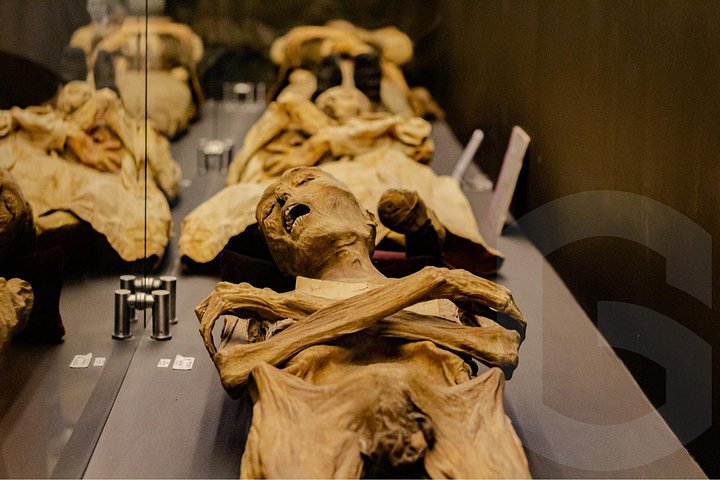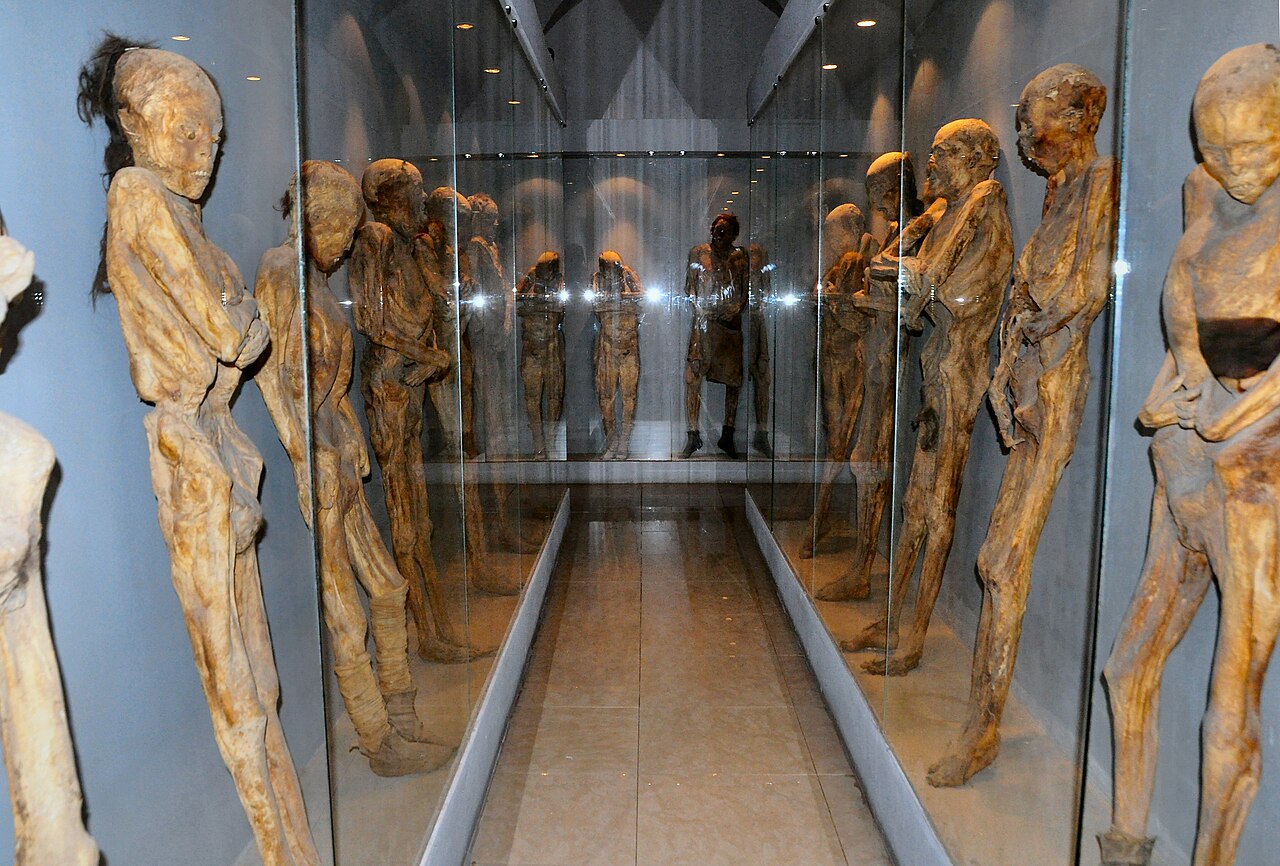
The Museo de las Momias is the attraction that Guanajuato is best known for abroad, and it is not subtle. Standing on the esplanade of the Municipal Pantheon, it displays bodies that were naturally mummified in the local cemetery and later exhumed. The story begins in the 1860s, when the authorities started digging up burials because the graveyard was full. Workers at the Santa Paula cemetery found corpses that had been neither embalmed nor bandaged yet were remarkably well preserved, a result of the dry, mineral-rich conditions of the soil. Many of the bodies belong to victims of the 1833 cholera epidemic, and over the years more were unearthed, belonging to people of different ages and social classes. The museum places the display in context, with exhibits on how Mexico has thought about and celebrated death since ancient times and on the city's own history with the subject. It is open every day of the year, normally from morning until early evening, and visiting is quick, since the core display can be seen in a short time. Expect strong reactions: the exhibit is genuine, the faces and postures are often startling, and it is more reverent than the gift-shop skulls outside suggest. It suits curious adults and teenagers, but it is not for everyone.
The history explains the oddity. In the nineteenth century a tax was levied on perpetual burial in Guanajuato, and when families could not pay, bodies were removed to make space. The soil and climate of the area, dry and rich in minerals, had preserved some of them naturally, and the first discoveries were treated as a curiosity before they became an exhibition.
Over time the display grew into a museum in its own right, and it now draws a large share of the city's visitors every year, so it is often among the first stops on a sightseeing list.
Working the visit
The museum is a short ride from the centre, beside the Municipal Pantheon, so use a taxi or a local bus rather than the hill walk. Tickets can be bought online through the museum's own website, which is in Spanish, and that is worth doing in busy periods to skip the queue.
Specialised guides are available in the morning hours; if you want explanations in English, ask when you arrive. The visit itself is short, but allow time to take in the building, the cemetery setting and the surrounding stalls. Photography rules can change, so follow the signs.
Who it suits
Curious adults, teenagers and anyone with an interest in Mexican traditions around death, which look different here from the sugary imagery of Day of the Dead. Parents should judge for themselves: some displays are distressing for young children. If you prefer your history with a guide, the Silver Mines and Museums Tour on this site includes a stop here, and the museum pairs naturally with an afternoon among the city's other museums.
What to expect
The experience
A walk-through museum of naturally mummified bodies in glass cases, with panels on how the mummies were found and on Mexican attitudes to death.
Best time
Early in the day, soon after opening, before tour groups arrive and when guides are available.
How long
The display itself is quick, so allow forty-five to sixty minutes with the context rooms and the surroundings.
Tips
Buy tickets on the museum's website in busy weeks, take a taxi rather than walking, and think carefully before bringing young children.
Quick picks
- Best for
- Curious adults and teenagers who want something genuinely different from the usual colonial sights.
- Families
- Only for older children who are comfortable with the subject; some displays are distressing for the young.
- Couples
- Memorable and conversation-starting, but not romantic; pair it with a long lunch afterwards.
- Pair with
- The Silver Mines and Museums Tour, the Alhóndiga museum and an evening Estudiantina night walk.
- Time needed
- About an hour, plus travel time from the centre.
Good questions
How did the mummies form?+
The bodies were naturally mummified in the local cemetery, neither embalmed nor bandaged. The dry, mineral-rich soil preserved them, and many date from the 1833 cholera epidemic.
When is the Mummy Museum open?+
The tourism board lists it as open every day of the year, normally from nine in the morning to six in the evening. Check the venue's site for any change before you go.
Can I buy tickets online?+
Yes, the museum sells tickets through its own website, which is in Spanish. Buying ahead helps in busy periods.
Is it suitable for children?+
It depends on the child. The exhibit is real and some displays are upsetting, so it is better for older children and teenagers.
How do I get there from the centre?+
It is beside the Municipal Pantheon, a short taxi or bus ride from the centre. Walking is possible but uphill and not very pleasant.