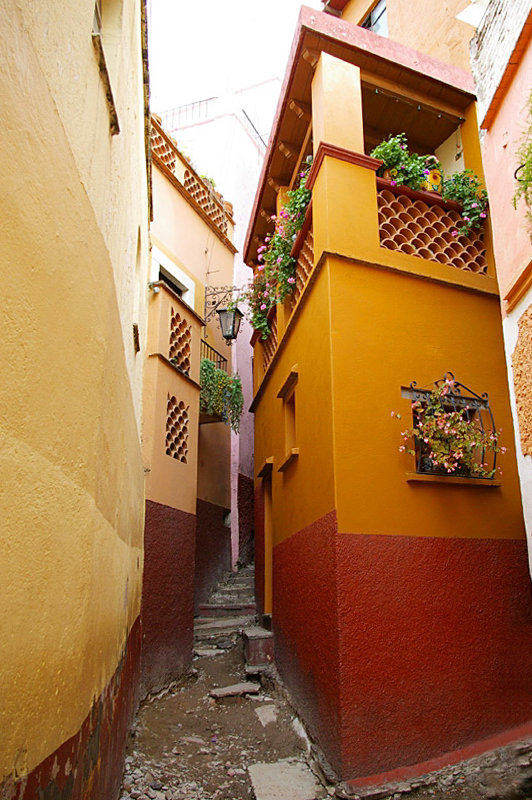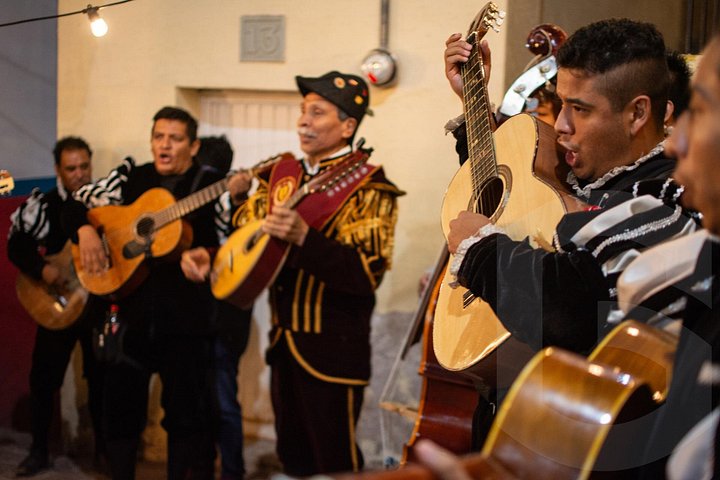
The callejoneada is Guanajuato's signature night out, a tradition in which an estudiantina, a group of students in black capes and tights playing guitars, mandolins and tambourines, leads a crowd through the alleys in a procession of songs, jokes and legends. It descends from the student troupes of medieval Spain and has flourished in this university city for generations. This walk, run as the Night Walk with the Estudiantina, takes about an hour and twenty minutes and starts at the Iglesia de San Diego beside the Teatro Juárez. Stops include the Iglesia de San Diego, the Salto del Mono alley and finally the Callejón del Beso, where the evening ends. Expect singing, dancing and audience participation, with tales of local legends along the way and optional extras such as roses; the short serenade between men and women is part of the tradition and is optional. The storytelling is mostly in Spanish, so non-Spanish speakers should expect to follow the music, the mood and the spectacle rather than every joke. The cost is very low, free cancellation is available up to a day before, and the group atmosphere makes it easy to join solo.
Why it works
A callejoneada is less a tour than a party with a route. The musicians are charismatic, the alleys are spectacular after dark and the crowd, a mixed group of Mexican visitors and foreigners, usually ends up singing together by the end. It also solves a common problem for travellers, which is what to do in the evening in a city with few big nightclubs: the entertainment is the city itself.
Working the visit
Arrive at the meeting point, the Iglesia de San Diego next to the Teatro Juárez, a few minutes early, wear comfortable shoes for the stairs and cobbles and bring a little cash for tips and optional purchases. The walk runs for roughly an hour and twenty minutes and ends at the Callejón del Beso, so you can stay on for a drink on the Jardín de la Unión straight afterwards.
Tipping the musicians is customary and voluntary. Check availability for your date when you book, since evenings in festival season and on weekends fill up first, and groups are large.
Who it suits
Couples, friends and solo travellers who like music and a little audience participation, and families with teenagers. It is less suited to anyone who dislikes crowds, loud music or being asked to join in, or to guests who need full English commentary, since most of the talking is in Spanish. A good plan is to start with a Pípila sunset, eat early, then join the callejoneada, and finish with a nightcap. That sequence gives you the city's best view, its best table and its best party in one night.
What to expect
The experience
A guided evening procession through the alleys behind a student troupe, with songs, dancing, legends and optional extras, starting beside the Teatro Juárez and ending at the Callejón del Beso.
Best time
Evenings, ideally after a sunset at the Pípila and an early dinner; weekends and festival season are busiest.
How long
About one hour and twenty minutes, covering the Iglesia de San Diego, the Salto del Mono alley and the Callejón del Beso.
Tips
Expect Spanish storytelling, bring small change for tips, wear shoes with grip and arrive a few minutes early at the Iglesia de San Diego.
Quick picks
- Best for
- Anyone who wants Guanajuato's most characteristic night out, with live music and local legends.
- Families
- Fine for teenagers and music-loving children; the crowds, volume and late hour suit older kids best.
- Couples
- The finale at the Callejón del Beso makes it a romantic evening, with an optional serenade along the way.
- Pair with
- A sunset at the Pípila monument, dinner on the Jardín de la Unión and the Teatro Juárez.
- Time needed
- About ninety minutes including the meeting time.
Good questions
What is a callejoneada?+
It is a street procession led by an estudiantina, a troupe of students in traditional costume who play music and tell legends as they walk through the alleys. It is a Guanajuato tradition.
Where does the walk start and end?+
It starts at the Iglesia de San Diego, next to the Teatro Juárez, and ends at the Callejón del Beso, with a stop at the Salto del Mono alley.
Is it in English?+
The storytelling is mainly in Spanish, so non-Spanish speakers will enjoy the music and atmosphere more than the jokes. Optional participation is part of the fun.
How long does it take?+
About an hour and twenty minutes. You can have dinner before and a drink afterwards without rushing.
Can I cancel if my plans change?+
Free cancellation is offered up to 24 hours before the start. Check availability for your date, since popular evenings fill up.